
Custom built homes energy efficiency decisions in Florida’s Climate Zone 2 follow different economics than any retrofit, and the reason is simple: on a new build you are not paying for the upgrade, you are paying the difference between the upgrade and the baseline you would have installed anyway. A sealed attic assembly is not a $20,000 project on a house that has not been framed yet — it is the delta between two roof details. That is why several measures with a discouraging payback on an existing home are among the best investments available on a custom build, and why the ranking below is ordered by incremental cost rather than by installed cost. Ofir Engineering is a licensed Florida general contractor (License #CGC 1540016) with 15+ years serving Jacksonville, Ponte Vedra, St. Johns, and Northeast Florida.
What Climate Zone 2 Changes About Custom Built Homes Energy Efficiency
Northeast Florida sits in Climate Zone 2 — hot and humid, cooling-dominated, with a heating season short enough to be a rounding error in most annual energy bills. Roughly speaking, the load in a Jacksonville house is cooling and dehumidification, water heating, and everything else. Design guidance written for a mixed or cold climate optimizes the wrong variables here.
Three consequences follow. Keeping heat and moisture out matters far more than keeping heat in, which shifts priority from wall insulation depth toward roof performance, air sealing, and solar heat gain control at the glass. Latent load — humidity — is a first-order design problem, not an afterthought, so equipment that is oversized will cool quickly, short-cycle, never run long enough to dehumidify, and leave a house that is cold and clammy. And duct location dominates: ducts in a vented attic in Florida can sit in 130°F air for months, so their leakage and their surroundings cost more here than almost anywhere else in the country.
Tier One: Design-Stage Decisions That Cost Almost Nothing
The highest-return efficiency measures on a custom home are made on paper, months before a slab is poured, and several are free.
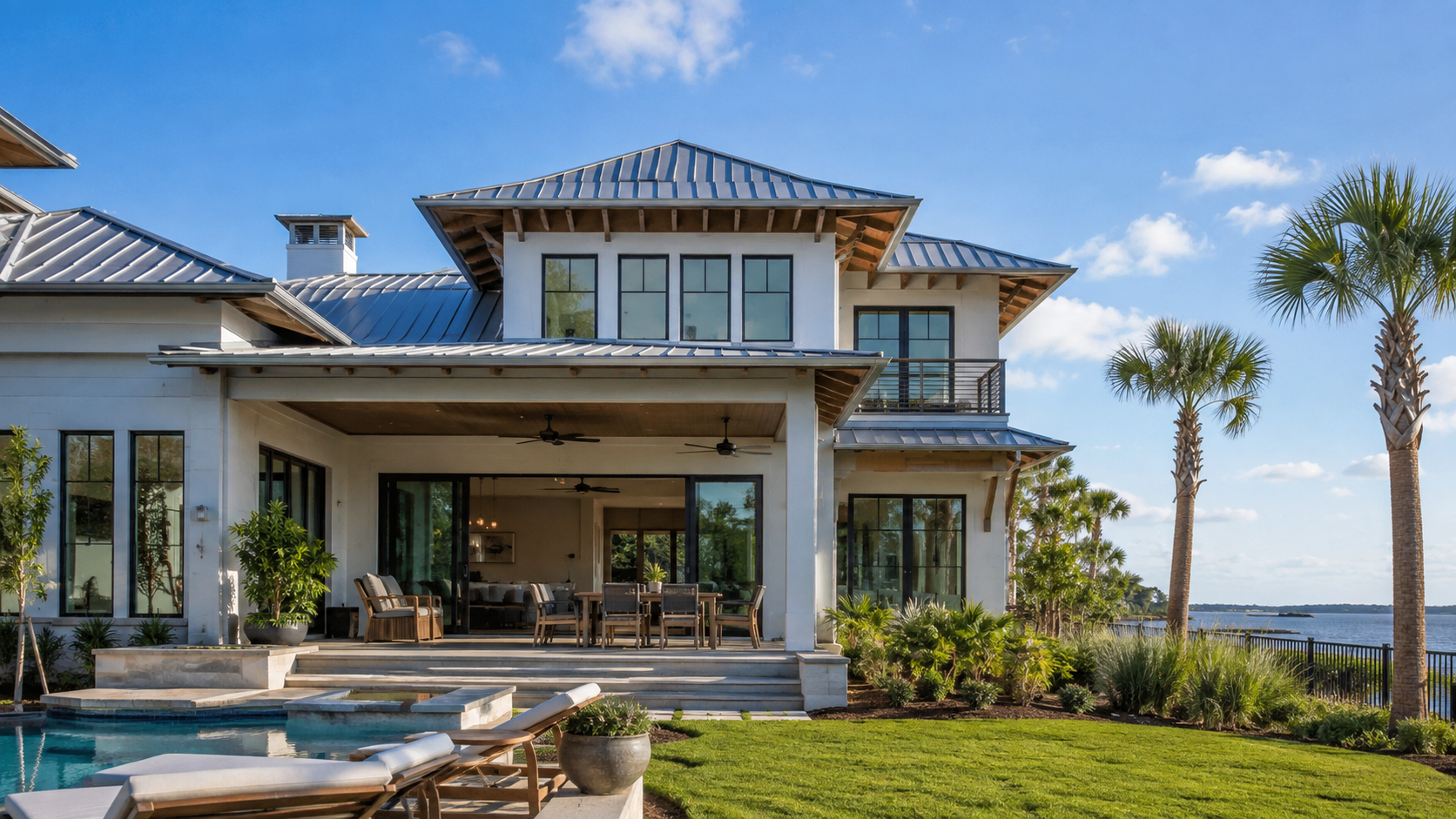
Orientation and glazing distribution. Placing the greatest glass area on north and south exposures and minimizing unshaded west-facing glass costs nothing at the design stage and permanently reduces peak cooling load. West glass in Florida takes late-afternoon sun at the hottest hour of the day.
Deep overhangs and shading. Extending roof overhangs and covering south-facing openings is a marginal framing cost that shades glass before the heat ever reaches it — always cheaper than removing the heat afterward with equipment.
Ducts inside the conditioned envelope. This is the single most consequential decision on the list. Designing the house so the air handler and every duct run sit within conditioned space — via a sealed, unvented attic or interior chases and dropped soffits — eliminates the largest ongoing loss in a typical Florida home. It is a design decision, not a product purchase, and it is nearly impossible to add later.
Right-sized equipment through real load calculations. Manual J for the load, Manual S for equipment selection, and Manual D for duct design cost a modest engineering fee and frequently reduce tonnage. Smaller, correctly sized equipment costs less to buy, less to run, and dehumidifies properly. Rule-of-thumb sizing by square footage is the most expensive shortcut in residential construction.
A defined air-sealing scope with a tested target. Written into the plans and the contract as a required blower-door result, air sealing costs a few hundred dollars in materials and labor during framing and delivers the best return per dollar of anything in this article.
Tier Two: Upgrades Worth the Incremental Cost
The sealed, unvented attic assembly. Moving the insulation plane to the roof deck brings the attic inside the envelope, protects ducts and equipment, and improves moisture control. The incremental cost over a vented attic with ceiling insulation is real but moderate on a new build, and it is the measure most likely to change how the house actually performs.
Low-SHGC impact glazing. Impact-rated windows are effectively mandatory in much of Northeast Florida, so the efficiency decision is not whether to buy windows — it is which coating to specify. Selecting a low solar heat gain coefficient glass package is a small delta on a purchase you are making regardless, and it directly cuts cooling load. Because the same units are also part of the structure’s wind-load compliance, coordinate the selection with the wind mitigation requirements in Jacksonville code before ordering.
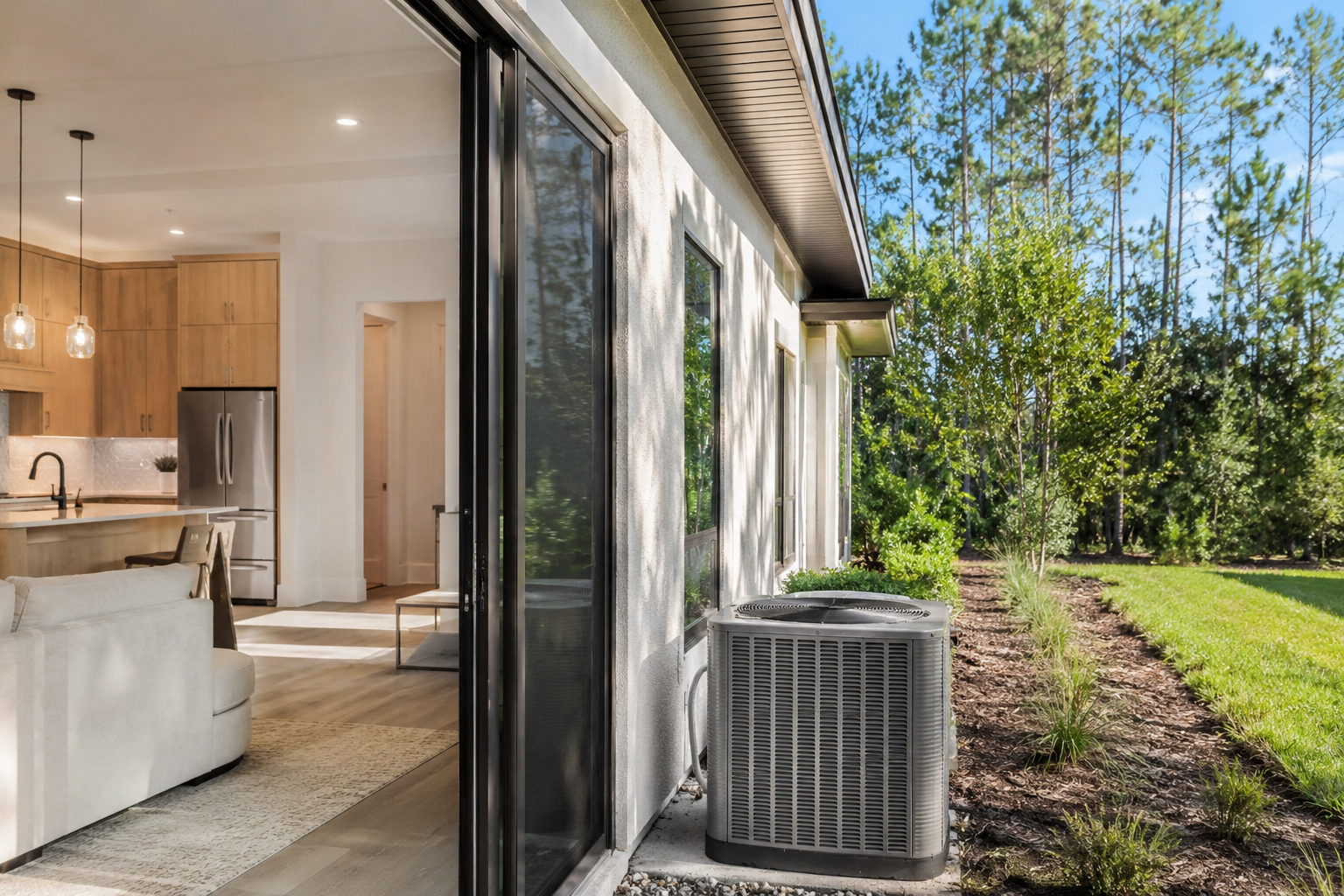
A high-efficiency variable-capacity heat pump. Stepping up from a baseline single-stage unit to a variable-capacity system with better part-load performance improves both efficiency and humidity control, because it runs longer at lower output instead of blasting and stopping. In a cooling-dominated climate the annual hours are high enough to earn the delta back.
Heat pump water heating. Water heating is the second-largest energy end use in most Florida homes. A heat pump water heater carries a modest equipment premium over resistance electric and typically uses a fraction of the energy. Placing it inside conditioned space, or in a mechanical room designed for it, is a plan decision you can only make now.
Radiant barrier roof sheathing. If a vented attic is chosen despite the guidance above, radiant barrier decking adds very little per sheet and meaningfully reduces attic temperature.
Where the Money Stops Working in Climate Zone 2
Efficiency spending has a point of diminishing return, and knowing where it sits protects the rest of the budget.
Very thick wall insulation. Pushing wall assemblies well beyond code minimum yields little in a cooling climate where the roof, the glass, and air leakage dominate. Spend the same dollars on the attic and the envelope seal.
Triple-pane glazing. Triple glazing solves a cold-climate heat-loss problem Jacksonville does not have. In Zone 2, the coating matters and the third pane rarely does.
Solar installed before the envelope is finished. Photovoltaics are legitimate, but sizing an array to power an inefficient house means paying for generation to offset avoidable waste. Seal, insulate, and right-size first, then size the array to the smaller load — the array itself gets cheaper. Current equipment specifications and program details are published at ENERGY STAR.
Oversized equipment “for the hot days.” This is not an efficiency measure at all. Oversizing raises cost, shortens equipment life through short-cycling, and produces the cold-and-clammy result Florida homeowners complain about most.
How to Put Custom Built Homes Energy Efficiency Into the Contract
Efficiency claims that live in a sales conversation do not survive value engineering. Efficiency written as a measurable specification does. Five items belong in the construction documents.
Specify a blower-door air-leakage target in air changes per hour at 50 pascals, with testing by a third party and a defined remedy if the number is missed. Specify a duct-leakage limit and require the test result, or eliminate the issue entirely by specifying ducts inside conditioned space. Require Manual J, S, and D calculations to be produced and provided, not assumed. State the glass package by SHGC and U-factor, not by brand alone, so a substitution cannot quietly change performance. And name the energy code compliance path being used, since Florida permits multiple methods and they are not equivalent in outcome — the current code is published by the Florida Building Commission.
Verifying the builder matters as much as verifying the specification: confirm an active Florida general contractor license through the state before signing. For how these decisions fit the overall build sequence and budget, see our guides to custom built homes permit requirements in Duval County and the custom home construction schedule and its milestones. To review the whole process, visit our custom home construction service page or contact Ofir Engineering to price an efficiency package against your specific plan and lot.
Frequently Asked Questions
Which energy-efficiency upgrade pays back fastest on a custom built home in Florida?
Air sealing with a tested blower-door target, followed by locating ducts and the air handler inside the conditioned envelope. Both are design and labor decisions rather than equipment purchases, both cost very little as an incremental line item on a new build, and together they address the largest sources of loss in a Climate Zone 2 house.
Is a sealed attic worth it in Jacksonville?
In most cases yes. Bringing the insulation plane to the roof deck puts the attic inside the conditioned envelope, which protects ductwork and equipment from months of extreme attic temperatures and improves moisture control. On a custom build the incremental cost over a vented attic is far lower than converting one later.
Do I need triple-pane windows in Florida?
No. Triple glazing addresses cold-climate heat loss. In Climate Zone 2 the meaningful specification is a low solar heat gain coefficient on impact-rated glass, which controls the heat actually driving your cooling bill.
Should I add solar panels to a new custom home?
Only after the envelope and equipment decisions are settled. Sizing an array to an inefficient house means paying to generate power that a sealed envelope and right-sized equipment would have saved. Reduce the load first, then size the system to it — the array ends up smaller and cheaper.
How do I know the builder actually delivered the efficiency that was promised?
Require testing, not assurances. A third-party blower-door test and duct-leakage test with stated numeric targets, along with the Manual J, S, and D calculations and the glass package specified by SHGC and U-factor, turn efficiency into a verifiable contract deliverable instead of a marketing claim.
Keep Building With Ofir Engineering
Related discussions & follow us: Facebook · Reddit
Latest & related guides: Explore more Custom Home Construction guides →
