
Luxury custom home builders long term maintenance is the part of the job that starts the day the certificate of occupancy is issued, and in Northeast Florida it is not optional housekeeping — it decides whether a house still performs at year fifteen or quietly loses its envelope, its hardware, and its warranty coverage by year five. Humidity and salt air work continuously and on their own schedule, and they attack the most expensive components first: the mechanical systems that control interior moisture, the sealants and flashings that keep bulk water out, and the metal that holds the rest of it together. A builder who hands over a set of keys and a folder of receipts has not finished the job. Ofir Engineering is a licensed Florida general contractor (License #CGC 1540016) with 15+ years serving Jacksonville, Ponte Vedra, St. Johns, and Northeast Florida.
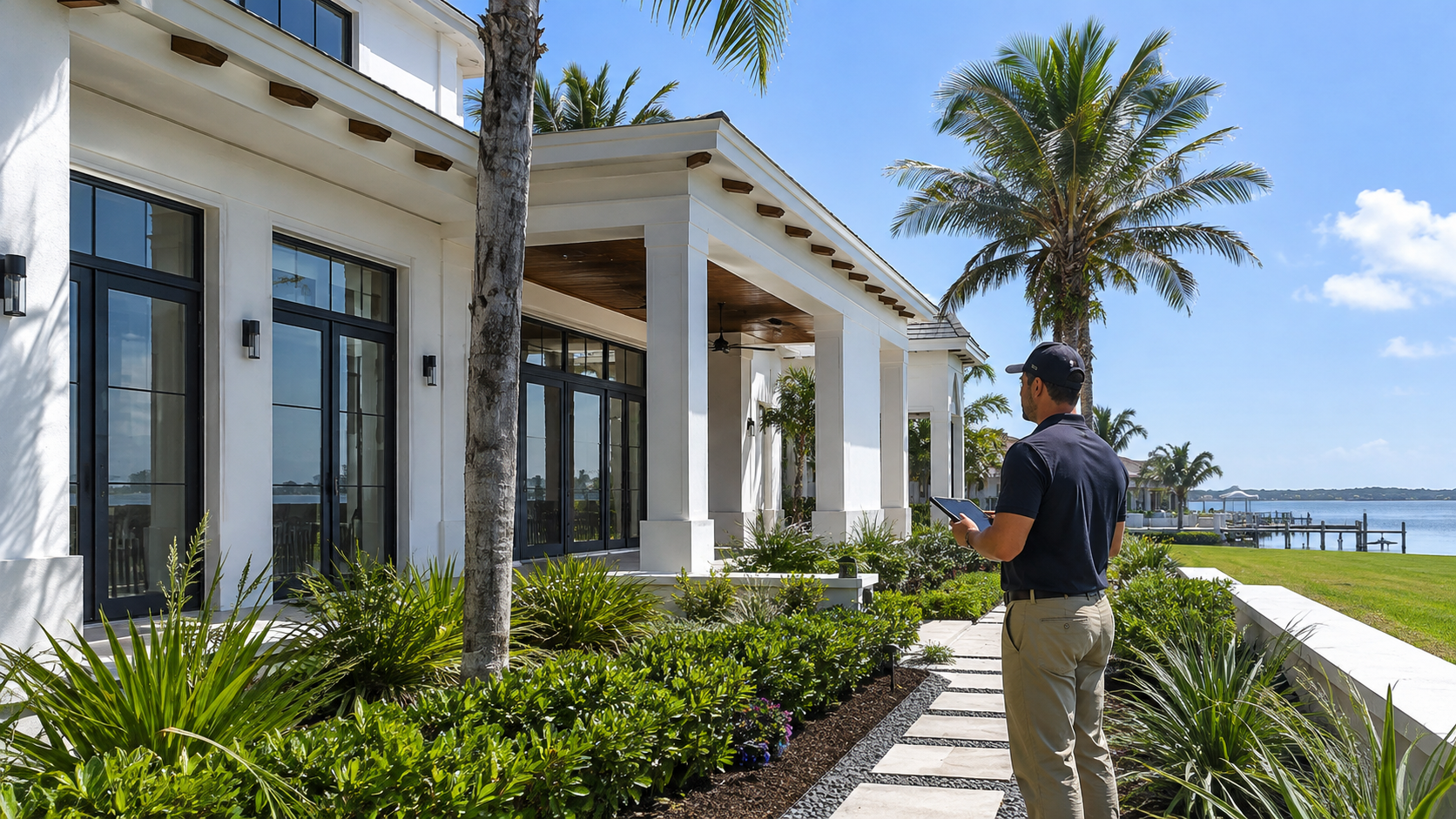
Luxury Custom Home Builders Long Term Maintenance: What Belongs in the Handover Package
The handover package is the deliverable that makes maintenance possible. Without it, the owner is guessing at model numbers, sealant types, and service intervals two years after the trades have moved on. On a high-end custom home in this climate, a complete package contains eight things:
The as-built document set. Final architectural, structural, mechanical, electrical, and plumbing drawings reflecting what was actually built, plus the site and drainage plan. Anyone servicing the house later works from these.
An equipment register. Every piece of installed equipment with manufacturer, model, serial number, install date, warranty term, and — critically — confirmation that the warranty was registered. Unregistered equipment routinely carries a shorter term than the owner believes.
A written maintenance calendar. Not a generic homeowner pamphlet: a schedule keyed to the specific components in this house, with intervals and who performs each task.
A finish and material schedule. Paint manufacturers, colors, and sheens; stucco finish and texture; tile, stone, and grout products; the sealer used on stone and pavers; wood species and coating systems. Matching a repair later is a documentation problem, not a craft problem.
A shutoff and panel map. Water main, irrigation, gas, electrical panels and subpanels, pool equipment disconnects, generator transfer switch. This matters most during a storm, when it has to be found in the dark.
The vendor and subcontractor list. Names, license numbers, and contacts for the roofer, mechanical contractor, low-voltage integrator, pool contractor, and stucco applicator — the people who know the assemblies.
Commissioning reports. HVAC airflow and refrigerant charge, duct leakage and blower-door results, dehumidification setpoints, and irrigation zone coverage. These are the baseline that later performance is measured against.
The warranty package and claim procedure. The express warranty document plus every manufacturer certificate, and a written explanation of how to file a claim. What that coverage actually consists of under Florida law is covered in our guide to luxury custom home builders warranty coverage and Florida statute.
Why Florida Humidity Is a Building Science Problem, Not a Comfort Complaint
Northeast Florida sits in Climate Zone 2, hot and humid, where the vapor drive pushes moisture toward the interior for most of the year. That single fact changes what maintenance means. A house here is not merely cooled; it is dehumidified, and the equipment that does the cooling is not always the equipment that does the drying.
The failure mode owners see is mold or musty odor in a house whose thermostat is perfectly satisfied. The cause is usually one of three things. Oversized cooling equipment satisfies the thermostat in short bursts and never runs long enough to pull moisture out of the air, so interior relative humidity drifts up into the sixties while the temperature reads seventy-two. Unbalanced duct systems put parts of the house under negative pressure, drawing humid outside air through the envelope into wall and attic cavities. Or a house is left largely unoccupied at a high thermostat setting with no dedicated dehumidification, which is the classic way a seasonal or second home develops a problem while no one is standing in it.
The maintenance answers are specific: hold interior relative humidity in the forty-five to fifty-five percent band and actually measure it with a hygrometer rather than assume it; service the mechanical system twice a year rather than once; keep condensate drains clear and treated, because a blocked condensate line is one of the most common causes of interior water damage in Florida homes; and if the house sits empty for stretches, run a whole-house dehumidifier on a humidistat instead of relying on a raised thermostat setpoint. The equipment and envelope decisions that make this manageable are set during construction — see our discussion of energy efficiency in Florida Climate Zone 2.
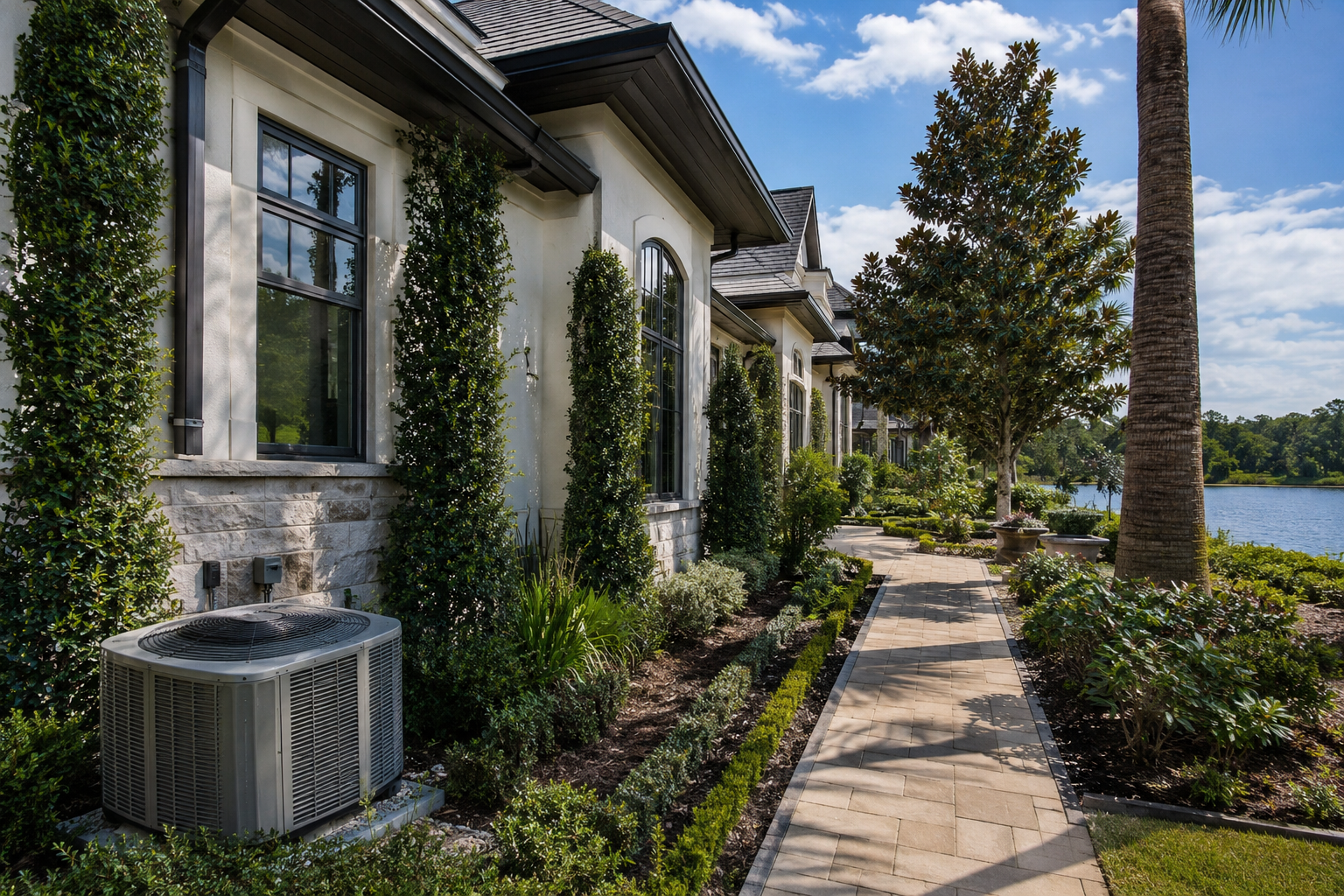
Salt Air Puts a Corrosion Clock on Everything Metal
Airborne chlorides do not stop at the dune line. Homes in Ponte Vedra Beach, Atlantic Beach, Neptune Beach, Vilano Beach, and along the Intracoastal all sit in a corrosive environment, and the closer to open water, the faster the clock runs. Salt deposits on a surface, attracts moisture, and holds an electrolyte film against metal around the clock. Nothing about that process is dramatic; it simply never stops.
The components that fail first are predictable. Condenser coils and cabinets corrode from the outside in, losing capacity long before they fail outright, which is why coastal installations should specify coated coils and get a fresh-water rinse on a quarterly schedule. Exterior door and window hardware pits and seizes, and the difference between plated hardware, 304 stainless, and 316 stainless shows up in years rather than decades. Garage door springs, tracks, and rollers rust in place. Light fixtures, railings, gate hardware, and exposed fasteners on decks and pergolas stain and weaken. Roof fasteners, drip edge, and flashing corrode at the exact points that keep water out. Pool equipment, generator enclosures, and outdoor equipment housings all sit outside in the same air.
The single highest-value habit for a coastal owner is also the simplest: a scheduled fresh-water rinse of exterior metal, hardware, screens, and mechanical equipment. It costs almost nothing and it materially extends service life. The construction-side decisions that make it work — material selection, equipment placement, and clearances — are set at design, and they are part of what separates a builder who has built on this coast from one who has not, as covered in our overview of waterfront luxury home construction in Florida.
The Component Schedule: What Gets Serviced, and How Often
Mechanical and dehumidification. Filters every one to three months depending on media and occupancy; professional service twice a year; condensate line clearing and treatment quarterly; coil rinse quarterly within a few miles of salt water; verified refrigerant charge and airflow at each service visit rather than a visual once-over.
Roof. A professional inspection annually and after every named storm, focused on fasteners, flashing, sealant at penetrations, and — on tile roofs — displaced or cracked units. Sealant at penetrations is a consumable, not a permanent detail.
Windows and doors. Clear the weep holes annually so frames drain instead of holding water; lubricate hardware with a marine-grade product; check gaskets and weatherstripping; inspect impact-rated units and their hardware, since a storm is the wrong time to discover a seized lock. Keep the wind mitigation documentation with the maintenance file.
Exterior envelope. Walk the sealant joints annually — control joints, penetrations, transitions between dissimilar materials. Sealants have a service life measured in years, not the life of the building. Stucco cracks get evaluated rather than ignored, and exterior coating cycles run shorter on the coast than inland.
Exterior wood and millwork. Annual inspection and refinishing on the schedule the coating manufacturer specifies for a marine exposure, which is typically more frequent than the general specification.
Plumbing and water treatment. Flush the water heater annually; service filtration and softening equipment on the manufacturer’s interval; exercise main and fixture shutoffs so they still turn when needed; test the irrigation backflow preventer annually, which the utility generally requires anyway.
Pool, spa, and outdoor living equipment. Manufacturer-interval service plus a corrosion inspection of heaters, pumps, controls, and their electrical connections.
Standby generator. Monthly exercise cycle, annual professional service, battery replacement on schedule, and a documented fuel plan. A generator that has not been exercised is a decorative object.
Low-voltage and smart home systems. Firmware and controller updates, UPS battery replacement every three to five years, camera and sensor checks, and a documented credential handoff so the owner is not locked out of a system they paid for.
Elevator, lifts, and specialty systems. Service and inspection at the intervals required by the state and the manufacturer.
Termite and moisture protection. Renew the termite bond on schedule and keep the annual inspection reports. A lapsed bond is discovered at the worst possible moment.
How Maintenance Decides Warranty and Insurance Outcomes
Maintenance is not only about the physical house; it is what preserves the paper. Manufacturer warranties on roofing, mechanical equipment, and windows are conditioned on registration and on documented service at the specified intervals. A builder’s express warranty excludes damage arising from owner neglect. In both cases the dispute is decided by records: dated invoices, service reports, and photographs. An owner with a maintenance file wins those conversations, and an owner without one usually does not.
Insurance follows the same logic. Florida carriers price wind and water risk on roof age and condition and on documented mitigation features, which is why the wind mitigation inspection form belongs in the maintenance file and gets refreshed when it expires. Deferred exterior maintenance is visible at inspection and shows up in premium and, increasingly, in whether a policy is offered at all. That relationship is covered in more depth in our guide to how a luxury custom build affects Florida insurance premiums. Current building requirements behind those features are published by the Florida Building Commission.
What to Ask Your Builder Before Closeout
Ask for the maintenance calendar in writing, with intervals and responsible parties, before the final payment rather than after. Ask which components carry a coastal specification and which do not, so you know where the corrosion clock runs fastest. Ask for confirmation that every manufacturer warranty was registered in the owner’s name, with the registration confirmations attached. Ask which maintenance obligations are conditions of the warranties, because those are the ones that carry a financial consequence if they are skipped. Ask for the commissioning numbers, so a future performance complaint can be measured against a baseline. And ask who to call for the first year — a builder who expects to be there in year three writes a different handover package than one who does not.
Any Florida contractor’s license and its status can be verified independently through the Florida DBPR license portal before you sign anything.
To see how we structure closeout documentation, commissioning, and a coastal maintenance program as part of the build rather than an afterthought, review our luxury home builder service page, or contact Ofir Engineering to talk through your site, its exposure, and what it will take to keep the house performing.
Frequently Asked Questions
How often should a coastal Florida home have its exterior metal rinsed?
Quarterly is a reasonable baseline within a few miles of the ocean or Intracoastal, and monthly for hardware and mechanical equipment in direct salt spray. The rinse is plain fresh water on hardware, railings, fixtures, screens, and condenser coils. It is the cheapest maintenance task on the list and the one with the clearest effect on service life.
What interior humidity level should a Florida custom home hold?
Roughly forty-five to fifty-five percent relative humidity. Above sixty percent, mold growth becomes likely on interior surfaces regardless of what the thermostat reads. Measure it with a hygrometer rather than inferring it from temperature, and if the house runs high while the cooling is satisfied, the problem is usually equipment sizing, duct balance, or the absence of dedicated dehumidification.
Can I leave a Florida home unoccupied with the air conditioning off?
No. Left unconditioned in this climate, interior humidity climbs into a range where mold and material damage occur within weeks. For seasonal absences the durable solution is a whole-house dehumidifier on a humidistat with the thermostat at a moderate setpoint, which controls moisture without running the cooling system continuously.
Does skipping maintenance actually void a warranty?
It can void the parts of it that matter. Manufacturer warranties on roofing, mechanical equipment, and windows are generally conditioned on registration and documented service intervals, and a builder’s express warranty excludes damage caused by owner neglect. The determining factor in a dispute is documentation, so keep dated invoices, service reports, and photographs in one file.
What should be included in the maintenance handover at closeout?
As-built drawings, an equipment register with model and serial numbers and confirmed warranty registrations, a written maintenance calendar with intervals, a finish and material schedule, a shutoff and panel map, the vendor and subcontractor list, commissioning reports for the mechanical system, and the complete warranty package with a written claim procedure.
Keep Building With Ofir Engineering
Related discussions & follow us: Facebook · Reddit
Latest & related guides: Explore more Luxury Home Builder guides →
