
Evaluating luxury custom home builders energy efficiency claims in Northeast Florida comes down to a short list of specifications that actually govern how a large house performs in a hot, humid climate — and almost none of them are the items that appear in marketing material. Climate zone 2, which covers Jacksonville and the surrounding counties, is cooling-dominated and moisture-driven. That single fact reorders the entire priority list away from what works in a northern climate. Ofir Engineering is a licensed Florida general contractor (License #CGC 1540016) with 15+ years serving Jacksonville, Ponte Vedra, St. Johns, and Northeast Florida. Planning to build? See our our new home construction process.
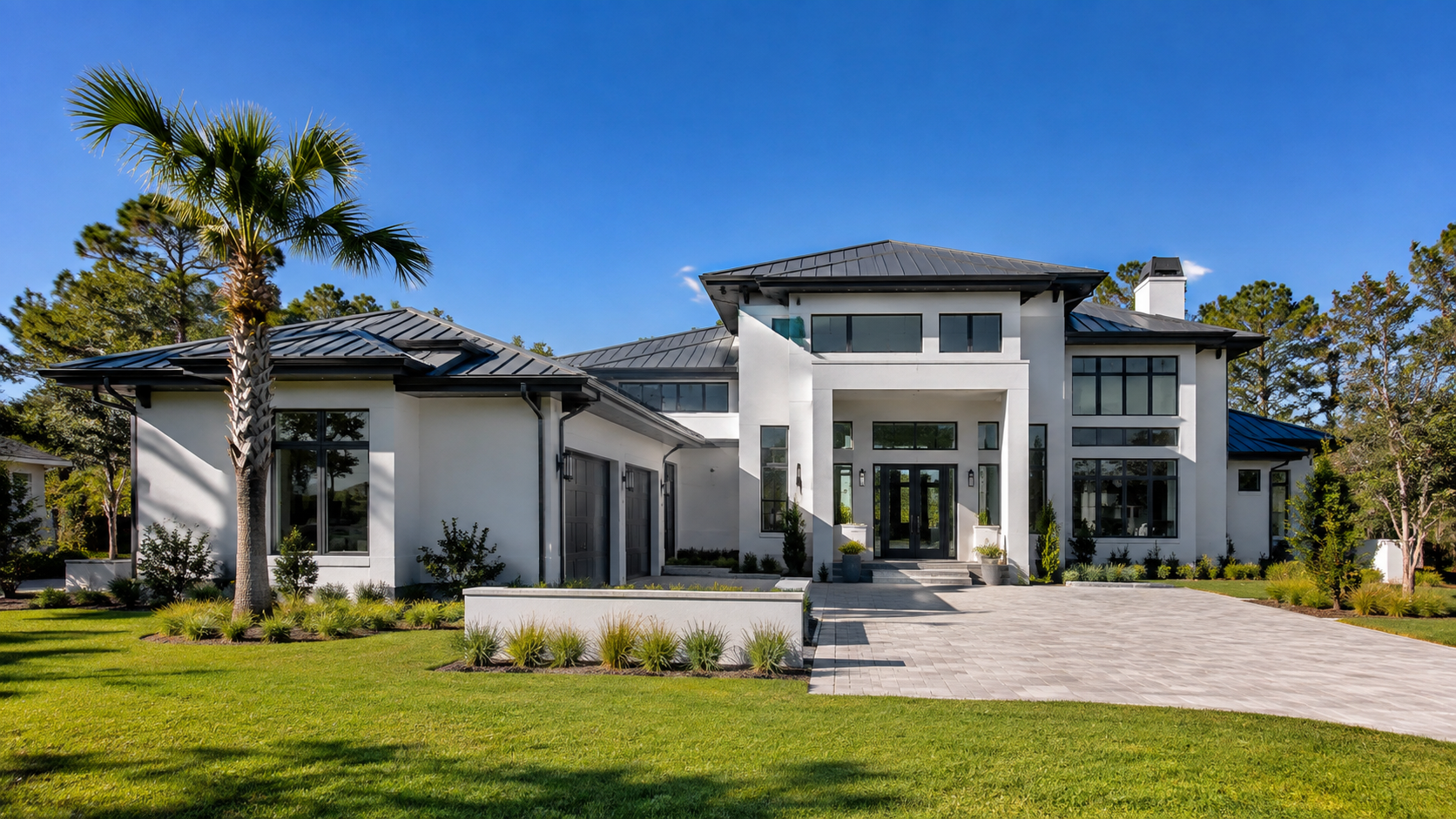
Luxury Custom Home Builders Energy Efficiency Priorities in a Cooling Climate
In a heating climate, thick wall insulation dominates the energy conversation. In climate zone 2 it does not. Here the dominant loads are solar gain through glass and roof, and latent load from humidity — the energy spent removing moisture rather than lowering temperature. A large luxury home amplifies both, because it typically has more glass, more roof area, higher ceilings, and more zones than a standard house.
That produces a clear order of priority. First, control solar gain at the glass and the roof. Second, make the air barrier continuous and verify it. Third, manage humidity deliberately rather than hoping an oversized air conditioner will do it. Fourth, right-size and properly distribute the mechanical systems. Wall insulation matters, but it is fourth or fifth in impact, not first — and a builder who leads with R-value in a wall assembly while staying vague about air sealing and glazing is describing a different climate than the one your house will stand in.
The Envelope: Roof, Air Barrier, and Ducts
Roof and attic strategy. A vented attic in Florida routinely runs far above outdoor temperature in summer, and any duct or air handler placed in it is fighting that heat all day. On a high-end build, ask specifically whether the design brings the attic inside the thermal envelope — typically with insulation applied at the roof deck to create a sealed, conditioned or semi-conditioned attic — or keeps the attic vented with all mechanical equipment relocated into conditioned space. Either can work. What does not work is a vented attic full of ductwork, which is the default in ordinary construction and has no place in a luxury specification.
Continuous air barrier, tested not assumed. Air leakage carries humid outdoor air into the assembly, which is both an energy cost and a durability risk. Require a defined air barrier strategy, and require a blower door test with a target result written into the specification. The number is the point: a builder who commits to a tested airtightness result has to detail the work correctly, while a builder who promises a tight house without a test has promised nothing measurable.
Ducts inside conditioned space. Duct leakage and duct heat gain are among the largest and most common efficiency losses in Florida homes. Specify that ducts run within the conditioned envelope and require a duct leakage test at completion. On a large house with multiple systems this single item often outweighs several upgrades that cost far more.
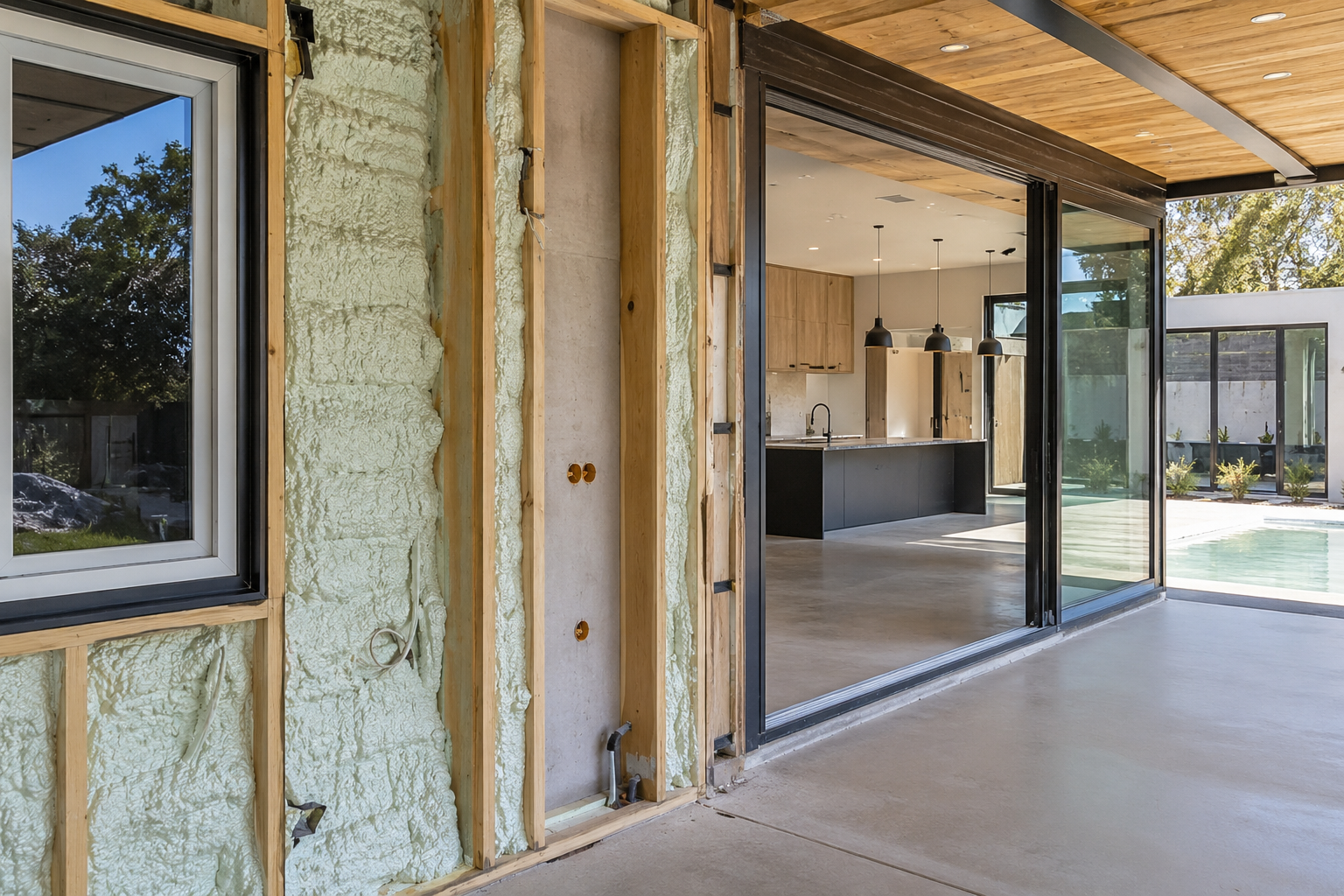
Glazing, Shading, and Mechanical Systems
Glass is where luxury design and energy performance most often collide, because the water views and light that justify the house are delivered through the assembly with the worst thermal performance in it. The resolution is not less glass, it is better-specified glass and real shading. Ask for the actual solar heat gain coefficient and U-factor of the specified units, not a brand name. In climate zone 2 a low solar heat gain coefficient does more work than an aggressive U-factor, and west and east elevations matter far more than north. Deep overhangs, recessed openings, exterior shading, and louvered elements reduce load before it reaches the glass, which is always cheaper than removing that heat afterwards. Impact-rated glazing is a separate requirement driven by wind, and the two specifications must be coordinated rather than treated as one product decision — the Florida Building Commission publishes the code provisions that govern both.
On mechanical systems, the most valuable question to ask a builder is how the equipment was sized. A room-by-room load calculation, rather than a rule of thumb per square foot, is the difference between a system that dehumidifies properly and one that short-cycles. Oversized equipment cools the air quickly, shuts off before it has removed enough moisture, and leaves a house that feels clammy at a comfortable thermostat setting — a complaint heard constantly in large Florida homes. Variable-capacity equipment, correct zoning that matches how the house is actually occupied, and a dedicated dehumidification strategy for the seasons when cooling load is low but humidity is not, are what deliver comfort in this climate. Add controlled mechanical ventilation, because a genuinely tight house needs deliberate fresh air rather than accidental leakage.
Water heating and pool equipment deserve their own line on a luxury project. Heat-pump water heaters, recirculation controlled by demand rather than a continuous loop, and variable-speed pool pumps address loads that are unusually large in this house type. Independent verification through a recognized program such as ENERGY STAR, or a HERS rating with a written target, converts all of these from intentions into commitments.
How to Hold a Builder to It
Put performance into the contract as testable results rather than adjectives. A defensible specification names the blower door target, the duct leakage target, the glazing solar heat gain coefficient and U-factor, the load calculation method, the ventilation strategy, and who pays if a test fails and the work has to be corrected. Ask to see results from recently completed homes; a builder who tests routinely will have them.
Where budget forces choices, spend in priority order: roof and attic strategy, air sealing verified by test, ducts inside conditioned space, glazing and shading, then equipment. To see how these decisions fit the wider budget, read our luxury custom home builders cost guide, and compare specification levels in luxury home features and finishes in Florida. The luxury home builder service page explains how we develop a performance specification before pricing, or contact Ofir Engineering to review a builder’s proposal against this list.
Frequently Asked Questions
What matters most for energy efficiency in Florida’s climate zone 2?
Controlling solar gain through glass and roof, verified air sealing, and keeping ducts inside conditioned space. Because the climate is cooling-dominated and humid, these outrank wall insulation R-value, which drives the conversation in northern climates but is a secondary factor here.
Should a luxury Florida home have a sealed or vented attic?
Either can perform, but a vented attic containing ductwork and air handlers should be avoided. Bringing the attic inside the thermal envelope by insulating at the roof deck, or keeping it vented and relocating all mechanical equipment into conditioned space, both solve the underlying problem.
Is a blower door test worth requiring on a custom home?
Yes, and it should carry a written target. The test converts airtightness from a claim into a measured result, forces correct detailing during construction, and gives you grounds to require correction. Pair it with a duct leakage test, since duct losses are among the largest in Florida homes.
Why does my large Florida home feel humid even when it is cool?
Almost always oversized cooling equipment. It reaches the thermostat setpoint quickly and shuts off before running long enough to remove moisture. A room-by-room load calculation, variable-capacity equipment, and a dedicated dehumidification strategy for mild-weather months resolve it.
Keep Building With Ofir Engineering
Related discussions & follow us: Facebook · Reddit
Latest & related guides: Explore more Luxury Home Builder guides →
