
The custom built homes insurance impact in Florida is one of the largest recurring costs a homeowner controls at the design table, and it is decided by construction choices made months before a policy is ever quoted. Two houses of identical size on the same street can carry materially different premiums for the life of the building, because Florida carriers price wind, water, and replacement cost from documented physical characteristics rather than from the appearance of the home. A new build is the one moment when every one of those characteristics is still a choice. Ofir Engineering is a licensed Florida general contractor (License #CGC 1540016) with 15+ years serving Jacksonville, Ponte Vedra, St. Johns, and Northeast Florida.
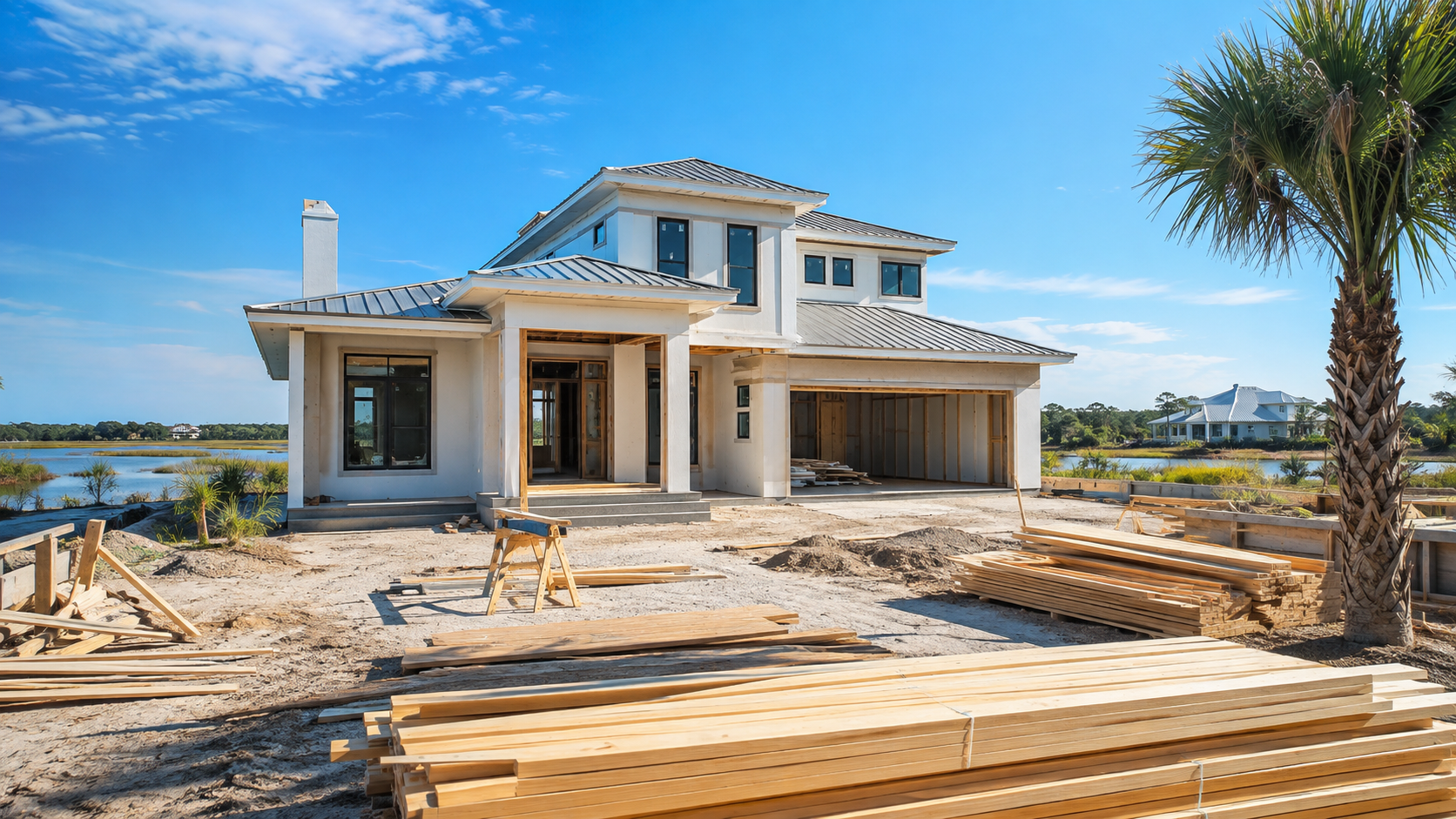
Why the Custom Built Homes Insurance Impact Starts at Design
Florida homeowner premiums are built mainly from wind exposure, water exposure, and the cost to rebuild. Wind pricing rewards a documented, code-current, tested envelope. Water pricing depends on elevation relative to base flood elevation and on the plumbing and mechanical systems inside. Replacement cost tracks the finish level and the complexity of the structure, which is precisely where a custom home differs from a production home.
New construction starts with structural advantages that are permanent. The roof is zero years old, and roof age alone is among the strongest premium drivers in this state — carriers restrict or decline coverage on older roofs regardless of condition. The building is designed to current wind provisions of the Florida Building Code. Electrical service, wiring, plumbing supply lines, and mechanical equipment are all new, which removes the fire and water-damage risk factors that drive up premiums on older homes and, in some cases, make them difficult to insure at all.
Wind Mitigation: The Features Carriers Actually Credit
Florida law requires carriers to provide premium discounts for specific, verifiable wind-resistant features, documented on a uniform mitigation verification inspection. On an existing home these are expensive retrofits. On a custom build most are marginal cost or no cost if specified before construction, which makes this the highest-return insurance conversation you will ever have.
The credited features cluster in a few areas. Roof covering must meet current code with documented product approval. Roof deck attachment is credited by nail size and spacing — tighter nailing patterns cost very little at framing and are credited for the life of the roof. Roof-to-wall connection is credited in ascending order from toe nails to clips to single wraps to double wraps; specifying the strongest connection is inexpensive during framing and impossible to change afterwards without opening the structure. Roof geometry matters, with hip roofs credited over gable roofs because they shed wind load better, which turns a purely aesthetic design decision into a recurring cost decision. Secondary water resistance, a sealed roof deck beneath the covering, earns credit and limits interior damage if the covering is lost. Opening protection requires that every glazed opening be impact-rated or shuttered — and the credit is all-or-nothing, so one unprotected window can forfeit the entire benefit. Our detailed guide to custom built homes wind mitigation and Jacksonville code covers how these are documented and verified.
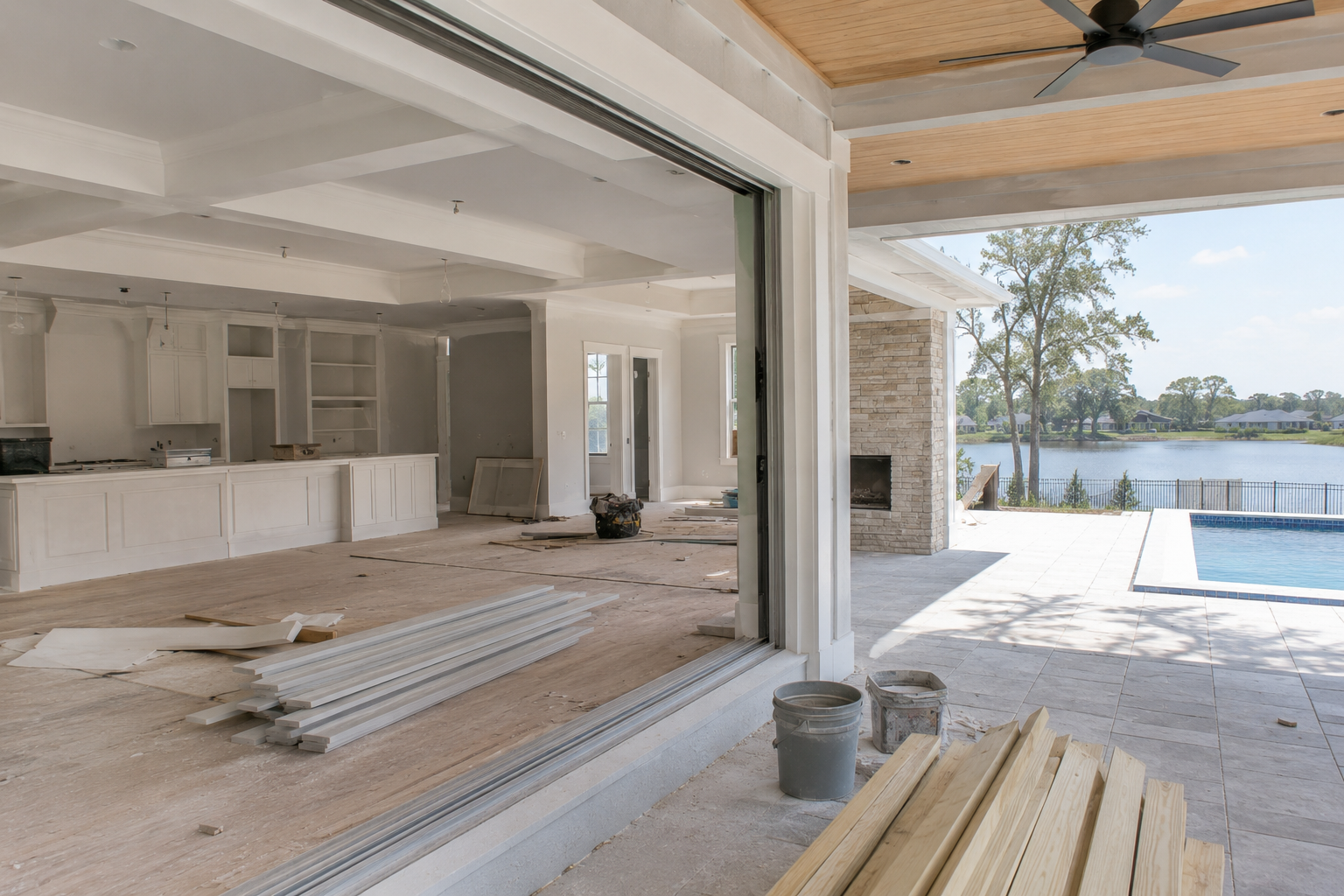
Flood, Elevation, and the Coverages Behind the Premium
Flood is not part of a standard homeowner policy, and in Northeast Florida the flood decision is made when the lot is chosen and the finished floor elevation is set. Where a house sits in a Special Flood Hazard Area, premiums scale steeply with how the lowest floor relates to base flood elevation. Building above the minimum required elevation is one of the few construction decisions that reduces both risk and cost permanently, and the additional freeboard is usually cheap compared with the premium difference over decades. Confirm the mapped zone at the FEMA Flood Map Service Center before you commit to a lot, and obtain an elevation certificate at completion, because without that document a carrier will rate the house conservatively.
Beyond premium, a custom build changes what you need to insure. During construction the correct instrument is a builder’s risk policy covering the structure and stored materials; confirm who carries it, what it covers, and precisely when it converts to a homeowner policy at closeout, because a gap between those two is a genuine exposure. Once complete, insure to replacement cost rather than market value. Custom homes are frequently underinsured because owners insure to what they believe the house is worth rather than what it would cost to rebuild with the same specification, and that gap only becomes visible at claim time. High-value finishes, custom millwork, imported materials, and specialty systems may need scheduled coverage or an extended replacement cost endorsement.
Two further items are worth naming. Law and ordinance coverage pays the cost of rebuilding to current code after a loss, which matters more as codes evolve during your ownership. And separate wind or hurricane deductibles, expressed as a percentage of the insured value rather than a flat dollar amount, are standard in Florida — on a high-value custom home that percentage can represent a large out-of-pocket figure, so it should be understood before it is tested.
How to Turn This Into Lower Premiums
Bring an insurance agent into the process during design, not at closing. Have them price the same house with and without specific mitigation features so the credits become numbers you can weigh against construction cost. Then require that the builder deliver, at completion, the documentation that unlocks them: the uniform mitigation verification inspection, product approvals for roof covering and openings, the elevation certificate, and permit close-out records. Credits are paid on documented evidence, and documentation assembled after the fact is far harder to obtain than documentation collected as the work is inspected.
To see where these choices land in the overall budget, read our custom built homes cost guide for Jacksonville, and review the custom home construction service page for how we specify and document mitigation from the start. To have your plan reviewed for insurance-credited features before permitting, contact Ofir Engineering.
Frequently Asked Questions
Is insurance cheaper on a newly built Florida home?
Usually yes, and often substantially. A new build has a zero-year-old roof, a code-current wind-resistant envelope, and new electrical, plumbing, and mechanical systems. Roof age and wind features are among the strongest premium drivers in Florida, and a new house scores well on both from day one.
Which wind mitigation features earn the largest discounts?
Opening protection, roof-to-wall connections, roof deck attachment, roof geometry, and secondary water resistance. Opening protection is all-or-nothing, so a single unprotected glazed opening can forfeit the credit entirely. All of these are inexpensive when specified before construction and costly to retrofit later.
Do I need flood insurance if my lot is not in a flood zone?
It is not required outside a Special Flood Hazard Area, but flooding occurs outside mapped zones and coverage there is comparatively inexpensive. Because flood is excluded from standard homeowner policies, the choice is between a modest premium and carrying that risk yourself.
Should I insure my custom home for market value or rebuild cost?
Rebuild cost. Market value includes land and reflects buyer demand, neither of which relates to what reconstruction would cost with the same specification. Custom homes are frequently underinsured for exactly this reason, and high-value finishes may require scheduled coverage or an extended replacement cost endorsement.
Keep Building With Ofir Engineering
Related discussions & follow us: Facebook · Reddit
Latest & related guides: Explore more Custom Home Construction guides →
