
When homeowners search for home additions near me contract terms, they are usually one signature away from committing six figures to a project that will attach permanently to a house they already live in — and the contract is the only thing that will govern what happens when something unexpected appears behind an existing wall. An addition is legally and practically different from a standalone build, because the builder is working into an existing structure that neither party has fully seen. Good contract terms do not eliminate that uncertainty; they decide in advance who carries it and how it gets priced. Ofir Engineering is a licensed Florida general contractor (License #CGC 1540016) with 15+ years serving Jacksonville, Ponte Vedra, St. Johns, and Northeast Florida.
Home Additions Near Me Contract Terms: What Florida Law Already Requires
Florida gives owners several protections automatically, and a contract should acknowledge rather than dilute them. Any residential contract over a defined threshold must include the statutory notice explaining that failure to pay subcontractors and suppliers can result in a lien against your property even if you have paid your contractor in full. That is not boilerplate; it is the mechanism behind the most common way owners end up paying twice.
A Notice to Owner is the related instrument. Subcontractors and suppliers who do not contract with you directly serve it to preserve their lien rights. Receiving one is routine and is not a warning sign. What matters is that you keep every notice you receive, because together they form the exact list of parties who must provide a release before you make the corresponding payment. Your contract should require the builder to deliver partial releases from every one of them with each draw, and final releases from all of them before final payment and any retainage is released.
Recovery-fund eligibility and license status are the third layer. Verify the license, the license class, and any disciplinary history through the Florida DBPR license portal before signing. A contract with an unlicensed party is not a protected contract, however well it reads.
The Terms That Matter Most on an Addition Specifically
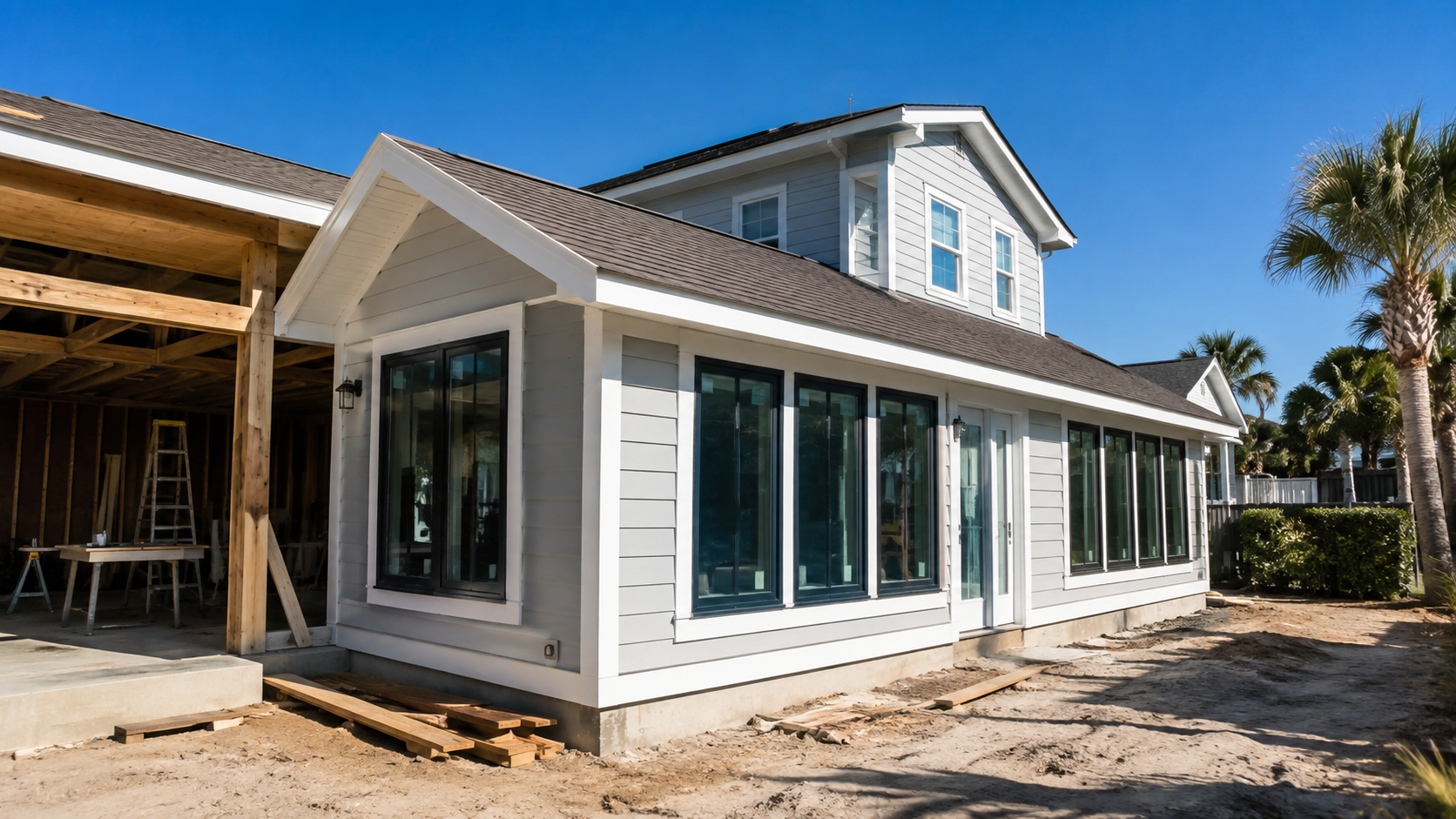
Scope of the structural tie-in. This is the clause that separates an addition contract from a new-build contract. Name in writing who is responsible for connecting new foundation to old, new roof framing to existing framing, and new wall assemblies to existing exterior walls, and state what happens to the existing roofline, siding, and flashing at the junction. Ambiguity here is where the largest addition disputes originate.
Existing-conditions and concealed-conditions clauses. Once demolition opens the existing wall, the crew may find undersized framing, out-of-code wiring, failed flashing, active termite damage, or a foundation that does not match the drawings. A fair contract says how such findings are documented, priced, and approved, and it distinguishes conditions a reasonable pre-construction investigation should have found from conditions genuinely concealed. A contract silent on this defaults every surprise to a negotiation you conduct while your house is open.
Change orders in writing, priced before work proceeds. Require that every change order state the added cost, the schedule impact, and be signed by both parties before the work begins. Verbal changes on a live jobsite are how a budget quietly moves twenty percent.
Allowances stated realistically. If windows, doors, flooring, or fixtures are carried as allowances, confirm the figures reflect the quality level actually intended and whether they cover material only or material plus installation. Both overruns and underruns should flow back to you. Low allowances make a proposal look competitive and then erode the budget one selection at a time. Our home additions cost guide for Jacksonville shows what realistic figures look like.
Payment, Permits, and Insurance Clauses
Tie every payment to verifiable progress rather than to the calendar. A defensible draw schedule pays on completed milestones — permit issued and mobilization, foundation poured and inspected, framing complete and inspected, dry-in achieved, rough-in inspections passed, drywall complete, finishes complete, and final payment at certificate of completion with all releases in hand. Keep a meaningful final payment, and treat a large deposit demanded before permits are even issued as a warning about the builder’s working capital.
State plainly that the builder pulls the permits. Never accept an arrangement where you pull an owner-builder permit for work a contractor performs — it moves liability, code responsibility, and inspection exposure onto you and can void protections you would otherwise have. Name who is responsible for scheduling inspections, and require that all permits be closed at completion; an open addition permit discovered years later becomes a title problem at sale. Our overview of home addition permits and inspections in Florida covers that sequence in detail.
On insurance, require current certificates for general liability and workers’ compensation, listing you as certificate holder, and confirm they remain in force through completion. Also require that the builder maintain builder’s risk coverage appropriate to the work, and notify your own homeowner’s carrier before construction begins — an addition changes the insured value and, in many policies, the conditions of coverage while work is underway.
Completion, Warranty, and Dispute Terms
Define substantial completion precisely, because it typically triggers occupancy of the new space, the start of the warranty period, and the punch list. State how the punch list is generated, how long the builder has to finish it, and what portion of payment is held until it is complete. Confirm who obtains the certificate of completion or occupancy and who closes the permits.
Set out the workmanship warranty duration and what it covers, and require that manufacturer warranties for windows, roofing, and equipment be assigned to you in writing at closeout with the documentation delivered, not merely promised. Finally, read the termination and dispute clauses while relations are still good. Know how either party may terminate, what is owed if they do, whether disputes go to arbitration or to court, and who pays fees. To see how these terms interact with the physical work, read our guide to the home addition structural tie-in, review the home additions service page, or contact Ofir Engineering for a scope and contract explained in plain language before you commit.
Frequently Asked Questions
What is the most important contract clause for a home addition?
The structural tie-in scope, paired with a concealed-conditions clause. Together they define who is responsible for joining new construction to the existing house and how surprises found inside existing walls are documented, priced, and approved. Most serious addition disputes trace back to one of these two being vague.
Should I ever pull the permit myself for an addition?
No. An owner-builder permit for work a contractor performs shifts code responsibility and liability onto you and can cost you protections you would otherwise have. The licensed contractor performing the work should pull the permit, schedule the inspections, and close the permit at completion.
How do lien releases protect me on an addition?
Without them you can pay your contractor in full and still face a lien from an unpaid subcontractor or supplier, meaning you pay twice. Collect partial releases with every draw from every party who served a Notice to Owner, and collect final releases from all of them before releasing final payment and retainage.
How much should the deposit be before work starts?
A modest mobilization payment tied to permit issuance is normal. A large up-front payment demanded before permits are issued suggests the builder is funding operations from your money rather than from working capital, and it removes your main source of leverage if performance slips.
Keep Building With Ofir Engineering
Related discussions & follow us: Facebook · Reddit
Latest & related guides: Explore more Home Additions guides →
