
The luxury custom home builders insurance impact on a Florida policy is larger than almost any other line item a client controls, and it is decided years before the first premium is quoted. Carriers in this state underwrite on construction type, roof, opening protection, elevation, water-loss risk, and replacement cost — every one of which is fixed during design and construction. A high-end home built with the underwriting criteria in mind is cheaper to insure and easier to place; one built without them can be expensive, restricted, or in some coastal cases genuinely difficult to cover at all. Ofir Engineering is a licensed Florida general contractor (License #CGC 1540016) with 15+ years serving Jacksonville, Ponte Vedra, St. Johns, and Northeast Florida.
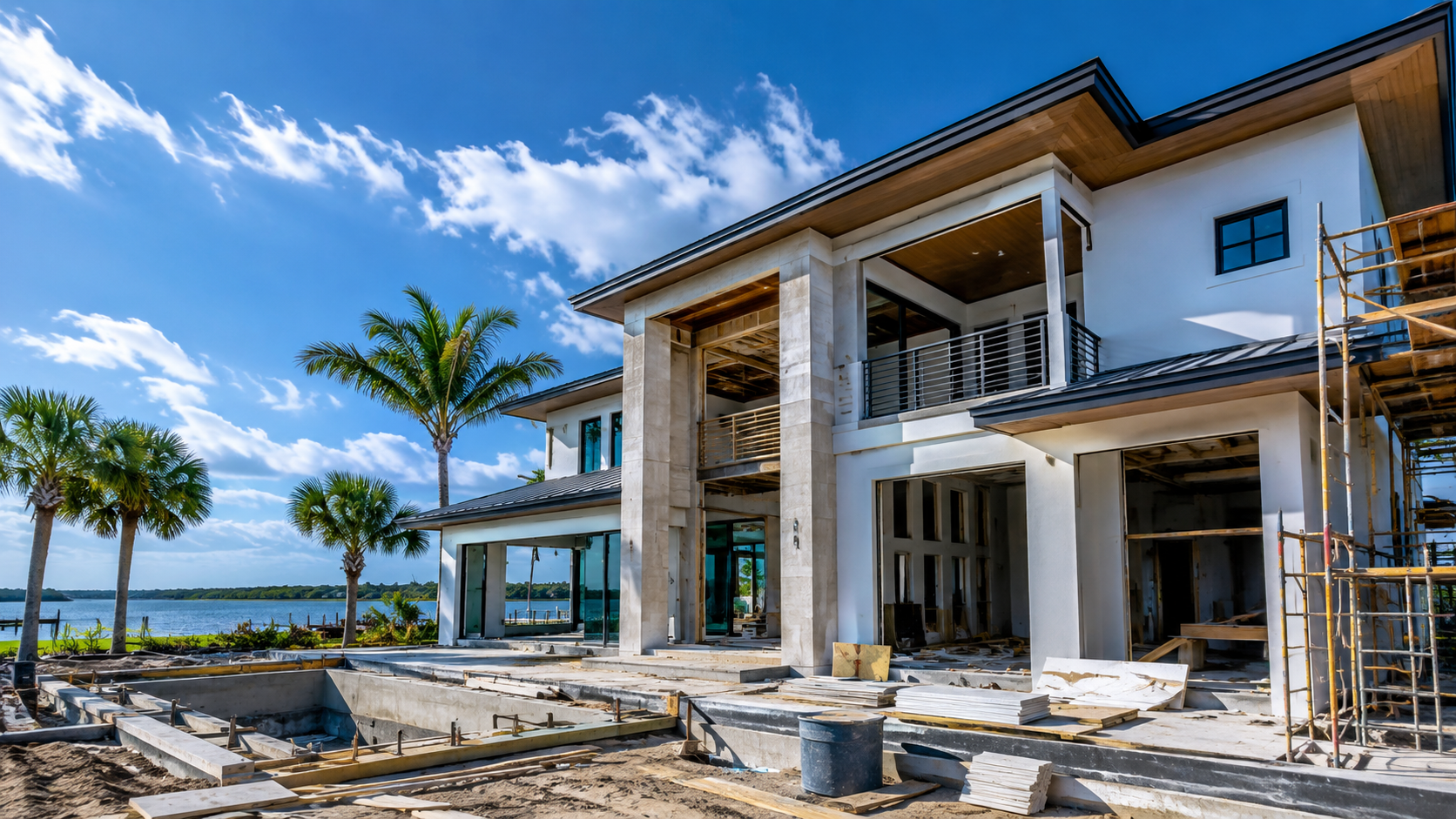
Why the Luxury Custom Home Builders Insurance Impact Is So Large in Florida
Florida’s residential market is priced primarily on catastrophe exposure, and a custom home concentrates value in a single structure. That combination makes the underwriting file unusually sensitive to build decisions. A carrier is asking a short list of questions: what is it made of, how is the roof attached and how old is it, are the openings protected, how high is the finished floor relative to flood risk, and how much would it cost to rebuild.
The high end amplifies each answer. Replacement cost on a custom home is not a per-square-foot table figure — it reflects specialised materials, millwork, and systems that cannot be rebuilt from stock. Higher rebuild cost means higher exposure, which means the mitigating factors matter proportionally more.
There is also a placement question that lower price points rarely encounter. Above certain values, or on certain coastal sites, the policy may need a high-value carrier or a surplus-lines market rather than a standard admitted one. What the builder does directly affects which of those markets will look at the risk.
The Build Decisions Carriers Price
Structural system. Masonry and engineered non-combustible framing are rated differently from conventional wood frame in most Florida programmes. The distinction shows up in both the wind and the fire components of the rate.
Roof: covering, geometry, and attachment. This is the single most influential cluster. Roof covering type and its compliance status, roof deck attachment, roof-to-wall connection, and whether the geometry is hip or gable all feed the mitigation credits. Roof age then governs renewal — many carriers restrict or non-renew older roofs regardless of condition, so the covering chosen at build time sets the clock on future insurability.
Opening protection. Full impact-rated glazing across every opening earns the strongest credit tier. Partial protection typically earns nothing, which makes this a threshold decision rather than a sliding scale — protecting most of the openings and leaving a few unprotected can forfeit the entire credit.
Elevation and flood position. Finished floor elevation relative to base flood elevation drives flood rating, and on waterfront property the difference between a home at the minimum and one comfortably above it is substantial and permanent.
Water mitigation. Non-weather water loss is the most frequent claim category in high-end homes. Automatic leak-detection and shut-off systems, correctly specified supply lines, and sensible mechanical placement reduce both the claim frequency and, with many carriers, the premium.
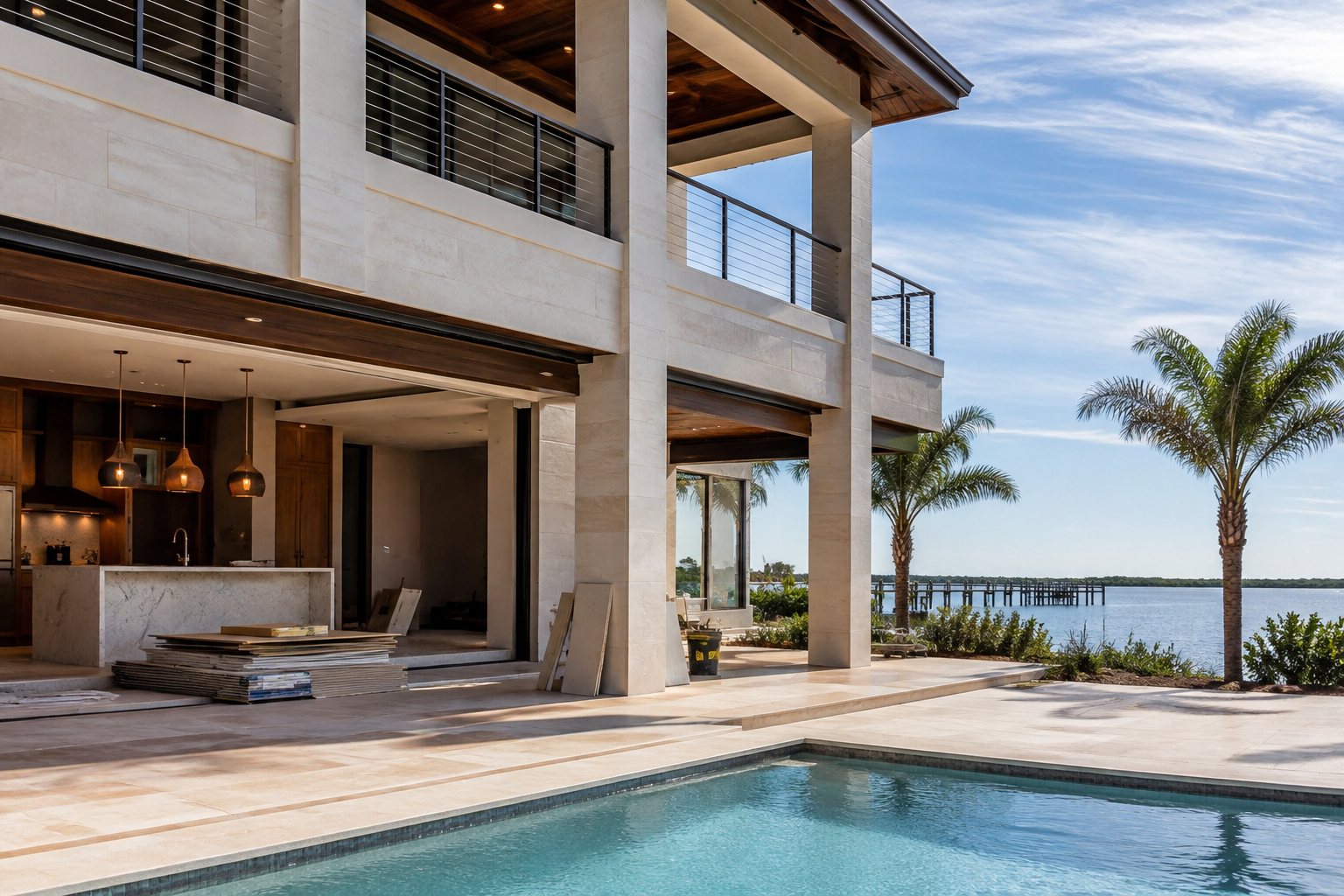
The Documentation That Converts Build Quality Into Premium Savings
Credits are not granted for quality; they are granted for verified quality. Three documents do the work.
The uniform mitigation verification form records roof covering, roof deck attachment, roof-to-wall connection, roof geometry, secondary water resistance, and opening protection. Without it on file, the features exist and the discount does not. The elevation certificate establishes finished floor elevation relative to base flood elevation and is the basis of flood rating. And a documented replacement-cost valuation, built from the actual specification rather than a generic estimator, prevents both underinsurance and paying for coverage you do not need.
A builder who assembles this package at closeout hands the owner something worth real money annually. A builder who does not leaves the owner reconstructing it later, often at a worse rate in the meantime. Florida’s insurance regulatory framework and consumer resources are published by the Florida Office of Insurance Regulation, which is the right place to verify how mitigation discounts are required to be applied.
Coverage Issues Specific to High-Value Homes
Three come up repeatedly. Replacement cost on custom construction is routinely understated, because standard valuation tools do not model bespoke millwork, imported materials, or specialist systems — and an understated dwelling limit can trigger coinsurance penalties on a partial loss, not just a total one.
Ordinance and law coverage matters more here than most owners realise. If a covered loss requires rebuilding to current code, the cost difference between the original and compliant construction is only covered if that endorsement is present and adequately limited. On a large custom home that gap can be significant.
Builder’s risk during construction is a separate policy from the eventual homeowner’s policy, and the transition between them is a moment worth managing deliberately. The builder should confirm coverage is continuous through substantial completion and handover rather than assuming it.
What to Ask Your Builder Before Design Is Final
Bring the insurance agent into pre-construction, not into closing. Ask the builder which structural system and roof covering they are proposing and how each is rated; whether opening protection will be complete rather than partial; what finished floor elevation is proposed relative to base flood elevation and what the cost is to go higher; whether leak detection and automatic shut-off are in the specification; and who is responsible for producing the mitigation form, elevation certificate, and replacement-cost valuation at closeout.
Those five questions, answered before drawings are final, typically change the lifetime cost of the house more than any finish decision. You can review how we approach the specification on our luxury home builder page, see the ground-up process under new construction, and read our companion guide on wind mitigation and Jacksonville code. To have the underwriting-relevant decisions reviewed against your site, contact Ofir Engineering.
Frequently Asked Questions
Which build decision saves the most on Florida homeowners insurance?
The roof cluster — covering, deck attachment, roof-to-wall connection, and geometry — combined with complete opening protection. Together they carry the largest wind mitigation credits, and roof age also governs whether carriers will renew the policy years later.
Does partial impact-window coverage still earn a discount?
Generally no. Opening protection credits are usually granted on an all-or-nothing basis: leaving a few openings unprotected can forfeit the entire credit. It is a threshold decision that belongs in the original specification, not in a later retrofit.
Why is replacement cost a problem on custom homes?
Standard valuation tools estimate from square footage and generic quality grades, which understates bespoke millwork, imported materials, and specialist systems. An understated dwelling limit can trigger coinsurance penalties even on a partial loss, so the valuation should be built from the actual specification.
When should the insurance agent be involved in a custom build?
During pre-construction, before drawings are final. Structural system, roof covering, opening protection, and finished floor elevation are all underwriting inputs, and changing them on paper costs nothing compared with changing them after construction.
Keep Building With Ofir Engineering
Related discussions & follow us: Facebook · Reddit
Latest & related guides: Explore more Luxury Home Builder guides →
