
Home additions near me long term maintenance is a different problem from maintaining the house the addition is attached to, and homeowners in Northeast Florida consistently underestimate the difference. An addition is not simply more house. It is a new structure joined to an older one along a seam, and that seam — the roof-to-wall connection, the wall intersection, the foundation joint, the point where new ductwork meets an existing air handler — is where nearly every long-term problem in an addition begins. Humidity and salt air then apply constant pressure to exactly those details. Knowing what to inspect, and how often, is what keeps a five-year-old addition performing like a new one instead of quietly becoming the wettest part of the house.
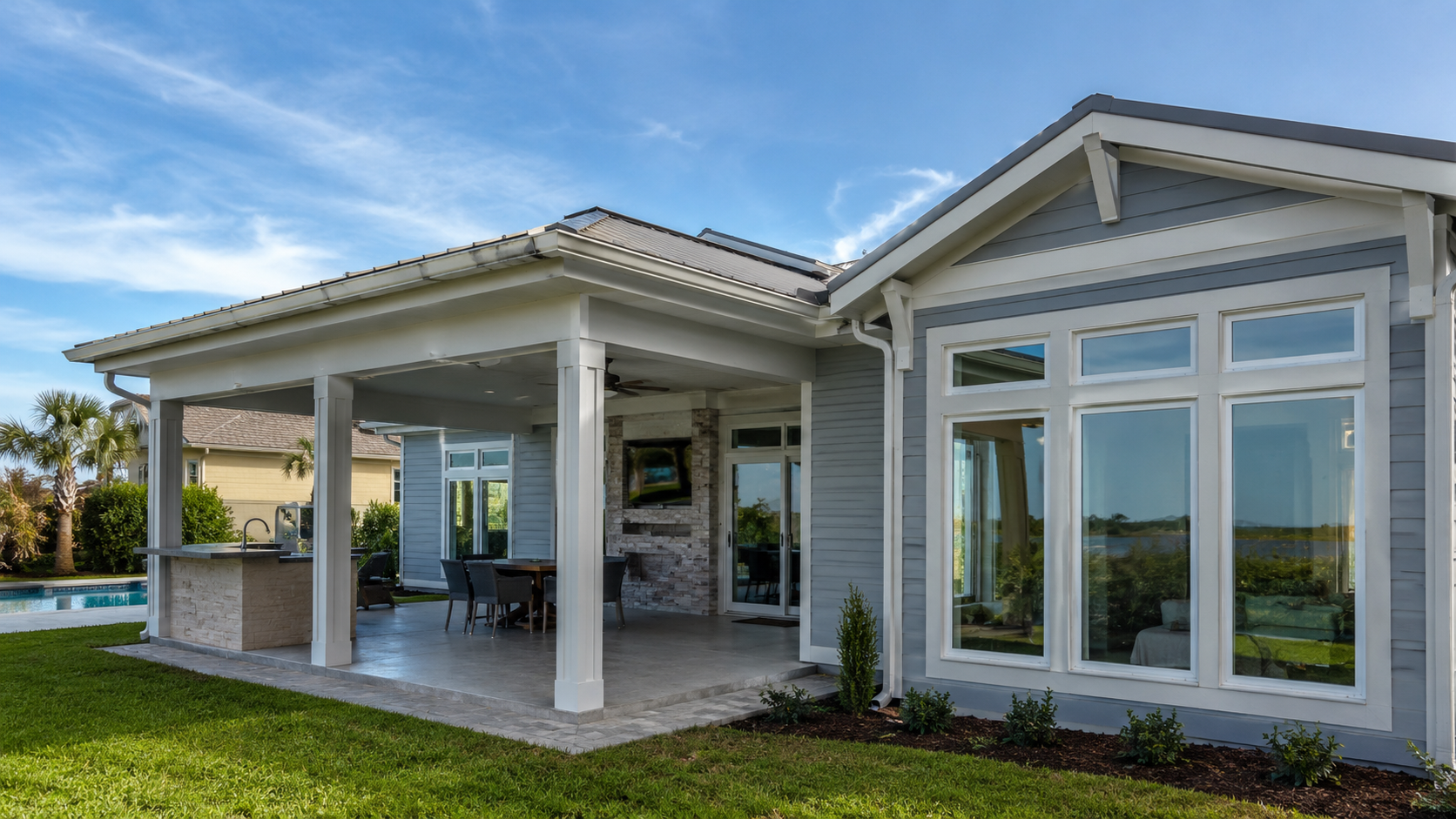
Home Additions Near Me Long Term Maintenance Starts at the Tie-In
The connection between an addition and the original house concentrates more risk than any other part of the project, because two assemblies built decades apart have to behave as one. Four details deserve annual attention.
Roof-to-wall flashing. Where the new roof meets the existing wall, step flashing and counterflashing are what keep water out. Sealant at that junction is a consumable with a service life measured in years, and it is the most common source of a leak that appears inside an addition long after the build. Inspect it annually and after every named storm.
The roof valley or transition. Tying a new roof plane into an old one creates a valley or a saddle that carries far more water than either plane alone. Debris collects there, and a valley that ponds is a valley that will eventually leak.
The exterior wall joint. Where new stucco, siding, or masonry meets the original wall, the two materials move at different rates with temperature and moisture. That joint is designed to move, which means it is sealed rather than rigid, and the sealant needs inspection and periodic replacement rather than being treated as permanent.
Differential settlement. A new foundation and an older one settle at different rates, especially on the sandy and variably compacted soils common across Duval and St. Johns. Hairline cracking at the joint in the first year or two is expected. Cracking that widens, offsets, or opens progressively is not, and it is worth evaluating rather than filling. The soil work that governs this is set at construction — see our guide to soil and drainage on Northeast Florida lots.
Humidity: The New Space Is Usually the Wet One
Northeast Florida sits in a hot, humid climate zone where moisture is driven toward the interior for most of the year. Additions are disproportionately affected for a specific and avoidable reason: the mechanical system.
When an addition is served by extending the existing air handler rather than adding dedicated capacity, the new space frequently receives airflow that satisfies temperature but not moisture removal. The thermostat, which is almost always located in the original house, reports comfort while the addition drifts into the sixties in relative humidity. That is the condition that produces musty odor, condensation on interior surfaces, and eventually mold, in a room where the air conditioning appears to be working perfectly.
The maintenance response is straightforward. Put an inexpensive hygrometer in the addition and hold it between forty-five and fifty-five percent relative humidity. If it consistently runs higher than the rest of the house, the problem is capacity, duct balance, or the absence of a dedicated return, not maintenance — and it should be diagnosed rather than tolerated. Service the mechanical system twice a year, keep condensate lines clear and treated quarterly, and verify the addition actually has a return-air path rather than relying on a door being left open. Where the envelope and equipment were sized correctly in the first place, this stays a non-issue; the reasoning is covered in energy efficiency for additions in Florida Climate Zone 2.
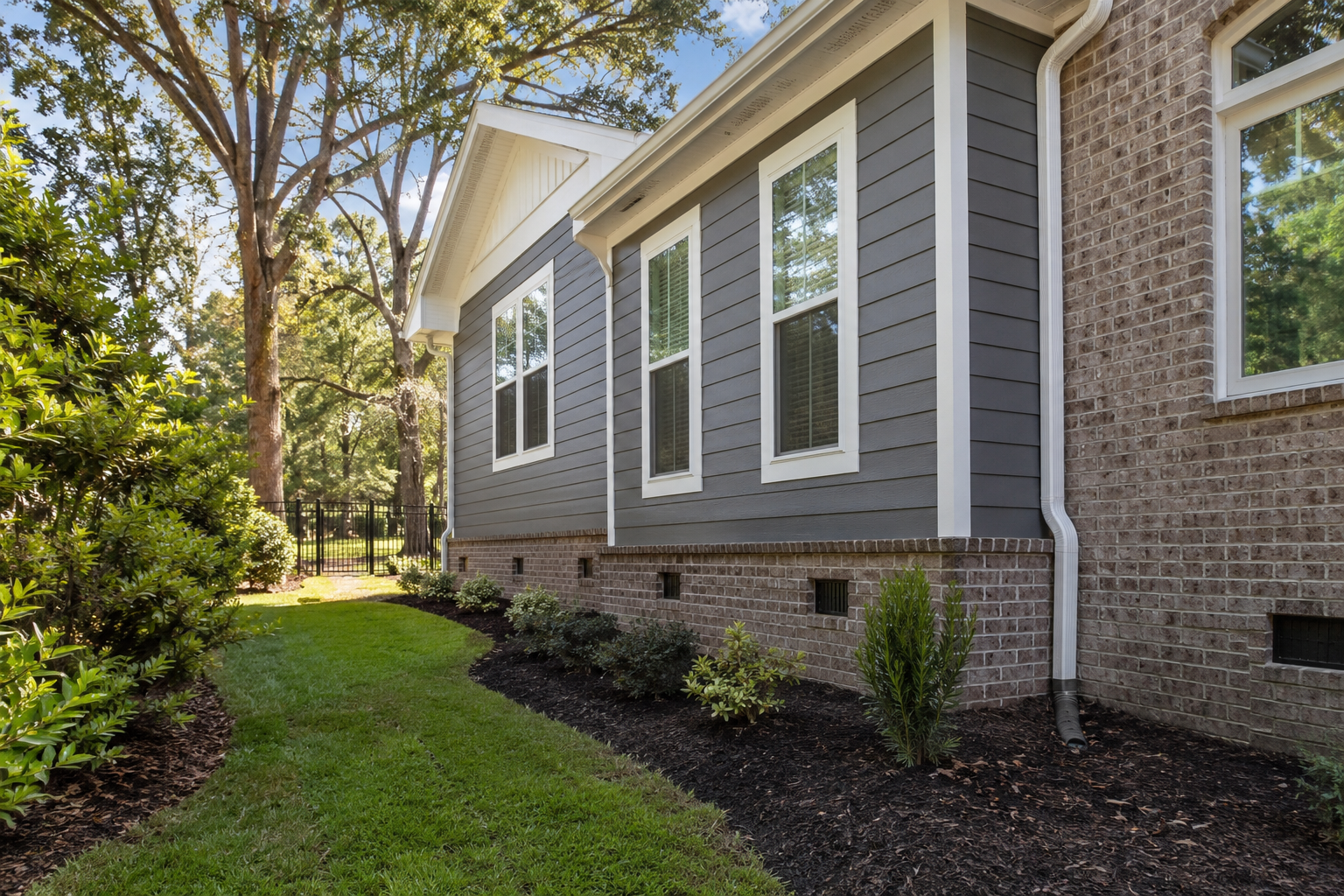
Salt Air Puts a Clock on Everything Metal
Airborne chloride does not stop at the beach. Additions in Ponte Vedra, Atlantic Beach, Neptune Beach, and along the Intracoastal sit in a corrosive environment, and salt deposited on a surface attracts and holds moisture against metal continuously. The components that degrade first are predictable: exterior door and window hardware, which pits and seizes; fasteners and flashing at the roof transition; condenser coils and cabinets, which lose capacity as they corrode long before they fail outright; light fixtures, railings, and screen frames.
The single most valuable habit for a coastal owner is also the cheapest — a scheduled fresh-water rinse of exterior metal, hardware, screens, and mechanical equipment. Quarterly is a reasonable baseline within a few miles of open water, monthly for anything in direct salt spray. It costs almost nothing and it materially extends service life. Specify coated coils on coastal equipment and understand that plated hardware, 304 stainless, and 316 stainless have very different life expectancies in this exposure.
The Service Schedule for an Addition
Annually: inspect roof-to-wall flashing, the valley or roof transition, and all sealant joints at the tie-in; clear window and door weep holes so frames drain; walk the foundation joint and photograph any crack so you can compare it next year; test the addition’s humidity; inspect the attic space above the addition for staining, condensation, or displaced insulation, which is where a slow leak shows up first.
Twice a year: professional mechanical service including the equipment serving the addition, with airflow and refrigerant charge verified rather than eyeballed.
Quarterly: clear and treat condensate lines; fresh-water rinse of exterior metal and condenser coils on coastal sites; check gutters and downspouts serving the new roof plane, since an addition often changes where water lands and a discharge point too close to the foundation undermines the drainage the addition was designed around.
After every named storm: inspect the roof transition, flashing, and exterior openings. The tie-in is the part of the roof most likely to be disturbed by uplift.
On the manufacturer’s interval: re-seal or re-coat exterior wood, stucco, and masonry. Coating cycles run measurably shorter on the coast than inland, and a specification written for inland exposure will disappoint you.
Maintenance Is What Preserves the Warranty and the Insurance
Maintenance protects the paperwork as much as the building. Manufacturer warranties on roofing, windows, and mechanical equipment are generally conditioned on registration and on documented service at the specified intervals, and a builder’s express warranty excludes damage arising from owner neglect. When a claim is disputed, it is decided on records — dated invoices, service reports, and photographs. Keep them in one file with the as-built drawings and the equipment register. What that coverage includes under Florida law is set out in our guide to warranty coverage for additions under Florida statute.
Insurance follows the same logic. Florida carriers price wind and water risk on roof age and condition and on documented mitigation features, so the wind mitigation form for the addition belongs in the maintenance file and should be refreshed when it expires. Deferred exterior maintenance is visible at inspection and shows up in premium, and increasingly in whether a policy is offered at all.
It is also worth understanding that most long-term maintenance problems in an addition trace back to a construction decision rather than a service failure — flashing detailed correctly, a dedicated return installed, drainage carried away from the joint. The same details that fail inspection during construction are the ones that fail in year six, which is why our guide to common addition inspection failures in Jacksonville is worth reading alongside this one. Contractor licensing can be verified independently through the Florida DBPR license portal before you hire anyone to build or service the work.
Ofir Engineering is a licensed Florida general contractor (License #CGC 1540016) with 15+ years serving Jacksonville, Ponte Vedra, St. Johns, and Northeast Florida. To see how we detail tie-ins, drainage, and mechanical capacity so an addition stays maintainable, review our home additions services or contact Ofir Engineering to discuss your property, its exposure, and the maintenance plan the design should come with.
Frequently Asked Questions
Why is my addition more humid than the rest of the house?
Almost always because it was served by extending the existing air handler without adding capacity or a dedicated return. The thermostat in the original house reads satisfied while the addition never gets enough runtime to dehumidify. Measure it with a hygrometer, and if the addition consistently runs above sixty percent relative humidity, have the airflow, capacity, and return path evaluated rather than treating it as a comfort preference.
How often should the tie-in between the addition and the house be inspected?
Annually, and after every named storm. The roof-to-wall flashing, the roof transition or valley, and the sealant joint where new and existing exterior walls meet are the three highest-value items. Sealant at these locations has a service life of years, not the life of the building, and replacing it on schedule is far cheaper than tracing a leak through a finished ceiling.
Is cracking at the joint between the addition and the original house normal?
Hairline cracking in the first year or two is common, because a new foundation and an older one settle at different rates. What is not normal is a crack that widens over time, offsets so the two faces are no longer flush, or reopens repeatedly after being filled. Photograph it annually with a scale in frame, and have progressive movement evaluated rather than cosmetically patched.
How often should I rinse exterior metal on a coastal addition?
Quarterly within a few miles of the ocean or Intracoastal, and monthly for hardware and mechanical equipment in direct salt spray. Plain fresh water on hardware, railings, fixtures, screens, and condenser coils is enough. It is the cheapest item on the maintenance list and the one with the clearest effect on service life.
Does skipping maintenance on an addition actually affect the warranty?
It can void the parts that matter most. Manufacturer warranties on roofing, windows, and mechanical equipment are generally conditioned on registration and documented service intervals, and a builder’s express warranty excludes damage caused by owner neglect. Disputes are decided on documentation, so keep dated invoices, service reports, and photographs together in one file.
Keep Building With Ofir Engineering
Related discussions & follow us: Facebook · Reddit
Latest & related guides: Explore more Home Additions guides →
