
Full house remodeling long term maintenance is decided during the renovation, not after it. In Northeast Florida the two forces that age a house hardest are constant humidity and, near the coast, airborne salt — and both attack materials, fasteners, and mechanical equipment continuously rather than seasonally. A whole-home renovation that specifies for those conditions needs routine upkeep. One that specifies for a milder climate needs repairs, and it needs them sooner than the owner expects.
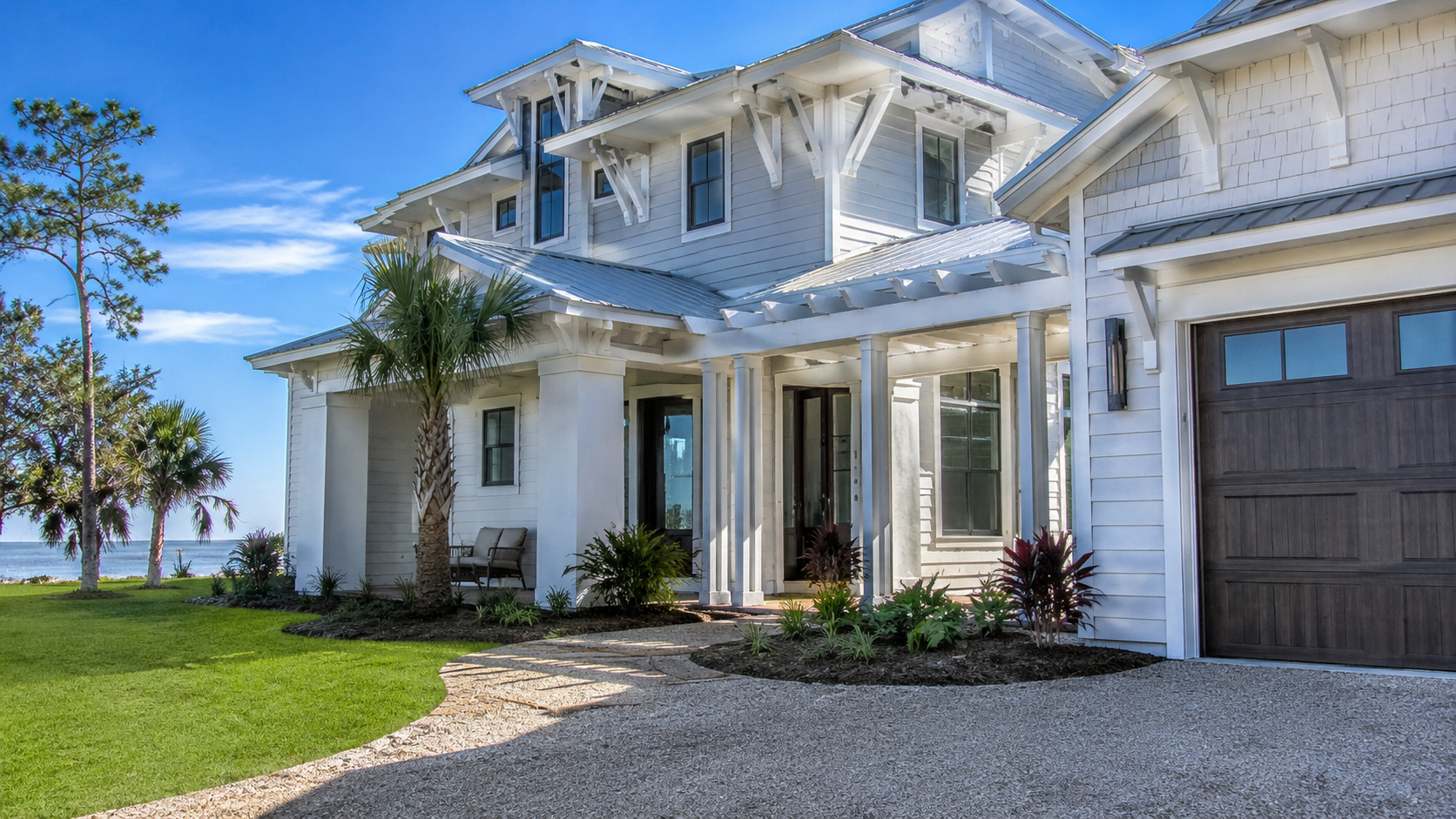
Full House Remodeling Long Term Maintenance Starts at Specification
Every material selection made during a whole-home renovation is also a maintenance decision with a recurring cost attached. Interior-grade hardware in a coastal house becomes an annual replacement item. A standard carbon-steel fastener behind a coastal cladding assembly becomes a structural problem within a decade. An HVAC system sized purely on square footage without regard to latent load becomes a humidity complaint that no amount of thermostat adjustment resolves.
The productive question during specification is not simply what a material costs installed, but what it costs to own for fifteen years in this climate. That framing usually justifies stainless or hot-dip galvanized fasteners, coated hardware, closed-cell or properly detailed insulation assemblies, and equipment selected for dehumidification performance rather than cooling capacity alone.
What Florida Humidity Does to a Renovated House
Humidity is a year-round load in Northeast Florida, not a summer one. It drives moisture into assemblies whenever indoor conditions are cooler than outdoor conditions, which is most of the year. In a renovated house the consequences show up in predictable places.
Wood movement and finish failure. Interior wood expands and contracts with indoor relative humidity. Trim joints open, doors bind seasonally, and wide-plank flooring cups or gaps if it was installed without acclimation or without a correct moisture barrier over a slab. Keeping indoor humidity in a stable 45 to 55 percent band prevents most of this.
Mold and microbial growth. Growth needs sustained surface moisture, and the reliable sources are unconditioned humid air reaching cool surfaces, undersized or oversized cooling equipment that short-cycles without dehumidifying, and small plumbing or envelope leaks that go unnoticed inside a wall. A renovation that tightened the envelope without adding controlled ventilation and dehumidification can be worse in this respect than the house it replaced.
Corrosion of concealed metal. Fasteners, strapping, hangers, and duct components corrode faster in humid air even well inland. Where dissimilar metals contact each other in a damp assembly, galvanic corrosion accelerates the process further.
What Salt Air Does Differently Near the Coast
Salt aerosol is deposited on every exposed surface and is hygroscopic, meaning it pulls moisture out of the air and keeps surfaces damp long after rain has stopped. The result is a corrosion rate that can run several times higher than inland at the same humidity. Exposure falls off with distance from the water, but in Jacksonville Beach, Ponte Vedra, and along the Intracoastal it is a design condition, not a footnote.
The components that fail first are consistent: exterior light fixtures, door and gate hardware, railing connections, garage door tracks and springs, hurricane shutter hardware, outdoor kitchen and grill components, pool equipment, and — most consequentially — the outdoor condensing unit of the air conditioning system, where salt attacks the coil fins and shortens equipment life substantially.
The countermeasures are unglamorous and effective. Rinse exposed hardware and the condenser coil with fresh water regularly. Specify marine-grade stainless, powder-coated aluminum, or composite in place of plated steel. Use coastal-rated equipment packages where they are offered. Maintain coatings on schedule rather than after visible failure, since a coating is protecting the substrate long before it looks worn.
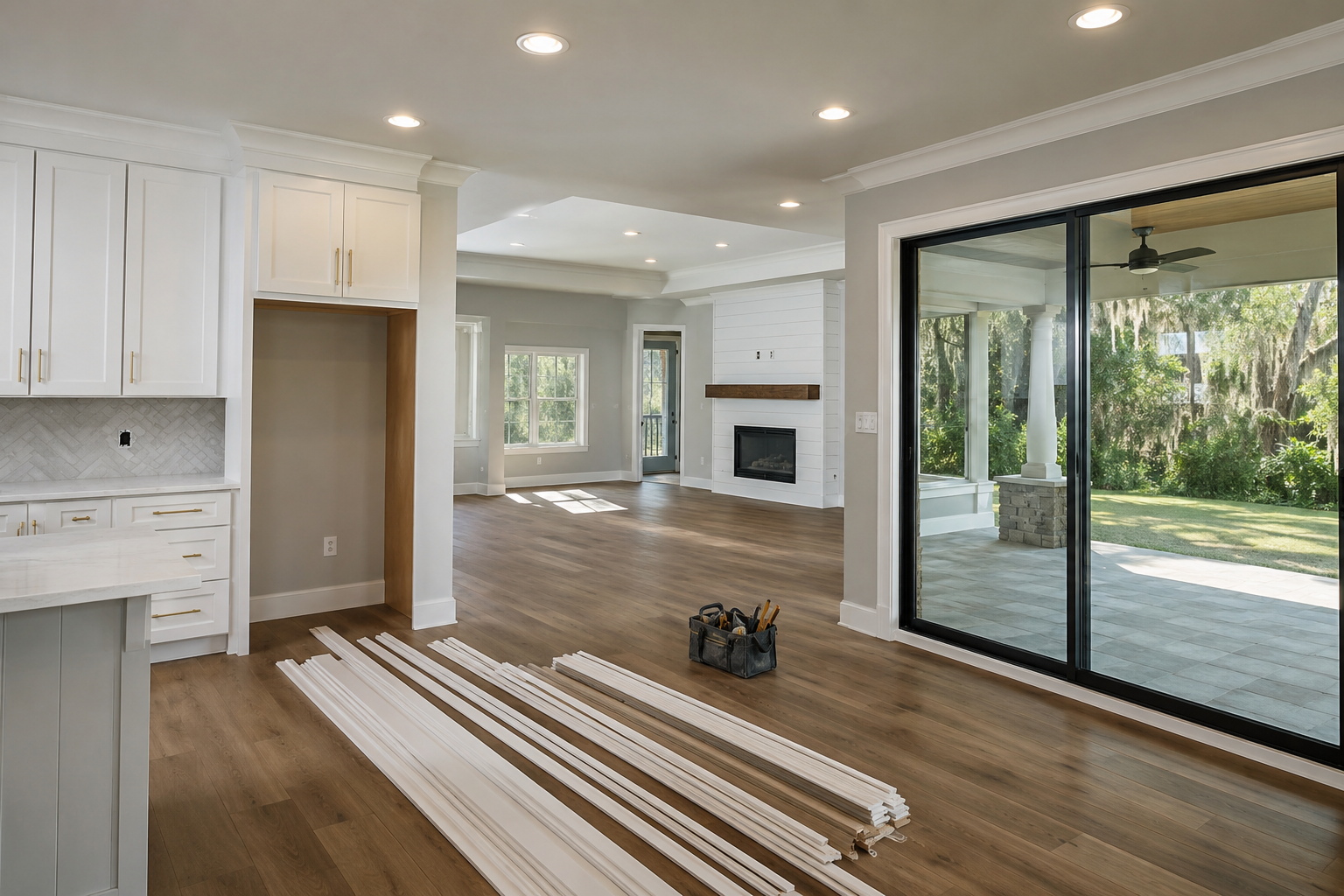
A Realistic Maintenance Calendar
Monthly to quarterly. Change or clean HVAC filters, which is the single highest-value habit in this climate. Confirm indoor relative humidity is holding in the target band. Rinse coastal hardware and the condenser coil with fresh water. Clear the condensate drain line, which is the most common cause of an emergency water event in a Florida house.
Twice yearly. Professional HVAC service before the cooling season and again before winter operation, including coil cleaning and refrigerant charge verification. Clean gutters and confirm downspouts discharge away from the foundation. Inspect exterior caulking and sealant joints at windows, doors, and penetrations, which fail from ultraviolet exposure long before the surrounding materials do. Check weatherstripping and door sweeps.
Annually. Inspect the roof and all flashings, ideally after storm season. Wash exterior surfaces to remove salt and biological growth. Inspect the attic for staining, compressed or displaced insulation, and daylight at penetrations. Service the water heater. Verify irrigation is not spraying the structure, which is a surprisingly common cause of persistent wall moisture. Test and reset ground-fault and arc-fault protection.
Every three to seven years. Reseal or refinish exterior wood and metal per the coating manufacturer’s schedule. Reapply grout sealer and re-caulk wet-area transitions. Reassess exterior paint, which in full sun and salt exposure has a materially shorter service life than the same product inland. Have the electrical panel and any surge protection inspected.
The Envelope: Where Maintenance Pays for Itself
Roof, windows, doors, and cladding are the assemblies where deferred maintenance turns into structural repair. A failed sealant joint at a window head admits water into a wall cavity where it is invisible for months. A lifted flashing at a roof-to-wall intersection does the same. Because these failures are hidden, they are found by inspection rather than by symptom, which is precisely why an annual walk matters more here than in a drier climate.
Renovations that upgraded the envelope for storm resistance also created a maintenance obligation, since impact-rated openings, shutters, and tie-down hardware all require periodic verification to keep performing — and, in many cases, to keep qualifying for the credits that reduced the premium. That relationship is covered in our guides to wind mitigation under Jacksonville code and to how a whole-home renovation affects Florida insurance premiums.
Mechanical Systems and Moisture Control
The air conditioning system in a Florida house is a dehumidifier that also cools, and specifying it as though cooling were the only job is the root of most comfort complaints in renovated homes. An oversized system satisfies the thermostat quickly, shuts off before it has removed meaningful moisture, and leaves the house cold and clammy. Variable-capacity equipment, correct duct design, and in tighter houses a dedicated dehumidifier are what hold humidity stable through shoulder seasons when cooling loads are low but moisture loads are not.
Duct sealing deserves specific attention. Leaky ducts in an unconditioned attic draw humid air into the system and lose conditioned air out of it, which raises both the energy bill and the indoor moisture level at once. If a renovation touched the duct system, its performance should have been verified by test rather than assumed.
Documentation, Warranties, and Who Is Responsible
A whole-home renovation generates warranties with different terms and different holders: the contractor’s workmanship warranty, manufacturer warranties on roofing, windows, and equipment, and Florida’s statutory implied warranties. Most manufacturer warranties are conditional on documented maintenance, and a roof or equipment claim is routinely denied for lack of service records. Keep a folder with model and serial numbers, product approval documentation, paint and finish specifications, and dated service records — it is the difference between a covered claim and an argument. The statutory side is covered in our guide to warranty coverage under Florida statute.
Building code editions and product approval documentation are published by the Florida Building Commission, and any Florida contractor’s license can be verified through the Florida DBPR license portal before you hire.
Ofir Engineering is a licensed Florida general contractor (License #CGC 1540016) with 15+ years serving Jacksonville, Ponte Vedra, St. Johns, and Northeast Florida. If you are planning a whole-home renovation in Jacksonville, Ponte Vedra, or St. Johns and want materials and systems specified for the maintenance load this climate actually imposes, review our whole home remodeling services or contact Ofir Engineering to talk through your house and its exposure.
Frequently Asked Questions
What maintenance does a whole-home renovation need in Florida humidity?
The recurring items are HVAC filter changes and twice-yearly professional service, condensate drain clearing, keeping indoor relative humidity between roughly 45 and 55 percent, annual roof and flashing inspection, semiannual inspection of exterior sealant joints, and periodic attic checks for staining or displaced insulation. Humidity control is the single highest-leverage habit.
How much faster do materials fail in coastal salt air?
Corrosion rates near the ocean can run several times higher than inland at the same humidity, because salt deposits hold moisture on surfaces between rains. The first casualties are exterior hardware, light fixtures, railing connections, shutter hardware, and the outdoor air conditioning condenser. Rinsing with fresh water and specifying marine-grade materials are the effective countermeasures.
Which renovation choices reduce long-term maintenance the most in Northeast Florida?
Stainless or hot-dip galvanized fasteners and coastal-rated hardware, impact-rated openings with properly detailed flashing, correctly sized variable-capacity HVAC with verified duct sealing, dehumidification capacity for shoulder seasons, and exterior finishes rated for ultraviolet and salt exposure. Each costs more installed and less to own.
How often should exterior finishes be redone on a coastal Florida home?
Shorter intervals than manufacturer literature suggests for milder climates — commonly three to seven years for exterior wood and metal coatings, and sooner on fully exposed elevations facing the water. Recoat on schedule rather than after visible failure, since the coating stops protecting the substrate well before it looks worn out.
Do maintenance records affect renovation warranties?
Yes, substantially. Most manufacturer warranties on roofing, windows, and mechanical equipment are conditional on documented maintenance, and claims are routinely denied when service records are missing. Keep model and serial numbers, product approval documents, finish specifications, and dated service records together from the day the renovation is completed.
Keep Building With Ofir Engineering
Related discussions & follow us: Facebook · Reddit
Latest & related guides: Explore more Whole Home Remodeling guides →
