
Metal frame homes resale value in Northeast Florida is decided by three things that have very little to do with the steel itself: whether the appraiser can find comparable sales, whether the buyer understands what they are buying, and whether the documentation proves the structure was engineered and inspected properly. Steel framing is durable, termite-proof, and dimensionally stable, but resale is a market question rather than an engineering one — and owners who plan for it from the design stage recover far more than owners who assume the material sells itself. Ofir Engineering is a licensed Florida general contractor (License #CGC 1540016) serving Jacksonville, Ponte Vedra, St. Johns County, and Northeast Florida.
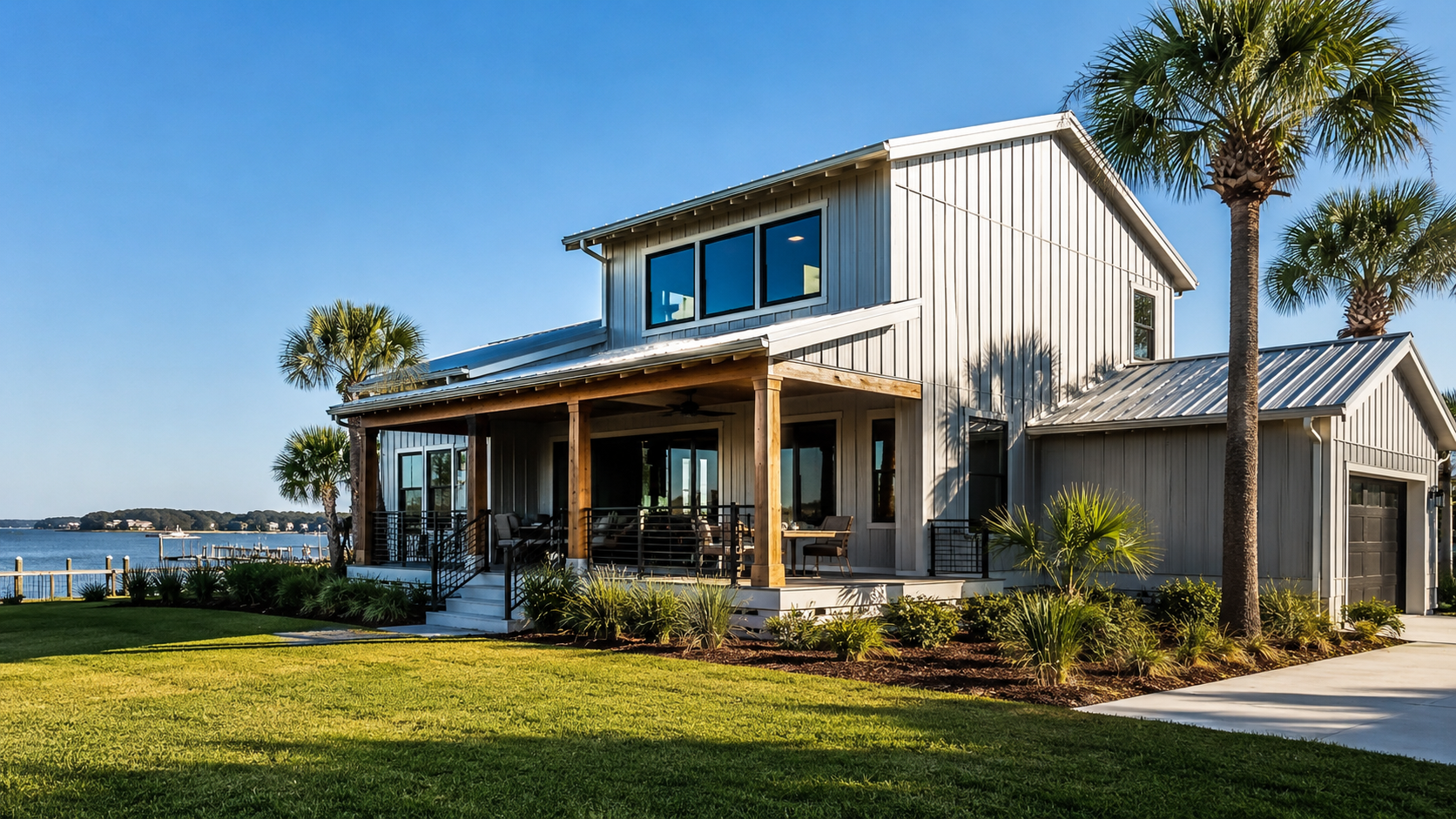
What Metal Frame Homes Resale Value Actually Depends On
An appraisal is not a materials review. An appraiser establishes value by finding recent sales of similar homes in a similar location, then adjusting for differences in size, condition, age, and features. Structure type enters that calculation only when the market has demonstrably paid differently for it. In practice this means the strongest lever on resale is not the steel — it is the quality of the home wrapped around it: layout, finish level, lot, school zone, and condition.
Where structure does move the number, it moves through consequences the market prices readily: lower insurance premiums, verified wind performance, absence of termite or rot history, and the straightness of walls and ceilings in a ten-year-old house. Those are the outcomes an owner should be able to evidence at sale, because they are what a buyer’s lender and insurer respond to.
How Appraisers Treat Steel Framing in Practice
Most Northeast Florida appraisers work in a market dominated by concrete block and wood framing. A light-gauge steel home is not unusual enough to alarm anyone, but it may be unusual enough that the appraiser has no direct comparable sale. When that happens, the appraiser will value the home against block and frame comps and make no positive adjustment for the structure. That is a neutral outcome, not a penalty — but it is why owners should not expect the framing alone to add a premium line item.
What can create a negative adjustment is ambiguity. If the appraiser or the buyer’s inspector cannot tell what was built, whether it was engineered, or whether corrosion protection was specified for a coastal site, uncertainty gets priced in as risk. Keeping the engineered drawings, the connector and fastener specifications, the permit record, and the inspection sign-offs in one package converts that uncertainty into a documented asset.
Where Steel Framing Adds Measurable Value
Condition at ten and twenty years. Steel does not warp, twist, shrink, or feed termites. Doors that still close, tile that has not cracked along a flexing floor, and drywall without nail pops read to a buyer as a well-built home, and condition is one of the largest single adjustments in any appraisal.
Insurance and wind mitigation. Florida insurers price the continuous load path, roof-to-wall connections, and opening protection. A steel-framed home with engineered connections and a completed wind mitigation inspection typically documents those features cleanly. Lower carrying cost raises what a buyer can afford to pay for the same monthly payment.
Absence of a damage history. Termite treatment records, rot repairs, and moisture claims all suppress price. A structure that has none of them enters the market with a shorter list of buyer objections.
Clear spans and layout. Steel allows longer spans and more open plans without heavy interior bearing walls. Open living space is one of the most consistently valued attributes in the Jacksonville resale market.
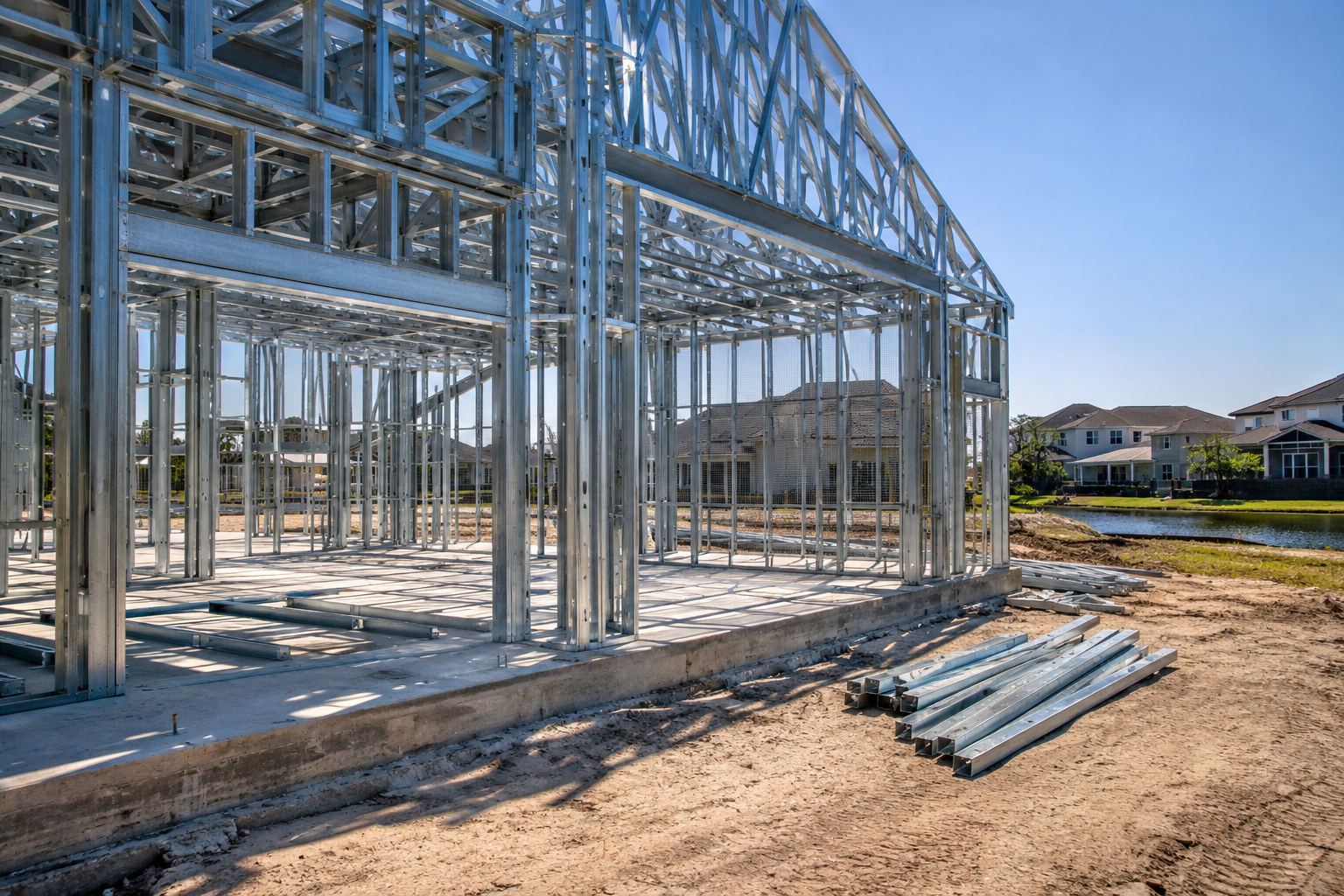
Insurance, Carrying Cost, and the Buyer’s Real Budget
In coastal Florida, insurance is no longer a footnote in a buyer’s decision. Two otherwise identical homes with a meaningful annual premium difference do not compete on equal terms, because the buyer qualifies against the total monthly payment. Anything that reduces premium — verified roof attachment, secondary water resistance, opening protection, documented construction type — quietly increases the pool of buyers who can afford the house.
This is the most reliable channel through which construction quality becomes resale value in Northeast Florida, and it is entirely dependent on paperwork. A wind mitigation report that a seller can hand to a buyer’s agent on day one is worth more than a verbal description of how well the home was built. Homeowners can confirm any contractor’s license and disciplinary record through the Florida Department of Business and Professional Regulation before hiring, and should keep that record with the closing file.
What Reduces Resale Value on a Steel-Framed Home
Three problems account for most of the discount owners encounter. The first is unprotected metal on a coastal site — corrosion at fasteners, straps, and exposed connectors is visible, alarming to inspectors, and expensive to remediate. The second is undocumented modification: a wall removed or an opening cut without engineering turns a strong structure into an open question during due diligence. The third is thermal detailing done poorly. Steel conducts heat, so a wall assembly built without continuous exterior insulation can show higher energy bills and, in bad cases, condensation staining that a buyer will read as a moisture problem.
Each of these is a construction decision, not a material flaw, which is the practical argument for building with a contractor who details steel correctly the first time. Our approach to steel frame construction is built around corrosion-rated components, engineered connections, and continuous insulation specified for the Northeast Florida climate.
How to Protect Resale Value From the Design Stage
Specify corrosion-rated fasteners, straps, and hardware for any site within reach of salt air, which extends considerably further inland than most owners assume. Require continuous exterior insulation so the thermal performance is not compromised at every stud. Keep the engineered drawings, connector schedule, and permit history as a single handover package rather than a box of receipts. Complete a wind mitigation inspection while the construction record is fresh. And avoid finishes so specific to one taste that they narrow the buyer pool — resale rewards quality that a wide market recognises, not personalisation.
Owners weighing structure types before design should read our comparison of framing systems alongside the ground-up process on our new construction page, or contact Ofir Engineering to review a specific lot and budget.
Frequently Asked Questions
Do metal frame homes appraise lower than block or wood-framed homes in Florida?
Not inherently. Appraisers value comparable sales, condition, and location rather than framing material. A steel-framed home usually appraises in line with equivalent block and frame homes, and can appraise above them when condition and documented wind performance are strong.
Does steel framing lower homeowners insurance in Northeast Florida?
It can, indirectly. Insurers price the roof attachment, continuous load path, and opening protection recorded on a wind mitigation inspection. Steel framing with engineered connections documents those features well, and a lower premium raises what buyers can afford to pay.
Will buyers hesitate over a steel-framed house?
Some will ask questions, which is why documentation matters. Engineered drawings, permit records, corrosion specifications, and inspection sign-offs answer the objection immediately. Ambiguity, not steel, is what costs money at closing.
What is the biggest threat to resale value on a steel-framed Florida home?
Corrosion at exposed connectors on a coastal site, followed by structural modifications made without engineering. Both are preventable at construction and both are expensive to resolve once a buyer’s inspector has flagged them.
Keep Building With Ofir Engineering
Related discussions & follow us: Facebook · Reddit
Latest & related guides: Explore more Steel Frame Construction guides →
