A high end home builders schedule is not one number, it is a sequence of milestones, each with its own dependencies and its own way of slipping. Homeowners planning a custom residence in Jacksonville usually ask how long it takes and receive an answer that is either uselessly vague or confidently wrong. The more useful answer describes the stages, what governs the pace of each, and where the real risk to the completion date actually sits. Ofir Engineering is a licensed Florida general contractor (License #CGC 1540016) building custom and luxury homes across Jacksonville, Ponte Vedra, St. Johns County, and Northeast Florida.
What a High End Home Builders Schedule Looks Like End to End
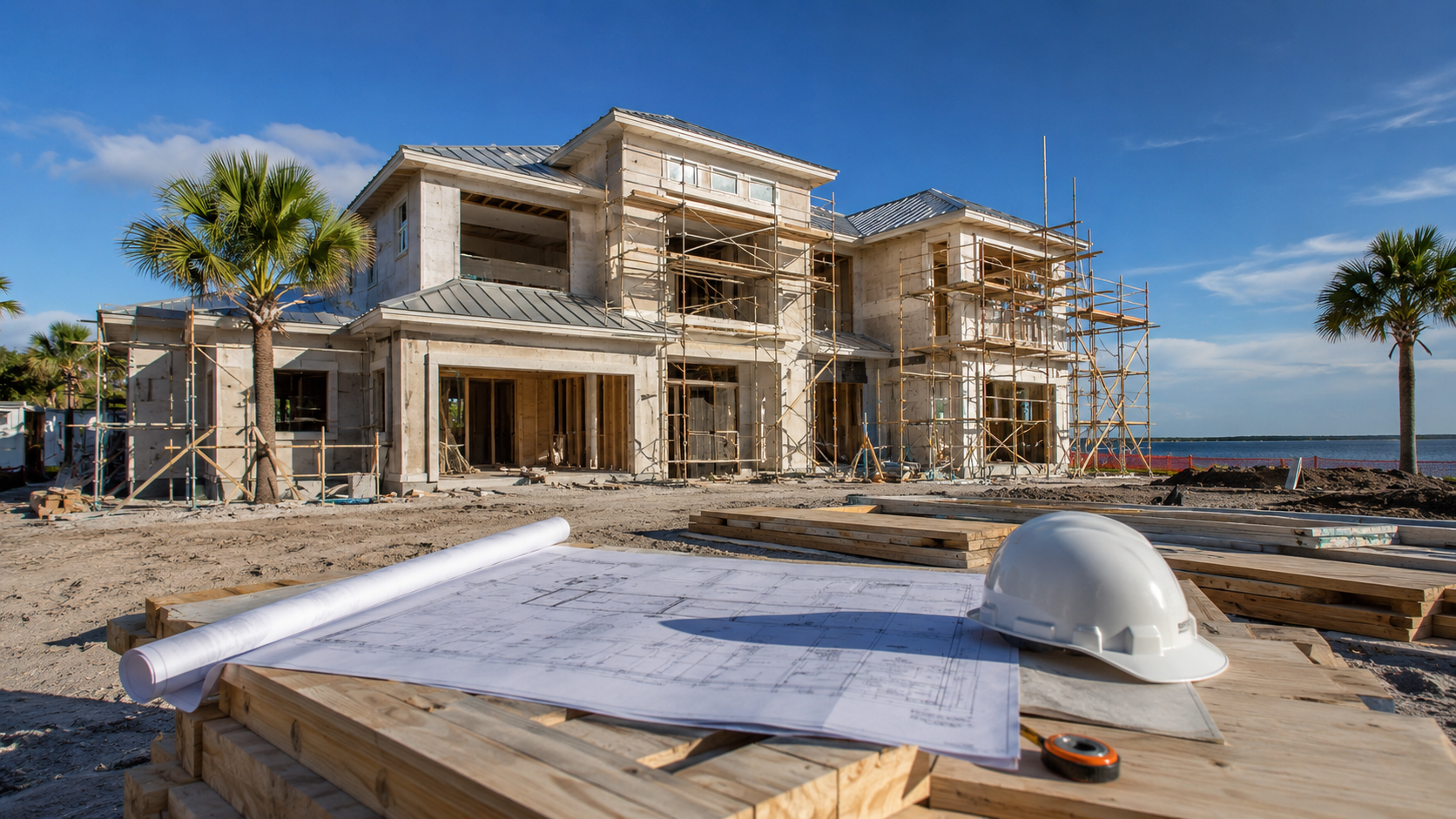
For a genuinely custom, high-specification residence in Northeast Florida, the honest overall range is roughly eighteen months to three years from first design conversation to move-in, with construction itself commonly running twelve to twenty-four months. That range is wide because it is driven by things that vary enormously between projects: the complexity of the design, the difficulty of the site, the responsiveness of the client during selections, and the availability of the specialised trades a high-end home depends on.
What follows is the sequence. The durations are typical rather than promised, and a builder should be able to give you a project-specific schedule after design is settled.
Stage One: Design and Pre-Construction
Architectural design for a custom residence commonly runs three to nine months. Structural and civil engineering, interior design, and landscape design overlap the later part of it. This stage is slow because it is where decisions are genuinely being made, and rushing it simply relocates the delay into construction, where changes cost far more.
Running in parallel, pre-construction covers site investigation, geotechnical work, budgeting, value engineering, and long-lead procurement planning. On a high-end home this last item is critical. Specialised windows, custom millwork, imported stone, elevators, and high-specification mechanical equipment carry lead times measured in months, and ordering them late is one of the most common reasons a luxury build finishes behind schedule.
Stage Two: Permitting
Permitting for a custom home in Duval or St. Johns County commonly takes two to four months, and longer where additional review layers apply. Coastal construction, flood zone requirements, environmental review, and architectural review board approval in a gated or deed-restricted community can each add weeks. Ponte Vedra and comparable communities routinely have their own review process that runs before or alongside the municipal one.
A complete, code-ready submittal clears review far faster than one that generates comments. This is where an experienced local builder measurably shortens the schedule. Current code requirements are published by the Florida Building Commission.
Stage Three: Site Work and Foundation
Typically one to three months. Clearing, grading, drainage, utility runs, and the foundation itself. Northeast Florida’s sandy soils, high water table, and flood elevation requirements shape the design here, and geotechnical findings can change the foundation approach entirely. Weather has more influence at this stage than any other.
Stage Four: Structure, Envelope, and Dry-In
Typically three to six months. Framing, roof structure, roofing, windows and exterior doors, and exterior cladding. Dry-in — the point at which the building is weather-tight — is the milestone that matters most psychologically and practically, because it decouples the interior schedule from the weather.
Window delivery is the classic critical-path item on a luxury home. High-performance impact-rated units in custom sizes are not stock items, and a late window package holds up dry-in, which holds up everything after it.
Stage Five: Rough-In and Inspections
Typically two to four months. Electrical, plumbing, mechanical, and the low-voltage and automation systems that a high-end home carries in volume. Each trade must be inspected before insulation and drywall conceal the work.
Coordination is the whole game here. A luxury residence packs structured wiring, audio-visual, security, lighting control, and sophisticated mechanical zoning into the same cavities, and sequencing those trades so they do not fight each other is a project management problem rather than a construction one. Poor coordination at rough-in produces rework that is invisible on a schedule until it is a month late.
Stage Six: Interior Finishes
Typically four to eight months, and the stage most likely to expand. Drywall, millwork, flooring, tile, cabinetry, stone, specialty plaster and paint, fixtures, and appliances. High-end finish work is slow by nature — it is craft labour executed to a tolerance that takes time — and it depends on materials that have already been ordered correctly.
The dominant schedule risk at this stage is the client. Selections made late, or changed after fabrication has begun, translate directly into weeks. A builder who forces selections to be locked before construction starts is protecting your completion date, not being inflexible.
Stage Seven: Closeout and Handover
Typically one to two months. Final inspections, Certificate of Occupancy, systems commissioning and balancing, landscape and hardscape completion, punch list, and owner orientation. Commissioning matters more on a high-end home than most owners expect: complex mechanical and automation systems need to be tuned and documented rather than simply switched on.
What Actually Protects the Completion Date
Three things, consistently. Complete design before construction starts, because changes cost time at a multiple once the structure is up. Early procurement of long-lead items, ordered against a schedule rather than as they come to mind. And decisive clients, since the single most common source of luxury build delay is not the builder or the building department, but selections that arrive late.
You can see how we manage this process on our luxury home builder page, review the wider ground-up process under new construction, or contact Ofir Engineering to discuss a realistic schedule for your site and scope.
Frequently Asked Questions
How long does a high end custom home take to build in Jacksonville?
Construction alone commonly runs twelve to twenty-four months, and eighteen months to three years from the first design conversation through move-in. The spread depends on design complexity, site conditions, permitting layers, and how quickly selections are finalised.
Which stage most often causes delays?
Interior finishes, usually because of late or changed selections and long-lead materials that were ordered too late. Permitting and window delivery are the other two recurring culprits, and all three are largely controllable during pre-construction.
Can a luxury home be built faster by overlapping stages?
To a degree. Design disciplines can overlap, procurement can run alongside permitting, and some trades can work concurrently. But the physical sequence of foundation, structure, dry-in, rough-in, inspection, and finish cannot be compressed without creating rework, which costs more time than it saves.
What should a builder give me before construction starts?
A milestone schedule tied to your specific design and site, a long-lead procurement list with order-by dates, and a selections deadline calendar. If a builder cannot produce those three documents, the schedule you have been quoted is an estimate rather than a plan.
Keep Building With Ofir Engineering
Related discussions & follow us: Facebook · Reddit
Latest & related guides: Explore more Luxury Home Builder guides →
