
High end home builders long term maintenance planning is the part of a luxury project that gets the least attention and produces the most expensive regrets. In Northeast Florida the enemies are humidity, wind-driven rain, ultraviolet exposure, and — within a few miles of the Atlantic or the Intracoastal — airborne chloride. Those conditions do not damage a house evenly; they attack specific assemblies on a predictable schedule. Ofir Engineering is a licensed Florida general contractor (License #CGC 1540016) building and maintaining custom homes across Jacksonville, Ponte Vedra Beach, Amelia Island, and St. Johns County.

What High End Home Builders Long Term Maintenance Documentation Should Include
A luxury home is a collection of engineered systems, many of them proprietary, most of them carrying warranties that are conditional on documented upkeep. The handover package is what makes those warranties enforceable years later, and it should exist as an organized digital archive rather than a box of paper.
At minimum it should contain the as-built drawings and any approved revisions; the full submittal and product data set with model numbers, finishes, and colors for every specified item; every manufacturer warranty with its registration confirmation and its specific maintenance conditions; a consolidated maintenance calendar by system; the commissioning and balancing reports for mechanical systems; and a subcontractor and supplier directory naming the people who actually installed the work. Photographs taken before drywall — showing framing, connectors, plumbing, electrical, and low-voltage runs — are worth more than any other single document a decade later, when someone needs to know what is behind a wall.
The gap that causes most disputes is the conditional warranty. Many high-end products carry coverage that lapses if a stated service interval is missed, and homeowners are rarely told which ones. Those conditions belong in a plain-language summary, not buried in a PDF.
The Building Envelope Comes First
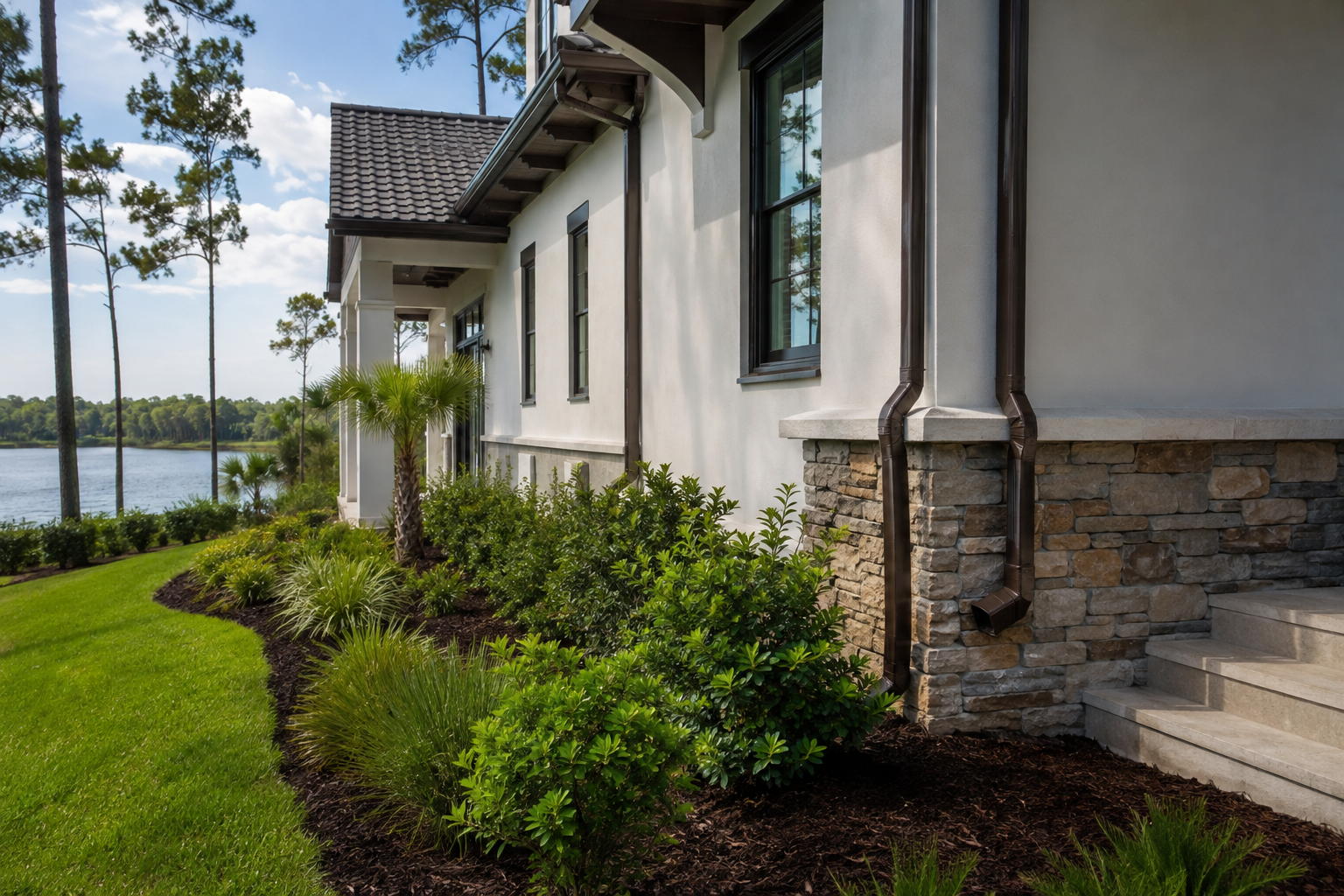
Water and air intrusion cause more damage to Florida homes than any other mechanism, and the envelope is where a maintenance program earns its keep.
Roofing should be inspected at least annually and after any named storm. On tile, the failure is usually the underlayment rather than the tile, which means a roof that looks perfect from the street can be at the end of its waterproofing life. Flat and low-slope sections, valleys, and every penetration deserve specific attention.
Sealants and flashing are consumables. Exterior sealant joints at windows, doors, control joints, and dissimilar-material transitions degrade under ultraviolet exposure and thermal cycling, and they are the most common entry point for water in an otherwise sound home. Budget for periodic replacement rather than treating it as a defect.
Windows and doors in impact-rated assemblies need their weep holes kept clear, their gaskets inspected, and — near the coast — their hardware and tracks rinsed and lubricated. Blocked weeps are a leading cause of sill rot in expensive units.
Stucco and cladding should be checked for cracking at corners and openings, and painted or elastomeric coatings treated as a scheduled recoat rather than a one-time finish. Site drainage matters as much as anything on the building: clogged gutters, blocked area drains, and grade that has settled toward the house undo good detailing quickly.
Humidity, Mechanical Systems, and Indoor Air
Florida’s real mechanical challenge is latent load — removing moisture, not just heat. A luxury home with a tight envelope, high ceilings, generous glazing, and long unoccupied periods can develop humidity problems that a conventional thermostat schedule will never reveal.
The controls should manage humidity directly, holding relative humidity in roughly the 45 to 55 percent range rather than relying on temperature alone. Homes used seasonally need a specific unoccupied strategy: a setback that continues to dehumidify, ideally with remote monitoring and an alert if humidity or temperature drifts. Whole-house dehumidification is often the right answer in a very tight home, and where it exists it needs its own service interval.
Beyond that, filters need changing on a real schedule, condensate drains need clearing before they back up into a ceiling, duct systems should be verified for leakage, and mechanical ventilation — required in tight construction — should be confirmed as actually operating. Pool enclosures, wine rooms, and conditioned garages each add their own moisture load and their own maintenance obligations.
Salt Air: The Coastal Multiplier
Within a few miles of the ocean, airborne chloride accelerates corrosion dramatically, and the effect is strongly distance-dependent. This is where specification decisions made during construction determine maintenance cost for decades.
Exterior metals — railings, light fixtures, hardware, hinges, fasteners, and outdoor kitchen components — should be specified for the actual exposure, and even correctly specified stainless benefits from routine fresh-water rinsing to remove surface deposits. Exposed fasteners and connectors deserve periodic inspection; corrosion at a connector is a structural issue, not a cosmetic one. Outdoor mechanical equipment, including condensing units, pool equipment, and generators, may warrant coastal-rated coatings and more frequent service near the water. Even glass can develop permanent etching if salt spray is left to dry repeatedly.
Interior finishes carry their own rhythm: natural stone needs periodic sealing, hardwood needs stable humidity to avoid movement, and millwork in a humid climate benefits from the same stability. Landscape irrigation aimed at the house is a surprisingly common and entirely avoidable source of damage.
A Realistic Service Cadence
A workable program is monthly for filters and visual checks; quarterly for HVAC service, coastal rinsing, and sealant review; semiannual for roof and drainage inspection and mechanical servicing; and annual for a full envelope walk, generator and pool system service, and a documented condition report. After any named storm, the roof, envelope, and drainage get an unscheduled inspection regardless of where they fall in the calendar. Storm preparation guidance for Northeast Florida homeowners is published by the Florida Division of Emergency Management.
Owners planning a coastal build can review how we specify for these conditions on our luxury home builder page, see the same standards applied to ground-up work in custom home construction, or contact Ofir Engineering to discuss a maintenance program for an existing home.
Frequently Asked Questions
What should a builder hand over at closing besides the keys?
As-built drawings, the complete submittal and product data set, every registered manufacturer warranty with its maintenance conditions stated plainly, commissioning and balancing reports, a maintenance calendar by system, a subcontractor directory, and pre-drywall photographs of the concealed work.
How does salt air change maintenance requirements?
Airborne chloride accelerates corrosion of exterior metals, hardware, fasteners, and mechanical equipment, and the effect increases sharply closer to the water. Coastal homes generally need routine fresh-water rinsing, more frequent inspection of exposed connectors, and coastal-rated equipment and coatings.
What humidity level should a Florida luxury home hold?
Roughly 45 to 55 percent relative humidity is a reasonable target. Controlling humidity directly matters more than temperature alone, particularly in tight, seasonally occupied homes where a conventional setback can allow moisture to climb unnoticed.
Can deferred maintenance void a warranty?
Frequently, yes. Many high-end products and assemblies carry warranties conditioned on documented service at stated intervals, and roofing, mechanical equipment, and coatings are common examples. Keeping dated service records is what makes a claim enforceable years later.
Keep Building With Ofir Engineering
Related discussions & follow us: Facebook · Reddit
Latest & related guides: Explore more Luxury Home Builder guides →
