
Custom built homes resale value follows a rule that surprises most first-time custom clients: the market pays for quality it can verify and layout it can use, and it pays almost nothing for decisions that only made sense to the person who made them. In Northeast Florida that distinction is sharper than in most markets, because insurability, elevation, and construction standard are priced explicitly by every buyer and every carrier. A custom home built with those factors in mind holds its price extremely well. One built purely around personal preference does not. Ofir Engineering is a licensed Florida general contractor (License #CGC 1540016) with 15+ years serving Jacksonville, Ponte Vedra, St. Johns, and Northeast Florida.
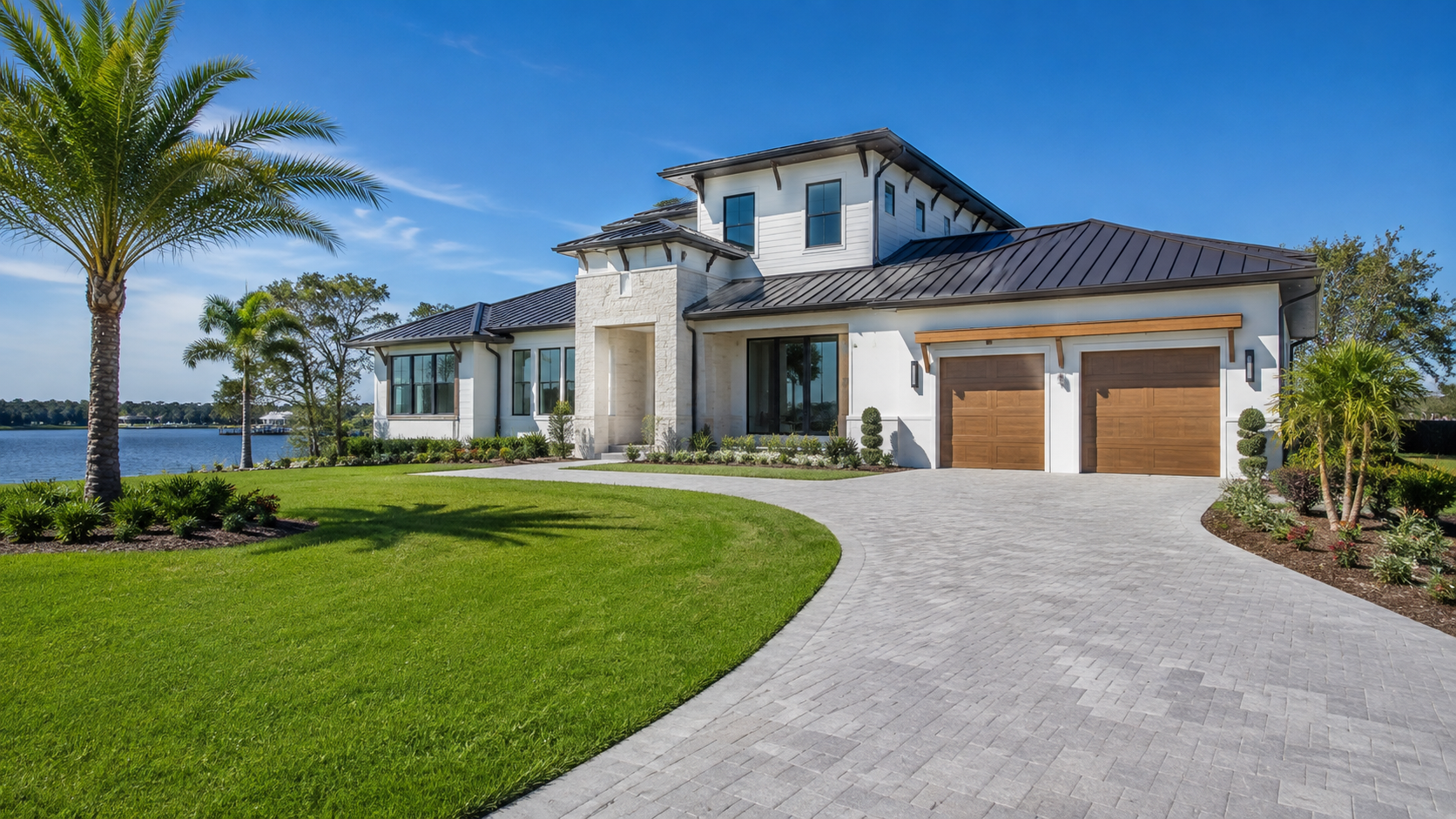
Why Custom Built Homes Resale Value Behaves Differently From Production Homes
A production home is valued against a wall of near-identical comparable sales. The appraiser has ten data points and the range is tight. A custom home has no direct comparable, so its value is assembled from adjustments — square footage, lot, quality grade, condition, and features — applied to whatever the appraiser can find nearby.
That mechanism has a consequence worth understanding before design. Quality that is documented and standard-recognisable — construction type, roof system, opening protection, elevation, energy performance — translates into adjustments. Quality that is invisible or idiosyncratic does not translate at all, because there is no line on the form for it. This is not a flaw in the process so much as a reality to design around.
The second difference is buyer pool. A custom home sells to whoever wants that specific house. The more the plan reflects universal needs, the larger that pool; the more it reflects one household’s habits, the smaller. Price follows pool size with remarkable consistency.
The Decisions That Hold Their Price
Structural system and envelope. In this climate the construction type is a value statement. Concrete block, engineered light-gauge steel, or a properly detailed frame with a compliant envelope all read as durability to a buyer who has watched a hurricane season here. Documentation of the system and its ratings is part of what makes it count.
Elevation and flood position. A home built above the base flood elevation with the finished elevation certificate on file is materially easier to insure and to sell. On coastal and riverfront property in Northeast Florida this is one of the largest single value factors, and it is fixed at design.
Opening protection and roof system. Impact-rated openings, documented roof-to-wall connections, and a modern roof covering feed directly into wind-mitigation credits. Those credits transfer to the buyer, and a lower insurance carrying cost supports a higher price.
Layout fundamentals. A genuine primary suite, a usable secondary bedroom count, real storage, a functional flow between indoor and covered outdoor space, and a garage sized for how people here actually live. These are boring and they hold value indefinitely.
Lot and orientation. The one decision that cannot be changed later. Lot quality, view, privacy, and orientation carry through every future sale regardless of what happens to the house.
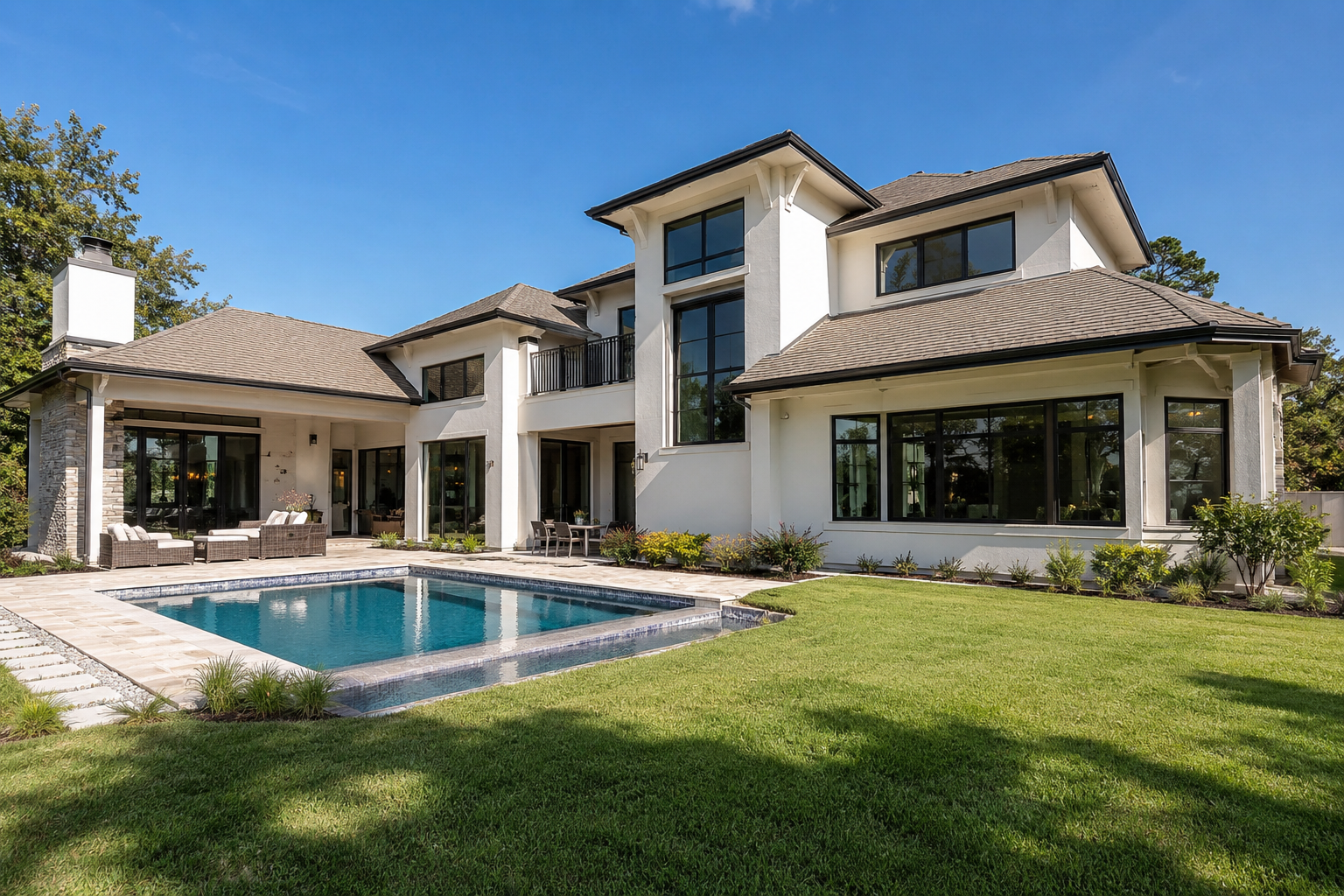
What Depreciates Fastest
Highly specific rooms are the clearest example. A space built around one hobby or one piece of equipment is functionally a bonus room to the next buyer, valued as square footage rather than as the thing it cost to build. Statement finishes age the same way — a dramatic material choice that defines the house in year one becomes the thing the next owner budgets to remove.
Over-building for the street is the second category, and it is the expensive one. A custom home substantially larger or more finished than everything around it cannot be appraised into a bracket its comparables do not support. The land carries some of it, but not all of it. Choosing the neighbourhood to match the house — rather than the other way round — is the fix, and it has to happen before the lot purchase.
The third is undocumented quality. Money spent on things nobody can verify at sale — premium components buried in walls, upgrades with no paperwork — is money that lives in your enjoyment of the house rather than in its price. That can be an entirely reasonable choice, but it should be a conscious one.
What Northeast Florida Buyers Price Explicitly
Four things come up in nearly every conversation here: what the insurance costs, what the roof is and how old, whether the property floods, and how the house handles humidity. A custom home that answers all four with documentation rather than reassurance sells faster and holds its number in negotiation. That is why the mitigation and elevation decisions made during design keep showing up in resale conversations a decade later.
Energy performance is rising on the list as well. Sustained cooling loads make efficiency a monthly, visible cost, and buyers increasingly ask for the numbers. National data on the characteristics and features of new residential construction is published by the U.S. Census Bureau and is a useful sanity check on which features are becoming standard rather than exceptional.
Designing a Custom Home That Sells Well Later
The practical approach is a two-tier budget. Tier one is everything structural, mechanical, and code-related — the decisions that are permanent, documented, and priced by the market. Fund that fully and do not economise. Tier two is finish and personalisation. Spend there for your own enjoyment, with clear eyes about the return.
Keep the documentation. Elevation certificate, wind mitigation form, permits and inspection records, warranty paperwork, and the specification for the structural and envelope systems. At resale that folder is the difference between claiming quality and proving it. If you are early in planning, our custom home construction page covers the process, our luxury home builder work covers the higher end of the market, and our guide to permit requirements in Duval County explains the documentation trail. To review your lot and programme against what the local market rewards, contact Ofir Engineering.
Frequently Asked Questions
Do custom homes hold their value better than production homes?
They can, but not automatically. Custom homes are appraised through adjustments rather than direct comparables, so documented, standard-recognisable quality — construction type, elevation, opening protection, energy performance — translates into value while idiosyncratic decisions largely do not.
What single design decision most affects a custom home’s resale value in Northeast Florida?
The lot, followed closely by elevation relative to the base flood elevation. Both are fixed at design and both drive insurability, which is the factor buyers in this market price first.
Can a custom home be too big for its neighbourhood?
Yes, and it is a costly error. An appraiser works from comparable sales in the same area, so a house well above its street cannot be valued into a bracket the comparables do not support. Match the neighbourhood to the house before you buy the lot.
What paperwork should I keep for resale?
The elevation certificate, the uniform wind mitigation verification form, permits and inspection records, warranties, and the specifications for the structural and envelope systems. At sale that documentation is what converts build quality into price.
Keep Building With Ofir Engineering
Related discussions & follow us: Facebook · Reddit
Latest & related guides: Explore more Custom Home Construction guides →
