
A commercial builder schedule in Jacksonville is not one number, it is a chain of milestones, and the only useful way to plan a project is to price the time each link takes rather than asking for a single completion date up front. Owners are usually quoted construction duration alone, which is the part a builder controls most tightly and the part that rarely causes the overrun. The time that decides whether a building opens on the date in your lease or your loan sits in design, permitting, and long-lead procurement, all of which happen before anyone breaks ground. Ofir Engineering is a licensed Florida general contractor (License #CGC 1540016) with 15+ years serving Jacksonville, Ponte Vedra, St. Johns, and Northeast Florida.
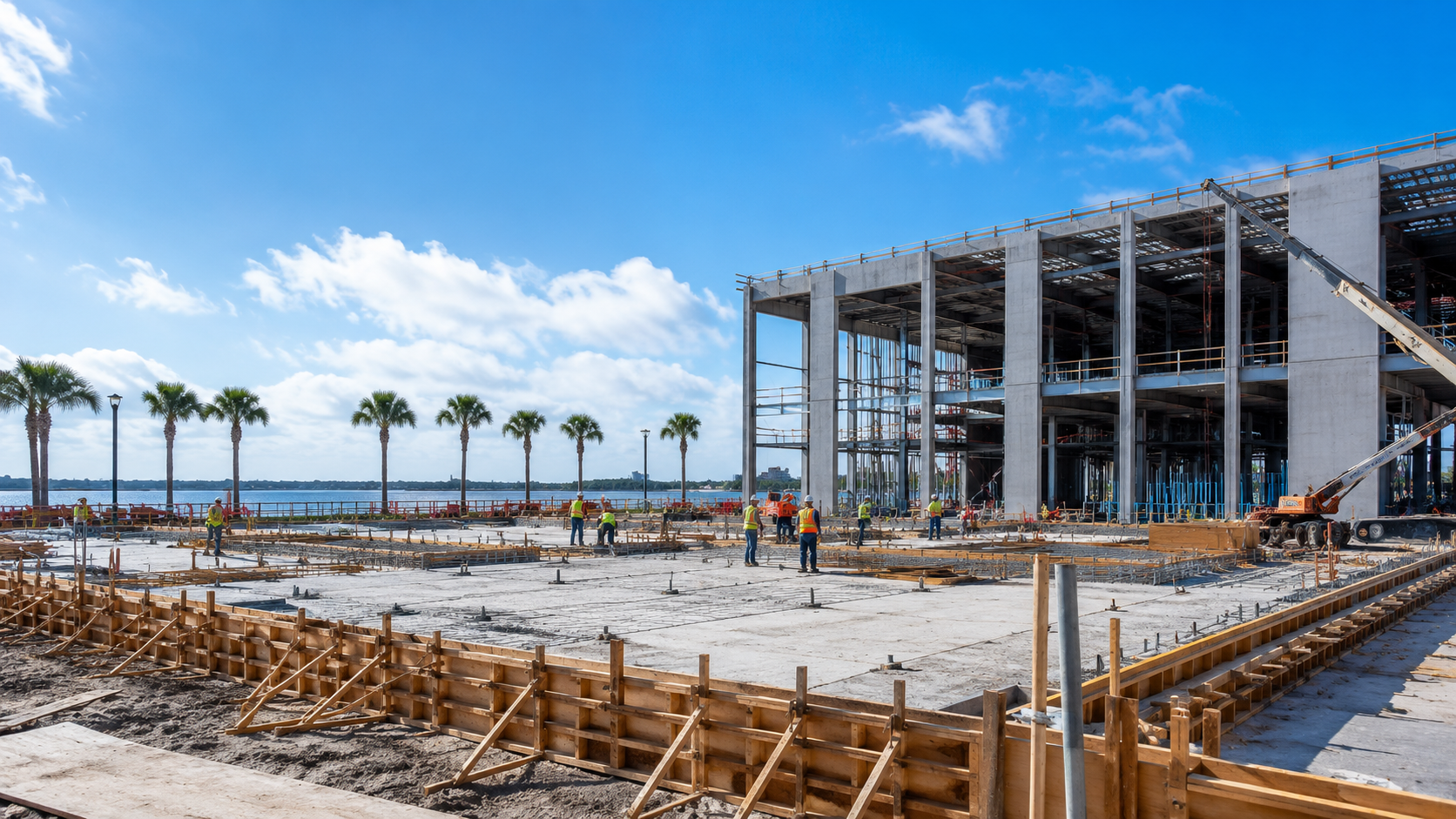
How a Commercial Builder Schedule Is Actually Structured
Every commercial project in Northeast Florida moves through the same seven milestones. What changes between a 6,000 square foot medical office and a 60,000 square foot distribution facility is the duration of each stage, not the sequence. The stages are pre-construction and design, permitting and agency review, site work and foundations, structure and dry-in, mechanical and electrical rough-in, interior build-out and finishes, then inspections and closeout to a Certificate of Occupancy.
Two of those milestones are largely outside the builder’s direct control. Permitting depends on a review authority’s queue and on the completeness of the drawings submitted. Procurement depends on manufacturers. A builder who tells you those stages are guaranteed is telling you what you want to hear; a builder who prices them honestly and starts them early is protecting your opening date.
Milestone 1 and 2 — Pre-Construction and Permitting
Pre-construction and design. This is where the schedule is won or lost. Programming, architectural drawings, structural and civil engineering, MEP design, a real budget, and a construction schedule with long-lead items identified. For a straightforward shell or build-out this can be a matter of weeks; for a complex or specialty facility it runs considerably longer. Compressing this stage is the single most expensive false economy in commercial construction, because everything it leaves unresolved reappears later as a change order and a delay.
Permitting and agency review. Commercial plans in Duval County route through the City of Jacksonville building department, and depending on the project also through zoning, the fire marshal, stormwater and environmental review, health department, and the utility provider. St. Johns, Clay, and Nassau counties each run their own queue and their own comment culture. The variable that matters most is not the jurisdiction but the completeness of your submittal: a set that draws two rounds of correction comments can take twice as long as a set that draws none. Concurrent reviews help, and a builder who knows which reviews can run in parallel in a given jurisdiction saves real weeks here.
Milestone 3 to 5 — Site Work, Structure, and Systems
Site work and foundations. Clearing, stormwater management, underground utilities, compaction, and foundations. Northeast Florida’s sandy soils and high water table regularly require added engineering, and a geotechnical report that arrives late is a classic schedule killer. Wet-season rain is a real, plannable factor here rather than an excuse — a schedule built in Jacksonville should already carry weather days.
Structure and dry-in. Steel, tilt-wall, masonry, or wood framing, then the envelope and roof. Getting the building dry-in is the milestone that de-risks everything after it, because interior trades can then work regardless of weather. This is also where long-lead procurement shows up: structural steel, joists, roof systems, switchgear, rooftop units, and elevators are ordered during design, not when they are needed. Electrical switchgear in particular has run long enough in recent years that it drives the schedule on many buildings by itself.
Mechanical, electrical, and plumbing rough-in. Overhead work, in-wall work, fire sprinkler and fire alarm, then the rough inspections that must pass before anything is covered. Trade coordination is the whole game at this stage; conflicts caught in a coordination model cost hours, and the same conflicts caught in the field cost weeks.
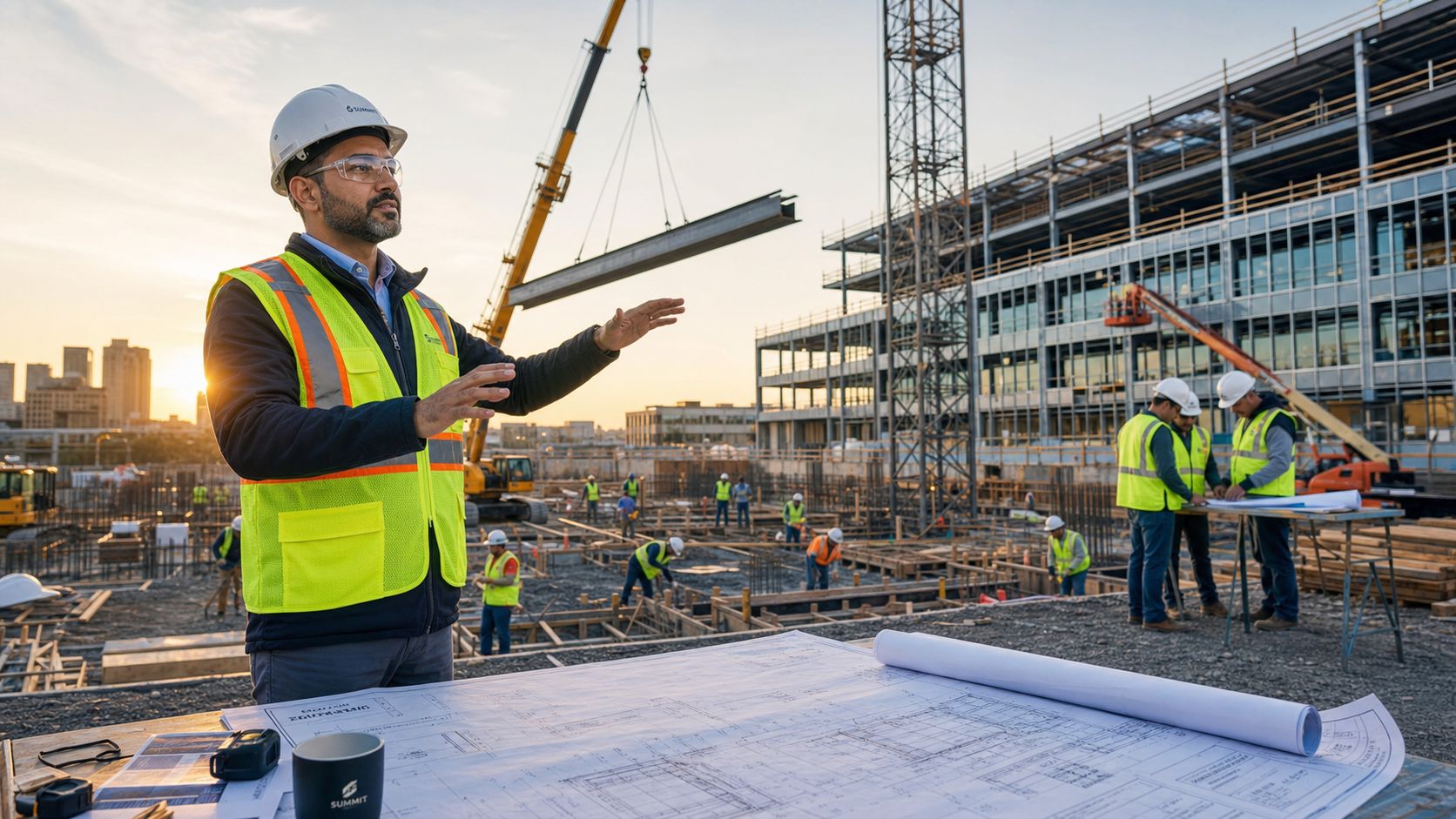
Milestone 6 and 7 — Build-Out, Inspections, and Certificate of Occupancy
Interior build-out covers wall assemblies, ceilings, flooring, casework, specialty equipment, and finishes, with the owner’s own vendors often working alongside the builder’s trades. Closeout is where owners are most often surprised. A Certificate of Occupancy is not a single inspection but a sequence: building, electrical, mechanical, plumbing, fire, and often a separate site or engineering signoff, plus utility energization. Any one of them can be rescheduled a few days out, and they must occur in order.
Two closeout items deserve their own line on the schedule. The first is permanent power — utility energization has its own lead time and its own paperwork, and a building cannot be commissioned without it. The second is commissioning and balancing of the mechanical systems, which takes real days and cannot start until the building is closed and powered. Owners who plan a move-in for the day after the final inspection almost always move twice.
What Actually Stretches a Commercial Schedule Here
In practice five things account for most Jacksonville overruns. Incomplete drawings at permit submittal, which buys extra correction cycles. Long-lead equipment ordered after design instead of during it. Unknown site conditions where no geotechnical work was done. Owner-driven change orders after construction has started, which are the most expensive kind. And utility coordination started too late. None of these are mysterious; all of them are schedule items that a disciplined builder puts on the critical path in pre-construction where they can still be managed.
Ask your builder for the schedule in writing with the critical path identified, the long-lead items listed with their order-by dates, and the float shown explicitly. A schedule without float is not an aggressive schedule, it is an inaccurate one. If your project is ground-up rather than a build-out, compare the sequence against our new construction process, and budget alongside our commercial builder cost guide for Jacksonville. Florida’s permitting and inspection requirements are published in the Florida Building Code, which is worth reading before you sign a lease with a hard opening date.
If you want a milestone schedule built around your specific building, site, and jurisdiction, see our commercial construction programme or contact Ofir Engineering for a pre-construction review.
Frequently Asked Questions
How long does a commercial builder take from contract to Certificate of Occupancy?
It depends far more on scope and jurisdiction than on square footage. A tenant build-out can run a few months once permitted; a ground-up commercial building typically runs from under a year to well over a year once design, permitting, procurement, and construction are combined. Ask for the milestone schedule, not a single date.
Which milestone causes the most delay in Jacksonville?
Permitting and long-lead procurement, and both are usually the result of decisions made earlier. Incomplete drawings generate correction cycles, and equipment ordered after design instead of during it lands on the critical path.
Can construction start before permits are issued?
Some jurisdictions allow limited early work such as site clearing or a foundation-only permit, but the full building permit governs vertical construction. Starting unpermitted work risks a stop-work order, fines, and a demolition order, which costs far more time than it saves.
How much schedule float should a commercial project carry?
Enough to absorb weather days, one round of permit comments, and inspection rescheduling. A builder who shows you where the float sits and what consumes it is giving you a schedule you can plan a lease or a loan around.
Keep Building With Ofir Engineering
Related discussions & follow us: Facebook · Reddit
Latest & related guides: Explore more Commercial Construction guides →
