
Full house remodeling versus alternatives is a cost question with four honest answers, and which one is cheapest for your house in Jacksonville depends on facts you can establish before you spend anything on design. The four routes are a whole-house remodel in one contract, a phased room-by-room remodel over several years, a home addition that fixes the space problem without touching the rest of the house, and a tear-down and rebuild. Each one wins in a specific, identifiable situation. The expensive mistake is choosing on preference rather than on the condition of the structure and the local cost per square foot. Ofir Engineering is a licensed Florida general contractor (License #CGC 1540016) with 15+ years serving Jacksonville, Ponte Vedra, St. Johns, and Northeast Florida.
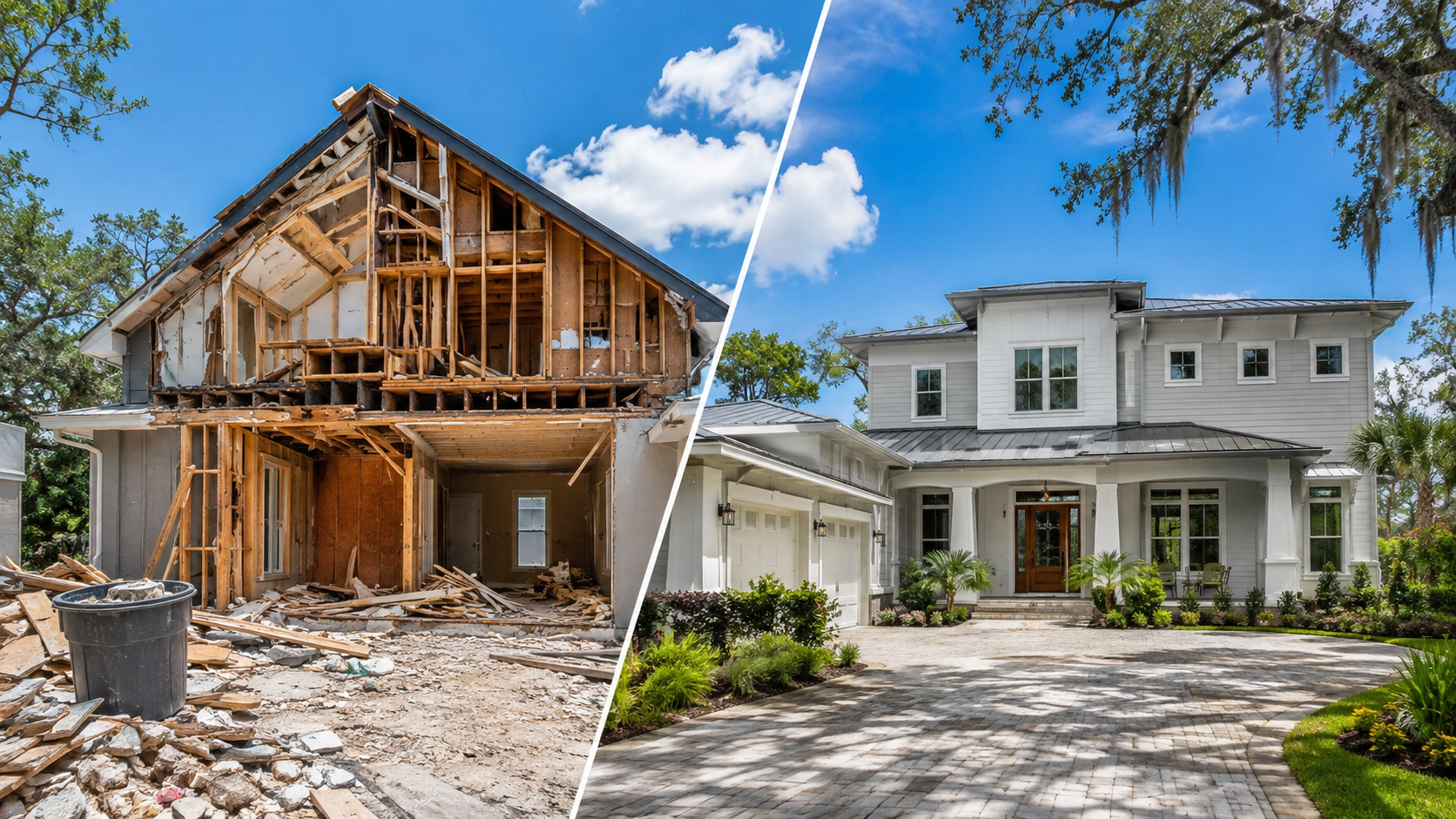
Full House Remodeling Versus Alternatives: The Four Routes Compared
Whole-house remodel in one contract. One mobilisation, one permit package, one set of inspections, one design coordination effort. The per-square-foot cost is lower than phasing because the fixed costs are spread across the whole scope, and the trades sequence properly instead of returning three times. The trade-offs are that you almost certainly move out, and the entire budget lands in one year.
Phased, room-by-room remodel. Attractive because the cash outlay is spread, and often the only realistic route when you cannot vacate. It is, however, the most expensive way to arrive at the same finished house. You pay mobilisation, permitting, and coordination repeatedly, you re-open finished work when systems have to run through it, and material and labour prices rise across the years the project spans.
A home addition instead. If the existing house is structurally sound and its systems are current, and the actual complaint is that it is too small or missing a proper primary suite, then a remodel of the whole house is solving a problem you do not have. An addition targets the deficiency directly and leaves the sound portion of the house alone.
Tear down and rebuild. The right answer more often than homeowners expect. When the structure has serious problems, the layout cannot be corrected without moving most of the walls anyway, and the remodel budget approaches new-construction cost per square foot, rebuilding buys a code-current, insurable, warrantied house instead of a heavily repaired old one.
The Numbers That Decide It
Three comparisons settle most of these decisions. The first is remodel cost per square foot against local new-construction cost per square foot. When the remodel estimate reaches roughly two-thirds to three-quarters of what building new on the same lot would cost, the remodel is usually the worse buy, because you are paying near-new prices for an old foundation, an old frame, and no warranty on the parts you kept.
The second is the value of the lot against the value of the improvement. In Jacksonville’s older and waterfront-adjacent neighbourhoods the land frequently carries most of the value. Where that is true the case for rebuilding strengthens, because the structure you are protecting is not what you are actually paying for.
The third comparison is the one people miss: the total cost of phasing against the cost of doing it once. Add up the repeated mobilisation, repeated permitting, the finished work you will re-open, and several years of cost escalation. Phasing usually costs meaningfully more in total, and the correct reason to choose it is cash flow or occupancy, not economy.
The Florida Rules That Can Make the Decision for You
Two local constraints override preference. The first is the substantial improvement rule in flood zones. If your home is in a Special Flood Hazard Area and the cost of the improvement reaches fifty percent of the structure’s market value, the whole building must be brought into compliance with current flood requirements, which usually means elevating it. That single threshold can turn a planned whole-house remodel into either a smaller scope deliberately kept under the line, or a full rebuild at the required elevation. Check your flood zone against the FEMA flood map service before you set a budget, not after.
The second is insurability. Florida carriers underwrite on roof age, electrical panel type, plumbing material, and opening protection. A remodel that leaves any of those untouched may leave the house difficult to insure regardless of how good the finishes are, and an uninsurable house is difficult to sell and difficult to finance. In practice this pushes many Jacksonville remodels toward including the envelope and systems whether or not the homeowner originally wanted to spend there.
When Full House Remodeling Is Clearly the Right Call
The whole-house route wins when the bones are good and the plan is wrong. A structurally sound 1960s to 1990s house with a compartmentalised layout, dated systems, and no real primary suite is exactly the case a whole-house remodel is built for: you keep the foundation, the frame, and the location, and you fix everything that makes the house feel out of date. It also wins when the neighbourhood will not support new-construction pricing, when the existing footprint or setbacks could not be rebuilt today under current zoning, and when the house has character that a new build genuinely would not reproduce.
It is the wrong call when the real need is space rather than condition, when the structure has problems the remodel would have to work around, or when the required scope has crept to within reach of rebuild pricing. If space is the actual issue, price a home addition against the remodel. If the estimate is closing on rebuild cost, price it honestly against new construction. Homeowners weighing the timing of a sale should also read our guide to whole-house remodeling resale value in Northeast Florida.
The decision is worth making with real numbers on all four routes rather than an estimate on one. See our whole home remodeling programme or contact Ofir Engineering for a pre-construction comparison of the options on your specific house.
Frequently Asked Questions
Is a whole-house remodel cheaper than building new?
Usually, but not always. Once a remodel estimate reaches roughly two-thirds to three-quarters of local new-construction cost per square foot, rebuilding is often the better buy, because you get a code-current, warrantied, insurable house instead of near-new pricing on an old structure.
Is it cheaper to remodel room by room or all at once?
All at once is almost always cheaper in total. Phasing repeats mobilisation, permitting, and coordination, re-opens finished work, and exposes you to several years of price escalation. Choose phasing for cash flow or because you cannot move out, not to save money.
What is the fifty percent rule in a Florida flood zone?
If your home sits in a Special Flood Hazard Area and the improvement cost reaches fifty percent of the structure’s market value, the entire building must be brought into compliance with current flood requirements, which typically means elevating it. Confirm your flood zone before setting a budget.
When should I add on instead of remodelling the whole house?
When the existing house is structurally sound with current systems and the only real complaint is size or a missing primary suite. An addition solves that directly and leaves the sound part of the house alone, which is cheaper than renovating rooms that did not need it.
Keep Building With Ofir Engineering
Related discussions & follow us: Facebook · Reddit
Latest & related guides: Explore more Whole Home Remodeling guides →
