
The home additions near me insurance impact in Florida runs in two directions at once, and homeowners who plan for only one of them get an unpleasant call from their carrier. Adding conditioned square footage raises the cost to rebuild your home, which raises the dwelling coverage you must carry and therefore the premium. At the same time, an addition built to current Florida code adds wind-resistant construction that can earn mitigation credits and pull the premium back down. Which effect dominates depends on the age of the rest of your house, the flood zone, and whether the work is properly permitted. Ofir Engineering is a licensed Florida general contractor (License #CGC 1540016) with 15+ years serving Jacksonville, Ponte Vedra, St. Johns, and Northeast Florida.
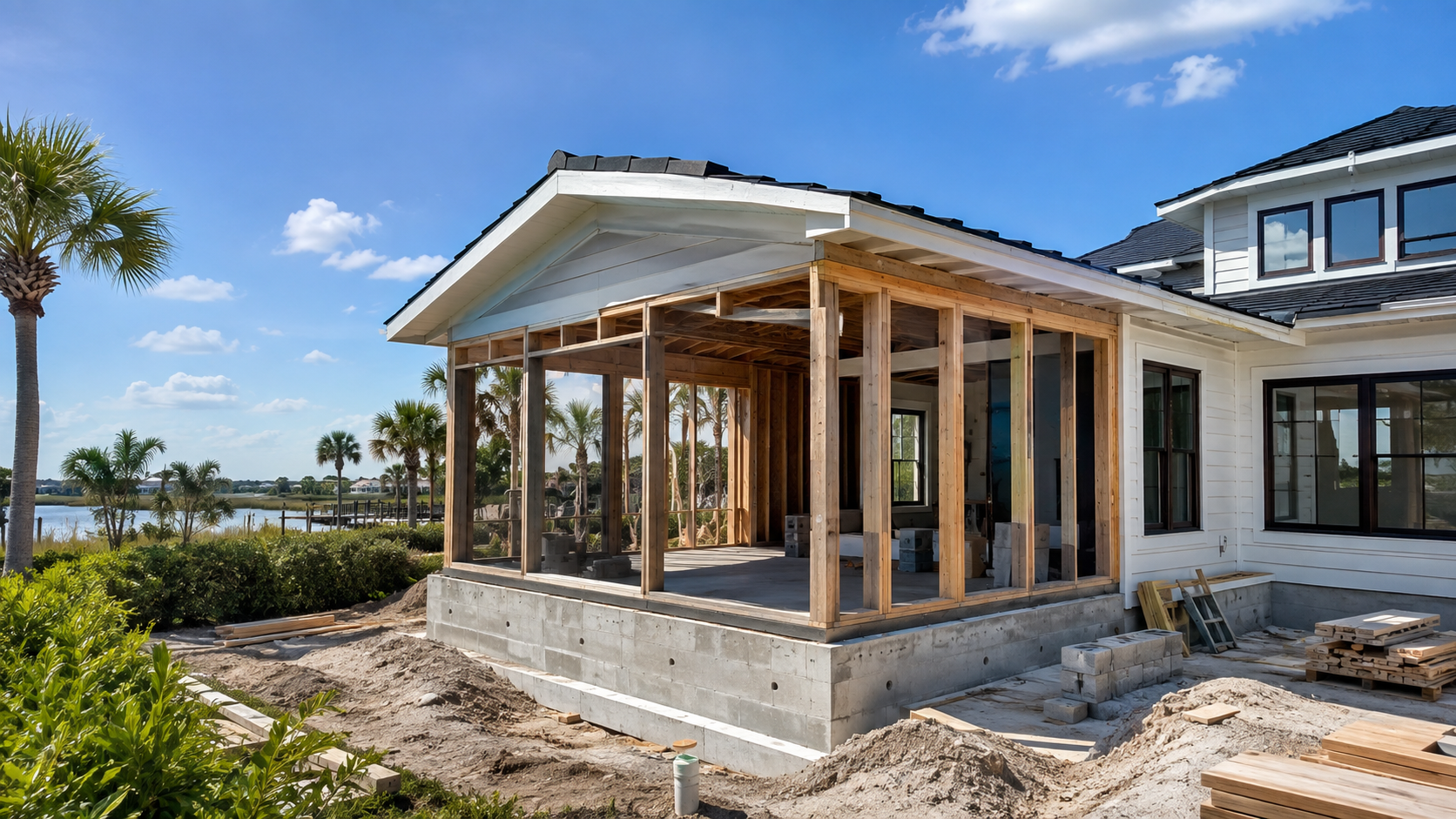
Home Additions Near Me Insurance Impact Before Construction Starts
Call your carrier before the first day of work, not after. A standard Florida homeowners policy is written for an occupied, finished home, and a major addition changes the risk in ways the policy language addresses directly. Two provisions matter most.
The first is the vacancy or unoccupancy clause. Most homeowners policies restrict or suspend coverage when a dwelling stands unoccupied beyond a stated period, commonly thirty to sixty days. If your addition requires you to move out for several months, an unreported vacancy can leave you without coverage exactly when the house is most exposed.
The second is coverage for the work itself. Materials stacked on site, partially completed structure, and theft or storm damage during construction are not automatically covered by a homeowners policy. That risk belongs on a builder’s risk policy or a renovation endorsement, and it should be clear in writing whose policy carries it, yours or the contractor’s. Ask your builder for a certificate of insurance showing general liability and workers’ compensation before work begins; if a worker is injured on your property and the contractor is uninsured, the exposure can land on you.
Why Your Premium Changes After the Addition
Once the addition is finished, dwelling coverage has to be recalculated. Coverage A is based on replacement cost, so adding conditioned square footage raises the figure your policy has to insure. Underinsuring is worse than the premium increase: many Florida policies apply a coinsurance provision, and a home insured below a required percentage of replacement cost can have a partial-loss claim reduced proportionally. That is the single most common and most expensive mistake made after an addition.
Other components move too. Personal property limits are typically a percentage of dwelling coverage and rise with it. Loss of use follows the same formula. If the addition includes a pool, an outbuilding, or a detached structure, that may fall under other-structures coverage rather than the dwelling limit. And an addition that puts more square footage under a roof in a coastal county can change the hurricane deductible calculation, since that deductible is normally a percentage of Coverage A rather than a flat dollar amount.
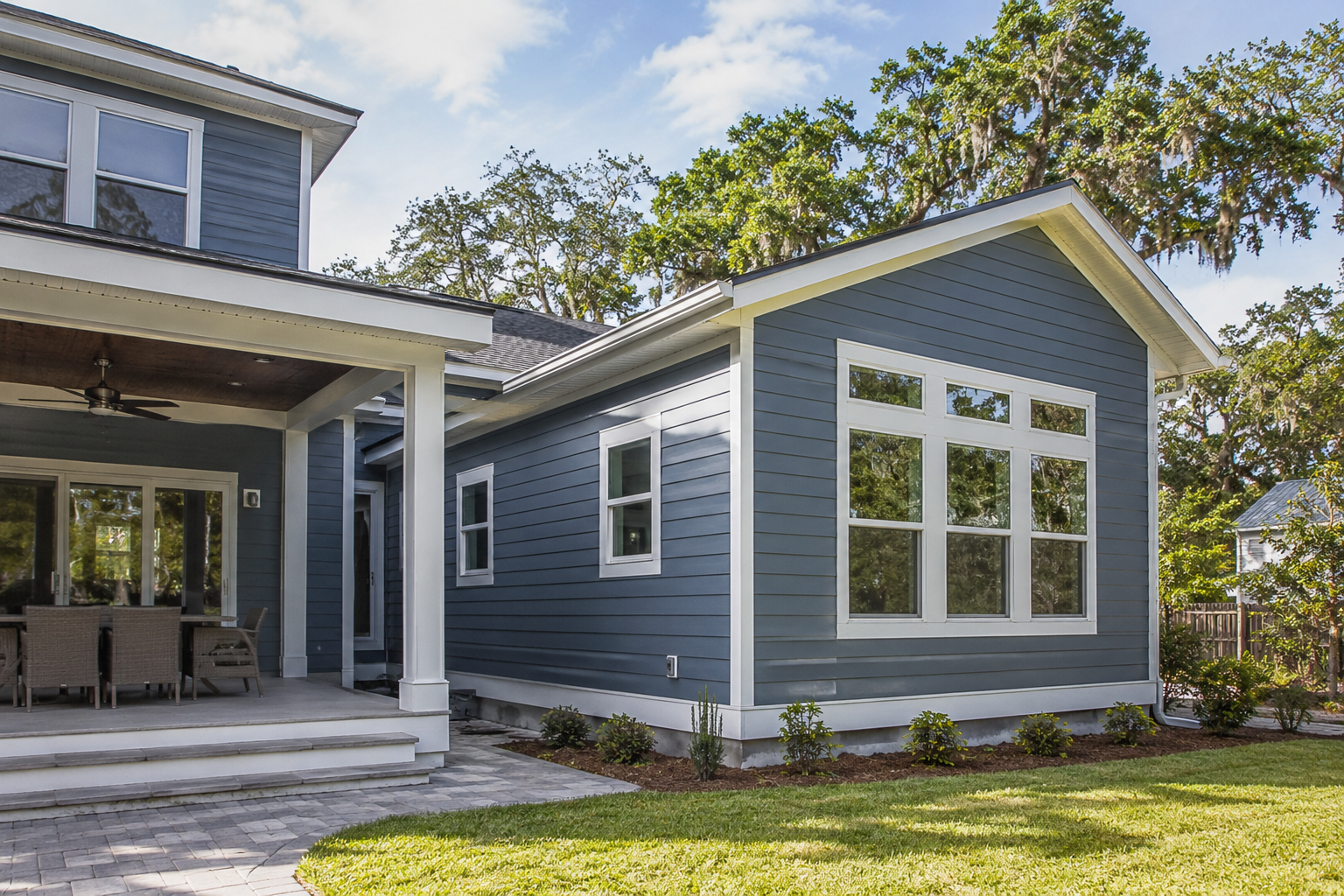
The Credits That Push the Premium Back Down
New construction in Florida is built to a far higher wind standard than most existing housing stock, and carriers pay for that through wind mitigation credits documented on the state’s uniform mitigation verification inspection form. The features that earn credit are specific: roof covering compliant with current code, roof deck attachment, roof-to-wall connections using clips or straps rather than toe-nails, roof geometry, a secondary water resistance barrier, and opening protection, meaning impact-rated glazing or shutters across all openings.
The catch is that several of these credits are assessed for the whole building, not the new portion alone. Opening protection in particular is normally credited only when every opening in the home is protected. That creates a genuine planning opportunity: if you are already adding impact-rated windows and doors to the addition, protecting the remaining original openings at the same time can convert a partial upgrade into a full credit. The same logic applies to a roof — if the addition ties into a roof that is near the end of its life, replacing the whole roof during the project is usually cheaper than doing it separately and unlocks credits the partial replacement will not.
Have a new wind mitigation inspection performed after the work is complete and send it to your carrier. Credits are not applied automatically; they are applied when the form is submitted. Details on Florida’s mitigation credit framework are published by the Florida Office of Insurance Regulation.
Flood Zones, Permits, and the Two Ways Coverage Fails
Flood insurance is separate from your homeowners policy and follows its own rules. If the property sits in a Special Flood Hazard Area, an addition may need to meet current elevation requirements, and where the improvement cost reaches fifty percent of the structure’s market value the substantial improvement rule can require the entire building to comply. That is a design decision, not a paperwork detail, and it must be settled before drawings are finalised.
The other way coverage fails is unpermitted work. An addition built without permits creates a chain of problems: the carrier may decline a claim arising from the unpermitted portion, the square footage may not be counted by an appraiser, and the work becomes a disclosure item and a renegotiation lever at sale. It is the one shortcut in construction that can produce a negative return. Every addition should also be reported to the property appraiser and reflected in your policy, so the insured value and the public record agree.
If you are weighing whether an addition or a broader renovation is the better route, compare it against our whole home remodeling programme, and read our guide to wind mitigation requirements for additions under Jacksonville code before you finalise the openings. For a scope priced with the insurance consequences built in, see our home additions service or contact Ofir Engineering.
Frequently Asked Questions
Do I have to tell my insurance company about a home addition?
Yes, and before construction starts. Your policy may restrict coverage while the home is unoccupied, and the construction itself usually needs a builder’s risk policy or endorsement. Afterwards, dwelling coverage must be increased to reflect the new replacement cost.
Will an addition raise my Florida homeowners premium?
The dwelling limit rises with the added square footage, which raises the premium. Code-compliant construction can offset part of that through wind mitigation credits, especially if the project brings the whole home up to full opening protection.
Does an addition qualify for wind mitigation credits?
Some credits apply to the whole building rather than the new portion, and opening protection is generally credited only when every opening is protected. Have a new mitigation inspection after completion and submit the form to your carrier; credits are not applied automatically.
What happens to insurance if an addition was built without permits?
A carrier may deny a claim arising from unpermitted work, an appraiser may refuse to count the square footage, and the work becomes a disclosure and renegotiation issue at sale. Permitting is the cheapest insurance protection available on an addition.
Keep Building With Ofir Engineering
Related discussions & follow us: Facebook · Reddit
Latest & related guides: Explore more Home Additions guides →
