
Metal frame homes long term maintenance is a shorter list than most owners expect, but it is not an empty one. Steel framing does not rot, does not feed termites, does not warp with humidity, and does not lose strength with age — which removes the three maintenance obligations that dominate wood-framed houses in Florida. What steel does have is one failure mode, corrosion, and in a climate that combines high humidity with airborne salt, the whole maintenance question comes down to protecting the coating that keeps corrosion from ever starting. Ofir Engineering is a licensed Florida general contractor (License #CGC 1540016) with 15+ years serving Jacksonville, Ponte Vedra, St. Johns, and Northeast Florida.
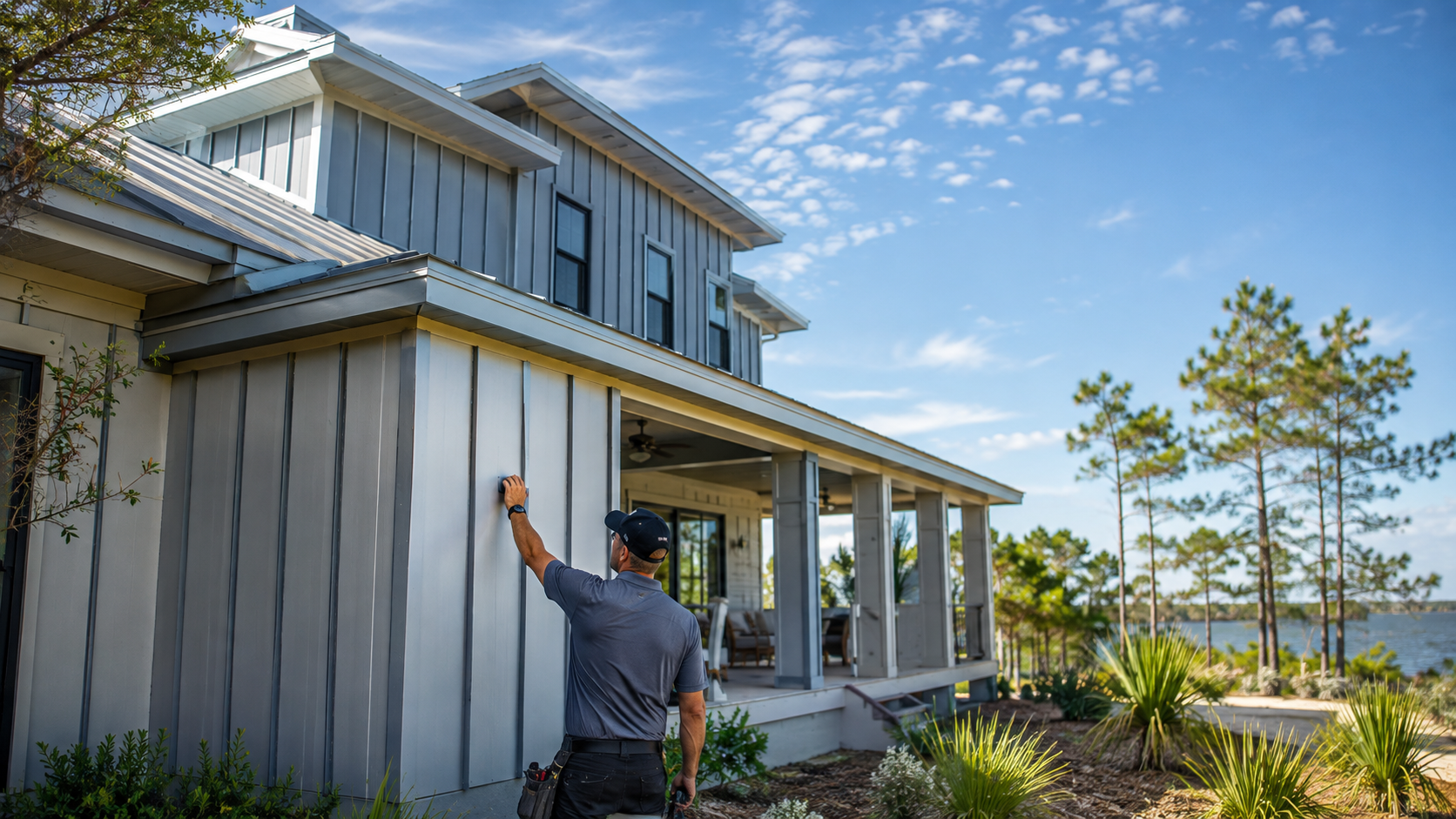
What Metal Frame Homes Long Term Maintenance Is Actually Protecting
Structural steel framing in residential construction is protected by a metallic coating, most commonly zinc applied by galvanising, sometimes a zinc-aluminium alloy. That coating works two ways: it is a physical barrier, and it is sacrificial, meaning it corrodes preferentially to protect exposed steel at a scratch or a cut edge. As long as the coating is intact and the steel stays dry, the framing is effectively permanent.
Corrosion therefore requires three things together — moisture, oxygen, and a breach in or exhaustion of the coating. Remove any one and nothing happens. That is why almost all real-world maintenance on a steel-framed house is about moisture control and coating integrity rather than about the steel itself.
Two Florida-specific accelerants matter. Airborne chloride from salt air makes moisture far more aggressive and extends its reach several miles inland from the ocean and the Intracoastal, which covers much of the Jacksonville beaches area and Ponte Vedra. And sustained high humidity means that condensation, not rainfall, is the most common source of persistent moisture inside an assembly. Both are design problems solved at construction, which is why our steel frame construction specifications set coating class by proximity to salt exposure rather than to a single statewide default.
The Details That Determine How Much Maintenance You Will Have
The maintenance burden of a steel-framed house is set almost entirely during construction. Four decisions dominate.
Coating weight. Galvanised framing is supplied in coating classes, and a heavier zinc coating simply lasts longer before it is consumed. Near the coast, specifying up from the minimum is the cheapest maintenance decision available, because it is made once and never revisited.
Cut edges and field modifications. Every cut, drilled hole and field alteration exposes bare steel. Zinc’s sacrificial action protects small exposures on its own, but larger ones — and any cut left in a damp or salt-exposed location — should be treated with a zinc-rich touch-up. Ask whether that was part of the original quality plan, and treat any future modification the same way.
Fastener and dissimilar-metal compatibility. Galvanic corrosion occurs when two different metals sit in contact with moisture present, and the less noble one corrodes rapidly. The classic residential mistake is placing steel framing in direct contact with copper plumbing, or using incompatible fasteners or connectors. Isolation at those junctions is standard good practice and effectively free at the time of construction; correcting it later means opening a wall.
Thermal breaks. Steel conducts heat far more readily than wood. Without a continuous layer of exterior insulation, framing members can drop below the dew point of the surrounding air and collect condensation on the steel itself — moisture with no rain involved. Continuous exterior insulation is a comfort and energy measure, but in a humid climate it is equally a durability measure.
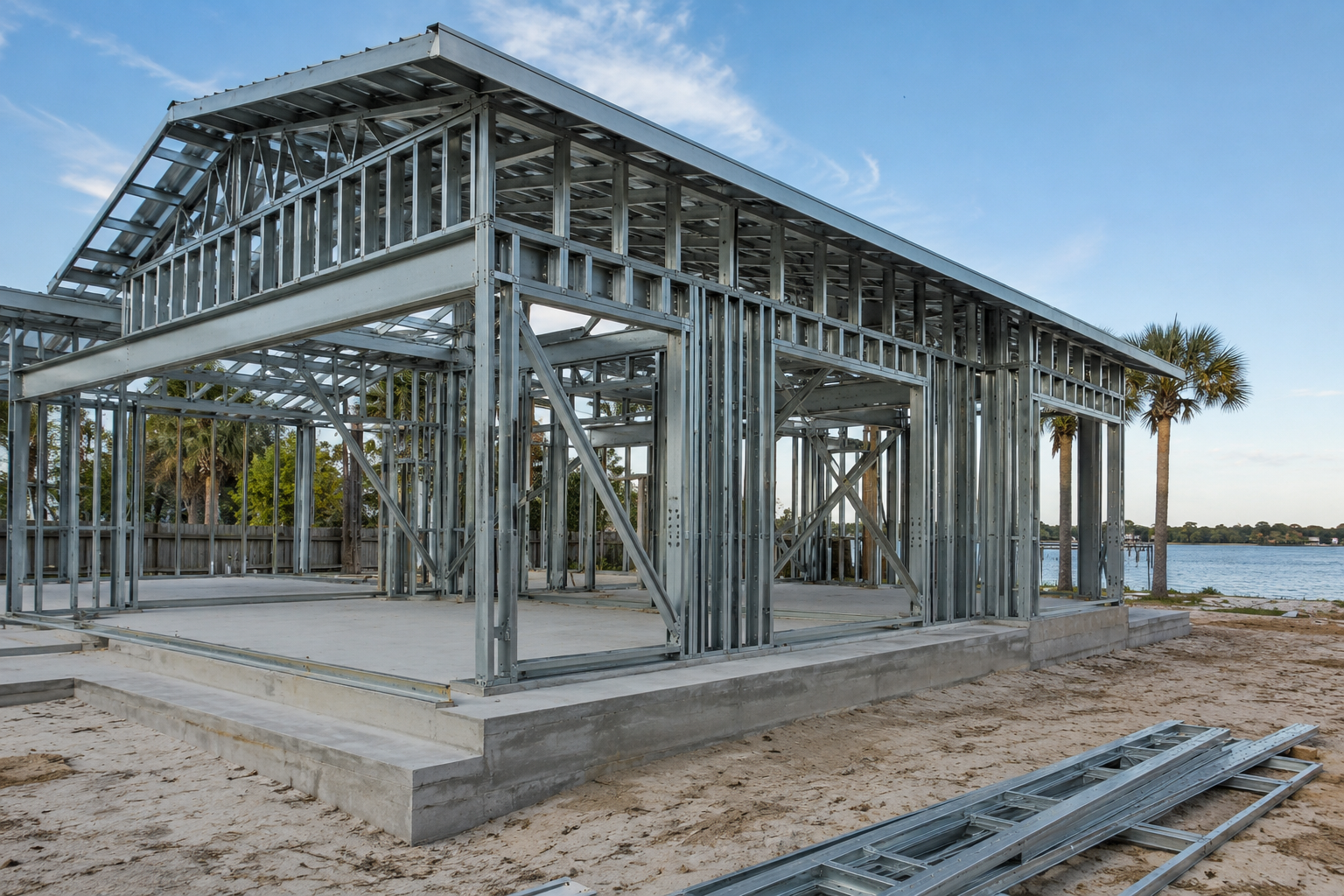
The Actual Maintenance Schedule
For a properly detailed steel-framed home, the routine is unremarkable and almost entirely about keeping water outside the assembly.
Annually: inspect and clear gutters and downspouts, confirm grading still drains away from the foundation, check exterior sealants at windows, doors and penetrations, and examine any exposed steel — carports, porch columns, exposed connections — for coating damage or rust staining. Rust staining on a wall surface is a signal worth tracing to its source rather than washing off.
In coastal locations, add a rinse. Where salt spray reaches exposed steel, periodic freshwater rinsing measurably slows chloride accumulation. It is the same maintenance logic applied to boat hardware, and it applies to exposed framing, fasteners and connectors within a few miles of open water.
After every named storm: inspect for envelope damage. The structural frame will normally be unaffected — resistance to wind is one of steel’s advantages — but a breached roof or window is a moisture path, and moisture is the thing to keep out.
Every three to five years: look inside. Check the attic for condensation staining on framing, inspect where framing meets the slab for standing moisture or splash-back, and confirm that the humidity control in the house is working, since interior relative humidity persistently above roughly sixty per cent is a durability problem in any framing system. Confirm too that no later renovation put copper or an incompatible metal into direct contact with the frame — that is a common way a well-built house acquires a corrosion problem years after completion.
How This Compares to a Wood-Framed House in Florida
The honest comparison is not that steel is maintenance-free and wood is not; it is that they have different obligations, and steel’s are easier to control in this climate.
A wood-framed Florida house carries a permanent termite exposure requiring ongoing treatment and monitoring, is vulnerable to rot wherever moisture persists, and can move dimensionally with humidity. A steel-framed house carries none of those, but has a corrosion exposure that is concentrated at specific, identifiable places — cut edges, fasteners, dissimilar metal contacts, and any location where condensation can form. Those places are finite and inspectable, which is what makes the maintenance predictable.
Neither system rewards neglect of the envelope. Water intrusion left alone will eventually damage any structure. But an owner who keeps the exterior sealed, the drainage working, and the interior humidity controlled is doing essentially all that a steel frame requires. Owners weighing framing systems for a new build can compare how each is detailed in our custom home construction work, or contact Ofir Engineering to review coating specification and detailing for a coastal Northeast Florida site. Structural and wind-resistance requirements for both systems are published by the Florida Building Commission.
Frequently Asked Questions
Will steel framing rust in a Florida coastal home?
Not if the coating stays intact and the steel stays dry. Galvanised framing is protected by a zinc coating that acts as both a barrier and a sacrificial layer. Corrosion requires moisture, oxygen and a breach in that protection together, so keeping the envelope sound and specifying a heavier coating near salt air effectively removes the risk.
How often should a steel framed home be inspected?
An annual exterior check of drainage, sealants and any exposed steel, plus a more thorough look inside the attic and at the frame-to-slab junction every three to five years. In coastal locations add periodic freshwater rinsing of exposed steel, and inspect after any named storm.
Does steel framing need termite treatment?
The framing itself is not a food source, so it is not vulnerable to termites the way wood is. A home still contains wood in trim, cabinetry, sheathing and other components, so termite prevention remains sensible — but the structural exposure that drives ongoing treatment in a wood-framed Florida house is not present.
What causes condensation on steel framing?
Steel conducts heat readily, so a framing member without adequate thermal separation from the exterior can fall below the dew point of the surrounding air and collect moisture directly on its surface. Continuous exterior insulation and controlled interior humidity are the two measures that prevent it.
Keep Building With Ofir Engineering
Related discussions & follow us: Facebook · Reddit
Latest & related guides: Explore more Steel Frame Construction guides →
