
The high end home builders insurance impact on a Florida homeowner runs in two directions at once, and owners are usually surprised by both. A luxury home costs more to insure because replacement cost is higher — that part is expected. What is less expected is how much of the premium a well-built luxury home can claw back through documented wind mitigation, correct flood elevation and a construction record that lets an underwriter price the house accurately instead of conservatively. The builder controls more of this outcome than the agent does. Ofir Engineering is a licensed Florida general contractor (License #CGC 1540016) with 15+ years serving Jacksonville, Ponte Vedra, St. Johns, and Northeast Florida.
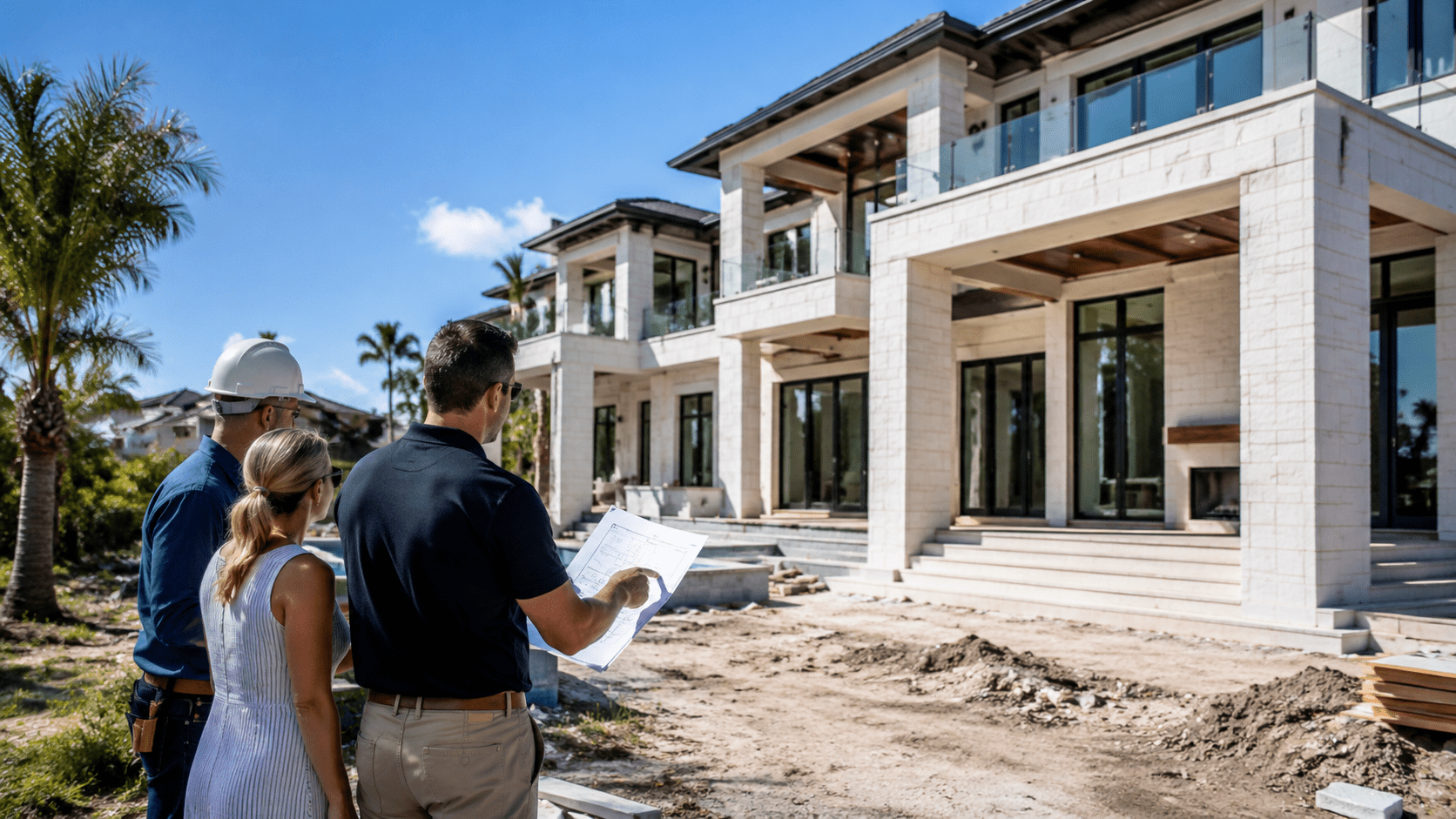
Understanding the High End Home Builders Insurance Impact on Premium
A Florida homeowners premium is driven by replacement cost, wind exposure and location, roof characteristics and opening protection, deductible structure, and claims history. Luxury construction affects the first item upward and several of the others downward.
Replacement cost is the honest driver of the increase. Insuring a home is not about market value; it is about what it would cost to rebuild the structure to the same specification after a total loss. Custom millwork, stone, specialty glazing, imported materials and complex rooflines are all genuinely expensive to reproduce, and a policy limit that does not reflect that leaves you underinsured. Setting the limit correctly matters more than setting it low.
Where the offsetting savings live is the mitigation side, and this is where a high end builder earns real money for the owner. A luxury home is typically built with impact-rated glazing throughout, engineered roof-to-wall connections, high-grade roof covering, sealed roof decks and elevated foundations in coastal or flood-exposed positions. Those are precisely the features Florida’s wind mitigation credit structure rewards — and they are worth nothing on the premium if they are not documented and filed.
Coverage Structure: Why a Luxury Home Often Needs a Different Policy
Standard homeowners forms are built around typical housing stock, and they fit a high-value custom home poorly in several specific ways.
The most important is guaranteed or extended replacement cost. A standard policy pays up to the dwelling limit; a high-value form may pay above it when rebuild costs exceed the estimate, which is meaningful protection after a regional catastrophe when material and labor prices spike. Second is ordinance or law coverage, which pays the cost of rebuilding to current code rather than to the original construction — significant in Florida, where code has tightened repeatedly and a partial loss may trigger substantial upgrade requirements.
Beyond that, high-value carriers typically offer broader open-perils contents coverage rather than named perils, higher sublimits and scheduled coverage for art, jewelry and collections, cash settlement options that do not require rebuilding on the same site, and often a professional appraisal at underwriting rather than a square-foot estimate. That appraisal is worth requesting: it is the mechanism that gets the dwelling limit right.
Builder’s Risk During Construction
Before the homeowners policy exists, the project needs builder’s risk coverage — a separate policy insuring the structure, materials and often stored or in-transit items during construction. Two provisions matter more than the rest.
The first is whether wind and named-storm damage is covered and at what deductible. In coastal Northeast Florida this is the coverage you are actually buying, and named-storm deductibles on builder’s risk policies can be substantial. The second is the policy term versus the real schedule. Builder’s risk is written for a defined period, and a luxury custom home routinely runs longer than the original estimate. An expired policy on an unfinished house is a catastrophic exposure, so extension terms should be understood at binding, not discovered at expiration.
Confirm as well who is named, that the general contractor’s general liability and workers’ compensation are current, and that the coverage converts cleanly to a homeowners policy at certificate of occupancy with no gap. Our certificate of occupancy guide covers that transition point.
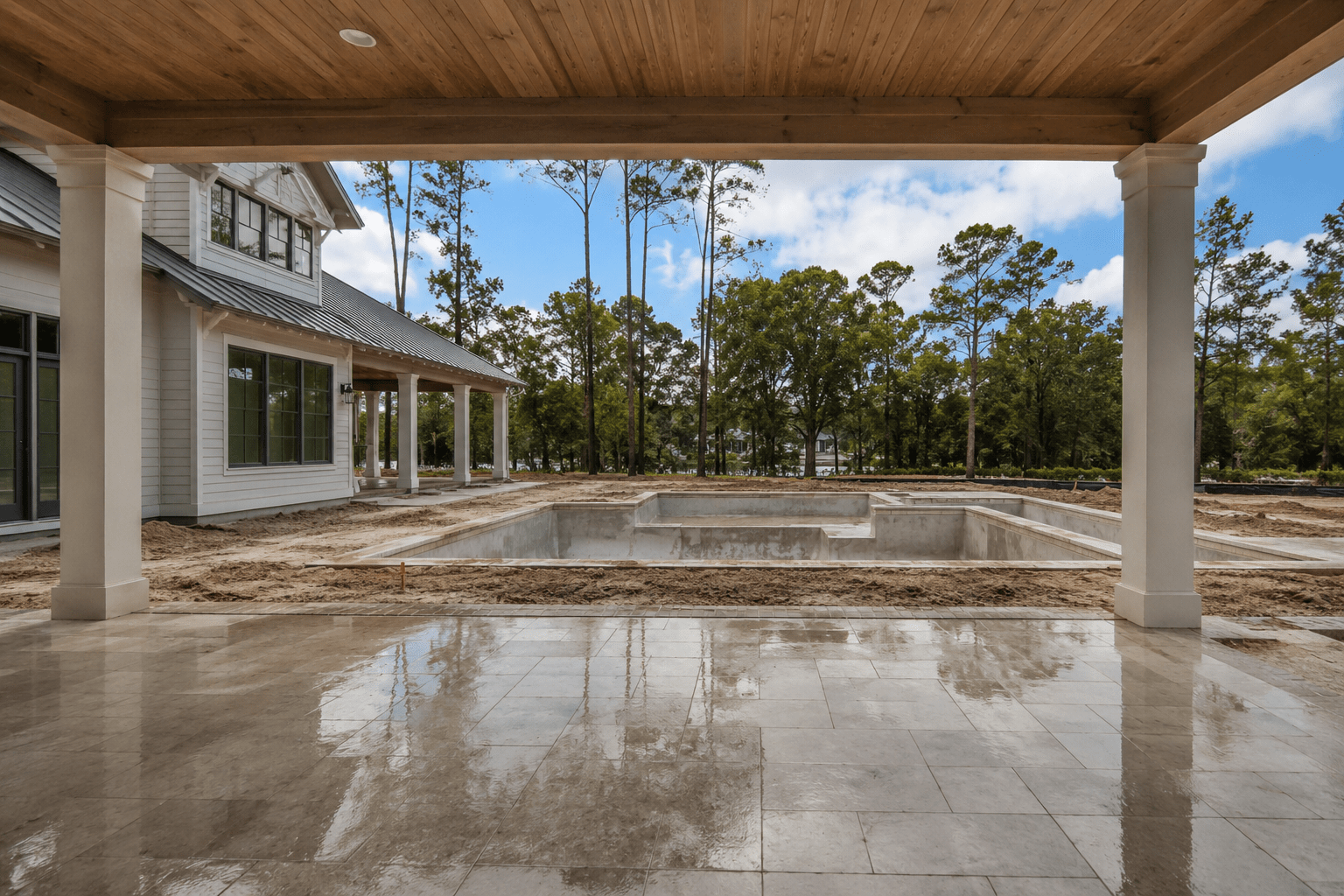
Flood, Elevation and Waterfront Exposure
Flood is not covered by a homeowners policy. It requires a separate policy, and on the luxury side that is frequently private market rather than the National Flood Insurance Program, because NFIP limits fall well short of a high-value dwelling’s replacement cost.
Flood premium is driven overwhelmingly by elevation relative to base flood elevation. Every foot of freeboard above the minimum reduces both premium and risk, and this is a design decision made once, at the foundation, that cannot be revisited later. On a waterfront or flood-zone lot, building higher than the minimum is one of the highest-return decisions in the entire project — it lowers a recurring cost for the life of the house and improves resale, because the next buyer inherits the same advantage.
Keep the elevation certificate. It is the document that proves the elevation to every carrier for as long as the house stands. Our guides to flood zone luxury home planning and waterfront luxury construction cover the design side.
What the Builder Should Hand You at Closeout
This is the practical core of the entire subject. Underwriters price what they can verify, and they price conservatively when they cannot verify. A complete closeout package converts your construction quality into a lower premium.
It should contain: the wind mitigation inspection, ordered as soon as the certificate of occupancy issues; the elevation certificate on any flood-zone property; Florida product approval numbers for every window, door and the roof covering; engineered connection details and the roof deck fastening schedule; the full permit and final inspection record; equipment schedules and warranties; and a detailed specification with material quantities that supports the replacement cost calculation.
File the mitigation inspection with your carrier immediately rather than waiting for renewal, and shop at least three carriers including at least one high-value specialist, because appetite for large custom homes in coastal Florida varies widely between companies. Consumer resources and rate filings are published by the Florida Office of Insurance Regulation. For the construction side, see impact windows and hurricane hardening and how to choose a luxury home builder. To discuss a specific project, see our luxury home builder service or contact us.
Frequently Asked Questions
Does a luxury custom home cost more to insure in Florida?
Yes on replacement cost, because rebuilding custom millwork, stone, specialty glazing and complex rooflines is genuinely expensive. But a well-built luxury home offsets much of that through documented wind mitigation credits, correct flood elevation and a construction record that lets an underwriter price it accurately.
Why would a luxury home need a high-value insurance policy?
Standard forms fit high-value custom homes poorly. High-value policies typically add guaranteed or extended replacement cost above the dwelling limit, ordinance or law coverage for rebuilding to current code, broader open-perils contents coverage, higher sublimits for art and jewelry, and a professional appraisal that sets the dwelling limit correctly.
What should I check on a builder’s risk policy?
Whether wind and named-storm damage is covered and at what deductible, and whether the policy term matches the realistic schedule with clear extension terms — luxury custom homes routinely run long, and an expired policy on an unfinished house is a severe exposure. Also confirm it converts to a homeowners policy at certificate of occupancy with no gap.
How much does building above base flood elevation save?
Flood premium is driven overwhelmingly by elevation, so every foot of freeboard above the minimum reduces it. It is a one-time design decision made at the foundation that lowers a recurring cost for the life of the house and transfers to the next owner. Keep the elevation certificate permanently.
Keep Building With Ofir Engineering
Related discussions & follow us: Facebook · Reddit
Latest & related guides: Explore more Luxury Home Builder guides →
