
The fastest payback in full house remodeling energy efficiency for a Jacksonville home is almost never the item homeowners ask about first. Northeast Florida sits in climate zone 2, a hot-humid zone where the annual energy bill is dominated by cooling and dehumidification rather than heating. That single fact reorders the entire priority list: air and duct sealing, attic performance, and equipment sizing outrank the glossy upgrades, and several products that pay back well in colder states barely move a Florida utility bill at all. Ofir Engineering is a licensed Florida general contractor (License #CGC 1540016) with 15+ years serving Jacksonville, Ponte Vedra, St. Johns, and Northeast Florida.
Why Climate Zone 2 Changes the Full House Remodeling Energy Efficiency Math
Energy-efficiency advice written for a national audience assumes a heating-dominated climate. In zone 2 the load profile is inverted. Your air conditioner runs a long season, the humidity load is a large share of the work it does, and the attic above the ceiling routinely reaches temperatures far above the outdoor air. Anything that reduces heat gain into the conditioned space, or stops conditioned air from leaking out of it, therefore acts on the biggest line item on the bill.
That is why the ranking below is built on three questions rather than on product marketing. First, does the measure reduce cooling load or only heating load? Second, does it also reduce moisture load, which in Florida drives both comfort and long-term building durability? Third, does it need the walls or ceilings open anyway — because during a whole-house remodel the labor to reach it is already being paid for, and that is what turns a marginal upgrade into a good one.
The Fast-Payback Tier: Air Sealing, Ducts, and the Attic
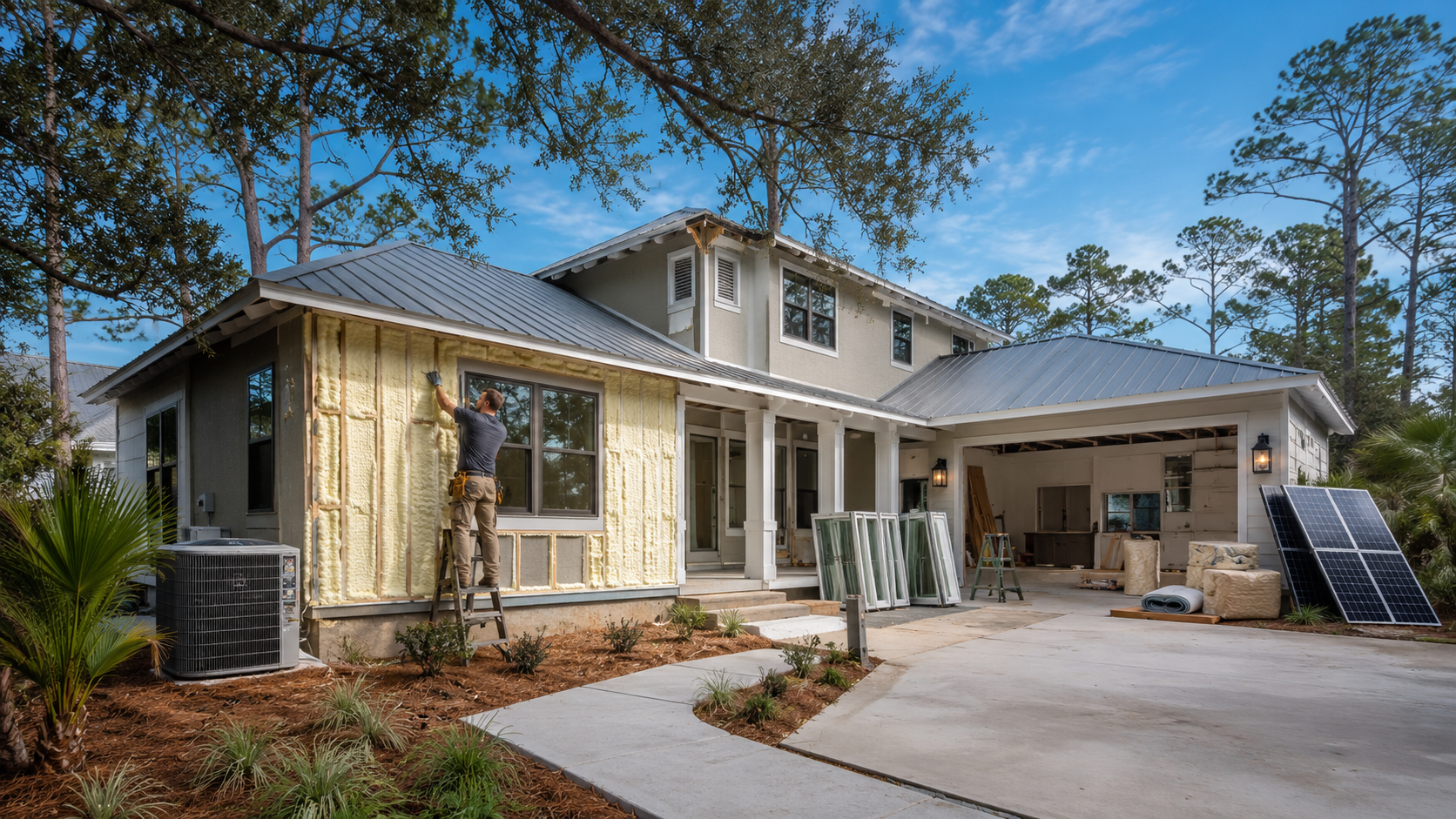
Air sealing the envelope. This is consistently the highest return per dollar in a whole-house remodel, and it is nearly free to do well when framing is exposed. Top plates, recessed can housings, plumbing and wiring penetrations, the attic hatch, and the band joist are where conditioned air escapes and humid attic air is drawn in. A blower-door test before drywall tells you what you actually bought instead of what the crew intended to seal.
Duct sealing and duct location. A duct system in a vented Florida attic sits in the harshest environment on the property. Leaks in the supply side dump money into the attic; leaks in the return side pull hot, humid, unfiltered attic air directly into the system. Sealing at every joint and boot, testing total duct leakage, and — where the remodel makes it feasible — relocating ducts inside the conditioned envelope is among the strongest moves available in zone 2. If the ceiling is coming down anyway during a whole-house remodel, this is the moment.
Attic insulation and radiant control. Bringing attic insulation up to current levels is inexpensive relative to its effect on cooling load, and it is easy to do correctly while a house is torn up. Adding a radiant barrier or specifying a reflective roof surface at reroof time is a genuine zone 2 measure, because it attacks radiant gain — the dominant heat path through a Florida roof — rather than conductive loss.
The Middle Tier: Equipment, Water Heating, and Windows
Right-sized, high-efficiency cooling. Efficiency ratings matter, but sizing matters more. An oversized system short-cycles, satisfies the thermostat before it has removed enough moisture, and leaves a house that is cold and clammy. A whole-house remodel changes the load — new insulation, new windows, sometimes new square footage — so the equipment should be selected from a fresh room-by-room load calculation, not from what was there before. Doing this out of order is the most common expensive mistake we see.
Water heating. Water heating is usually the second-largest electrical load in a Florida home. A heat pump water heater is well suited to the climate, and its payback improves further when the remodel lets you shorten hot-water runs or place the unit somewhere its cool, dry exhaust is useful rather than a nuisance.
Windows. In zone 2 the number that matters on a window is the solar heat gain coefficient, not the insulating value that dominates northern specifications. A low-SHGC unit blocks the radiant gain that actually loads your air conditioner. Windows are also the clearest example of stacked benefits: an impact-rated, low-SHGC replacement improves energy performance, storm protection, and often the insurance picture at the same time, which is why we treat it alongside wind mitigation during a full house remodel rather than as a standalone energy line.
What to Deprioritize — and the Order That Protects Your Money
Some upgrades that headline national efficiency lists earn very little in zone 2. Very high-R wall assemblies deliver far less here than the same dollars spent on air sealing and ducts, because conduction through walls is a smaller share of a cooling-dominated load. Heating-focused equipment upgrades matter little in a climate with a short heating season. And any efficiency spend made before the envelope is tightened is spend made against a load you were about to reduce.
The sequence that protects your budget is simple: seal and insulate the envelope first, fix the duct system, then calculate the load, then buy equipment sized to that number, and only then consider generation such as solar. Reversing those steps means paying for capacity you no longer need. The U.S. Department of Energy’s Energy Saver guidance makes the same point about load reduction preceding equipment selection.
Two practical notes for Northeast Florida owners. Efficiency work is inspected work — envelope sealing, duct leakage, and equipment changes are tied to permits and code compliance, so treat the documentation as part of the deliverable rather than paperwork. And ask for the test results, not the promises: a blower-door number and a duct-leakage number are the only proof that the invisible half of the job was done. For where these items fall in a full renovation budget, see our home remodeling cost guide for Jacksonville, review the whole home remodeling service page for how we sequence this work, or contact Ofir Engineering to have the priority list built for your specific house.
Frequently Asked Questions
Which energy upgrade pays back fastest in a Jacksonville whole-house remodel?
Air sealing and duct sealing, in that order. Both attack the cooling and humidity load that dominates a climate zone 2 utility bill, both are inexpensive while framing and ceilings are already open during a remodel, and both can be verified with a blower-door and duct-leakage test rather than taken on faith.
Are new windows worth it for energy savings in Florida?
They are worth it when specified for the right number. In zone 2 the solar heat gain coefficient drives cooling load far more than the insulating value that matters up north. Windows also stack benefits here, because an impact-rated low-SHGC unit improves energy performance, storm protection, and often the insurance picture together.
Should I install solar during a full house remodel?
Consider it last, not first. Every dollar of load you remove through sealing, insulation, ducts, and correctly sized equipment is a dollar of generation you no longer have to buy. Sizing an array against a pre-remodel bill means paying for capacity the finished house will never use.
Does more attic insulation help in a hot-humid climate?
Yes, and it is cheap while the house is torn up, but it is not the whole answer. Radiant gain through a Florida roof and leakage between the attic and the living space often matter as much as the insulation depth, which is why a radiant barrier or reflective roof surface and thorough air sealing belong in the same conversation.
Keep Building With Ofir Engineering
Related discussions & follow us: Facebook · Reddit
Latest & related guides: Explore more Whole Home Remodeling guides →
