As a licensed Jacksonville general contractor (CGC 1540016), Ofir Engineering brings hands-on construction expertise to every project throughout Northeast Florida.
Not every home improvement qualifies as a construction upgrade, and that distinction can cost Jacksonville homeowners thousands of dollars if misunderstood. A construction upgrade refers to optional enhancements made during or after initial construction aimed at boosting a home’s function, appearance, efficiency, or value. Unlike a standard renovation, which updates an existing space, upgrades are most powerful and cost-effective when planned before walls are closed and systems are locked in. This guide covers what construction upgrades actually are, how they compare to renovations, what they cost in Jacksonville, and which ones deliver the strongest return.
Table of Contents
- The real meaning of a construction upgrade
- Cost comparison and return on investment (ROI)
- Smart upgrades for Jacksonville homes
- Navigating permits, regulations, and risks
- Why most homeowners underestimate construction upgrades
- Next steps: Trusted experts for your upgrade project
- Frequently asked questions
Key Takeaways
| Point | Details |
|---|---|
| Time upgrades wisely | Construction upgrades are most cost-effective and practical when planned during initial building, not after. |
| Focus on function | System and structural upgrades boost home value and comfort more than quick cosmetic changes. |
| Know local rules | Permits and compliance are essential for major upgrades in Jacksonville, especially in regulated zones. |
| Choose climate-smart | Upgrades like better insulation and water softeners are vital for Jacksonville weather and water quality. |
The real meaning of a construction upgrade
With the basics established, let’s clarify precisely what counts as a construction upgrade and how it differs from other home improvements. The terminology matters more than most homeowners realize, because the category of improvement determines the cost, the permit requirements, and the long-term value you can expect.
A construction upgrade is an optional enhancement selected during the building or early post-construction phase. It typically targets systems, structure, or infrastructure rather than surface finishes. A renovation updates or restores an existing space, such as replacing flooring, repainting walls, or refreshing a dated kitchen. An addition expands the footprint of the home, such as adding a garage, a sunroom, or an extra bedroom.
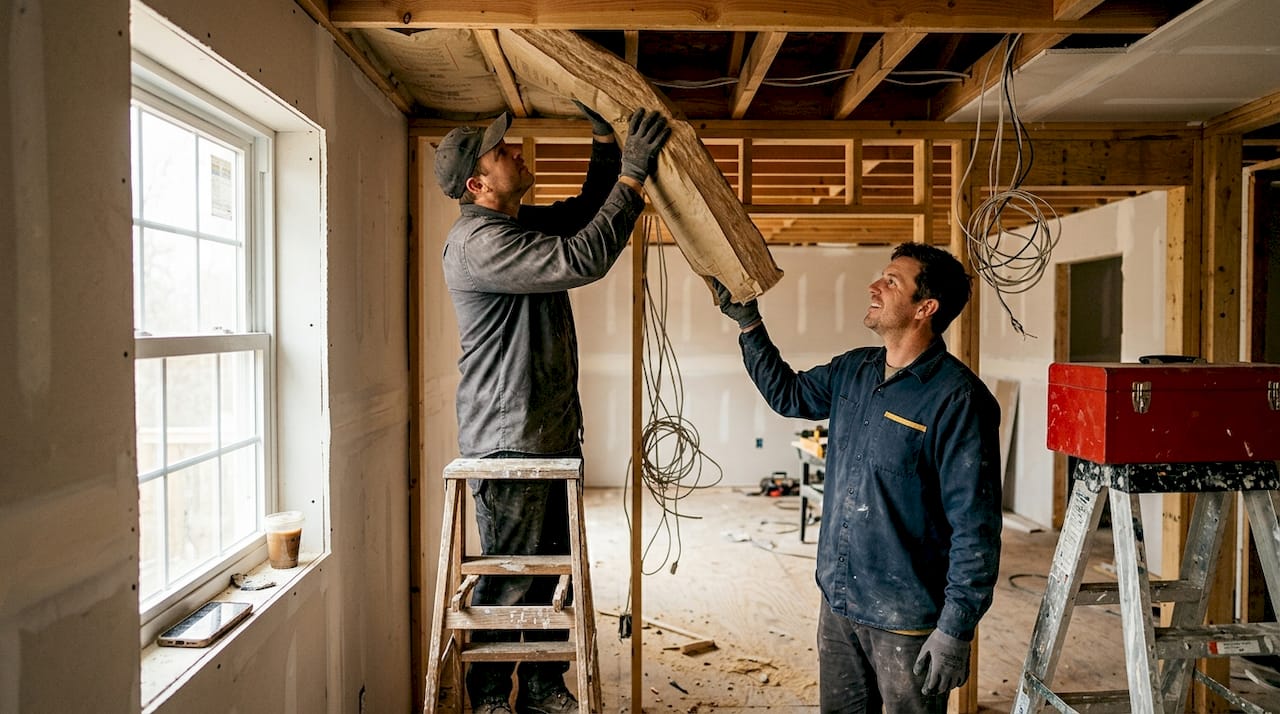
The timing distinction is critical. Upgrades to extra outlets and pre-plumbing for future bathrooms, for example, are cost-effective only during the building phase because walls are open and labor is already on-site. Once drywall goes up, the same upgrade can cost two to four times more.
Here is a quick comparison of the three categories:
| Category | Timing | Focus | Example |
|---|---|---|---|
| Construction upgrade | During or just after build | Systems, structure | Extra circuits, upgraded insulation |
| Renovation | Existing home | Finishes, layouts | Kitchen remodel, new flooring |
| Addition | Existing home | Footprint expansion | Garage, sunroom, extra room |
Common construction upgrades worth considering include:
- Upgraded electrical panel capacity and additional circuits
- Pre-plumbing for future bathrooms or outdoor kitchens
- Enhanced insulation beyond code minimums
- Rough-in for central vacuum systems
- Upgraded HVAC zoning systems
- Structural reinforcement for future solar panel loads
- Water softener loop installation
For a practical breakdown of how renovation steps vs upgrades differ in a real project timeline, it helps to map each decision to the construction phase where it belongs.
Pro Tip: If you are building new or doing a major gut renovation, make a list of every system upgrade you might want in the next 10 years. Installing the rough-in or infrastructure now costs a fraction of what it will cost once the home is finished.
Cost comparison and return on investment (ROI)
Now that you know what a construction upgrade actually is, let’s break down the real numbers. What should you expect to pay, and what is actually worth it?
Renovation costs vary widely by scope and finish level. Nationally, renovations run $15 to $150 per square foot, while luxury-level work in Jacksonville can reach $200 to $400 per square foot. A garage door replacement, by contrast, can return up to 193% ROI, making it one of the most efficient investments in residential construction.
The financial case for doing upgrades during construction rather than after is straightforward. Labor is already mobilized, walls are open, and the incremental cost of adding a circuit or a plumbing rough-in is minimal compared to the cost of retrofitting the same feature years later.
| Upgrade scenario | Estimated cost during build | Estimated cost post-build | Potential savings |
|---|---|---|---|
| Extra electrical circuits | $200 to $500 | $800 to $2,500 | Up to $2,000 |
| Pre-plumbing for bath | $300 to $700 | $1,500 to $4,000 | Up to $3,300 |
| Upgraded insulation | $1,000 to $3,000 | $3,000 to $8,000 | Up to $5,000 |
| HVAC zoning system | $1,500 to $4,000 | $4,000 to $10,000 | Up to $6,000 |
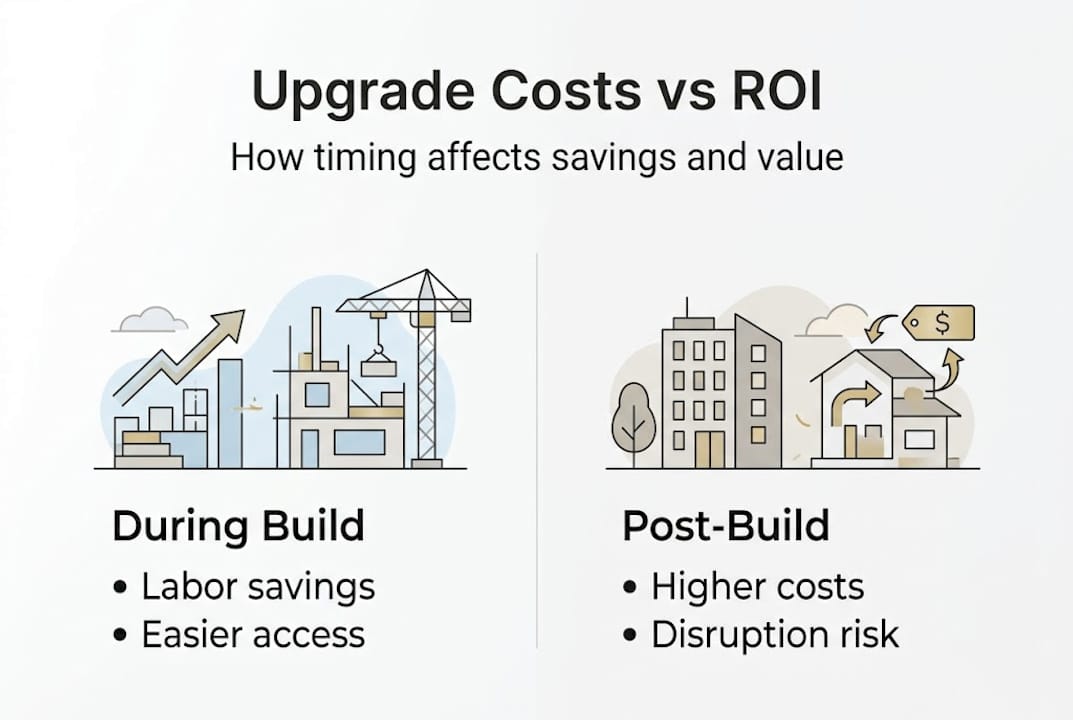
For national renovation spending context, homeowners consistently underestimate how much post-build modifications cost relative to in-build upgrades.
Upgrades with the strongest returns tend to be functional rather than cosmetic:
- High ROI: Insulation upgrades, electrical capacity, kitchen and bath system improvements, energy-efficient windows
- Moderate ROI: Flooring upgrades, lighting packages, smart home pre-wiring
- Lower ROI: Custom millwork, premium tile selections, decorative hardware
For a detailed look at remodeling costs in Jacksonville, local labor rates and material availability play a significant role in final project budgets.
Statistic callout: A garage door upgrade alone can return up to 193% of its cost at resale, while mid-range kitchen remodels return approximately 67 to 80 percent, reinforcing the case for strategic, functional upgrades over purely aesthetic ones.
Smart upgrades for Jacksonville homes
You have seen why costs and timing matter, so what upgrades actually make the most sense for Jacksonville homes specifically?
Jacksonville’s climate presents conditions that directly influence which upgrades deliver the most value. High humidity, intense summer heat, occasional flooding risk, and hard water from local aquifers all create specific demands on a home’s systems. Climate-resilient features like enhanced insulation and water softeners for hard water are particularly smart upgrade choices for this region.
Upgrades that make the most sense before drywall installation in a Jacksonville home include:
- Spray foam insulation in the attic and exterior walls, exceeding Florida Energy Code minimums
- Water softener loop pre-installed in the utility area to protect plumbing and appliances
- Impact-resistant windows and doors for wind resistance in coastal zones
- Whole-home dehumidification system rough-in to manage interior humidity year-round
- Electrical panel upgrade to 200 or 400 amp service to accommodate EV chargers and future demand
- Raised foundation or flood-resistant materials in lower-elevation neighborhoods
For homeowners building with steel framing, energy-saving insulation options specific to steel construction are worth reviewing, since thermal bridging through steel members requires a different insulation strategy than wood frame construction.
“Structural and system upgrades made during construction are the ones that protect your investment for decades. Cosmetic choices can always be changed later, but a properly insulated, correctly wired, and moisture-managed home is the foundation everything else depends on.”
For broader Jacksonville planning tips that account for local zoning and environmental conditions, early planning conversations with a licensed contractor can prevent expensive oversights. Homeowners considering steel framing should also review why steel homes for Florida weather perform differently than wood frame construction in high-humidity, high-wind environments.
Pro Tip: Never skip an upgrade that is physically impossible or extremely costly to add after construction. Insulation behind walls, pre-plumbing, and electrical rough-ins fall into this category. Cosmetic choices can wait. Infrastructure cannot.
Navigating permits, regulations, and risks
Choosing the right upgrades is vital, but being aware of Jacksonville’s permit and regulatory landscape is just as important to avoid costly mistakes.
In Jacksonville, permits are required for plumbing and electrical upgrades, and structural changes made after the initial build can cost two to four times more than the same work done during construction. Skipping permits is not just a legal risk. It can void homeowner’s insurance, complicate a future sale, and result in mandatory demolition of non-compliant work.
Jacksonville’s regulatory environment includes several layers that homeowners must navigate:
- Standard building permits from the City of Jacksonville Building Inspection Division for any structural, electrical, plumbing, or mechanical work
- Historic preservation review for properties in designated historic districts such as Springfield, Riverside, or Avondale
- Coastal construction setback lines for properties near the ocean or tidal waterways, which restrict certain structural modifications
- Flood zone compliance under FEMA’s National Flood Insurance Program, which affects foundation and elevation requirements
Steps to stay compliant during an upgrade project:
- Identify your property’s zoning classification and any overlay districts before planning begins
- Submit permit applications before any work starts, not after
- Schedule required inspections at each phase of work
- Retain all permit records and inspection approvals for future sale documentation
- Confirm contractor licensing and insurance before signing any contract
For a full overview of local permit requirements and what is typically required for residential upgrades, reviewing the scope of services a licensed contractor provides is a practical starting point. Understanding Jacksonville construction codes also helps homeowners set realistic timelines and avoid budget overruns caused by compliance surprises.
Pro Tip: Always confirm permit requirements directly with the Jacksonville Building Inspection Division before finalizing your upgrade plan. Requirements change, and relying on outdated information from non-official sources can cause costly delays.
Why most homeowners underestimate construction upgrades
Here is a hard-won lesson most guides skip: the upgrades that look the least exciting on paper are almost always the ones that matter most.
Homeowners consistently overvalue cosmetic improvements because they are visible and immediately satisfying. New countertops, fresh paint, and premium tile selections photograph well and feel rewarding. But empirical data favors functional over cosmetic upgrades for long-term ROI, and the gap is significant.
The real risk is not choosing the wrong countertop. It is failing to upgrade the electrical panel, skipping the insulation improvement, or not pre-plumbing for a future bathroom when the walls were open and the cost was manageable. These are the decisions that become expensive regrets, because correcting them later means opening walls, relocating systems, and paying full labor rates for work that could have been done incrementally during the original build.
The most experienced contractors will tell you that the clients who are happiest five years after a build are the ones who invested in systems and structure first, and treated cosmetic finishes as a secondary priority. Talking to a qualified professional early, before plans are finalized, is the most reliable way to avoid costly building mistakes that are difficult to reverse once construction is complete.
Next steps: Trusted experts for your upgrade project
Ready to make your construction upgrade plan a reality? Working with a licensed, experienced contractor who understands Jacksonville’s climate, codes, and market conditions is the most direct path to maximizing your investment.
Ofir Engineering has over 15 years of experience delivering residential construction, remodeling, and upgrade projects across Jacksonville. Whether you are planning a new build or updating an existing home, their team provides guidance on which upgrades deliver the best value for your specific situation. Explore their home remodeling experts services, review options for Jacksonville new construction, or browse the full range of Jacksonville construction services to find the right starting point for your project.
Frequently asked questions
What is the main difference between a construction upgrade and a renovation?
A construction upgrade is an optional improvement during or just after building, often targeting systems or structure, while a renovation updates finishes or layouts in an existing home. The timing and scope of each are fundamentally different.
Which construction upgrades offer the highest ROI in Jacksonville homes?
Functional upgrades like improved insulation, upgraded electrical, and kitchen or bath system improvements typically deliver the best ROI for Jacksonville properties. Kitchens, baths, and energy systems consistently outperform cosmetic upgrades at resale.
Are permits required for construction upgrades in Jacksonville?
Yes, permits are required for most plumbing, electrical, and structural upgrades in Jacksonville, with additional review steps for properties in historic or coastal zones.
Can all upgrades be added after construction is complete?
Some upgrades, especially structural or major system changes, are much more difficult and up to 4 times costlier after construction is finished, making early planning essential.
What should Jacksonville homeowners prioritize for construction upgrades?
Prioritize climate-resilient features like insulation and water softeners first, then focus on functional system upgrades such as electrical capacity and HVAC zoning for the best combination of comfort and long-term value.
Recommended
- New Construction Homes Jacksonville FL | Ofir Engineering
- Step-by-step guide to renovating homes in Jacksonville
- Essential construction planning tips for Jacksonville homes
- Commercial construction guide for Jacksonville homeowners 2026
- How Much Are You Spending On Home Improvements?
