
Commercial builder versus alternatives is a question most Jacksonville business owners answer emotionally and regret financially, because the alternative that looks cheapest on a spreadsheet usually moves cost rather than removing it. There are four realistic routes to occupied commercial space: hire a general contractor, self-manage the trades as an owner-builder, take second-generation space that is already built and negotiate a landlord allowance, or use a construction manager under a different contracting structure. Each is genuinely cheaper in a specific situation, and the situations are identifiable in advance. Ofir Engineering is a licensed Florida general contractor (License #CGC 1540016) with 15+ years serving Jacksonville, Ponte Vedra, St. Johns, and Northeast Florida.
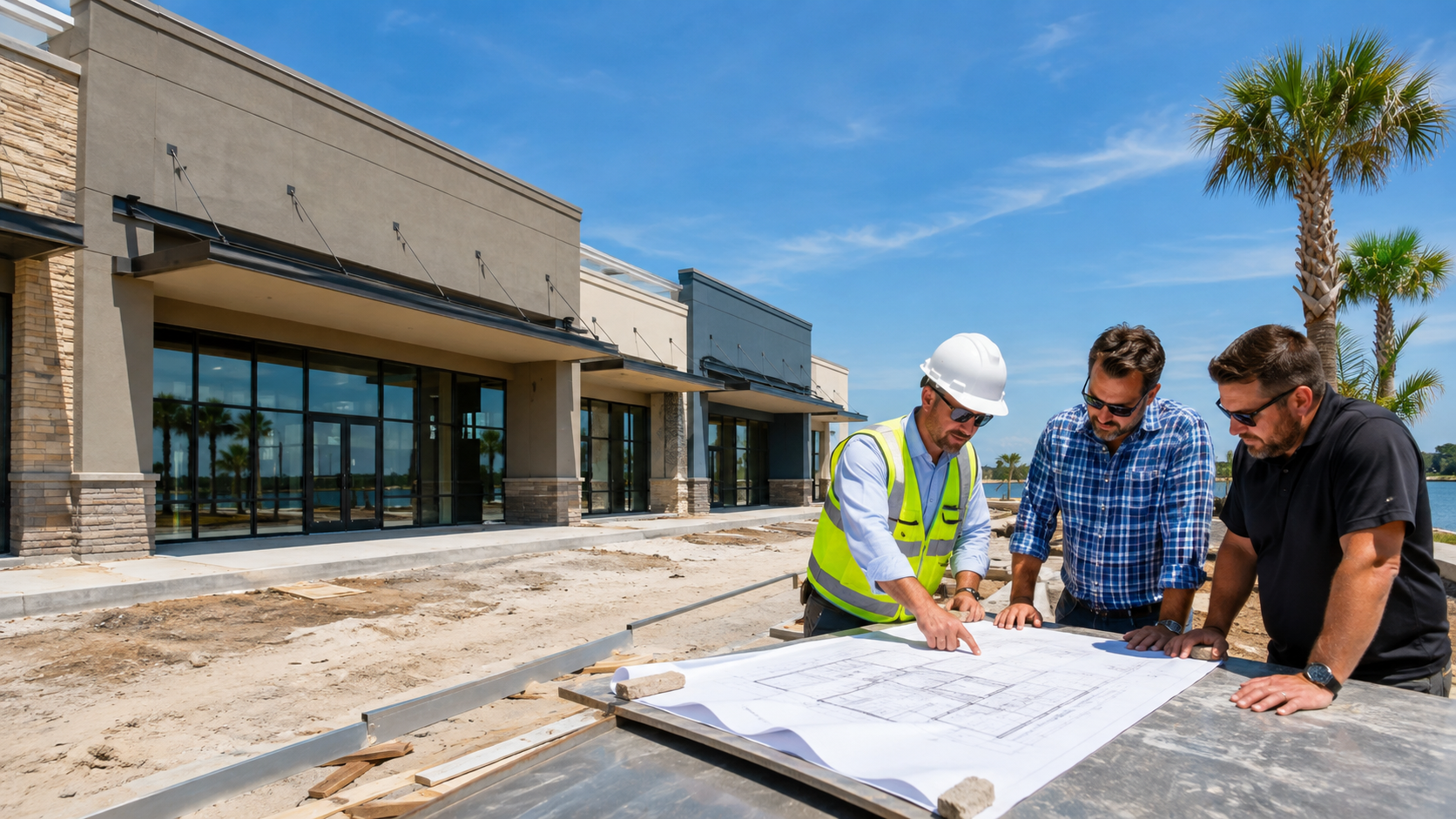
Commercial Builder Versus Alternatives: What You Are Actually Comparing
The comparison people think they are making is a general contractor’s fee against zero. That is not the comparison. A general contractor’s fee buys four things that still have to happen if you do not buy them: scope coordination between trades, schedule management, single-point liability for defects, and the license and insurance that permit and warranty the work. Remove the contractor and those four responsibilities transfer to you, along with the cost of performing them badly.
The genuine variables are your time, your tolerance for risk, whether the work requires a licensed general contractor at all, and how many trades have to be sequenced. A single-trade project with no structural or life-safety scope is a different problem from a build-out involving demolition, framing, mechanical, electrical, plumbing, fire sprinkler, fire alarm, and finishes on a schedule tied to a lease commencement date.
When Self-Managing the Trades Is Genuinely Cheaper
Owner-managed trade contracting works in a narrow band and works well inside it. If your scope is essentially cosmetic — paint, flooring, non-structural fixtures, signage — involving one to three trades with no permit-triggering work, hiring them directly and coordinating them yourself will cost less than a general contract, and the risk if the schedule slips a week is small.
It stops working the moment three conditions appear. The first is structural, mechanical, electrical, plumbing, or life-safety scope, which in Florida requires licensed trades working under permits and, for most commercial work, a licensed general contractor. The second is more than a handful of trades that must be sequenced, because coordination failures compound: an electrician who arrives before the framing is ready does not simply come back tomorrow, they come back in two weeks when their crew is free. The third is a hard date, whether a lease commencement, a loan requirement, or a seasonal opening. Self-management is cheapest when time has no price, and most commercial projects are the opposite.
There is also a liability dimension that owners routinely underestimate. With a general contract, one entity is responsible for defects and carries the insurance for them. With direct trade contracts, every gap between two trades’ scopes is your gap, and every dispute about who caused a defect is your dispute. Verify any contractor’s license status through the Florida DBPR license portal before signing, whichever route you take.
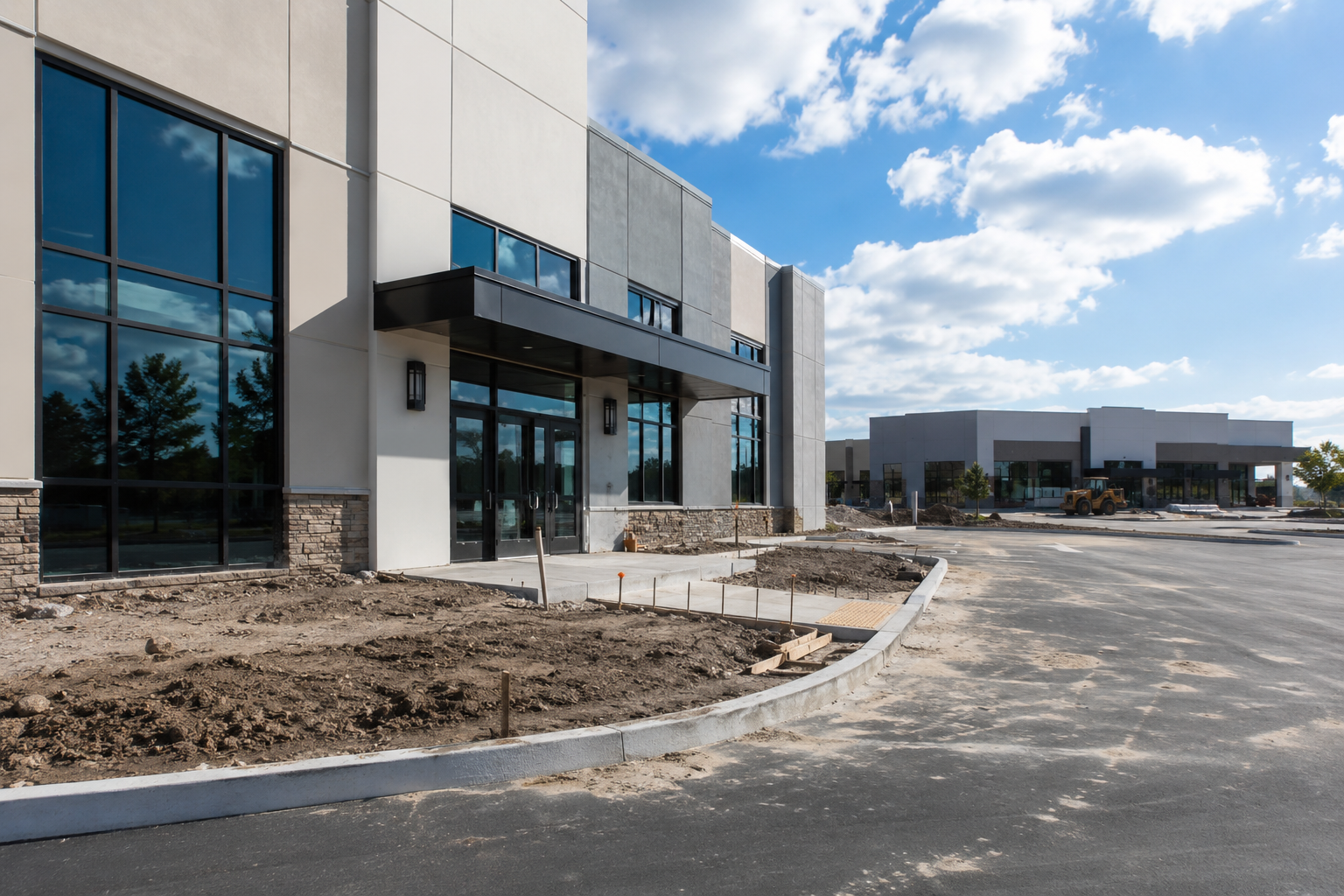
When Taking Already-Built Space Wins
The most underrated alternative is not to build at all. Second-generation space — a suite previously fitted out for a similar use — can be occupied for a fraction of the cost of a full build-out if the existing layout, mechanical capacity, and electrical service suit your operation. The questions to ask are specific: does the existing HVAC tonnage and distribution suit your occupancy, is the electrical service adequate, does the fire sprinkler layout match your intended partition plan, and does the space already meet current accessibility requirements. If the answers are yes, the savings are large and immediate.
Landlord improvement allowances change the arithmetic further. A tenant improvement allowance is real capital contributed to the build-out, and it is negotiable alongside rent, term, and free-rent periods. The trade-off is control: a landlord-delivered build-out is built to the landlord’s standard on the landlord’s schedule, and change requests move slowly. For a straightforward office or service suite that is usually fine. For a space where the build-out is part of the product — a restaurant, a clinic, a specialised facility — the loss of control usually costs more than the allowance is worth.
When a Commercial Builder Is the Cheaper Choice
A general contractor is the lower-total-cost route in four situations. When the work is ground-up construction or a major structural renovation, because the licensing, engineering, and permitting requirements leave no realistic alternative. When the schedule is tied to revenue, because coordinated sequencing is worth more than the fee — a facility that opens six weeks late usually loses more than the entire contractor fee. When multiple permit-triggering trades must be sequenced, because that is precisely the work the fee pays for. And when you need single-point accountability for warranty and defects, which matters most on the systems that are most expensive to fix later.
The practical way to decide is to price two routes properly rather than one. Get a real general contract number that includes coordination, permitting, and closeout, and get a trade-by-trade number that honestly includes your own time, the permitting effort, the contingency for coordination failures, and the cost of a slipped opening date. In our experience the gap narrows dramatically once the second number is complete, and on anything with a hard date it usually reverses.
To compare a build-out against ground-up delivery, see our new construction process, and budget the options with our commercial builder cost guide for Jacksonville. For a scoped comparison of the routes available on your specific space, see our commercial construction service or contact Ofir Engineering.
Frequently Asked Questions
Can I act as my own contractor on a commercial project in Florida?
Owner-builder options are limited on commercial work, and most permit-triggering scope requires a licensed general contractor. Cosmetic, non-permitted work with a small number of trades can reasonably be self-managed; structural, mechanical, electrical, plumbing, and life-safety scope generally cannot.
Does hiring a general contractor really cost more?
It costs more in visible fee and usually less in total. The fee buys trade coordination, schedule management, permitting, and single-point liability. Self-managing does not remove those costs, it transfers them to you along with the risk of a missed opening date.
Is leasing second-generation space cheaper than building out?
Often substantially, if the existing mechanical capacity, electrical service, sprinkler layout, and accessibility suit your use. Verify those four items before signing; a suite that needs its systems reworked can cost more than starting from a clean shell.
What is a tenant improvement allowance worth?
It is negotiable capital toward the build-out, traded against rent, term, and free rent. It is best value on straightforward office or service space. Where the build-out is central to the business, the loss of schedule and design control often outweighs the allowance.
Keep Building With Ofir Engineering
Related discussions & follow us: Facebook · Reddit
Latest & related guides: Explore more Commercial Construction guides →
