
Comparing metal frame homes versus alternatives in Jacksonville comes down to a question most builders answer too generally: cheaper over what period, and on what kind of building. Against wood framing, steel is usually more expensive to erect and less expensive to own. Against concrete block, the answer flips depending on span, height and the design you actually want. Here is how the three structural systems really compare in Northeast Florida, and the specific situations where each one wins. Ofir Engineering is a licensed Florida general contractor (License #CGC 1540016) with 15+ years serving Jacksonville, Ponte Vedra, St. Johns, and Northeast Florida.
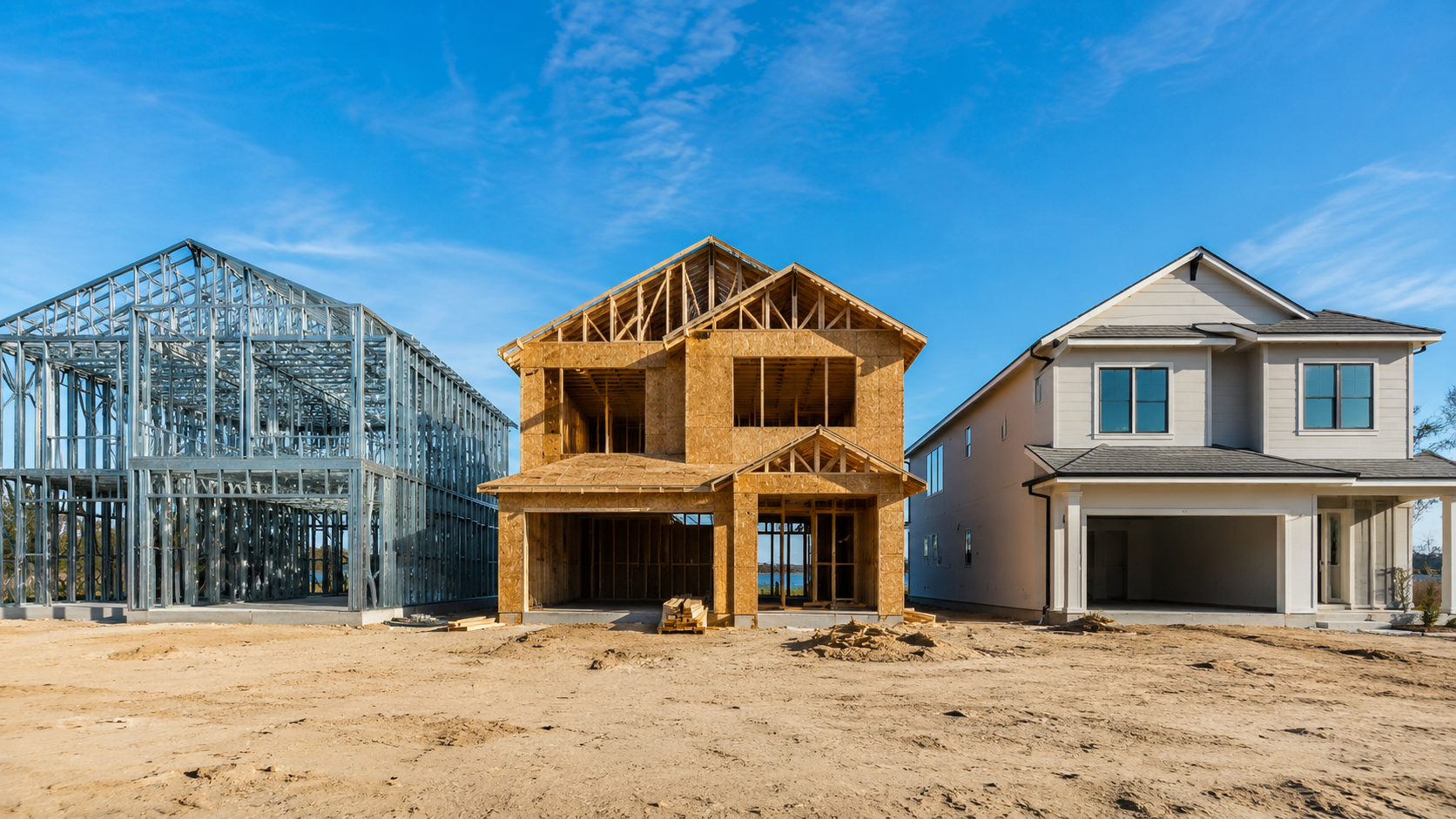
The Three Systems Actually Being Compared
Light-gauge steel framing uses cold-formed steel studs and joists in place of dimensional lumber, assembled with screws and engineered connectors. Wood framing is the default for most Florida residential construction and the system every trade in the market already knows. Concrete block, usually reinforced CMU with poured cells and tie beams, is the traditional Florida coastal wall system and remains extremely common for single-story homes here.
Each behaves differently under this climate’s three real stressors: wind, moisture and pests. Steel does not rot, does not feed termites, and does not warp, but it conducts heat and requires careful detailing to avoid thermal bridging and galvanic issues. Wood is inexpensive and universally understood but is vulnerable to moisture and to Florida’s termite pressure. Block is massive, wind-resistant and pest-proof for the wall assembly but is limited in span and generally still needs a framed roof structure above it.
When Metal Frame Homes Are the Cheaper Choice
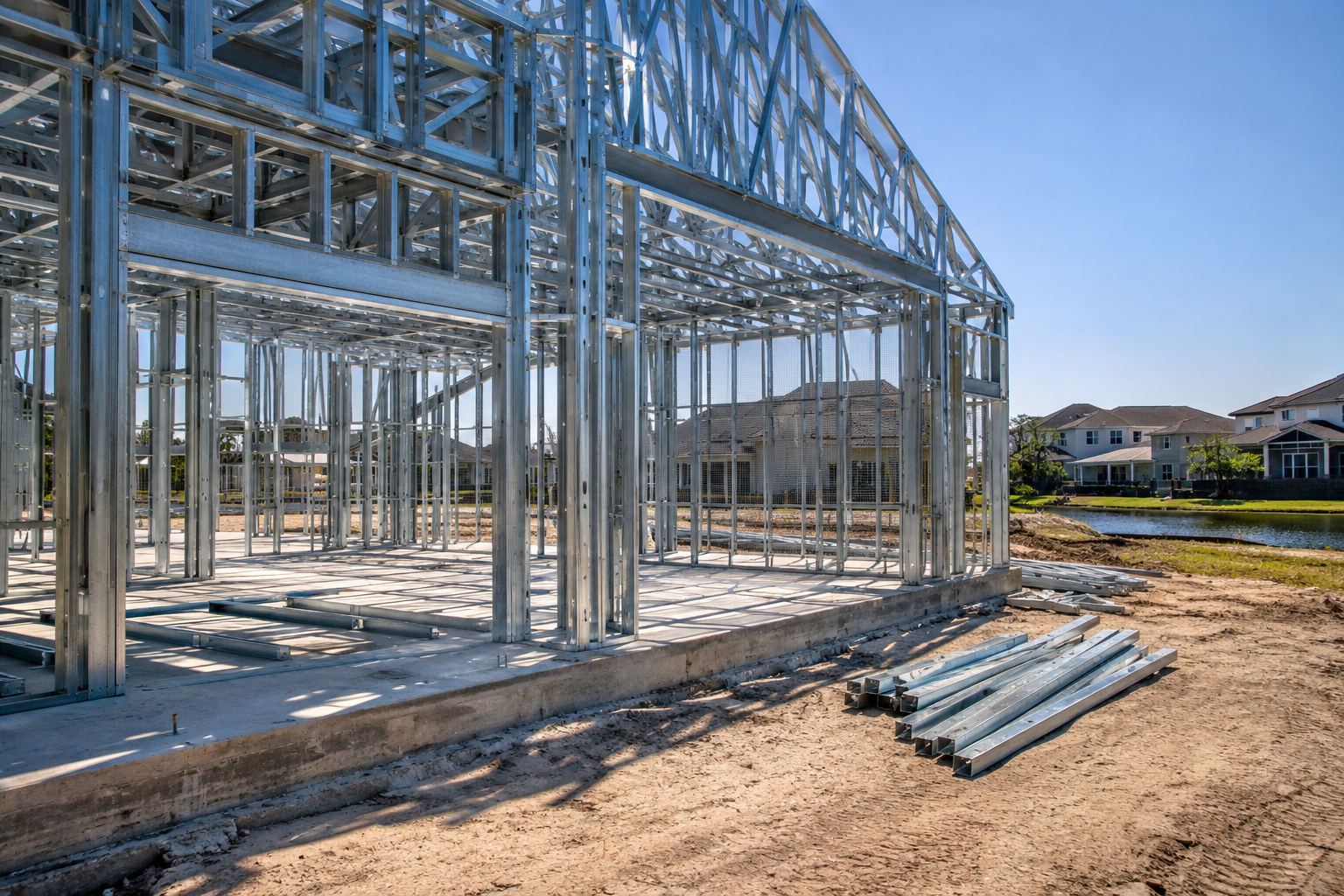
Steel tends to win where its structural properties are actually being used. Long clear spans are the clearest case: open-plan living areas, large great rooms, or garage and pavilion structures where wood would require engineered beams or intermediate supports. Steel carries those spans efficiently, and the material premium is offset by what you do not have to add.
Two-story and taller structures are the second case, because steel’s strength-to-weight ratio and dimensional stability compound with height while block becomes progressively more expensive to reinforce. Complex or repetitive geometry is the third – components can be pre-engineered and cut to precise length off site, which cuts field waste and speeds erection, particularly on multi-unit projects where the same frame repeats.
Then there is the ownership case. Over a long hold, steel’s immunity to termites and rot removes a category of maintenance and repair that Florida homeowners genuinely pay for, and its non-combustibility plus wind performance can improve insurability. If you intend to hold the house for decades, the total-cost comparison looks very different from the bid-day comparison. Our analysis of whether steel frame homes are worth it in Florida runs those numbers.
When Steel Is Not the Cheaper Choice
On a conventional single-story home with ordinary spans and a simple rectangular footprint, steel usually costs more without delivering a structural advantage you needed. Block or wood does the job at lower first cost, and the ownership savings are smaller because there is less structure to protect.
Labor availability is the second constraint and it is a real one in this market. Framing crews experienced with light-gauge steel are less common in Northeast Florida than wood crews, which narrows your subcontractor pool and can raise the price – or the schedule risk – regardless of material cost. Short holding periods are the third: if you plan to sell within a few years, the durability advantages accrue to the next owner, not to you, and the appraisal is unlikely to fully credit the system.
Finally, if the design is being value-engineered aggressively, steel’s detailing requirements work against it. Thermal breaks, careful insulation strategy, and correct isolation from dissimilar metals and from concrete are not optional, and a builder who trims them to hit a number creates problems that show up as condensation or corrosion later. Our comparisons of steel frame cost versus wood and steel frame versus concrete block break down the line items.
The Jacksonville Variables That Decide It
Wind is the first. Northeast Florida’s design wind speeds and wind-borne debris requirements demand a continuous load path from roof to foundation in every system, and steel provides that connection naturally through bolted and screwed engineered connectors. Under the code framework published by the Florida Building Commission, all three systems can be made compliant – but steel and block get there with less added hardware than wood.
Moisture and termites are the second. Jacksonville’s humidity and subterranean termite pressure are the strongest practical argument for steel or block over wood, and they are the reason so much of Florida’s older housing stock is block. Insulation strategy is the third: steel studs conduct heat, so a steel-framed wall needs continuous exterior insulation to perform, which adds cost that must sit in the comparison honestly. Our article on steel frame energy efficiency and insulation explains how that is detailed.
How to Make the Decision on Your Project
Answer four questions in order. What are the longest spans and the building height – if either is significant, steel moves up. How long will you hold the property – a long hold favors durability, a short hold favors first cost. What does the local subcontractor market look like for the system you are considering, priced with real bids rather than national averages. And what does your insurer say about each system for your specific parcel.
Then price at least two systems for the same drawings. Comparing a steel bid to a national wood-framing average is not a comparison. Comparing two real bids on your plans, for your lot, is. Our broader look at block versus wood versus steel is the companion piece to this decision.
Ofir Engineering is a licensed Florida general contractor, License #CGC 1540016, and any contractor can be verified through the Florida DBPR portal. Our steel frame construction team prices steel against the alternatives on the same drawings so the comparison is real; start at our contact page.
Frequently Asked Questions
Are metal frame homes cheaper than wood in Jacksonville?
Usually not at bid day on a simple single-story home, where wood is less expensive to buy and to erect. Steel becomes competitive when long spans, extra height, or repetitive geometry are involved, and it tends to win over a long ownership period because it does not rot or feed termites.
How do metal frame homes compare to concrete block?
Block is excellent for single-story wall assemblies and is the Florida coastal default, but it is limited in span and gets progressively more expensive to reinforce as buildings get taller. Steel handles height and open spans more efficiently. Block also still needs a framed roof structure above it.
Do steel frame homes cost more to insure in Florida?
Generally the opposite. Non-combustibility and wind performance can help, and steel is immune to termite damage. Actual premium outcomes depend on your carrier, your parcel and your wind mitigation report, so get quotes on the specific system before committing.
Is it hard to find crews for steel framing in Northeast Florida?
It is harder than for wood. The pool of framing crews experienced with light-gauge steel is smaller here, which can affect both price and schedule. This is a legitimate reason to price the system with real local bids rather than national cost data.
Keep Building With Ofir Engineering
Related discussions & follow us: Facebook · Reddit
Latest & related guides: Explore more Steel Frame Construction guides →