Are steel frame homes worth it in Florida? For many coastal Northeast Florida homeowners, the answer is yes — once you look past day-one price and consider the full 30-year picture. Wood framing usually looks cheaper at the start, but a steel frame’s resistance to rot, termites, fire, and storm damage can narrow or reverse that gap over the life of the home. The honest answer depends on your priorities, your budget, and how long you plan to own the home. Ofir Engineering is a licensed Florida general contractor (License #CGC 1540016) serving Jacksonville, Ponte Vedra, St. Johns, and Northeast Florida.
Steel Frame Homes: The Upfront Premium: What You Pay Day One
Let us start with the part that is true: a steel-frame home often carries a higher upfront cost than a comparable wood-frame home. The material itself, the engineered connections, and the specialized labor all factor in. There is no point pretending otherwise — on the day you sign the contract, wood typically looks like the cheaper option, and for some budgets and timelines that matters.
But the day-one price is only one number in a much longer story. A home is a 30-year asset, often longer, and the costs that show up over those decades are where the comparison really lives. For a full breakdown of what goes into pricing, see our guide to the cost to build a custom home in Jacksonville. For the day-one materials-and-labor comparison specifically, see does a steel-frame home cost more than wood.
The 30-Year Math: Where Steel Closes the Gap
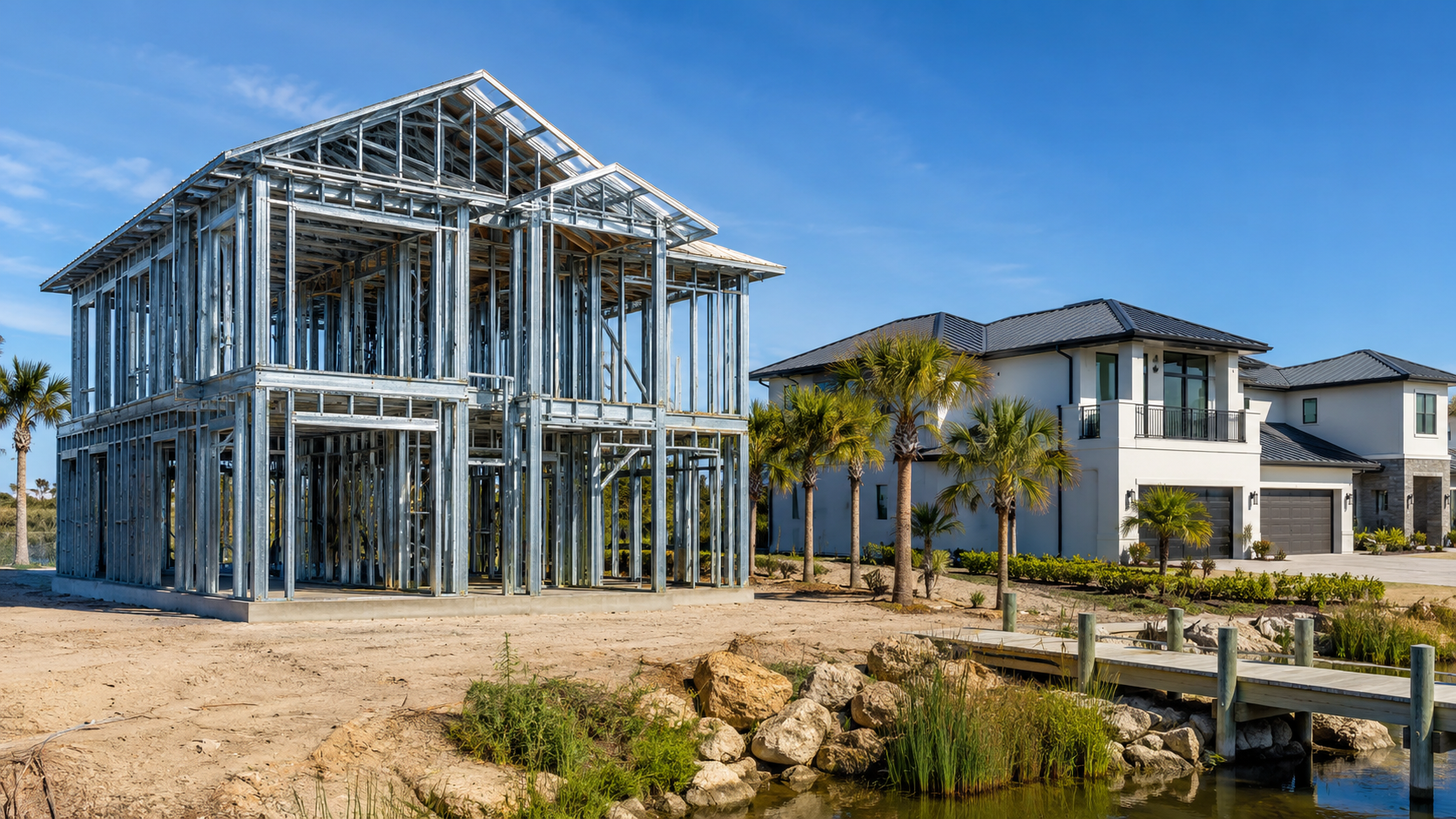
Over three decades, several recurring costs and risks tilt the comparison. We will not invent specific dollar figures — every home and situation is different — but the categories are well established:
Termite protection. Wood framing in Florida typically requires a termite bond and ongoing treatment to protect against an insect that is relentless in our climate. Steel is not food for termites, so there is no termite bond to maintain on the steel structure and no annual treatment expense for the frame itself. Over 30 years, those avoided costs add up.
Rot and moisture repair. Wood can rot when exposed to our humidity and wind-driven rain over time, leading to repairs that are easy to overlook in a day-one budget. Cold-formed steel does not rot, and it is dimensionally stable — it will not warp, twist, or shrink. That stability means fewer callbacks for stuck doors, cracked drywall, and squeaky floors as the home ages.
Durability and storm resilience. A steel frame engineered to the Florida Building Code is built to carry hurricane wind loads with a documented load path. A more durable, non-combustible structure can mean less storm-related damage and repair over a lifetime of ownership, which is a real, if hard-to-quantify, long-term value.
Insurance and Long-Term Value
Building materials and construction type can influence home insurance, and a non-combustible, storm-resilient frame is the kind of feature insurers and appraisers tend to view favorably. We will be honest here too: we cannot promise a specific premium reduction, because rates depend on the carrier, the full home design, location, and many other factors. What we can say is that durability and non-combustibility are genuine assets, and they are worth discussing with your insurance agent as part of the value equation.
There is also resale and longevity to consider. A frame that resists rot, termites, and fire, and that holds its engineered shape for decades, is a quality story you can tell a future buyer. To weigh steel against the alternatives directly, read our comparison of block, wood, and steel construction in Florida.
When Steel Is Worth It — and When It Might Not Be
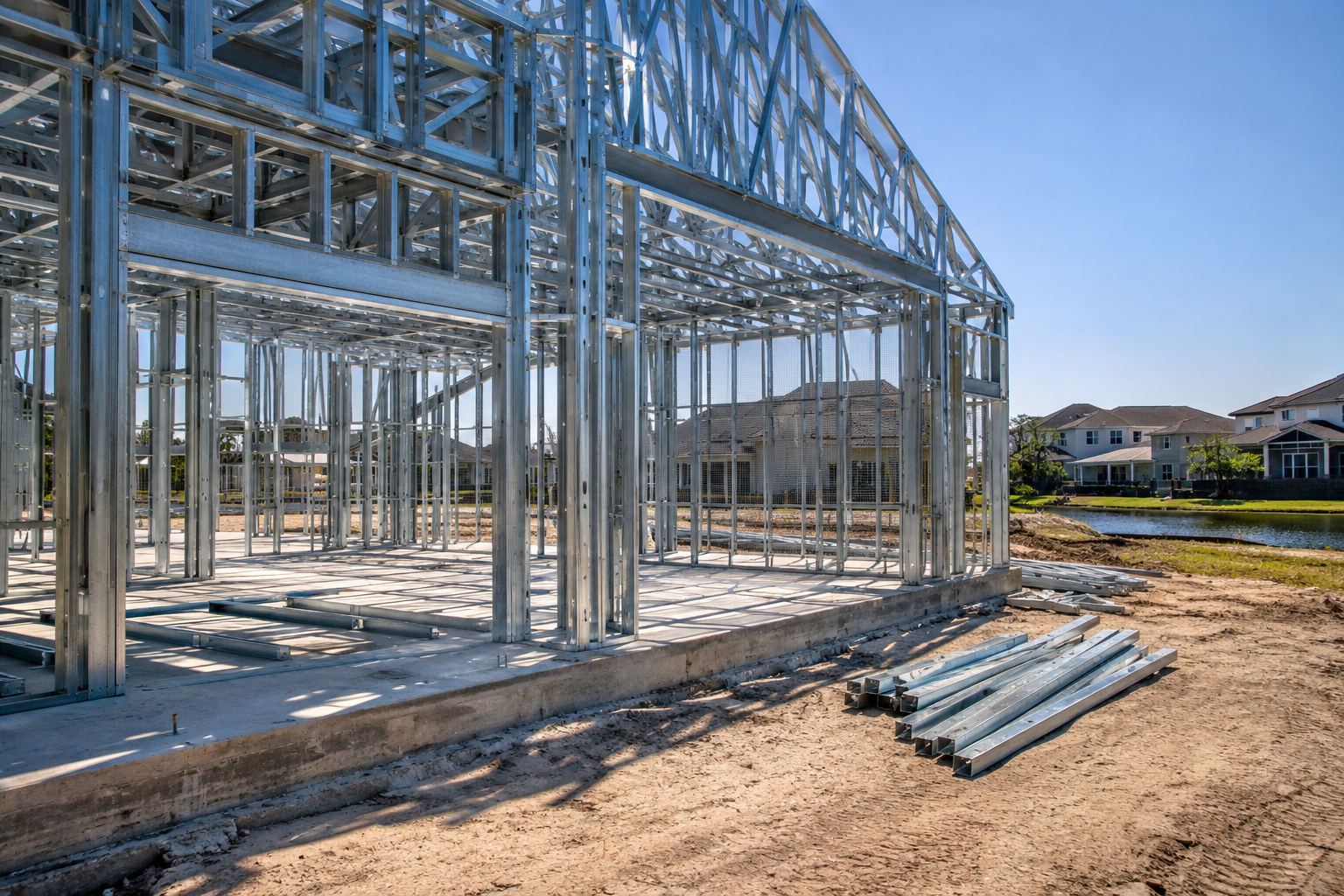
Steel framing tends to be most worth it when you plan to own the home long enough to capture the durability and maintenance advantages, when you value storm resilience in a coastal location, and when you want a stable, low-maintenance structure for open or two-story designs that benefit from steel’s strength-to-weight ratio. For those homeowners, the 30-year math often favors steel.
It may be a tougher call if your budget is tight day one, if you are building to sell quickly, or if a well-detailed wood or block home already meets your needs and risk tolerance. The right answer is the one that fits your situation — and a good contractor will tell you that honestly rather than push one material on everyone. Explore our custom steel-frame home approach to see whether it fits your plans.
Frequently Asked Questions
Are steel-frame homes worth the higher upfront cost in Florida?
For many homeowners, yes. Steel usually costs more day one, but avoided termite treatment, no rot repair, durability, and potential insurance and resilience benefits can narrow or reverse the gap over a 30-year ownership period.
What long-term costs does a steel frame save over 30 years?
Over a long ownership period, a steel frame avoids termite bonds and treatment, resists rot so there is less moisture repair, and stays dimensionally stable to cut callbacks — and its durability and non-combustibility can support insurance and resilience value. For the day-one material price, see our separate steel-versus-wood cost comparison.
Will a steel-frame home lower my insurance?
It may help, but we cannot promise a specific reduction. A non-combustible, storm-resilient frame is the kind of feature insurers view favorably, but rates depend on your carrier, location, and full home design. Ask your insurance agent directly.
How long do steel-frame homes last?
Cold-formed steel does not rot, warp, or feed termites, and it is non-combustible, so a properly designed and protected steel frame is built to hold its engineered shape and perform for the long life of the home in Florida’s climate.
Talk Through the Numbers With Ofir Engineering
Deciding whether a steel-frame home is worth it for your situation deserves an honest conversation, not a sales pitch. Ofir Engineering can walk you through the upfront and long-term costs for your specific project in Jacksonville, Ponte Vedra, or St. Johns and help you choose the right framing for your goals. See how we build in our steel construction capabilities. Contact us to get started.
For local permitting and building codes, see the City of Jacksonville Planning & Development.
