

If you're getting ready for your first major renovation in Jacksonville, you're probably feeling two pressures at once. You want the project done right, and you need the numbers to work. That's why learning how to hire a general contractor is less about finding someone with a nice website and more about controlling risk, protecting timeline, and keeping your renovation aligned with ROI. Backed by Florida general contractor license CGC 1540016, the Ofir Engineering team serves clients across Jacksonville, St. Johns, and Clay County.
In Northeast Florida, construction presents greater challenges than many first-time investors anticipate. Moisture, wind-load requirements, permitting, subcontractor coordination, and material lead times all show up fast once walls open and inspections begin. A solid contractor can keep a project moving. A weak one can burn margin through delays, change orders, and rework.
Table of Contents
- Define Your Project Before You Search
- Finding and Vetting General Contractors in Jacksonville
- Key Questions to Ask During the Contractor Interview
- Deciphering Bids and Comparing Apples to Apples
- Contract Essentials and Florida Permit Navigation
- Red Flags and Northeast Florida Construction Insights
- FAQ
Define Your Project Before You Search
Most hiring mistakes happen before a contractor is ever called. Owners start with a loose idea, ask for pricing too early, and then compare estimates built on different assumptions. That's how budgets drift before work even starts.
A contractor can only price what you define. If your project description says “update kitchen,” you'll get vague bids, broad allowances, and room for conflict later. If your project description specifies cabinet layout, countertop type, appliance scope, flooring, lighting, drywall repairs, paint coverage, permit responsibility, and finish level, you'll get something much more useful.
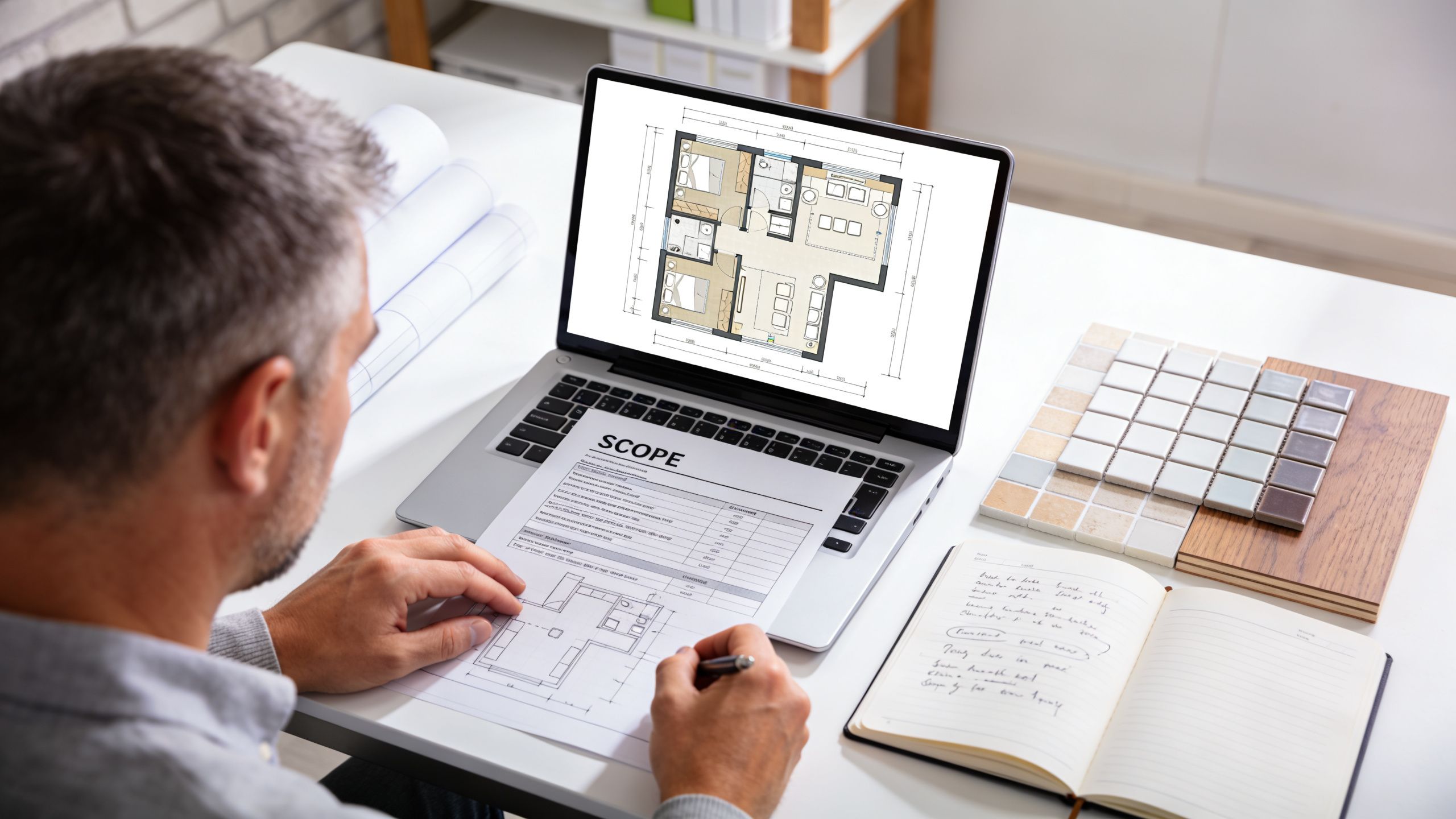
Build a real scope of work
Your Scope of Work, or SOW, is the operating document for the project. It should list what is included, what is excluded, who is supplying materials, what needs permit review, and how success will be judged at the end.
Include these items before you request bids:
- Project description: Define each room or area separately. Write “replace flooring in living room, hall, and bedrooms” instead of “new floors.”
- Demolition details: Identify what stays and what goes. This matters for labor, haul-off, dust control, and wall repair.
- Material decisions: Name products where you can. If you don't know exact brands yet, define quality level and finish category.
- Site conditions: Note occupancy, access hours, parking, HOA restrictions, and whether the property is vacant or tenant-occupied.
- Permit-related work: Flag electrical, plumbing, structural, roofing, window, or framing items early.
A common pitfall is skipping a detailed SOW. That leads to 25% of projects exceeding their budget by 20% or more due to scope creep, and stronger project definition can reduce bid inaccuracies by up to 30% according to this contractor hiring guide.
Practical rule: If two contractors can read your scope and picture different end results, your scope isn't finished.
Set the budget and timeline before bids
Set your budget in layers. Separate hard costs, such as labor and materials, from soft costs like design, permit fees, carrying costs, and inspections. Then add a contingency. A contingency in the 10-20% range is standard practice for renovation planning, especially in older Jacksonville properties where hidden conditions show up after demolition.
Your timeline should also be more than a target finish date. Break it into milestones like design completion, permit submission, demolition, rough trades, inspection points, finishes, punch, and turnover. That helps you judge whether a contractor's schedule is realistic or just optimistic.
If you need help understanding how scheduling should flow, this guide to a home construction timeline is useful for mapping the sequence before you start collecting bids.
Finding and Vetting General Contractors in Jacksonville
The best contractor search is a funnel. Start broad, filter fast, and verify everything. Don't rely on charisma, a polished proposal, or a friend-of-a-friend recommendation alone.
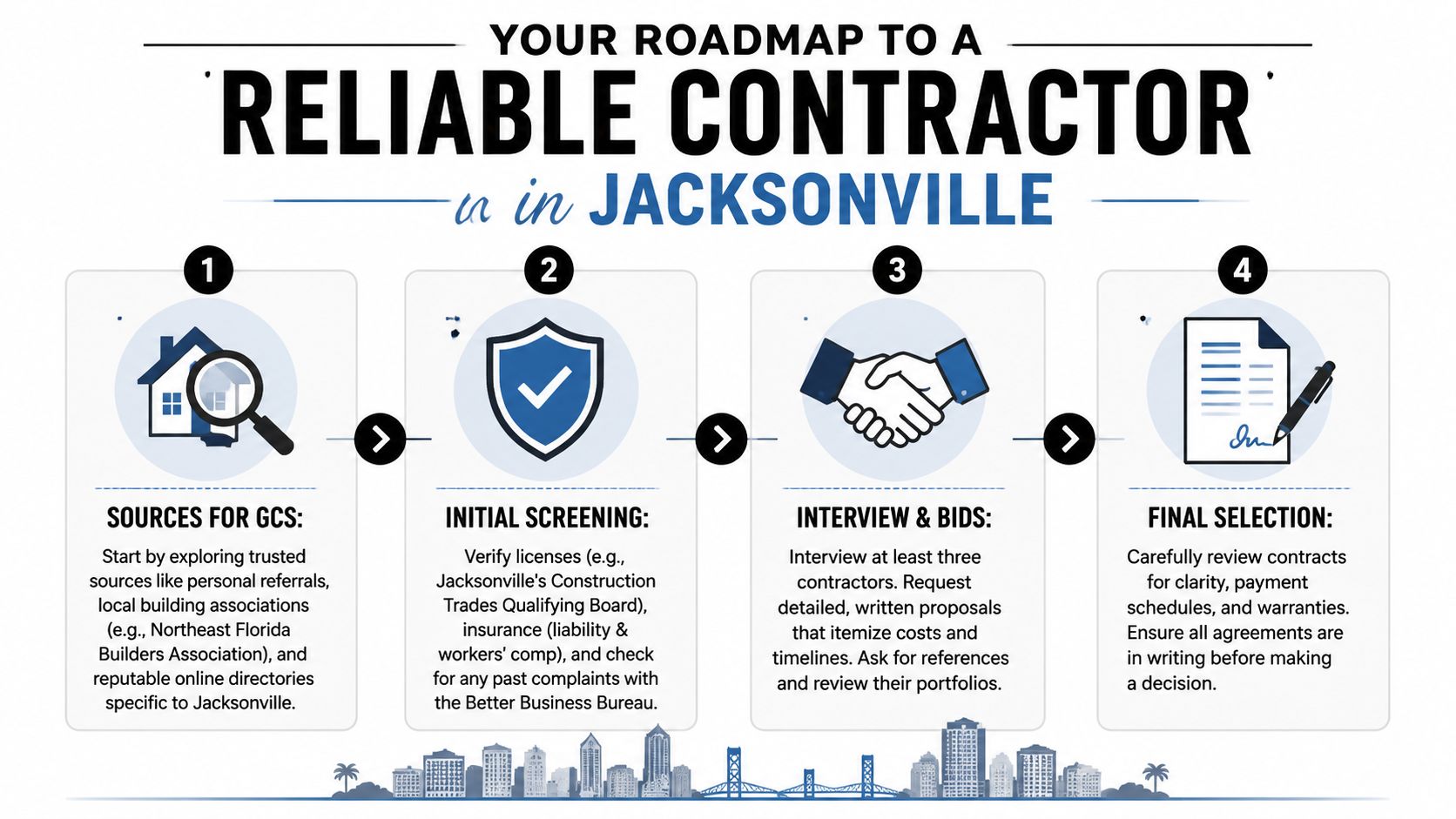
Start with a shortlist, not a random search
For Jacksonville investors and homeowners, good sources usually include local referrals, investor circles, neighbors, HOA contacts, and contractors already known for your project type. A company that handles ground-up construction may not be the right fit for a fast-turn interior renovation, and a remodel specialist may not be the best choice for structural additions.
Build a shortlist of at least three candidates who do similar work. Look for relevant project photos, local job history, and signs they understand Florida code realities. If you want another perspective on selecting your ideal renovation contractor, that overview is a helpful companion to your own screening process.
Verify credentials the hard way
This part is not paperwork theater. It's risk control.
Ask each contractor for:
- State license information: Verify it through the Florida Department of Business and Professional Regulation.
- General liability insurance: Request the certificate and confirm the policy is active.
- Workers' compensation coverage: This is critical if crews will be working on your property.
- Bonding information: If applicable, ask what protection it provides and how claims work.
- Recent comparable projects: Not just polished portfolio shots. Ask for addresses, scope type, and timeline context.
According to Crest Management analysis, 40% of project failures stem from unverified insurance, and those failures can lead to 15-20% cost overruns due to accidents. The same analysis says rigorously checking licenses, insurance, and references can reduce project disputes by as much as 75% compared to casual hiring practices, as explained in their contractor selection guidance.
Insurance verification matters most when everything goes wrong. By then, it's too late to discover the certificate was outdated or the coverage didn't match the work.
Review reputation for patterns
Don't obsess over one bad review. Look for patterns. Repeated complaints about communication gaps, disappearing crews, billing surprises, failed inspections, or unfinished punch lists are more useful than star ratings alone.
Check:
- Better Business Bureau history: Focus on unresolved complaints and the nature of the issue.
- Google and Yelp reviews: Read the low reviews and the contractor's replies.
- Reference calls: Ask recent clients how the contractor handled schedule slips, hidden conditions, and cost changes.
- Jobsite discipline: If possible, drive by an active project. Clean staging, clear supervision, and organized material storage tell you a lot.
A strong contractor should be able to explain process, show proof, and answer direct questions without getting defensive.
Key Questions to Ask During the Contractor Interview
A contractor interview is not a price meeting. It's a stress test for how that company will behave once your property is open, your money is committed, and something unexpected shows up behind a wall.
In a tight labor market, process matters as much as technical skill. 91% of firms report trouble filling positions, and clear communication with established systems can prevent over 60% of project issues that arise from misaligned expectations, according to Nationwide's construction industry overview. That's why your questions should focus on operations, supervision, and decision-making.
Ask about process, not just price
Use the interview to find out how they run work, not just how they estimate it.
Ask questions like these:
- Who will manage my project day to day: You need one accountable point of contact.
- How often will I get updates: Weekly site meetings, email summaries, shared photos, and change logs are all reasonable if they're consistent.
- How do you handle change orders: The answer should include written pricing and approval before extra work starts.
- How do you manage subcontractors: Ask who schedules them, who checks their work, and who is onsite when trades overlap.
- What causes delays on projects like mine: Good contractors answer this directly and explain how they mitigate it.
- How do you protect occupied homes or finished areas: Dust control, floor protection, cleanup, and access planning are practical signs of professionalism.
If you want a plain-English backgrounder on insurance for Florida general contractors, it can help you ask sharper follow-up questions when coverage documents are handed over.
Listen for operational maturity
A polished salesperson can answer basic questions well. The key signal is whether the contractor can describe a repeatable system.
Listen for signs like:
- they use written scopes and written change orders
- they can explain inspection sequencing
- they know who pulls permits
- they define how selections are finalized
- they can describe what happens when materials arrive late
- they speak clearly about supervision, not vaguely about “the crew”
The best interviews feel boring in a good way. Clear answers, clear roles, clear paperwork.
If the conversation keeps drifting back to “we'll figure it out as we go,” you're not interviewing a manager. You're interviewing a future problem.
Deciphering Bids and Comparing Apples to Apples
A stack of bids doesn't help if each contractor priced a different project. One includes permits, one excludes haul-off, one assumes builder-grade finishes, and one left out electrical upgrades. The bottom-line number becomes meaningless.
That's why serious owners level bids line by line. A simple spreadsheet is enough. List each major scope category, then compare what each contractor included, excluded, allowed, or left vague.
What a usable bid should show
A useful estimate should break out key categories such as demolition, framing, drywall, mechanicals, finishes, fixtures, painting, cleanup, permit responsibility, and allowances. It should also note assumptions. If a bid says “tile allowance” without defining square footage, labor coverage, or material class, you don't have a real comparison.
Look closely at these trouble spots:
- Allowances: These are placeholders, not fixed commitments.
- Exclusions: If permits, dumpsters, or final cleaning are excluded, your real cost is higher.
- Vague finish language: Terms like “standard fixtures” invite disputes later.
- Schedule assumptions: A fast timeline can look attractive, but only if staffing and material sequencing support it.
- Change order exposure: Thin bids often recover margin through extras once work begins.
A practical tool can help organize your review. This construction bid proposal template is a solid reference for spotting missing line items and tightening your comparison sheet.
Sample Bid Comparison
| Item | Contractor A Bid | Contractor B Bid | Contractor C Bid |
|---|---|---|---|
| Demolition | Included | Included | Included |
| Dumpster and haul-off | Included | Excluded | Included |
| Permit handling | Included | Included | Not clearly stated |
| Electrical updates | Allowance listed | Included with scope note | Excluded |
| Flooring material | Owner supplied | Contractor supplied | Allowance listed |
| Paint scope | Walls only | Walls and trim | Vague |
| Cleanup | Final clean included | Basic broom clean | Not stated |
| Change order process | Written approval noted | Not described | Written approval noted |
Use a table like this and force clarity before selecting anyone. If a contractor resists clarifying assumptions in writing, that resistance tells you more than the bid itself.
A low bid is only a bargain when the scope is complete, the materials are right, and the contractor can actually deliver it.
Contract Essentials and Florida Permit Navigation
A clean contract protects your downside before the first wall comes down. In Jacksonville, that matters even more because permit timing, inspection scheduling, flood-zone requirements, and wind-resistance details can affect both holding costs and resale.
Treat the agreement as the project playbook, not a formality. If a contractor says, “We'll figure that out in the field,” the contract is not finished.
What belongs in the contract
Your contract should match the final scope, pricing, and selections you approved. If those documents conflict, the contractor usually follows the contract language first, which is why vague terms cost owners money later.
Include these items in writing:
- Full scope of work: Room-by-room or trade-by-trade detail that matches the bid package
- Payment schedule tied to progress: Draws based on completed work and passed inspections where applicable
- Start date and substantial completion terms: Clear timing language, plus what counts as delay, weather impact, or owner-caused pause
- Change order rules: Written pricing and written approval before extra work starts
- Material and product specifications: Brand, model, grade, finish, and substitution approval process
- Permit responsibility: State who pulls permits, who attends inspections, and who corrects failed inspection items
- Site protection and cleanup: Dust control, debris removal, temporary weather protection, and daily jobsite standards
- Warranty terms: Coverage period, exclusions, and response process for punch list or callback items
- Lien release requirements: Partial releases during the job and final releases before closeout
- Dispute procedure: Mediation, venue, attorney fee terms, and any cure period before termination
Payment terms deserve close attention. Keep deposits reasonable, tie progress payments to visible milestones, and hold final payment until punch list work is finished, final inspections are complete, and closeout documents are in hand. For an investor, that last step protects both cash flow and exit value.
Florida permit handling affects risk and ROI
Permit language should be specific. “Permits included” is not enough. The contract should state which permits are being pulled, whether plan revisions are included, who pays reinspection fees if work fails, and whether the contractor is carrying the job through final approval.
That matters in Northeast Florida because code issues are not theoretical. Window and door replacements may trigger wind-load questions. Structural changes can bring engineering review. In some Jacksonville neighborhoods, older homes also create surprises once walls are open, especially around electrical, plumbing, and framing.
I also look for contract language on materials and methods that fit Florida conditions. If you are renovating for long-term durability, ask how the contractor plans for moisture management, corrosion exposure, and storm resistance. On some projects, products like Light Gauge Steel make sense because they can improve durability and dimensional consistency, but they may also affect pricing, lead times, and the trades you need onsite. That trade-off should be discussed before signing, not after framing starts.
For a local code and documentation overview, review these permit requirements in Florida while you check the contract language.
Lien protection is part of the hiring process
Florida lien law can create problems for owners who pay on time but do not collect the right paperwork. If the general contractor uses subcontractors or material suppliers, require a process for lien releases with each draw and at project closeout.
Keep a simple file with the signed contract, change orders, permit card, inspection record, invoices, releases, and warranty documents. If you refinance, sell, or file an insurance claim later, that paperwork saves time and prevents expensive disputes.
A good contractor will not resist this level of documentation. They already run jobs that way.
Red Flags and Northeast Florida Construction Insights
Some contractor red flags are universal. Others only become obvious when you understand how building in Jacksonville works.

Red flags that usually get worse after demo
Watch for pressure tactics early. If a contractor pushes for a fast signature, asks for large cash payments, avoids written detail, or gets vague about licensing and insurance, the project usually won't get cleaner once work starts.
Other warning signs include:
- No recent references: Not handpicked testimonials. Real recent clients.
- Thin documentation: A one-page estimate for a complex remodel is not enough.
- Unclear supervision: If nobody seems accountable onsite, small issues compound quickly.
- Dismissive attitude toward permits: This is a direct threat to resale, insurance, and safety.
- No defined cleanup or site protection plan: That often signals weak project discipline overall.
Jacksonville renovations also expose weak contractors fast when inspections, scheduling, and subcontractor handoffs start colliding. If you want a sense of how project flow depends on trade management, this overview of subcontractor coordination shows why supervision is not an administrative detail. It's core project control.
Jacksonville and Northeast Florida factors that change hiring
Florida hiring guides often stop at licenses and reviews. That's not enough for this region. In Northeast Florida, you need a contractor who understands wind exposure, moisture management, material durability, and the practical differences between systems like wood frame and Light Gauge Steel.
General hiring guides often miss specialized system expertise like LGS, which is especially important in hurricane-prone areas. A 2025 ASCE report noted that many post-hurricane rebuilds in Florida failed inspections due to improper LGS installation, and Angi's hiring guidance highlights the importance of vetting a contractor's experience with Florida Building Code wind-load requirements and specialized materials.
Ask direct questions such as:
- What projects have you built or renovated with Florida wind-load requirements in mind
- What is your experience with Light Gauge Steel framing or structural retrofit work
- How do you handle moisture-prone assemblies, exterior transitions, and envelope detailing
- What inspections typically create problems on projects like mine
- How do you coordinate engineering, field changes, and permit revisions if conditions change
A contractor who has real local experience will answer with specifics. They'll talk about framing details, inspections, sequencing, and product choices. A contractor without that background will usually stay general.
This short video adds useful perspective on evaluating contractor reliability before you commit:
In Jacksonville, a contractor isn't just building the project you see. They're building the structure's response to humidity, storms, inspections, and long-term ownership.
FAQ
First-time investors in Jacksonville usually ask the same thing after they collect a few bids. How do you choose without overpaying, under-scoping the work, or handing control to the wrong contractor? The short answer is to make decisions from the paperwork, the process, and the contractor's local track record, not from personality alone.
How many contractors should I interview
Three is usually the right number for a mid-size renovation or value-add project. That gives you enough range to compare communication, scheduling discipline, and bid detail without wasting weeks chasing estimates you will never seriously consider.
If one contractor is much higher or much lower than the other two, treat that as a signal to examine scope gaps, assumptions, and exclusions.
What is the most important document before requesting bids
A written Scope of Work.
Without it, each contractor is pricing a different project. One may include demo disposal, permit runners, upgraded exterior materials, or moisture-resistant assemblies. Another may leave those items out and still appear cheaper on page one. For Florida investors, that gap shows up fast in change orders and delays.
Should I choose the lowest bid
Choose the bid you can defend.
The best proposal usually has a clear scope, realistic production timing, defined allowances, and enough detail to show the contractor has thought through the job. A low number with vague line items can wreck your ROI if the contractor starts billing for every missing piece after work begins.
How much should I pay upfront
Keep deposits reasonable and tie the rest of the payment schedule to visible progress.
For example, payments can be tied to demolition completion, rough-in inspections, drywall, cabinetry, or final punch. Avoid large front-loaded draws that put too much cash out before material delivery, permit activity, or measurable site progress. In Florida, I also want to see that long-lead materials and permit timing are accounted for before releasing major funds.
Should my contractor handle permits in Jacksonville
Yes, if the work requires permits, the contractor should be responsible for pulling them, posting them, calling inspections, and correcting issues that come up during review or field inspection.
That responsibility should be written into the contract, not left to a verbal understanding. If a contractor asks you to pull permits for contractor-controlled work, slow down and find out why.
What matters most for Florida projects
Local experience that matches your project type.
In Northeast Florida, that means more than basic remodeling experience. The contractor should understand moisture control, wind-load requirements, product availability during storm season, inspection sequencing, and which assemblies hold up better in our heat and humidity. If you are renovating for rental income or resale, ask one more question. Will this choice lower future maintenance, insurance friction, or turnover costs? That is where smart contractor selection protects ROI.
Related guides: Custom Home Builder vs. General Contractor in Jacksonville: Which Do You Need? · How to Choose a Commercial General Contractor in Jacksonville · General Contractor Jacksonville FL: Expert Hiring Guide
Related service: our custom home builder services by Ofir Engineering, a licensed Florida general contractor (CGC 1540016) serving Jacksonville and Northeast Florida.
