
If you're buying, renovating, or building investment property in Jacksonville, subcontractor coordination is the part of construction that will either protect your return or gradually drain it. Most investors don't lose money because one trade failed. They lose money because nobody controlled how the trades fit together, who owned each handoff, and how changes were approved before they affected schedule, inspections, and cash flow. Ofir Engineering is a fully licensed Jacksonville general contractor (License #CGC 1540016) trusted by homeowners and real estate investors throughout Northeast Florida.
A project can look fine on paper and still go sideways once framing, electrical, plumbing, HVAC, drywall, flooring, and finish crews start overlapping. In Northeast Florida, that risk gets sharper when permit timing, inspection sequencing, labor availability, and weather exposure all collide on the same job. Good subcontractor coordination isn't admin work. It's active control of schedule, scope, site readiness, quality, safety, payments, and documentation.
Table of Contents
- The High Stakes of Subcontractor Coordination on Your Investment
- The Pre-Construction Blueprint Vetting and Contracting Subs
- On-Site Rhythm Managing Schedules and Communication
- Ensuring Quality and Safety on the Job Site
- Managing Financial Flows Payments and Change Orders
- Conflict Resolution and Project Closeout
- Frequently Asked Questions About Subcontractor Coordination
The High Stakes of Subcontractor Coordination on Your Investment
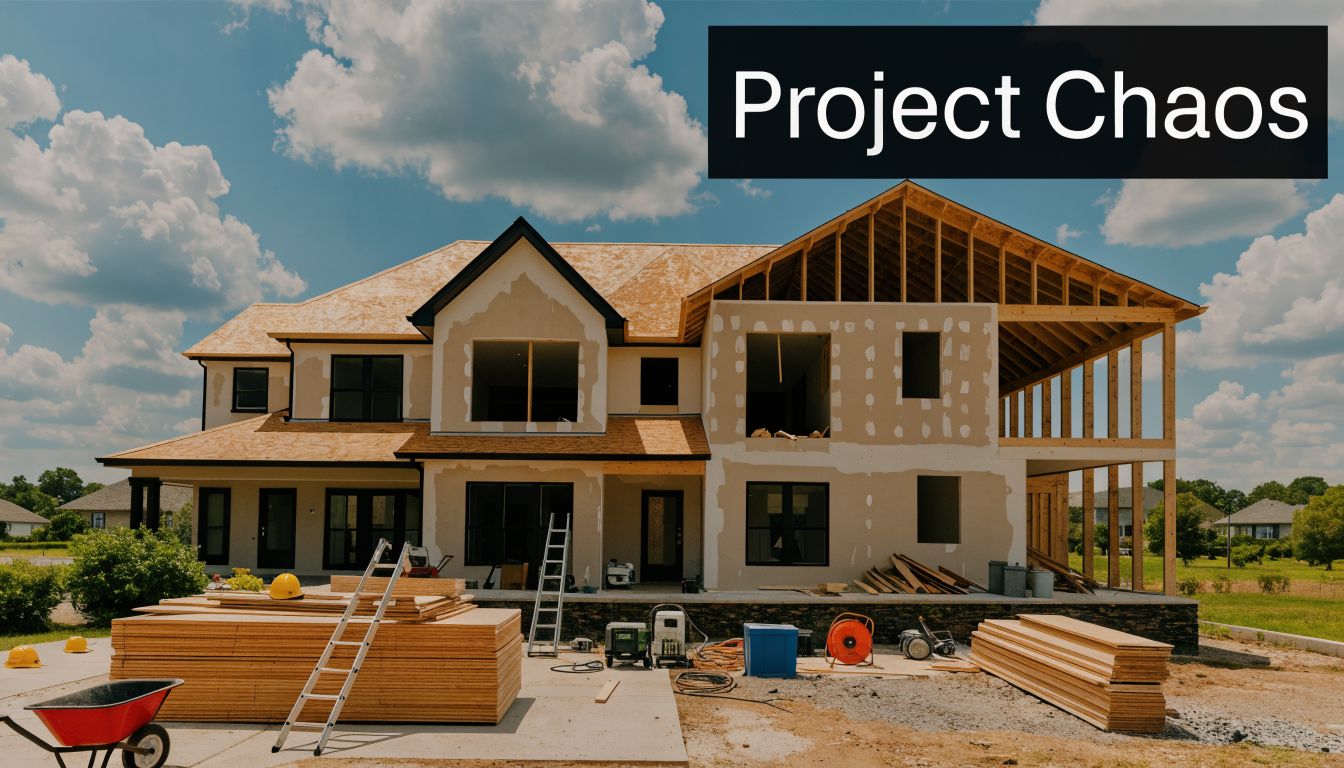
A Jacksonville investor buys a house with a strong resale spread. Demolition moves quickly. Framing starts. Then the rough trades collide. Materials show up before space is cleared, one crew finishes late, another arrives to a site that isn't ready, and the inspector flags work that should've been caught before inspection day. The budget doesn't blow up all at once. It leaks through idle labor, repeat trips, rushed fixes, and missed handoffs.
That's what subcontractor coordination is really about. It isn't just putting names on a calendar. It's controlling dependencies between trades so the next crew can start with the right drawings, the right materials, the right site conditions, and the right approvals.
Why investors feel the damage first
On a single-family build or major renovation, the moving parts multiply fast. The Home Builders Institute reports that a single-family home involves 24 different subcontractors on average, and industry data cited by Xpedeon shows 54% of contractors attribute project delays directly to labor shortages among their own workers or their subcontractors (Xpedeon on subcontractor management).
For an investor, those delays hit three places at once:
- Holding costs increase: Extra time on site means more carrying cost, more exposure to rate pressure, and more uncertainty around resale or lease timing.
- Finish quality gets squeezed: When crews start chasing lost days, mistakes rise and punch lists get longer.
- Decision-making gets worse: Late coordination usually turns into rushed approvals, unclear change orders, and arguments about who owns what.
Practical rule: If the superintendent or project manager can't tell you what each trade is waiting on this week, the project isn't under control.
What professional coordination actually includes
Strong coordination starts before boots hit the site and continues through closeout. In practice, that means:
- Scope control: Every subcontractor knows what is included, excluded, and dependent on others.
- Schedule control: Trade sequencing matches real field conditions, not wishful thinking.
- Inspection readiness: Rough and final milestones are timed around local permit and inspection flow.
- Financial control: Billing, lien waivers, and change approvals happen in a documented system.
- Quality control: Work gets checked before the next trade covers it up.
If you want a useful outside reference on the contract side, this guide to managing construction contracts gives a good overview of how documentation and approvals reduce disputes. For investors focused on return, the same discipline ties directly to maximizing renovation ROI in Florida, because clean execution protects both timeline and resale value.
The Pre-Construction Blueprint Vetting and Contracting Subs
Before the first delivery is scheduled, most of the risk is already visible. You can usually spot it in the estimate, the scope gaps, or the subcontractor who prices aggressively but can't clearly explain crew capacity, permitting support, or who is supervising the work.
How to vet beyond the lowest bid
The cheapest proposal often creates the most expensive job. In Jacksonville and Northeast Florida, proper vetting should go beyond price and include basic operational proof.
Use a shortlist process that checks:
- Licensing and insurance: Confirm the trade is properly licensed for the work and carries current insurance that matches the project risk.
- Crew capacity: Ask who will be on site, who supervises them, and whether the same team is split across too many jobs.
- Local code familiarity: Florida work needs careful attention to wind exposure, moisture management, and inspection expectations.
- Documentation habits: If a sub is vague during bidding, they usually stay vague during change orders and disputes.
- References tied to similar jobs: A commercial tenant build-out reference doesn't tell you much about a residential addition in an occupied home.
A good subcontractor can explain their handoffs. A weak one only explains their trade in isolation.
What the subcontract must lock down
A usable subcontract should remove ambiguity before production starts. If a detail matters in the field, it should appear in writing.
At minimum, define:
| Item | Why it matters |
|---|---|
| Scope of work | Prevents overlap, omissions, and finger-pointing |
| Exclusions | Makes pricing comparisons honest |
| Schedule expectations | Sets start windows, durations, and readiness conditions |
| Materials responsibility | Clarifies who buys, stores, protects, and installs |
| Change order procedure | Stops verbal approvals from becoming cost disputes |
| Cleanup and protection | Avoids site friction between trades |
| Payment requirements | Links billing to documented progress and paperwork |
Clear scopes don't slow a job down. They stop preventable arguments before the job starts.
For owners who want a plain-English overview of who typically manages these relationships, this guide on what a general contractor does for Jacksonville homeowners is a helpful reference.
The trade-off in spreading work too widely
Some investors assume more subcontractors means more competition and tighter pricing. Sometimes it does. But splitting work too aggressively also creates more interfaces to manage.
An empirical study found that a one-standard-deviation increase in subcontractor dispersion raises coordination costs by 28% and monitoring costs by 22% (ASCE study on subcontractor dispersion). In plain terms, every extra handoff creates more calls, more clarifications, more scheduling risk, and more chances for one trade to blame another.
That doesn't mean bundling is always better. It means packaging work should be deliberate. On some projects, combining related scopes under fewer accountable trade partners improves control. On others, separating a specialty scope is the smarter move because quality or code exposure is too important to fold into a general package.
On-Site Rhythm Managing Schedules and Communication
A job site runs well when everyone works from one current version of reality. Most scheduling failures don't come from a bad master schedule. They come from field conditions changing while half the team is still working from yesterday's assumptions.
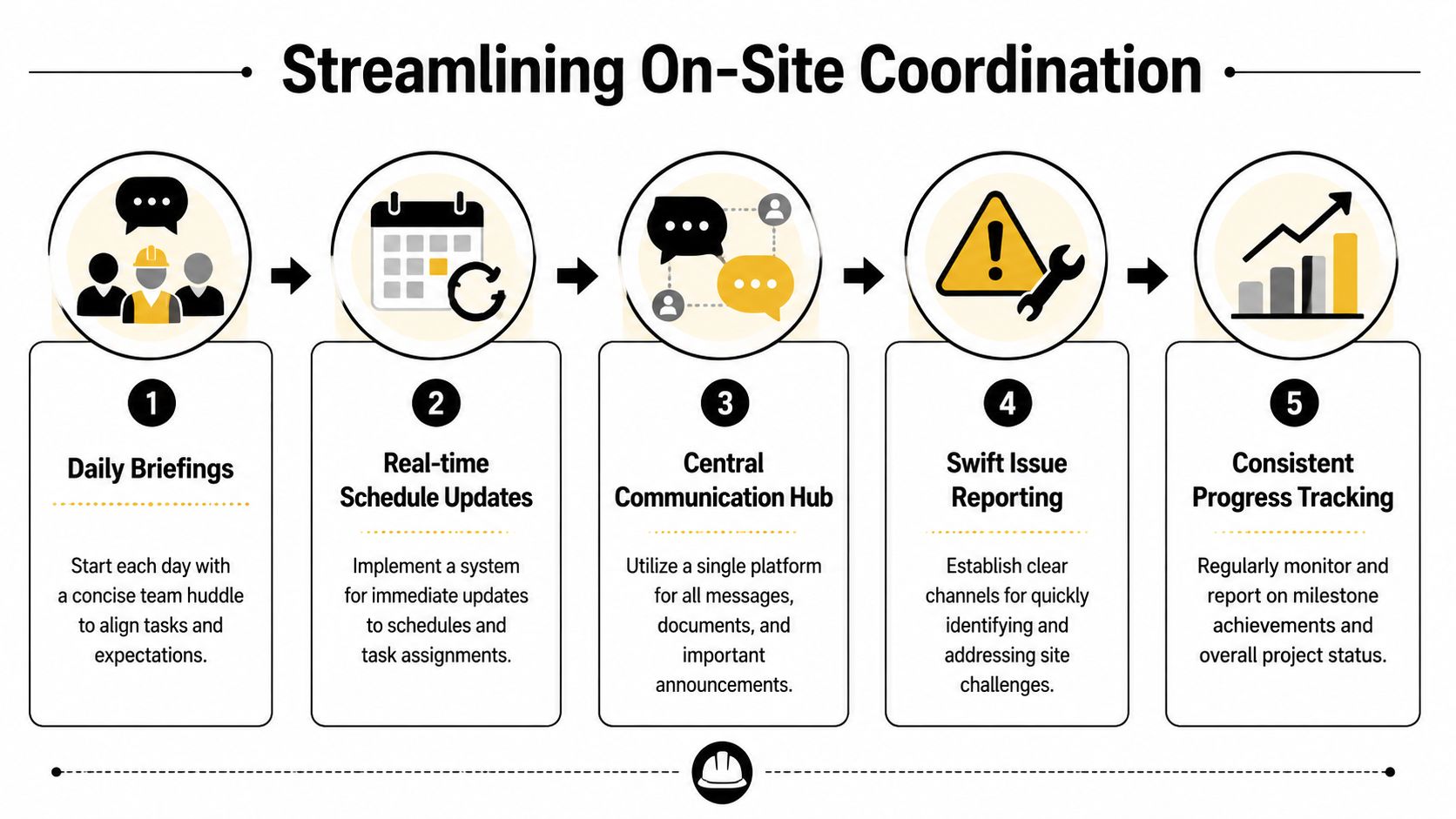
The site needs one operating system
Whether the team uses Buildertrend, Procore, a shared cloud drive, group text threads, or a disciplined email chain matters less than one thing. Everyone must know where the live schedule, current drawings, approved changes, and inspection notes are stored.
On an active Jacksonville project, a workable rhythm usually includes:
A master schedule with short look-aheads
The long schedule sets milestones. The short look-ahead confirms what is realistic for this week.Daily field updates
Photos, completed work, blocked tasks, weather issues, and delivery status all need to be logged.Trade-specific readiness checks
Don't bring in insulation before rough inspections pass. Don't schedule cabinets into a house that still has unresolved drywall corrections.A single escalation path
When there's a clash, one person makes the call. Group confusion kills momentum.
How weekly coordination prevents expensive downtime
Dodge Construction Network's 2024 survey found that poor coordination is the root cause of 33% of quality challenges like errors and rework, leading to an average 9% budget increase and eroding annual profit margins by 10% (Dodge survey summary).
That's why weekly coordination meetings matter. The useful ones are short, specific, and tied to actual site conditions. They answer questions such as:
- What is complete and verified
- What is blocked and by whom
- Which materials must arrive before the next handoff
- Which inspection must be booked or confirmed
- Which owner decisions are due now
In Northeast Florida, infill lots and occupied remodels add pressure. Material staging gets tight, parking is limited, and neighbors notice every misstep. On a coastal or humid-climate project, exposed materials and delayed dry-in can create moisture problems that ripple into later finishes. Good coordination means the schedule reflects those realities instead of pretending every site operates like an empty suburban lot.
A clean schedule isn't the same as a believable schedule. Field-tested sequencing wins.
For owners who want a framework for tracking these moving parts, a construction project management checklist for Jacksonville jobs is a practical baseline. Ofir Engineering is one option investors use when they want a single team coordinating trades, owner decisions, and schedule accountability under one project management process.
Ensuring Quality and Safety on the Job Site
Quality problems usually start before anyone calls them quality problems. They start when one trade begins without the right substrate, the right layout, or the right confirmation that prior work is complete.

Quality control starts before the next trade arrives
The simplest quality system is often the most effective. Check the work before it gets covered. Walk the site before the next crew starts. Tie punch items to a person and a deadline.
That means confirming framing is ready before rough-ins, checking rough-ins before insulation, reviewing wall condition before paint, and catching floor prep issues before finish materials are installed. In Florida, moisture exposure, flashing details, and code compliance around envelopes and structural connections deserve close attention because hidden defects can become expensive corrections later.
A practical quality routine includes:
- Pre-work walkthroughs: Verify dimensions, access, site readiness, and approved plans.
- In-progress spot checks: Catch misses while the trade is still mobilized.
- Photo documentation: Useful for owner updates, inspections, and dispute resolution.
- Punch lists by phase: Don't save everything for final completion.
The cheapest time to fix a mistake is before the next trade builds over it.
Safety discipline keeps production moving
Safety and productivity are tied together. A cluttered site, unclear access path, exposed hazards, or uncontrolled deliveries slow crews down and increase the chance that someone gets hurt or work gets damaged.
Site control is broader than hard hats and vests. It includes material storage, access management, cleanup expectations, and after-hours protection. For teams reviewing external guidance, these construction site security strategies are a useful supplement because theft, unauthorized access, and poor site control often become schedule problems as much as security problems.
This short video is also a helpful reminder that inspection discipline and field awareness are part of daily production, not a separate task.
When safety is treated as a box-checking exercise, the site gets reactive. When it's tied to sequencing, access, and cleanup, crews work faster and with fewer interruptions.
Managing Financial Flows Payments and Change Orders
Most subcontractor friction shows up in money conversations. Not because payment is complicated in theory, but because too many jobs handle it casually. Investors feel this when a trade slows down, refuses to remobilize, or submits a bill that doesn't match the work in place.
Payment systems that keep subs working
A reliable payment workflow does two things. It protects the owner from overpaying, and it gives the subcontractor confidence that approved work will be paid without a fight.
The cleanest structure usually includes:
- A schedule of values: Break the subcontract into logical billing components.
- Application for payment: The sub bills against completed work, not rough estimates from memory.
- Field verification: Someone verifies progress before approval.
- Conditional and final lien waivers: Paperwork must match money movement.
- Updated cost tracking: Approved invoices need to hit the job cost system quickly.
This process matters because many trades operate on tight margins. If payment is unpredictable, they'll move labor to the client who pays cleanly. That's one reason disciplined owners and project managers often get better field responsiveness than owners who negotiate every invoice after the work is already installed.
Change orders need structure, not debate
No project avoids change completely. Renovations uncover hidden conditions. Owners revise finishes. Inspectors ask for clarifications. The problem isn't change. The problem is unmanaged change.
A strong change order process should answer four questions before extra work proceeds:
| Question | Required answer |
|---|---|
| What changed | Specific scope revision or field condition |
| Why it changed | Owner request, hidden condition, code issue, design clarification |
| What it costs | Labor, material, and time impact |
| Who approved it | Named decision-maker with date |
Verbal approvals create memory battles. Vague allowances create mistrust. Late pricing creates advantage disputes. The right move is simple: document the change, price it clearly, explain schedule impact, and get approval before proceeding whenever the field condition allows.
For investors, ROI protection comes into view. You can't control every unknown in a renovation, but you can control whether each cost increase is justified, documented, and tied to an informed decision.
Conflict Resolution and Project Closeout
Even disciplined jobs run into conflict. A trade misses a detail. Two scopes overlap. A crew blames site conditions for slow progress. The mistake many owners make is waiting too long to force clarity.
Handle trade conflict early and in writing
The best conflict resolution process is direct and boring. Gather the facts, review the contract documents, inspect the condition, assign responsibility, and put the decision in writing. Avoid turning every issue into a personality contest between trades.
When a dispute appears, use this order:
- Document the field condition: Photos, marked plans, and dated notes.
- Check scope language: Confirm what each subcontract included.
- Issue a written direction: State who is correcting what and by when.
- Track downstream effects: If one delay shifts another trade, log it immediately.
That approach keeps the argument attached to work, not opinion.
Lower-tier subcontractors create hidden exposure
One of the least understood risks on residential and light commercial work is the lower-tier subcontractor. That's the subcontractor hired by your subcontractor. If the general contractor doesn't control that chain, problems can hide until there's a compliance, payment, or quality issue.
Recent analyses show that 40% of General Contractors are unaware of their subcontractors' subcontractors, and explicit agreements that mandate lower-tier labor audits can reduce hidden risks by 25-30% (Trimble on lower-tier subcontractor risk).

In practice, that means contracts should restrict unauthorized lower-tier use, require disclosure, and tie payment to proper documentation. For an investor, this protects against hidden liability and helps keep closeout clean.
Closeout is where discipline gets paid back
A professional closeout package should include final punch completion, warranty information, final waivers, permits or inspection sign-offs as applicable, and a documented handover. If you plan to sell or lease quickly, this paperwork matters. Buyers, lenders, and property managers all benefit from clean records.
Closeout isn't ceremonial. It's the moment a construction project becomes a usable asset.
Frequently Asked Questions About Subcontractor Coordination
| Question | Answer |
|---|---|
| What is subcontractor coordination in construction? | It's the active management of multiple trades so scope, schedule, quality, safety, inspections, and payments all stay aligned. It goes far beyond basic scheduling. |
| Why does subcontractor coordination matter to real estate investors? | Investors carry the financial consequences of delay, rework, change-order confusion, and missed turnover dates. Good coordination protects timeline, budget visibility, and resale or rental readiness. |
| How many subcontractors are typically involved in a home project? | On a single-family home, the average is 24 subcontractors, based on the source cited earlier in this article. That number shows why coordination has to be systematic. |
| Should I hire the lowest-bid subcontractor? | Not automatically. A lower bid can be appropriate, but only if the scope is complete, the subcontractor is properly vetted, and crew capacity, insurance, supervision, and documentation habits are solid. |
| What's the biggest coordination mistake on renovations? | Starting work with incomplete scope decisions or weak handoff control. Renovation jobs especially need clear sequencing because hidden conditions and occupied-site constraints change field reality fast. |
| How do change orders stay under control? | Put every change in writing, define the reason, price it clearly, state schedule impact, and require approval by the authorized decision-maker. Verbal approvals cause most of the later disputes. |
| How often should trades communicate on an active site? | Daily field updates and a weekly coordination meeting are usually the minimum for active work. The exact method can vary, but the job needs one current source of schedule and document truth. |
| What should I ask for before making a subcontractor payment? | Confirm progress in place, review the invoice against the scope or schedule of values, and collect the required lien waiver paperwork. Payment should match verified work, not assumptions. |
| Why are lower-tier subcontractors a concern? | Because owners and even some GCs may not know who is actually performing part of the work. That creates added risk around compliance, quality, supervision, and documentation. |
| What makes subcontractor coordination different in Jacksonville and Northeast Florida? | Florida code requirements, humidity, storm exposure, permit sequencing, and local labor pressure all affect how trades should be scheduled and supervised. Local project management experience matters because site conditions and inspection flow aren't generic. |
If you're planning a renovation, new build, or investor-focused improvement project in Jacksonville, Ofir Engineering can help you manage subcontractor coordination with clear scope control, schedule oversight, budget visibility, and professional project execution from pre-construction through final handover.
Focus keyword: subcontractor coordination
Meta title: Subcontractor Coordination in Jacksonville for Better Project ROI
Meta description: Learn how subcontractor coordination protects budgets, timelines, and ROI on Jacksonville construction and renovation projects. Practical guidance for investors and property owners.
Suggested internal linking opportunities:
- Investors page
- Project management page
- Home remodeling page
- New construction page
- Construction consulting page
- Related blogs on renovation ROI, budgeting, and contractor supervision
Suggested image ideas and alt text
Hero image filename: subcontractor-coordination-jacksonville-project.jpg
Alt text: subcontractor coordination on a Jacksonville residential construction site
Description: A residential project in progress with multiple trades working under active supervision.
Recommended size: 1731 x 909 pixelsSecondary image filename: subcontractor-schedule-planning-jacksonville.jpg
Alt text: project manager reviewing subcontractor schedule for a Northeast Florida renovation
Description: A project manager coordinating trade sequencing, permit timing, and delivery planning.Secondary image filename: construction-quality-control-jacksonville.jpg
Alt text: quality control inspection during subcontractor coordination in Jacksonville Florida
Description: A field inspection scene showing workmanship review before the next trade begins.
