

You're probably here because a project is ready to move. Maybe it's a Jacksonville rental renovation, a room addition in St. Johns, a roof replacement, or a new build you want to start before carrying costs climb. Then the same question shows up every time: what are the actual permit requirements florida property owners need to deal with, and how do you avoid wasting time and money? With Florida contractor license CGC 1540016 and deep local experience, Ofir Engineering serves Jacksonville, Ponte Vedra, and the surrounding Northeast Florida communities.
In Florida, permits aren't just paperwork. They affect schedule, resale, inspections, insurance conversations, lender confidence, and the quality of the finished asset. For investors, permit strategy is part of ROI strategy. For homeowners, it's one of the biggest factors separating a smooth project from a long, expensive mess.
Table of Contents
- Why Permits Are a Non-Negotiable for Florida Property Investments
- The Core Construction Permits You Will Encounter
- Navigating Special Permits for Florida-Specific Projects
- The Florida Permit Process From Application to Final Inspection
- Understanding Jurisdictional Layers State County and City
- Costly Permit Pitfalls and How to Avoid Them
- Frequently Asked Questions About Florida Permit Requirements
- Do I need a permit for a fence in Jacksonville, FL
- How long is a building permit valid in Florida
- What is the penalty for not getting a permit in Florida
- Can I pull a permit myself or do I need a contractor
- Are permits required for remodeling work
- What's the difference between permit approval and final approval to use the space
- Why do permit requirements feel different from one Florida city to another
Why Permits Are a Non-Negotiable for Florida Property Investments
A lot of owners treat permits like friction. They assume skipping them will save money, speed up the schedule, and keep the project simple. In practice, the opposite usually happens.
A properly permitted job is easier to defend, finance, inspect, insure, and sell. An unpermitted job creates uncertainty around workmanship, code compliance, and liability. Buyers notice that. Appraisers notice that. Inspectors definitely notice that.
In Northeast Florida, that matters even more because weather resilience and code compliance aren't theoretical issues. They affect whether a property performs well under stress and whether future work can move forward without reopening old problems.
What permits really protect
Permits protect more than the city. They protect the asset.
When a contractor pulls permits and closes them out correctly, the project leaves a paper trail showing what was approved, what was inspected, and what passed. That record can help when you refinance, sell, insure, or expand later.
Practical rule: If the work changes structure, systems, occupancy, or life safety, assume permitting should be reviewed before a hammer swings.
For investors, that paper trail belongs in the same conversation as budget and exit strategy. A cheap shortcut during construction can become an expensive disclosure issue at sale.
That's one reason I always tell owners to think of permits as part of risk management, not just code enforcement. The same mindset applies to insurance. If you operate a project through an entity, review guidance on Florida general liability for businesses so you understand where permit compliance and liability exposure can overlap.
Why this matters for ROI
Permit mistakes usually cost money in ways owners don't model at the start:
- Schedule drag: Work can stop while revisions, inspections, or corrections catch up.
- Resale friction: Buyers may ask for credits, repairs, or permit closeout before closing.
- Scope creep: Once concealed work is questioned, the repair path gets wider.
- Reputation risk: Investors who rely on repeat lenders, agents, and trades can't afford sloppy files.
A clean permit path doesn't guarantee a profitable project, but it removes one of the most common ways profit leaks out. If you're underwriting a flip or major rehab, this should sit alongside your scope review and contingency planning. That's also why a detailed fix and flip project budget in Florida should account for permit coordination, review comments, and inspection sequencing instead of pretending those steps don't exist.
The Core Construction Permits You Will Encounter
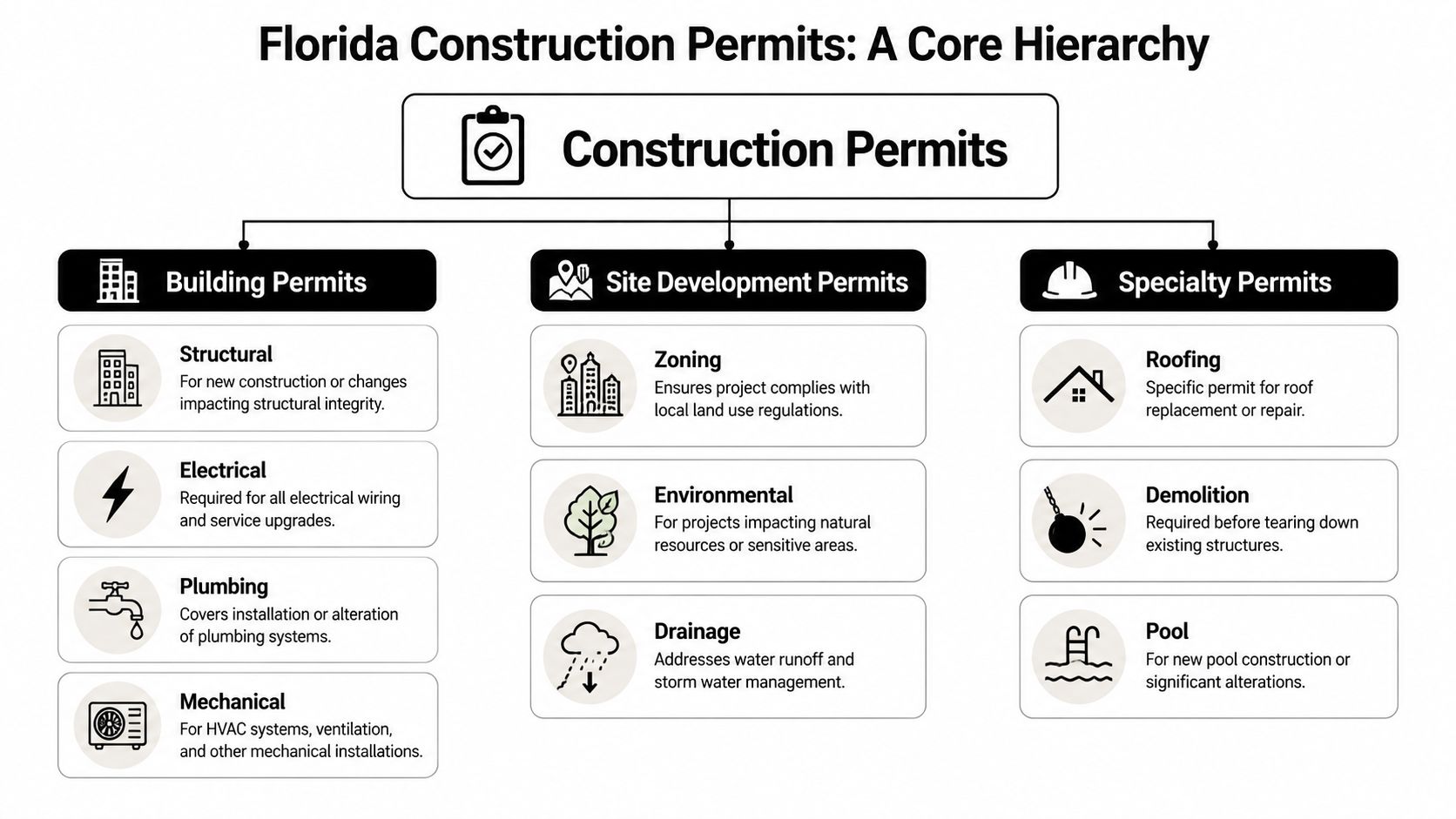
Most residential and light commercial projects in Florida fall into a few main permit categories. Once you understand these buckets, permit requirements florida stops feeling random and starts feeling predictable.
Building permits
A building permit covers work that affects the structure, layout, envelope, or major physical configuration of the property.
Typical triggers include:
- New construction: Building a house, addition, detached structure, or major enclosed improvement.
- Structural changes: Removing or altering load-bearing walls, changing framing, modifying beams, or reworking floor systems.
- Exterior envelope work: Some window, door, or roof-related work may need separate or related permit review depending on scope and local rules.
- Occupancy-related changes: Converting space to a new use can trigger code review even if the work looks minor.
This is usually the primary permit on a substantial project. It often becomes the umbrella that coordinates trade permits and inspections.
Electrical permits
An electrical permit is required when work affects wiring, service equipment, panels, circuits, devices, or connected electrical infrastructure.
Owners often miss this because they assume only big service upgrades count. In reality, permit review may be required for work such as:
- Panel replacements
- Service changes
- New circuits
- Added receptacles or lighting in remodel areas
- Rewiring during kitchens, baths, additions, or whole-home renovations
Electrical permits exist because hidden electrical work creates serious safety risks when it's done informally. If walls are being opened anyway, that's exactly when municipalities expect proper review and inspection.
Plumbing permits
A plumbing permit covers installation, relocation, replacement, or alteration of water supply, drain, waste, vent, and fixture connections.
Common examples include:
- Kitchen remodels: Moving sinks, dishwashers, or supply lines.
- Bathroom reconfigurations: Shifting toilets, tubs, showers, or lavatories.
- Water heater replacements: Often subject to permit review and inspection.
- Underslab or wall plumbing changes: Especially important because corrections get expensive once finishes are back in place.
Plumbing permit issues tend to surface late if they were skipped early. A beautiful bathroom doesn't stay beautiful long if drainage, venting, or fixture installation fails inspection later.
Mechanical permits
A mechanical permit usually covers HVAC systems, ventilation, air distribution, and related equipment.
This category commonly applies to:
- Air handler or condenser replacement
- Ductwork modifications
- Ventilation changes
- New mechanical systems in additions or converted spaces
Mechanical work is one of the most underestimated permit categories in Florida. Owners replace equipment and think they handled a maintenance item, but many jurisdictions still require permit review because performance, safety, and code compliance all matter.
The fastest way to confuse a project is to assume one permit covers every trade automatically. Often, separate permits or trade sign-offs are still required.
Here's a practical perspective:
| Permit type | Usually tied to | Common investor mistake |
|---|---|---|
| Building | Structure, layout, major envelope work | Assuming cosmetic scope won't drift into structural work |
| Electrical | Wiring, panels, circuits, service | Letting “small” electrical changes happen without review |
| Plumbing | Supply, drain, vent, fixtures | Moving fixtures without accounting for permit impact |
| Mechanical | HVAC equipment and ventilation | Treating equipment replacement as permit-free by default |
Navigating Special Permits for Florida-Specific Projects
A Jacksonville investor buys a house near the water, budgets for a straightforward renovation, and then learns the job also needs flood review, product approvals, and separate pool barrier sign-offs. That surprise is expensive. In Florida, the special permit issues are usually what push a project off schedule and cut into margin.

Additions demolition and pool work
Additions bring more than a larger floor plan. They can trigger zoning review, updated structural details, drainage questions, utility coordination, and trade revisions that were never part of the original budget. In Northeast Florida, I see owners focus on the new square footage and miss the site impacts. Setbacks, lot coverage, and stormwater issues can slow approval before framing even starts.
Demolition has its own permit path for a reason. Partial interior tear-out may stay simple if no structural elements are affected, but detached garages, full building removal, and major assembly removal usually require a specific review of utility disconnects, site protection, and disposal planning. That matters to investors because demo is often treated like a quick first step. If approval lags, every downstream trade gets rescheduled.
Pool work is another common blind spot. A new pool or major pool remodel can involve shell review, electrical bonding, plumbing circulation, decking, drainage, alarms or barriers, and final safety approvals. If the property is intended as a rental or resale, those details affect more than inspection results. They affect whether the property reaches the finish line with a legal building permission slip and without last-minute correction work.
Wind flood and coastal compliance
Florida permit review is heavily shaped by storm exposure and water risk. Florida permit requirements include stronger hurricane and code review standards tied to the state's history of storm damage. In practice, that means many projects in Jacksonville and Northeast Florida need more front-end coordination than owners expect.
For coastal, river-adjacent, or flood-sensitive properties, permit review often depends on engineering details as much as architectural plans. Common examples include:
- Wind-load calculations for openings, roof systems, and structural connections
- Florida product approvals for windows, doors, roofing components, and exterior assemblies
- Flood-zone design responses such as elevation details, foundation information, and site-specific requirements
- Additional inspection planning for larger or more complex buildings
These items affect ROI directly. A window package picked for price alone may fail review if the approvals do not match the exposure category. A foundation detail that works on one lot may not clear comments on another lot a few blocks away. By the time those mistakes surface, materials may already be ordered and crews may already be booked.
That is why permit strategy needs to start before purchasing decisions are locked in. Investors who map permit risk early usually make better scope decisions, protect their construction schedule, and avoid redesign costs that wipe out a good deal. If you need a realistic view of how these approvals can affect sequencing, this home construction timeline for Florida projects gives a useful frame for planning.
The trade-off is simple. Early engineering and permit coordination cost time up front. Late corrections cost more time, more money, and often lower resale momentum.
The Florida Permit Process From Application to Final Inspection
A Jacksonville investor closes on a property in January, lines up trades for February, and expects to list by early summer. Then the permit comments come back. The plans do not match the actual scope, one trade was left out of the application, and inspections cannot be scheduled until revised documents are approved. That is how a profitable schedule turns into carrying costs, change orders, and a delayed exit.
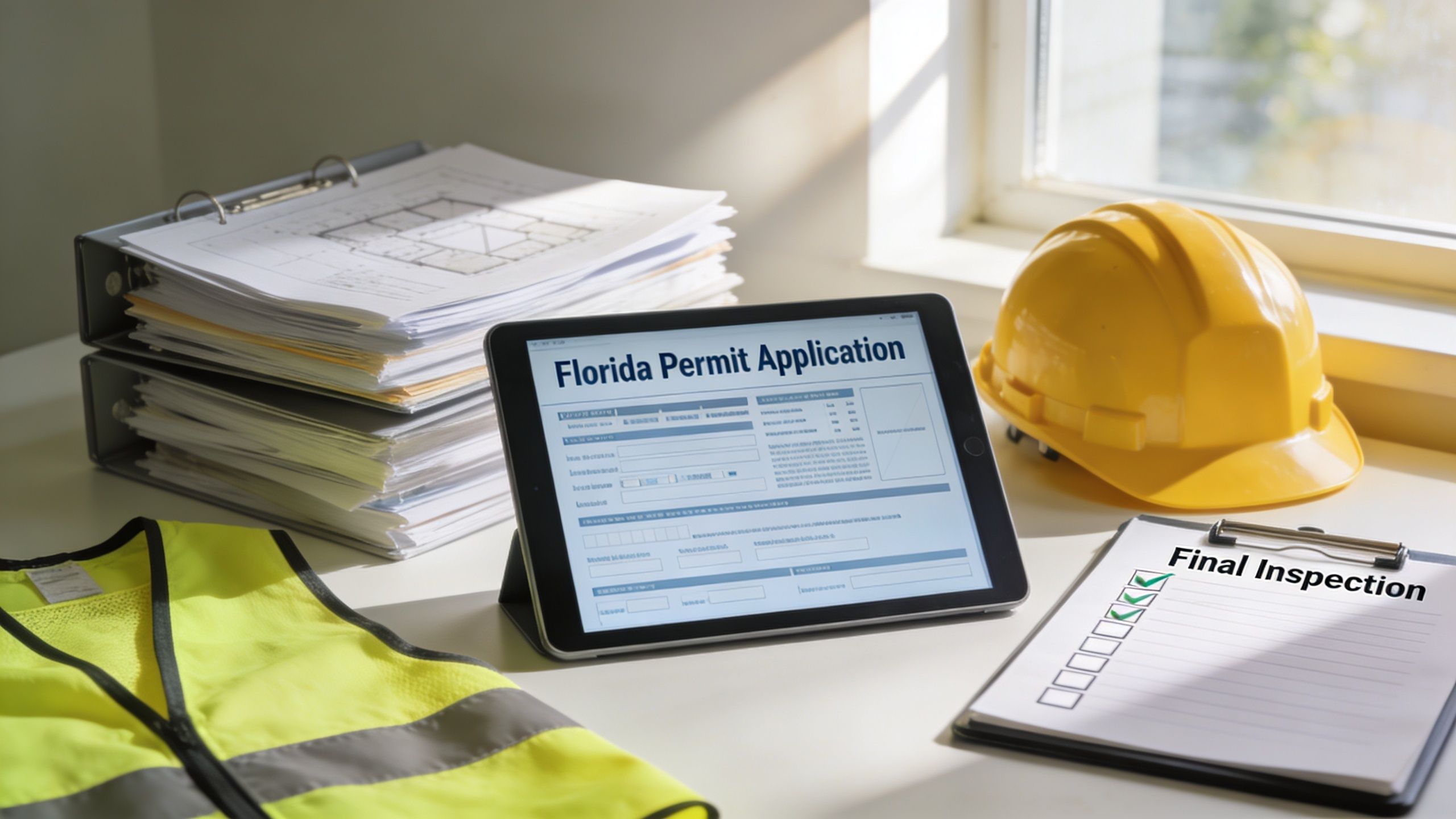
Permit process discipline protects timeline and ROI.
Preparing your documents and plans
Before anyone submits an application, the job needs a permit-ready package that reflects the actual work planned in the field. That usually includes drawings, scope descriptions, site information, product approvals, contractor or owner paperwork, and trade details for electrical, plumbing, mechanical, or structural work.
The size of that package depends on the job. A straightforward interior remodel may only need a limited set of plans and trade documents. An addition, structural renovation, or new build needs much more detail because the reviewer has to verify code compliance before work starts, not after the crew is already on site.
The best pre-submittal review is blunt. Does the scope match the investment plan? Do the drawings match what the contractor intends to build? Are structural changes fully shown? Have the trades been coordinated so one revision does not create three more? On investor projects, I also look at whether the permit package supports the target hold period or resale timeline. A cheap shortcut at this stage often costs far more in delay than it saves in design fees.
Submitting the application and responding to review comments
After submission, the building department reviews the package for code compliance and administrative completeness. The file may be approved, rejected, or sent back with comments.
This stage rewards accuracy and punishes half-fixes. If a reviewer asks for a revision, the response needs to address the actual issue, update all affected sheets, and keep the scope consistent across the full set. A patched response that fixes one page and ignores the rest usually buys another review cycle.
For owners who are managing rehab volume or trying to control a tight disposition window, permit administration is real project management work. It includes tracking comments, coordinating revisions, confirming resubmittals, and keeping field work aligned with approvals. For a realistic sense of how permit timing affects sequencing, this Florida home construction timeline is a useful planning reference.
Permit issuance also does not mean the property is ready for legal occupancy or use. Final occupancy approval is a separate step. If you need a plain-language explanation of that final legal building permission slip, that overview is a helpful primer.
The inspection schedule
Once the permit is issued, the job shifts from paperwork to field verification. Every required inspection is a hold point. If the inspection is missed, failed, or never closed out, the schedule slips and the file stays exposed.
Typical inspections include:
- Foundation or slab inspections
- Framing inspections
- Rough electrical, plumbing, and mechanical inspections
- Insulation or other intermediate inspections where required
- Final trade inspections and final building inspection
Inspectors are checking the permitted work in place. They are not there to solve scope gaps, approve undocumented changes, or sort out work that got ahead of the plans.
Here's a useful overview of the process in video form:
A permit file is not finished until the inspections pass and the permit is closed.
That closeout step affects resale value and deal timing more than many owners expect. Open permits can slow a sale, create underwriting questions, complicate insurance, and trigger extra work during buyer due diligence. In practice, the project is done when the jurisdiction signs off, not when the contractor leaves the site.
Understanding Jurisdictional Layers State County and City
One of the biggest reasons owners get permit requirements wrong is simple. They look up a state rule and assume that's the whole answer.
In Florida, it usually isn't.
State rules are the floor
The Florida Building Code sets the statewide minimum framework. That gives owners and contractors a common starting point for structural, life-safety, and systems compliance.
But minimum doesn't mean universal in day-to-day enforcement. The code framework still runs through local building departments, zoning offices, review staff, and inspection teams. Each one applies the process through its own forms, review habits, submittal standards, and local amendments where allowed.
Local enforcement changes the real-world process
A Jacksonville project and a St. Johns County project can feel similar on paper but move differently in practice. The same goes for work in a beach municipality versus an inland jurisdiction.
Differences often show up in areas like:
- Submittal expectations: One jurisdiction may want more documentation up front.
- Zoning interpretation: Setbacks, coverage, or use questions may surface earlier in one office than another.
- Inspection logistics: Scheduling windows and required sequencing can vary.
- Coastal sensitivity: Properties closer to shoreline conditions often face more scrutiny.
For investors, this matters because a repeatable playbook in one submarket may fail in the next one over. A contractor who knows Florida generally is useful. A contractor or project manager who knows how your exact jurisdiction behaves is much more useful.
That's especially true in Northeast Florida, where municipal boundaries, flood concerns, and neighborhood-level restrictions can change the path of the same project type. Local knowledge saves time not because it bends rules, but because it anticipates them correctly.
Costly Permit Pitfalls and How to Avoid Them
Most permit disasters don't happen because a project was impossible. They happen because someone made an avoidable decision early and hoped it wouldn't matter later.
Starting work too early
The first mistake is obvious but common. Work starts before permit issuance because the owner wants momentum.
That usually creates a chain reaction. Inspectors or neighbors notice activity. The jurisdiction asks questions. Then the project shifts from normal review into corrective mode.
The fix is simple in theory and hard in practice. Don't mobilize structural, MEP, or demolition scope that requires approval until the permit is active and the plans match what the field crew is about to build.
The owner-builder trap
The second mistake is more dangerous because owners often think it's a smart shortcut.
That has direct consequences for investors. If your strategy depends on resale timing, delegated trade management, or limited personal site presence, owner-builder status can become a liability instead of a savings tool.
Here's where people get it wrong:
- They assume it's an investor shortcut: It isn't built for fast-turn ROI logic.
- They delegate supervision anyway: The exemption can break down if the owner isn't actively managing the work.
- They underestimate paperwork exposure: Once something goes wrong, the file points back to the owner.
- They treat it like a fee-saving option: Any upfront savings can disappear if corrections, delays, or enforcement follow.
Field reality: If you can't be the actual hands-on supervisor, don't use an owner-builder permit as a paper workaround.
Paperwork and lien mistakes
A third category of problems comes from incomplete administration. Even when the construction work is solid, the file can still become messy if notices, permit cards, inspection records, or contractor documents are mishandled.
That's especially true when multiple trades are involved. Owners also need to understand lien-related paperwork. If you're hiring trades directly, this practical guide on help for Florida subcontractors gives useful context on Notice to Owner issues that often confuse property owners.
For investors trying to save money by self-managing permits, the bigger question isn't whether you can submit forms. It's whether you can control the sequence, documentation, supervision, and closeout without creating a more expensive problem later. This is exactly why many owners benefit from reading about how much it really costs to save on a permit before deciding to cut corners.
Frequently Asked Questions About Florida Permit Requirements
A permit question usually shows up after the budget is set and the contractor is ready to start. That is late. In Jacksonville and across Northeast Florida, permit strategy affects schedule, carrying costs, appraisal support, and resale confidence, so these answers are best handled before demolition or material orders.
Do I need a permit for a fence in Jacksonville, FL
Sometimes. Fence requirements can change based on height, placement, corner visibility, material, pool safety issues, zoning, and neighborhood rules. In Jacksonville, verify both building and zoning requirements before installation, especially on investment properties where a fence can affect setbacks, sight lines, or tenant use.
How long is a building permit valid in Florida
That depends on the issuing jurisdiction and whether the job keeps moving. Local departments control expiration, extensions, and reactivation, and an approved permit can still lapse if inspections are missed or the file goes inactive. For investors, a stale permit can turn into a delay at the worst time, usually right before draw funding, listing, or closing.
What is the penalty for not getting a permit in Florida
The short answer is cost.
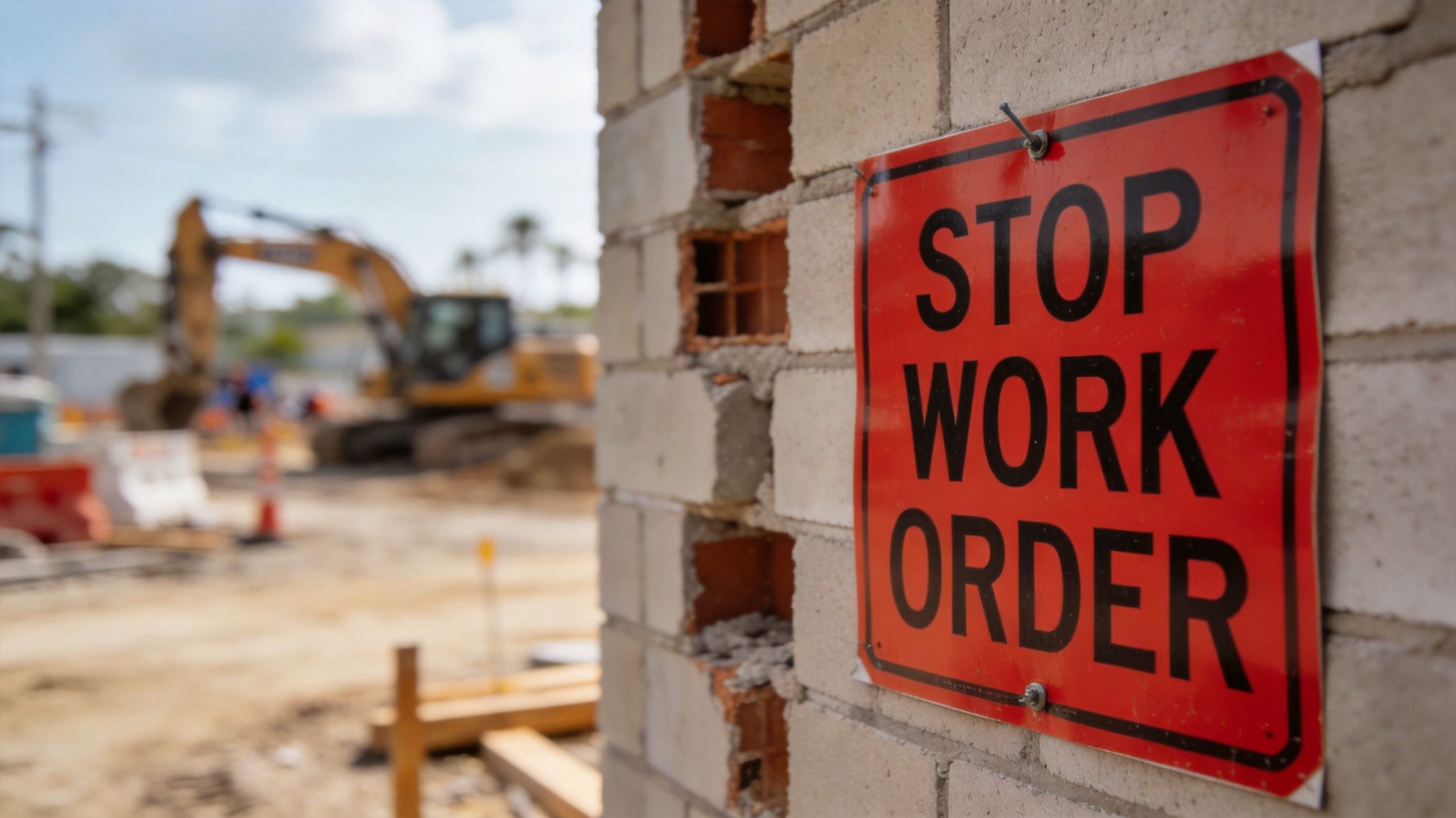
The actual consequences can include stop work orders, added plan review, delayed inspections, correction notices, and resale problems. If work is already covered, the department may require parts of the project to be opened so inspectors can verify what was done. On a flip or rental turn, that can erase the time and money you thought you saved.
Can I pull a permit myself or do I need a contractor
Owners can pull some permits themselves, depending on the scope and local rules. The better question is whether the owner can manage supervision, trade sequencing, inspections, paperwork, and closeout without creating a liability trail. On projects with structural work, multiple trades, financing pressure, or a defined exit date, contractor-led permit coordination is usually the safer business decision.
Are permits required for remodeling work
Many remodels do require permits, especially if the work touches framing, electrical, plumbing, HVAC, windows, doors, roofing, layout changes, or occupancy issues. Cosmetic work is more likely to fall outside permitting, but guessing is expensive. If the renovation is meant to raise value, support refinancing, or justify a higher resale price, keeping the record clean matters as much as the finish quality.
What's the difference between permit approval and final approval to use the space
Permit issuance allows the work to start. Final approval confirms the completed work passed the required inspections for the approved scope. Those are separate milestones, and investors should treat final signoff as the point that protects value, not the day the permit is issued.
Why do permit requirements feel different from one Florida city to another
Because local procedure changes the file, even when the state code starts from the same base. City and county departments set their own forms, review flow, submittal standards, correction habits, and inspection practices. That local variation is why Jacksonville area experience saves time, especially on additions, conversions, older homes, and projects near the coast.
If you are planning a renovation, addition, new build, or investment property project in Jacksonville or Northeast Florida, Ofir Engineering can help you handle permitting, project management, contractor coordination, budgeting, and code-compliant construction from pre-construction through final handover.
Meta title: Permit Requirements Florida Guide for Jacksonville Homeowners and Investors
Meta description: Learn the permit requirements florida property owners face, including construction permits, inspections, owner-builder risks, and Florida-specific code issues in Jacksonville.
Focus keyword: permit requirements florida
Suggested image ideas and alt text
Hero image filename: permit-requirements-florida-jacksonville-guide.jpg
Alt text: Permit requirements florida guide for a Jacksonville residential construction project
Description: Contractor and property owner reviewing permit-ready plans on a Florida job site
Recommended size: 1731 x 909 pixelsImage filename: florida-building-permit-documents-checklist.jpg
Alt text: Florida building permit documents and construction checklist on a table
Description: Permit application materials, plans, and inspection notes prepared for submittal
Recommended size: 1731 x 909 pixelsImage filename: jacksonville-renovation-permit-inspection.jpg
Alt text: Jacksonville Florida renovation permit inspection at a residential property
Description: Inspector and contractor reviewing permitted renovation work before final approval
Recommended size: 1731 x 909 pixels
Related guide: Duval County Building Permit Process: The Complete Guide — the full Jacksonville / Duval County permitting process.
See our main guide: Duval County Florida Permit Requirements.
Related service: custom home building in Florida by Ofir Engineering, a licensed Florida general contractor (CGC 1540016) serving Jacksonville and Northeast Florida.
