
Light commercial construction means non-residential projects under four stories, often under 25,000 square feet, such as retail, small offices, restaurants, banks, and small medical facilities. For investors in Jacksonville, it sits in the sweet spot between residential flips and large-scale development because it offers more income potential than a house renovation without the capital burden and complexity of heavy commercial work. Backed by Florida general contractor license CGC 1540016, the Ofir Engineering team serves clients across Jacksonville, St. Johns, and Clay County.
If you're looking at a vacant storefront, an aging strip unit, or a small office building in Northeast Florida, this asset class deserves serious attention. The opportunity is real, but so are the risks. In Florida, the wrong structure, the wrong permit strategy, or the wrong sequencing decision can turn a decent investment into a slow, expensive project that misses the leasing window.
That’s why light commercial construction has to be approached differently than a residential flip. The buyer pool is different. The code path is different. The mechanical, electrical, and life safety requirements are different. The upside can be strong, especially when you improve utility costs, durability, and tenant appeal, but only if the project is managed like a business asset from day one.
Table of Contents
- An Investor’s Introduction to Light Commercial Construction
- What Qualifies as a Light Commercial Construction Project
- Core Building Systems Wood Frame vs Light Gauge Steel in Florida
- Light vs Heavy Commercial Construction Key Differences
- Navigating Jacksonville's Building Codes and Permits
- A Project Management Checklist for Maximum ROI
- Frequently Asked Questions
- Is light commercial construction riskier than a residential flip?
- Can a small building still have major commercial code issues?
- Does structural material affect insurance and long-term ROI in Florida?
- Is a vacant storefront a good light commercial opportunity?
- What should investors budget for first in a light commercial renovation?
- How do I keep delays from damaging returns?
An Investor’s Introduction to Light Commercial Construction
A lot of investors reach a point where single-family renovations start to feel capped. You can still make money there, but the competition is tighter, the design decisions are easier for buyers to second-guess, and every delay hits resale timing hard. Light commercial construction opens a different lane.
In practical terms, this includes the kinds of buildings you already see all over Jacksonville and Saint Johns: a freestanding retail building, a neighborhood office, a small clinic, a daycare space, or a bank branch. These projects are still manageable in size, but the income logic is commercial. You’re not just updating finishes for resale. You’re creating a space that has to function for a tenant, satisfy code, and support long-term operating performance.
One reason this sector matters is the retrofit side of the market. The retrofit market for small commercial buildings is valued at $35.6 billion, and that demand grew out of the need to repurpose vacant storefronts and underused spaces after the 2007 to 2009 downturn, according to the National Institute of Building Sciences discussion of light commercial trends. That pattern still matters in Northeast Florida, where repositioning existing space can be faster and less risky than starting from raw land.
Practical rule: In light commercial, value usually comes from solving function, code, and durability problems. Fancy finishes alone rarely carry the deal.
For investors who are crossing over from residential work, one of the best first steps is learning how commercial scope, permitting, and tenant requirements change the budget logic. A useful starting point is this commercial construction guide for Jacksonville property owners, especially if you're comparing a conversion or retrofit with a ground-up plan.
What Qualifies as a Light Commercial Construction Project
The technical definition matters because it affects budget, code requirements, and who should be on your team. Light commercial construction generally means projects under 25,000 square feet and fewer than four stories, often using systems such as 25-gauge metal studs with 5/8-inch gypsum wallboard, as outlined in this light commercial construction overview.
That sounds simple, but for investors the better question is whether the building behaves like a small commercial asset. If it needs commercial permitting, business occupancy planning, accessibility review, upgraded MEP coordination, and a tenant-ready layout, it belongs in this category even if the footprint feels modest.
Typical project types in Jacksonville
You’ll usually see light commercial construction in properties such as:
- Retail storefronts: Strip center units, boutique retail, and free-standing shops.
- Small office spaces: Professional offices for legal, financial, or service businesses.
- Medical and service uses: Small clinics, therapy offices, and similar healthcare-adjacent spaces.
- Restaurant and food service properties: Fast-casual concepts, coffee shops, and takeout-focused locations.
- Community-serving buildings: Daycare facilities, auto service spaces, and small warehouses.
These projects are very different from a house flip. Residential investors often underestimate the importance of occupancy classification, life-safety details, and commercial restroom or accessibility requirements. That’s where avoidable rework starts.
The line between a manageable project and a bad surprise
The same source notes that non-compliance can lead to 20% to 30% cost overruns from rework alone in light commercial projects when standards and code requirements aren't followed from the beginning. For an investor, that’s one of the clearest reasons to define the project correctly before demo starts.
A few signs a property is a true light commercial opportunity rather than a disguised headache:
- The use is clear: You know whether the target tenant is retail, office, medical, or another small commercial user.
- The shell is workable: The existing structure can support the intended plan without a major redesign that belongs in a larger commercial category.
- The code path is understood: Zoning, occupancy, accessibility, and trade scopes are identified before pricing.
- The exit strategy matches the build: You’re planning for lease-up, owner occupancy, or sale based on actual use, not assumptions.
A light commercial deal looks small from the street. It doesn’t stay small if the scope is undefined.
Core Building Systems Wood Frame vs Light Gauge Steel in Florida
For Florida investors, few decisions affect long-term risk more than the structural system. The usual comparison is wood frame versus Light Gauge Steel (LGS). Both can work. The right answer depends on the property type, storm exposure, insurance pressure, and whether you care more about lower entry cost or stronger lifecycle performance.
Recent data summarized in this discussion of structural steel use in commercial building points to a real trade-off. Wood framing can be 15% to 20% cheaper upfront, but LGS can reduce retrofit costs by 30% to 40% in high-velocity hurricane zones. The same source says only 12% of Florida light commercial projects used LGS in 2025, which tells me many investors still evaluate structure mostly on first cost.
That’s shortsighted in Northeast Florida. A commercial building isn’t just a construction budget. It’s an operating asset. Storm resilience, repair exposure, tenant downtime, and insurability all affect returns.
Where the investor math changes
Wood can make sense when speed to market and initial cash outlay are the dominant constraints. It’s familiar to many crews, easier for some small scopes, and often pencils out at acquisition when the hold period is shorter.
LGS starts to look stronger when the project involves retrofit work, higher wind concerns, or a long-term hold. In those cases, durability matters more. So does consistency. Steel framing also aligns with the way many investors now think about risk in Florida. Not just “Can I build it?” but “How will this asset behave after storms, humidity, tenant wear, and insurance renewals?”
One option investors in Jacksonville consider for that type of build is light gauge steel frame construction in Jacksonville, especially for projects where resilience and long-term asset stability matter as much as upfront budget.
Comparison for Florida projects
| Factor | Light Gauge Steel (LGS) | Wood Frame |
|---|---|---|
| Upfront cost | Higher initial cost in many cases | 15% to 20% cheaper upfront based on the cited source |
| Hurricane-zone retrofit outlook | Can reduce retrofit costs by 30% to 40% in high-velocity hurricane zones | More vulnerable to storm-related retrofit exposure in those conditions |
| Market adoption | 12% of Florida light commercial projects used LGS in 2025 | More common and familiar in smaller projects |
| Long-term durability | Often favored where investors prioritize resilience and lifecycle performance | Can work well, but usually demands closer review of long-term exposure |
| Investor fit | Better for hold strategies and risk-conscious asset planning | Better for some lower-entry-cost projects |
If you're underwriting a Florida commercial asset like a house flip, you're probably overvaluing first cost and undervaluing resilience.
The bigger point is this. Material selection should follow the investment strategy. If the business plan depends on minimizing future disruption, preserving lease value, and controlling risk in a storm-prone market, LGS deserves a serious look. If the plan is narrower and the asset won't benefit much from those long-term advantages, wood may still be the right call.
Light vs Heavy Commercial Construction Key Differences
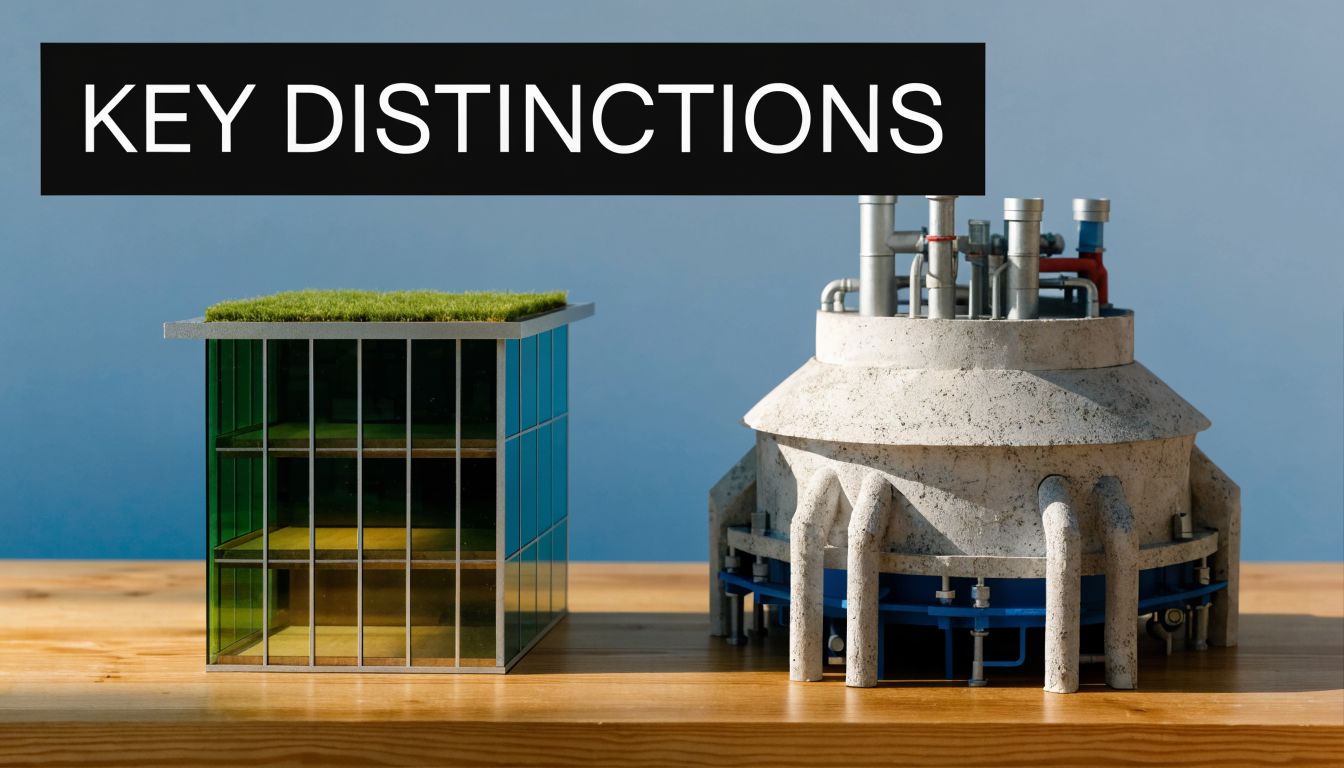
Investors sometimes group all business-use property into one bucket. That’s a mistake. Light commercial construction and heavy commercial construction operate on different risk profiles, different time horizons, and different management demands.
Light commercial usually fits the investor who wants a controllable project. Think small retail, office, restaurant, or service space where the building program is focused and the team can move with fewer layers. Heavy commercial is a different world. More consultants, more coordination, more infrastructure demands, and a much higher tolerance for delay and complexity.
Why light commercial fits more investor strategies
For many Jacksonville-area investors, light commercial works because it’s close enough to residential renovation to feel familiar, but commercial enough to create stronger tenant and income upside. You can often reposition an overlooked property into a leasable asset without taking on the full burden of a large institutional or tower-scale job.
That doesn’t mean it’s simple. It means the moving parts are more manageable if the scope is disciplined.
A practical difference shows up early:
- Team size: Light commercial can be run with a tighter core team and clearer lines of responsibility.
- Decision speed: Investors can usually make scope, finish, and layout decisions faster.
- Capital exposure: The project is generally more accessible than a large commercial development.
- Exit flexibility: Lease, owner-user sale, or hold strategies can all be viable depending on location and tenant demand.
Smaller doesn't mean easier. It means mistakes show up faster, and disciplined management matters more.
Where heavy commercial changes the game
Heavy commercial projects bring a different financial burden. The entitlement path is often longer. The design process is deeper. Specialized systems and large-span structural requirements raise the stakes. The investor usually needs more than a good contractor. They need a full development framework.
That’s why I usually tell investors to ask a blunt question before chasing a bigger asset: does the project need entrepreneurial management, or institutional management? If it’s the second, your capital structure and operational model need to reflect that.
A short overview of commercial project realities can help frame that difference:
In Northeast Florida, light commercial often wins because it allows faster repositioning of existing buildings, practical tenant improvements, and more direct control over scope. Heavy commercial can absolutely create value, but it usually isn't the next logical step for an investor who's still refining execution systems.
Navigating Jacksonville's Building Codes and Permits
A commercial project in Jacksonville rarely gets into trouble because the investor picked the wrong paint color. It gets into trouble because the permit set was incomplete, the use wasn’t fully aligned with the code path, or the scope was priced before the review comments changed the job.
The first risk is assuming a light commercial project can be run like a residential remodel. It can’t. Even relatively small spaces can trigger accessibility issues, occupancy questions, fire protection review, trade coordination, and documentation demands that are easy to miss if the pre-construction work is shallow.
What slows projects down in practice
The predictable bottlenecks are rarely dramatic. They’re usually documentation issues.
Common examples include:
- Unclear use definition: A generic “office” plan can unravel if the end user needs a different occupancy or additional life-safety features.
- Incomplete consultant coordination: Structural, mechanical, electrical, plumbing, and architectural sheets have to agree with each other.
- Late value engineering: If substitutions happen after permit submission, review cycles get longer and field confusion starts.
- Weak scope control: Tenant-driven changes during permit review can force redesign.
For Jacksonville investors, the safest approach is to build the permit package around the actual use case, not the hopeful one. If the long-term strategy includes lower utility costs, that planning should begin before drawings are finalized. For example, owners who want to pair envelope upgrades with on-site generation should plan commercial solar in Jacksonville while the broader building strategy is still being shaped, not after the roof and electrical decisions are locked in.
Efficiency upgrades that protect long-term returns
Energy performance is one of the few areas where better construction choices can improve both tenant appeal and operating numbers. According to this ACEEE paper on commercial building energy characteristics, optimizing a building envelope with R-20 walls and reducing Lighting Power Density from 1.2 to 1.5 W/sq ft to below 0.8 W/sq ft can cut annual operational costs by 15% to 30%. The same source notes that in Jacksonville’s climate, a TPO roof with a high Solar Reflectance Index can reduce cooling costs by 20% to 40%.
That matters more in commercial than residential investing because tenants and buyers pay attention to recurring overhead. A building that leases well but operates inefficiently can still drag returns.
Good permit strategy and good energy strategy should happen together. If they happen separately, one usually gets watered down.
In practice, the strongest projects in Northeast Florida are the ones that coordinate code compliance, roofing, lighting, HVAC loads, and tenant needs as one system. That’s where schedule protection and ROI protection start to overlap.
A Project Management Checklist for Maximum ROI
Most investor losses in light commercial construction don’t come from one catastrophic event. They come from a series of small misses. Scope that wasn’t nailed down. A permit package that didn’t match the intended use. A subcontractor sequence that caused rework. Final closeout documents that nobody organized until the tenant asked for them.
The cure is a disciplined checklist.
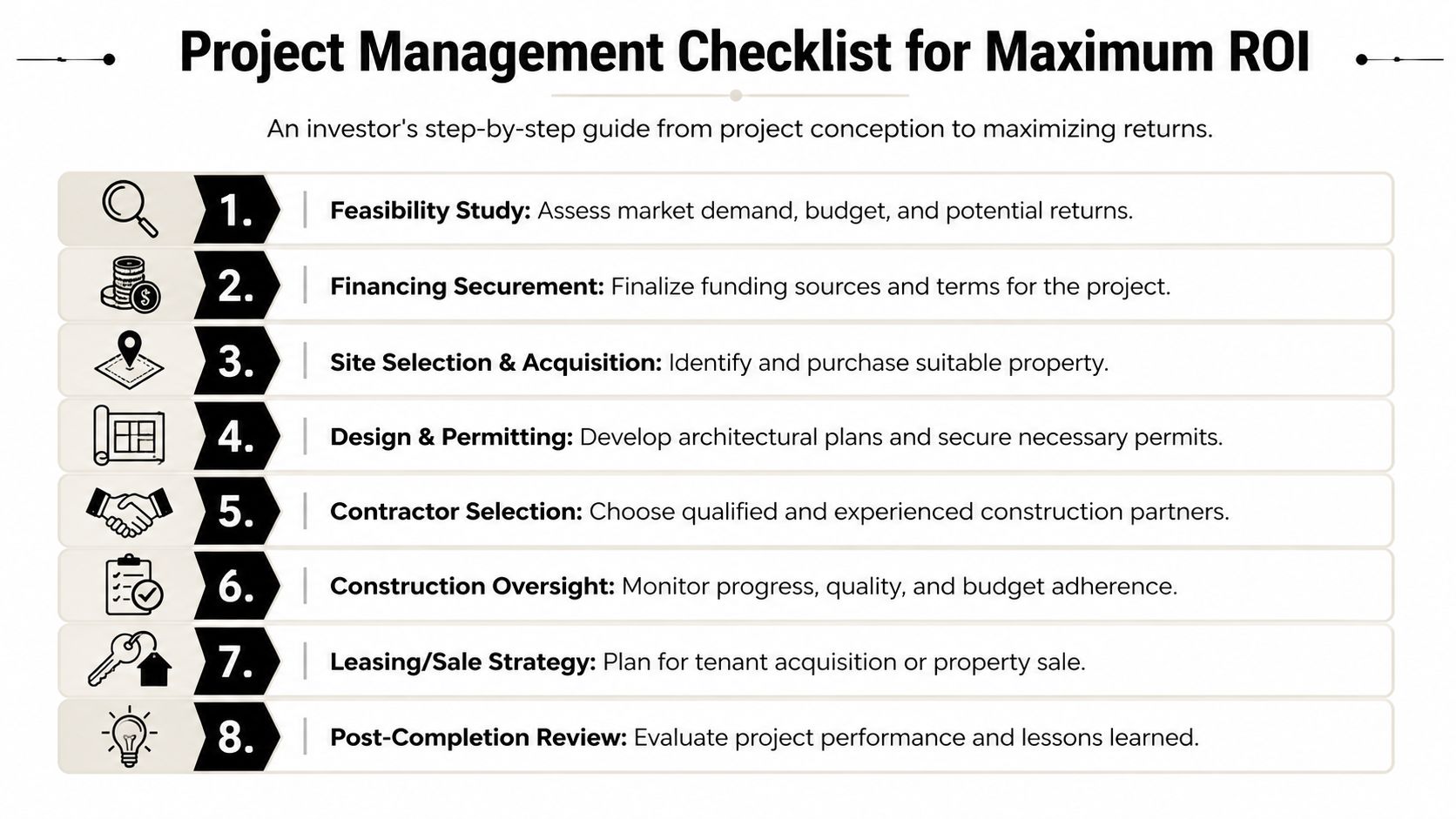
Pre-construction and due diligence
Start with the deal, not the design.
- Confirm the business case first. Know the intended tenant profile, use type, lease target, and hold strategy before you approve drawings.
- Inspect for hidden scope. Older Jacksonville-area buildings often hide moisture damage, outdated systems, or layout constraints that change the plan.
- Build a decision-ready budget. Don’t rely on broad assumptions. Break the job into shell work, interiors, MEP, code upgrades, and contingency logic.
- Choose the right delivery team. Investors who want a process reference can review this construction project management checklist for Jacksonville projects. One local option is Ofir Engineering, which provides construction and project management support for investor-focused renovations and light commercial work in Northeast Florida.
A lot of investors also underestimate the accounting side of execution. Clean job costing and disciplined invoice tracking make it easier to spot budget drift before it turns into a real problem. For that side of the process, these insights from Bookkeeping and Accounting Inc. on construction bookkeeping are useful.
Design permitting and scope control
Good projects separate from expensive ones.
- Lock the use early: The permit path should reflect actual occupancy and tenant intent.
- Coordinate consultants before submission: Field crews shouldn’t be solving drawing conflicts after permit approval.
- Value engineer before pricing is final: Material substitutions are much cheaper on paper than in the field.
- Write clear allowances: If an item is uncertain, define the assumption so there’s less room for dispute later.
Field lesson: Investors make better decisions when every allowance is tied to an actual scope description, not a placeholder number.
Construction oversight and closeout
Once construction starts, ROI protection is mostly about control.
A strong oversight rhythm usually includes:
- Weekly schedule review: Look ahead, not just behind. Procurement and inspections need active management.
- Trade verification in sequence: Framing affects MEP. MEP affects drywall. Drywall affects finishes. Sequence errors are expensive.
- Quality control before concealment: Catch issues before walls close and ceilings go up.
- Change management discipline: Every change should answer three questions. What changed, why did it change, and what does it do to budget and schedule?
- Closeout with intent: Collect warranties, as-builts, inspection records, and turnover documents before the project team disperses.
The best light commercial projects don’t feel dramatic. They feel controlled. That usually means the investor had a manager who kept the project aligned with the business plan, not just the construction drawings.
Frequently Asked Questions
Is light commercial construction riskier than a residential flip?
It’s riskier if you treat it like a residential flip. The code requirements, permit path, accessibility issues, and tenant needs are more complex. It becomes a strong investment category when the scope is defined early and managed as an income-producing asset.
Can a small building still have major commercial code issues?
Yes. Size doesn’t protect you from occupancy, life-safety, restroom, accessibility, or MEP requirements. Small commercial projects often get in trouble because owners assume “small” means “simple.”
Does structural material affect insurance and long-term ROI in Florida?
It can. In Florida, durability and storm performance matter because they influence future repair exposure and operating risk. That’s one reason some investors look harder at LGS for long-term holds, even when wood has a lower upfront cost.
Is a vacant storefront a good light commercial opportunity?
Often, yes. Retrofit opportunities can be attractive when the shell is usable, the zoning supports the intended use, and the permit strategy is understood before construction begins. Vacant space can create value, but only if conversion costs are controlled.
What should investors budget for first in a light commercial renovation?
Start with due diligence, design coordination, and code-related scope. Those items shape the budget. Finishes matter, but they shouldn’t drive the first round of financial decisions.
How do I keep delays from damaging returns?
Make decisions early, define the tenant use clearly, coordinate drawings before permit submission, and hold weekly schedule accountability during construction. In commercial work, delay usually starts with indecision or document gaps.
If you're evaluating a light commercial construction project in Jacksonville or anywhere in Northeast Florida, Ofir Engineering can help you assess scope, manage risk, and execute investor-focused renovations, build-outs, and construction projects with a practical eye on budget, schedule, and long-term ROI.
Focus keyword: light commercial construction
Meta title: Jacksonville Light Commercial Construction Experts | Investor ROI Guide
Meta description: Learn how light commercial construction works in Jacksonville, Florida. See project types, code risks, wood vs light gauge steel, permitting, and ROI-focused project management.
Suggested internal linking opportunities:
- Investors page
- Project Management page
- Home Remodeling page
- Construction services page
- Blog article on fix-and-flip project management
- Blog article on renovation budgeting in Jacksonville
- Blog article on permitting and inspections in Florida
Suggested image ideas and alt text
Hero image filename: jacksonville-light-commercial-construction-experts.jpg
Alt text: Light commercial construction project in Jacksonville Florida with modern storefront design
Description: A clean exterior shot of a small commercial building suitable for retail or office use in Northeast Florida
Recommended size: 1731 x 909 pixelsSecondary image filename: light-commercial-construction-jacksonville-permitting.jpg
Alt text: Jacksonville light commercial construction plans and permit drawings on a project table
Description: Permit set, code notes, and pre-construction planning materials for a Florida commercial project
Recommended size: 1731 x 909 pixelsSecondary image filename: wood-vs-light-gauge-steel-florida-commercial.jpg
Alt text: Comparison of wood frame and light gauge steel for Florida light commercial construction
Description: Side-by-side framing systems for a small commercial building under construction
Recommended size: 1731 x 909 pixels
