
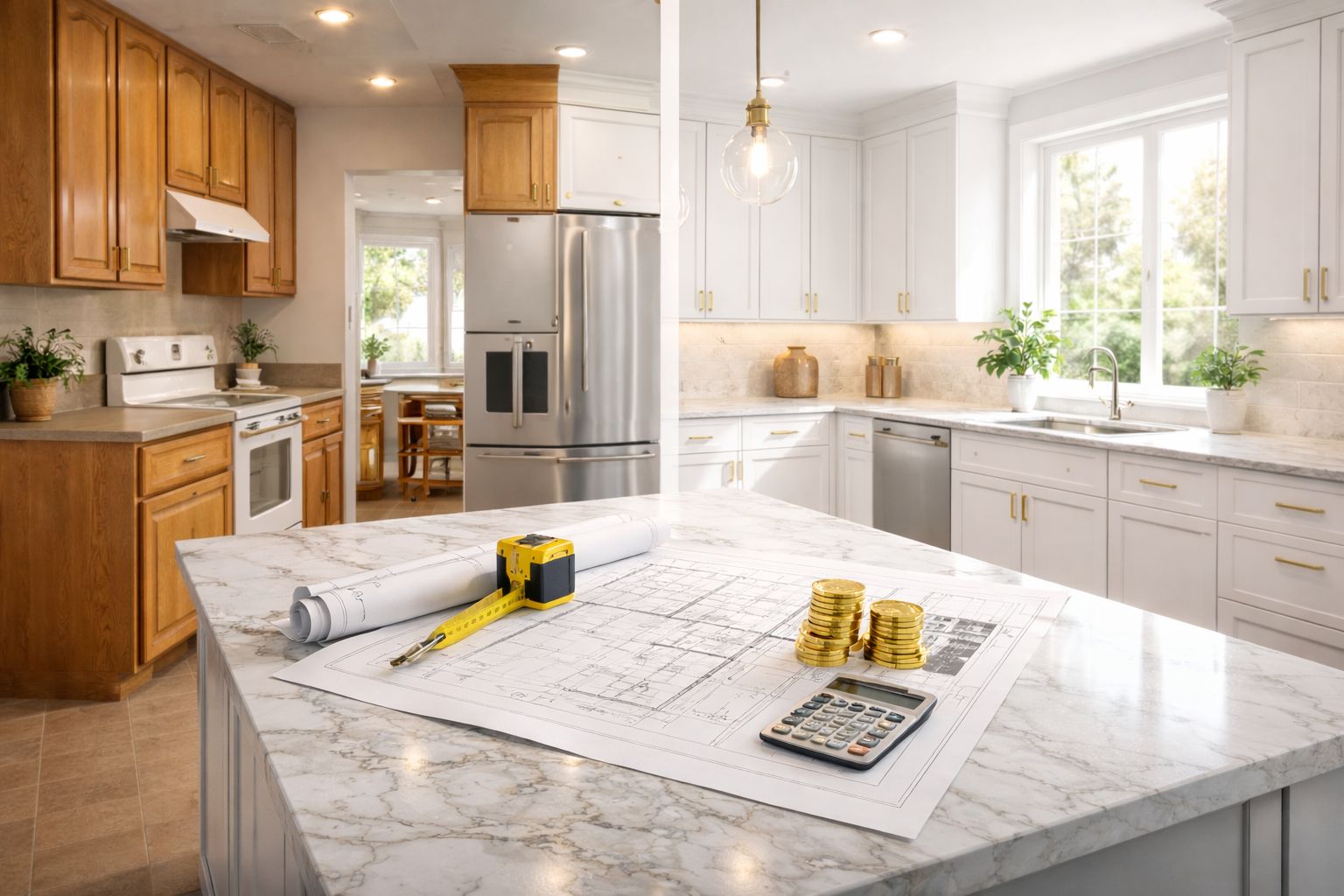
A strong ROI kitchen remodel usually isn't the biggest kitchen you can build. It's the one with the right scope. National data summarized by Zillow shows a minor kitchen remodel averaging $28,458 with an estimated resale return of $32,141, or 113% ROI, while larger remodels recover far less on average (Zillow kitchen remodel ROI data). In Jacksonville, that's the point I'd want any homeowner or investor to understand before a single cabinet door gets ordered.
With Florida contractor license CGC 1540016 and deep local experience, Ofir Engineering serves Jacksonville, Ponte Vedra, and the surrounding Northeast Florida communities.If you own a home in Northeast Florida, or you're underwriting a flip or rental upgrade, kitchen decisions affect more than looks. They affect resale, leasing appeal, timeline risk, and how much budget gets trapped in work buyers won't fully pay for.
Table of Contents
- Your Guide to a High-Value Kitchen Remodel in Jacksonville
- Understanding Kitchen Remodel ROI Benchmarks
- Key Factors That Influence Your Remodel's ROI
- Strategies for Maximizing Kitchen ROI in Jacksonville
- Sample Cost vs Value Scenarios in Northeast Florida
- Your Pre and Post Remodel Project Checklist
- Frequently Asked Questions About Kitchen Remodel ROI
Your Guide to a High-Value Kitchen Remodel in Jacksonville
Jacksonville owners often think kitchen ROI comes from adding more. More demolition, more custom work, more premium finishes. In practice, the better return usually comes from controlling the scope, protecting the layout, and spending where buyers notice the improvement.
That matters in Northeast Florida because kitchen remodeling isn't just a design exercise. It's a construction and project management decision. The wrong scope can tie up budget in plumbing moves, electrical revisions, and finish selections that push the project above neighborhood expectations. The right scope can refresh the room, shorten downtime, and keep the property aligned with local buyer demand.
For homeowners, the target is usually a kitchen that works better today without damaging future resale. For investors, the target is tighter. Better showing condition, stronger buyer response, and cleaner numbers at exit.
Practical rule: If a buyer sees a fresh, functional, consistent kitchen without spotting unnecessary luxury, you're usually closer to a good ROI position.
In Jacksonville, I'd separate every kitchen plan into two questions before discussing finishes:
- Resale question: Will this work feel appropriate for the home, the block, and the likely buyer?
- Budget question: Are we improving what people see and use, or are we spending heavily behind the walls?
- Timeline question: Will this scope keep the project moving, or will it trigger cascading trade coordination and permit complexity?
A high-value kitchen remodel isn't always the cheapest job. It's the one that solves the right problems without creating expensive new ones.
Understanding Kitchen Remodel ROI Benchmarks
What ROI means in a kitchen project
Return on investment in a kitchen remodel is the relationship between what you spend and what the market is likely to give back at resale. That's different from personal enjoyment. A family planning to stay in the home may accept lower resale recovery in exchange for better storage, workflow, or daily comfort. An investor usually can't.
The biggest mistake I see is using one kitchen category to justify another. People hear that kitchens add value, then assume a full gut renovation will automatically pay off. The national numbers don't support that.
National cost vs value snapshot
Zillow's summary of the 2025 Cost vs. Value data shows a clear pattern: smaller kitchen projects outperform larger ones on resale recovery (Zillow national kitchen ROI summary).
| Project Scale | Average Cost | Resale Value | ROI (Cost Recouped) |
|---|---|---|---|
| Minor kitchen remodel | $28,458 | $32,141 | 113% |
| Major midrange remodel | $82,793 | $42,130 | 51% |
| Major upscale remodel | $164,104 | $58,561 | 36% |
The table tells the story quickly. The lowest-cost kitchen project in the dataset is the only one that exceeds full cost recovery on average. Once the project becomes more structural, more custom, or more luxury-driven, resale recovery drops hard.
What Jacksonville owners should take from the data
For Jacksonville homeowners and investors, this doesn't mean major remodels are always wrong. It means they need a different justification. If the home has severe functional issues, visible deterioration, or a layout that blocks the property's marketability, bigger work may be warranted. But that's no longer a pure ROI play. It becomes a livability, repositioning, or strategic sale decision.
That's why many practical projects in this market lean toward:
- Cabinet-facing improvements instead of full custom replacement where boxes are still sound
- Countertop, backsplash, fixture, and lighting refreshes that create a strong visual reset
- Layout preservation so you don't pile cost into plumbing and electrical relocation
- Finish consistency with the rest of the house, rather than building a standout kitchen inside an otherwise average property
If you're comparing service options, Home Remodeling Jacksonville covers kitchen remodeling, bathroom renovations, flooring installation, interior upgrades, and full residential renovation projects managed by licensed contractors. That type of work is most useful when the scope matches the property's resale lane instead of fighting it.
Buyers respond to a kitchen that feels updated, clean, and functional. They don't always pay extra for every dollar spent getting there.
Key Factors That Influence Your Remodel's ROI
Scope drives the return
Kitchen ROI changes with market conditions and project size. Angi cites Remodeling's 2024 Cost vs. Value Report showing minor kitchen remodels at 96% ROI in 2024, compared with about 71% in 2022, and notes that returns in other U.S. regions range from 101% to 134% for minor kitchen remodels (Angi kitchen remodel value overview). That swing matters because it shows ROI isn't fixed. It moves with timing, geography, and scope.
In practical terms, the scope decision comes first. A surface-level refresh can preserve margin. A full tear-out can erase it.
Material choices can help or hurt
Not every upgrade carries the same resale weight. Durable, easy-to-read finishes usually perform better than highly personal selections. In Jacksonville homes, I'd rather see a coherent package than a premium feature surrounded by average finishes.
A useful habit during estimating is to separate visible-value items from hidden-cost items. Paint, cabinet fronts, hardware, counters, sink fixtures, and lighting usually change perception quickly. Complicated millwork details, niche material splurges, and custom fabrication can consume budget without creating equivalent buyer response.
If you're trying to tighten finish pricing during planning, tools like Exayard painting estimating software are worth reviewing because finish costs often get underestimated during kitchen refreshes, especially when walls, trim, ceilings, and adjacent rooms need to blend cleanly.
Layout changes add cost fast
Moving plumbing, gas, walls, or major electrical runs usually changes the economics of a kitchen. That's where a clean ROI kitchen remodel often turns into an expensive construction project.
I've found that owners underestimate the chain reaction:
- Sink relocation can affect plumbing rough-ins, cabinets, counters, and inspections
- Island additions can trigger electrical work, circulation issues, and flooring patching
- Wall removal can involve structural review, framing changes, and finish repairs well beyond the kitchen footprint
Those moves can still make sense. They just need to be justified by the house and the use case, not by wishful resale math.
Efficiency and finish planning matter
Energy-efficient lighting, updated appliances, and a cleaner work triangle can help a kitchen feel current without forcing a gut renovation. In Florida, efficient lighting and heat-conscious material choices also matter for comfort and long-term upkeep.
Don't price a kitchen by cabinets alone. Price the disruption. The longer the trade sequence and the more systems you move, the more your ROI exposure grows.
The strongest remodels usually follow a simple logic. Keep what still works. Replace what buyers will notice. Avoid construction complexity unless the existing condition leaves you no choice.
Strategies for Maximizing Kitchen ROI in Jacksonville
Jacksonville isn't one buyer pool. A condo near the Beaches, a historic bungalow in Riverside, and a family home in St. Johns County don't need the same kitchen strategy. The project has to fit the neighborhood and the expected buyer.
Recent remodeling guidance also points in the same direction. Broad-appeal design tends to outperform highly personalized choices, over-improving can reduce payback, and Shaker-style cabinets were chosen by 58% of renovating homeowners in 2026 (kitchen and bath remodeling ROI guidance). That doesn't mean every Jacksonville kitchen should look identical. It means the safe money usually follows timeless, flexible design.
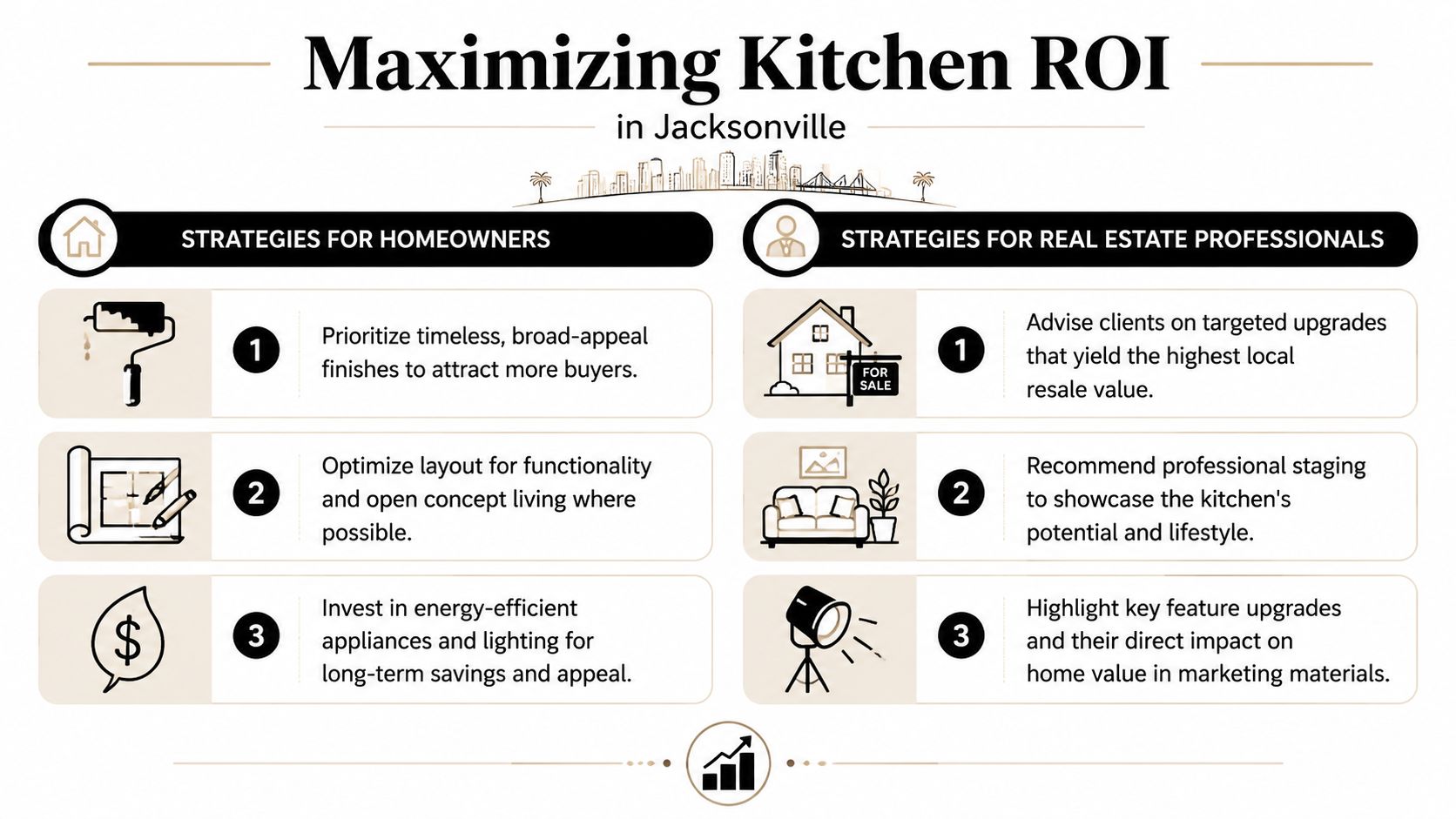
For homeowners balancing livability and value
A homeowner can accept some choices that an investor shouldn't. The key is staying disciplined about which choices are for you and which are for resale.
Good Jacksonville homeowner decisions often include:
- Keeping the kitchen footprint intact when the current layout is functional
- Using neutral cabinet profiles that still feel current several years from now
- Selecting durable counters and easy-maintenance finishes for daily family use
- Improving lighting quality so the room shows better and works better
Lighting is one of the most underused upgrades in a kitchen refresh. Layered task, ambient, and accent lighting can make average finishes look better and improve usability immediately. For fixture planning ideas, Golden Lighting for kitchen design is a useful reference.
For owners considering a more design-forward scope, high-end kitchen remodeling is relevant when the property, location, and surrounding comps support a higher finish level.
For real estate investors focused on speed and margins
Investors need a different filter. The kitchen has one job. Help the property sell faster or rent better without overspending.
That usually means:
- Refresh before replace when cabinet boxes are usable
- Choose finishes with broad appeal rather than trendy statements
- Protect timeline by avoiding layout changes unless the current arrangement is a deal-breaker
- Coordinate all visible finishes together so the kitchen reads as intentional, not patched
In flips, the money often works best on visible consistency. Matching hardware tones, clean paint lines, practical counters, functioning appliances, and updated lighting do more for buyer confidence than a single expensive centerpiece.
A flip kitchen should look complete, not extravagant.
For rental properties, durability takes priority. Tenants care about clean condition, storage, lighting, and easy-to-maintain surfaces. Fancy details don't help much if they increase replacement risk.
Jacksonville neighborhood fit matters
In Riverside or Avondale, character matters. In newer suburban inventory, buyers usually want simpler finishes and a brighter, more open feel. Near the Beaches, moisture resistance and easy maintenance should stay in the conversation. In working-family neighborhoods, going too custom can make the kitchen feel disconnected from the rest of the property.
That's where project discipline pays off. A strong ROI kitchen remodel in Jacksonville usually does three things well:
- It fits the home's price bracket.
- It avoids expensive scope creep.
- It gives buyers very few reasons to mentally discount the house.
Sample Cost vs Value Scenarios in Northeast Florida
The numbers become more useful when you apply them to real project types. These examples aren't market guarantees. They're planning models based on the same scope logic discussed above.
Scenario one fix and flip in Murray Hill
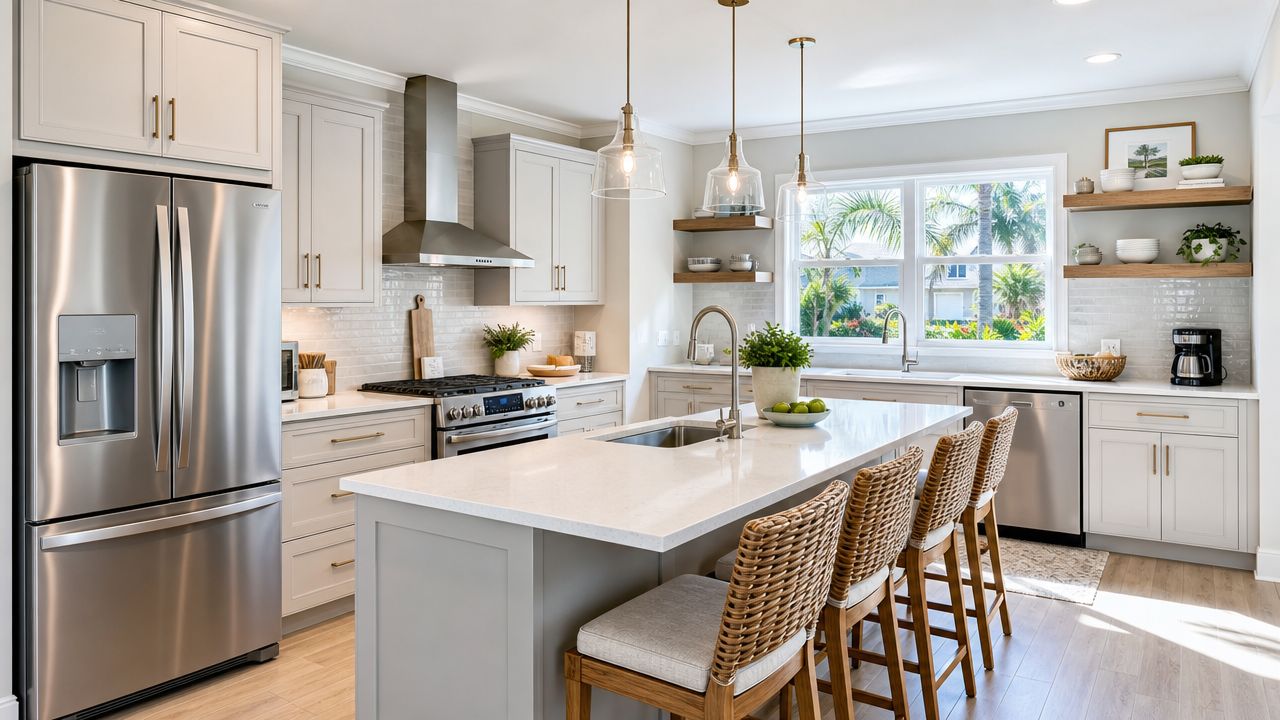
A local investor buys a mid-century bungalow with a dated but usable kitchen footprint. The winning move isn't a gut job. It's a controlled cosmetic reset.
Scope might include painted or refaced cabinets, new pulls, updated counters, replacement sink and faucet, basic appliance package, new lighting, and touch-up flooring work. The investor keeps plumbing in place and avoids opening walls unless a hidden condition forces it.
This is the kind of project where the resale story improves because the kitchen no longer drags the house down. Buyer perception changes fast when the room feels clean, bright, and consistent.
Scenario two rental update in Southside
A landlord with a tired rental kitchen usually needs durability more than style. The best plan often centers on low-maintenance surfaces, easy-to-replace hardware, straightforward fixtures, and finishes that won't show wear quickly.
I'd keep the selection package simple. Cabinet replacement only if the existing boxes are failing. Otherwise, focus on function, lighting, and a professional finish. If you're evaluating broader room-by-room budgeting, Ofir Engineering's guide on cost to remodel a room can help frame where kitchen spend should sit relative to the rest of the property.
This walkthrough gives a useful visual reference for how a modern kitchen update can change the feel of a home without requiring a luxury buildout.
Scenario three primary home in St Johns County
A homeowner planning to stay long term can justify a broader remodel if the current kitchen limits daily life. Better storage, improved island function, upgraded lighting, and stronger material durability can all be worth it.
The caution is simple. Once the project moves into full custom territory, resale recovery becomes less predictable. For a forever-home owner, that may be fine. For someone who may sell sooner, I'd keep one eye on neighborhood standards and avoid building a kitchen that outclasses the rest of the house.
The common thread in all three scenarios is the same. The best project is the one that solves the property's actual problem. Not the one that spends the most.
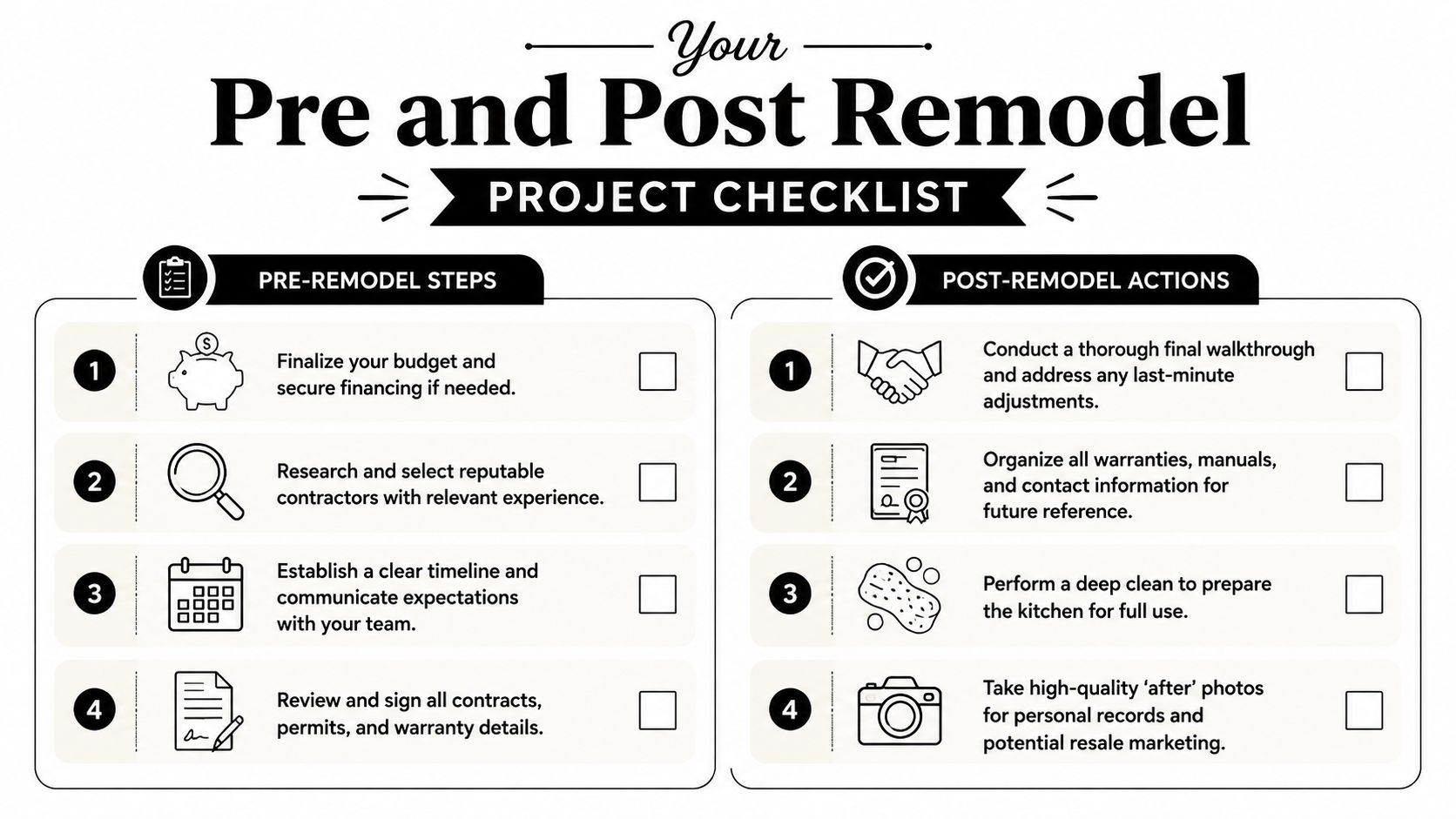
Your Pre and Post Remodel Project Checklist
A kitchen remodel performs better when the planning is disciplined. That's true whether you're renovating a primary residence or turning an investment property. I'd treat the process like a managed project, not just a design selection exercise.
Before work starts
Use this as a working checklist before demolition begins:
- Define the project goal: Decide whether this kitchen is for resale, rental durability, or long-term personal use.
- Lock the scope early: List what stays, what changes, and what must not drift during construction.
- Build a realistic budget: Include a contingency reserve so hidden conditions don't derail the job.
- Collect finish decisions in advance: Cabinets, counters, plumbing fixtures, hardware, paint, and lighting should be coordinated before crews are waiting.
- Verify contractor credentials: Use licensed and insured professionals with relevant kitchen and renovation experience.
- Confirm schedule expectations: Ordering, lead times, inspections, and trade overlap should be discussed up front.
For owners who want a more detailed planning framework, this guide on planning your next home renovation is a useful companion resource.
If you want a Jacksonville-specific planning tool, this home remodeling checklist for Jacksonville gives a localized reference point.
After the remodel is complete
Wrap-up matters. At this stage, a lot of owners get sloppy.
- Walk the punch list carefully: Open doors, test drawers, check paint touch-ups, inspect trim, and confirm all fixtures operate correctly.
- Collect closeout documents: Keep warranties, manuals, finish selections, and contractor contact details together.
- Request lien-related paperwork as applicable: Don't leave documentation unresolved at the end of the job.
- Photograph the finished kitchen: Good records help with resale, insurance, and future maintenance.
- Document maintenance items: Note caulk lines, specialty surfaces, and appliance care needs.
For projects needing structured oversight, Construction Project Management includes contractor coordination, budgeting, scheduling, renovation oversight, and construction supervision for homeowners and investors.
A remodel isn't finished when the trades leave. It's finished when the documentation, punch work, and handoff are complete.
Frequently Asked Questions About Kitchen Remodel ROI
How long does a typical kitchen remodel take in Jacksonville?
It depends on scope, permitting, product lead times, and whether you're changing layout or systems. A cosmetic kitchen refresh moves much faster than a project involving plumbing relocation, electrical rework, or structural changes. For investors, every extra week can affect holding costs and listing timing, so schedule discipline matters as much as design.
Is a permit required for a kitchen remodel in Florida?
Often, yes, if the work includes electrical, plumbing, mechanical, or structural changes. A simple finish refresh may involve less permitting than a full rebuild, but owners shouldn't guess. Permit requirements depend on the actual scope and the local jurisdiction. In Jacksonville and surrounding Northeast Florida municipalities, permit review should be addressed before work starts.
Should I reface or replace my cabinets for the best ROI?
If the cabinet boxes are sound and the layout still works, refacing or replacing doors can preserve more value than full replacement. If the boxes are failing, the storage is dysfunctional, or the configuration hurts usability, replacement may be the better call. The right answer comes from condition, layout, and project goals.
Do luxury finishes always improve resale value?
No. They can improve appeal in the right house and neighborhood, but they can also push the project beyond what local buyers will pay for. The safer resale path is usually quality, durability, and design consistency.
What matters more for ROI, layout or finishes?
If the existing layout is already functional, finishes often deliver the better return because buyers see them immediately. If the layout is problematic, that issue can outweigh finish quality. The decision should be based on what's limiting the kitchen today.
If you're planning a kitchen update in Jacksonville, Saint Johns, or anywhere in Northeast Florida, Ofir Engineering can help you evaluate scope, protect your budget, and manage the project with ROI in mind. That includes investor-focused renovations, homeowner remodels, contractor coordination, and practical construction planning built around the property's real goals.
