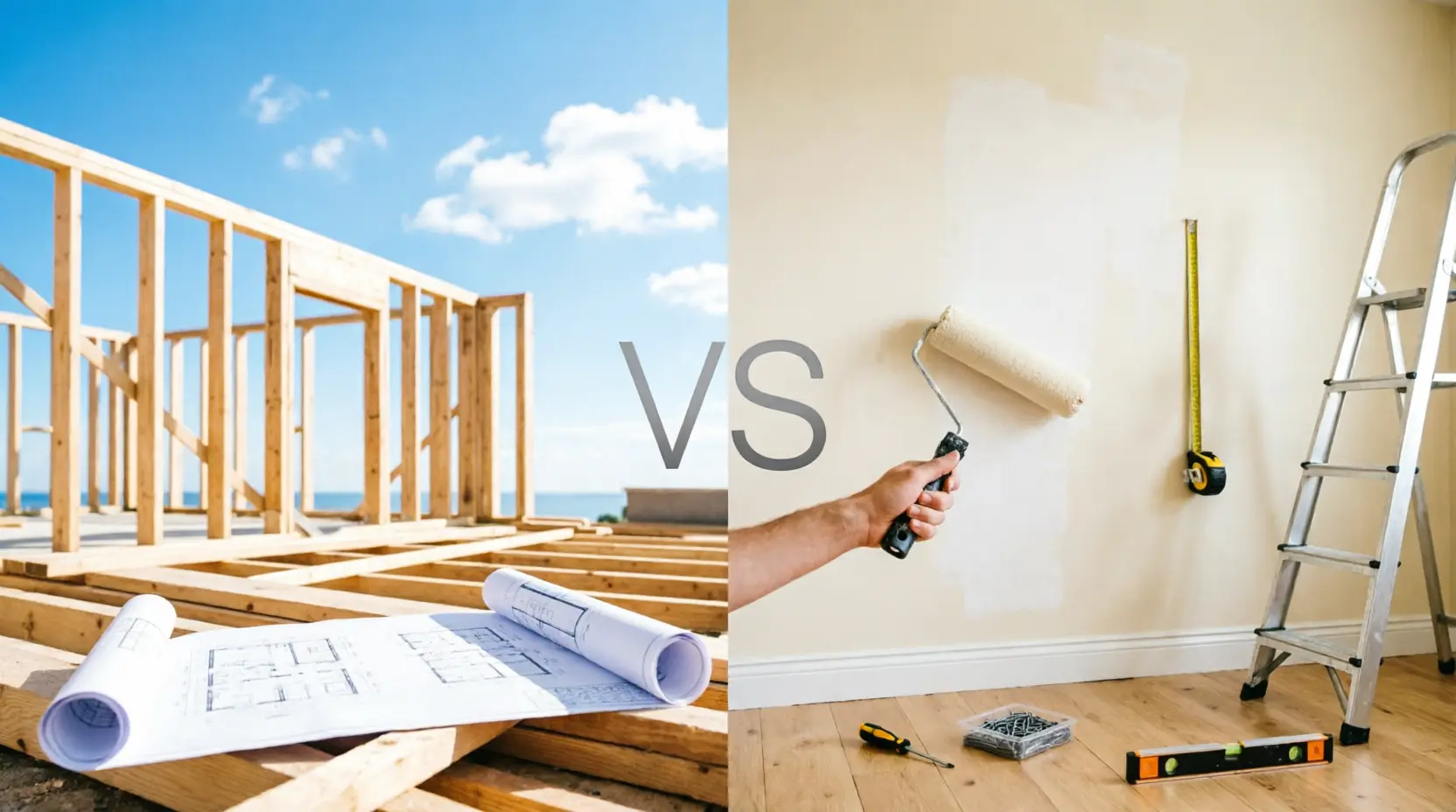
New construction vs renovation is one of the most significant decisions property owners face when they want to improve their living or working space. At OFIR Engineering, we have guided countless clients through this exact crossroads, and the answer is rarely one size fits all.
The truth is that both paths offer distinct advantages and trade-offs. Some projects call for the blank canvas of a brand new build, while others benefit from the cost efficiency and character preservation that comes with renovating an existing structure. This blog breaks down the differences, advantages, and drawbacks of each approach so you can make the smartest decision for your specific situation.
Understanding the Core Difference Between Building New and Renovating
Before diving into the details, it is important to understand what separates these two approaches at a fundamental level. New construction means starting from the ground up. You acquire land or clear an existing site and build an entirely new structure. Renovation, on the other hand, works within the framework of an existing building and focuses on upgrading, repairing, or transforming what is already there.
The distinction matters because each path comes with its own set of permits, costs, timelines, and design possibilities. When we work with clients evaluating new construction vs renovation, we always start with a thorough assessment of the existing property, the client’s goals, and the long-term value each option delivers.
The Case for New Construction
There is something undeniably exciting about building from scratch. You get full creative control, the latest materials, and a structure designed specifically for your needs. Here are some of the strongest reasons property owners choose to build new.
Complete Design Customization
With new construction, every detail is yours to decide. From the floor plan and ceiling heights to the placement of windows and the flow between rooms, nothing is dictated by an existing structure. This is valuable for property owners who have very specific functional or aesthetic requirements.
Modern Building Codes and Energy Efficiency
New builds are built to meet the latest codes, which means better structural integrity, fire safety, and energy performance. We often incorporate advanced insulation, smart HVAC systems, and sustainable materials that dramatically reduce utility costs over the life of the building.
Lower Long-Term Maintenance
When every pipe, wire, and beam is brand new, you benefit from manufacturer warranties and years of trouble-free performance. This is a major advantage when comparing new construction vs remodeling pros and cons, because older structures often come with hidden maintenance burdens that add up quickly.
Key Benefits at a Glance
- Total freedom over layout, materials, and design
- Built in compliance with the latest safety and energy standards
- Reduced repair and maintenance costs in the early years
- Opportunity to future-proof the structure with smart technology
- Higher potential resale value in many markets
The Case for Renovation
Renovation is far from a lesser option. In many scenarios, it is actually the smarter, more strategic move. Upgrading an existing structure allows you to preserve what already works while fixing what does not.
Preserving Location and Character
One of the biggest advantages of home renovation vs new construction is the ability to stay exactly where you are. If you love your neighborhood, your lot, or the architectural character of your building, renovation lets you keep all of that while making meaningful improvements. This is particularly relevant for properties in established communities or historically significant areas.
Budget Flexibility and Phased Work
Renovation allows you to prioritize. You can tackle the kitchen this year, the bathrooms next year, and the exterior the year after. This phased approach makes home remodeling accessible even on tighter budgets. You control the scope and the spending without committing to a massive all-or-nothing investment.
Faster Project Timelines
Because you are not starting from an empty lot, many renovation projects can begin and finish significantly faster than new construction. Permitting is often simpler, site preparation is minimal, and the structural bones of the building are already in place. When we manage renovation projects, we frequently see timelines that are 30 to 50 percent shorter than comparable new builds.
Key Benefits at a Glance
- Retain your current location and neighborhood advantages
- Spread costs across multiple phases
- Shorter permitting and construction timelines
- Preserve architectural charm and historical value
- Reduce material waste by reusing the existing structure
Weighing the Drawbacks of Each Option
No honest comparison of new construction vs renovation would be complete without addressing the downsides. Both options carry risks, and understanding them upfront helps you plan more effectively.
Drawbacks of New Construction
Building from scratch typically involves higher upfront costs. You may need to purchase land, pay for demolition of an existing structure, and wait through extended permitting processes. Timelines for ground-up projects often stretch longer than initially expected, especially in regions with strict zoning regulations.
When examining new construction vs remodeling pros and cons, the time and financial commitment of a new build is the most common concern we hear from clients.
Drawbacks of Renovation
Renovation carries its own set of surprises. Once you open up walls, you may discover outdated wiring, plumbing issues, asbestos, or structural damage that was not uncovered during the initial inspection.
These hidden conditions can push budgets beyond their original limits. The concept of renovation vs rebuilding a house often comes into play when a renovation uncovers problems so extensive that starting over becomes more practical.
How to Decide Between Renovation and Rebuilding a House
The question of renovation vs rebuilding a house comes down to a few critical factors. We use a straightforward evaluation framework with every client.
Assess the Condition of the Existing Structure
If the foundation, framing, and major systems are sound, renovation is usually the more economical and efficient path. If the structure has significant damage, code violations, or layout problems that cannot be reasonably fixed, rebuilding starts to make more sense.
Define Your Goals Clearly
Ask yourself what you truly want from the finished project. If you need a fundamentally different layout, additional square footage beyond what the current footprint allows, or features that require extensive structural changes, new construction may serve you better. If your goals center on updating finishes, improving energy efficiency, or adding modern amenities within the existing layout, renovation is likely the way to go.
Consider the Financial Picture
Effective project management means understanding the full financial picture before breaking ground or swinging a hammer. Factor in not just the construction costs but also permits, design fees, temporary housing if needed, and the long-term value each option adds to the property.
New Construction vs Remodeling Pros and Cons Side by Side
Understanding new construction vs remodeling pros and cons in a direct comparison makes the decision clearer. Here is how they stack up across the factors that matter most.
Cost
New construction generally requires a larger upfront investment but delivers lower maintenance costs over time. Renovation typically costs less initially but may involve unexpected expenses as hidden issues are uncovered.
Timeline
New builds take longer from concept to completion. Renovations can often be completed in weeks or months rather than the year or more that a full new build may require.
Design Freedom
New construction offers unlimited design possibilities. Renovation works within the constraints of the existing structure, though creative design can still achieve remarkable transformations.
Sustainability
Renovation reuses existing materials and structures, which reduces waste. New construction allows for the use of the latest green building technologies from day one.
Resale Value
Both options can significantly boost property value when executed well. The key difference is that home renovation vs new construction value depends heavily on local market conditions and buyer preferences. In some markets, a beautifully renovated historic home commands a premium that a new build cannot match.
Frequently Asked Questions
What is the biggest advantage of new construction vs renovation?
The biggest advantage of new construction is complete customization. You design every element from scratch, ensuring the final result perfectly matches your functional and aesthetic needs without being limited by an existing structure.
Is it cheaper to renovate or build new?
Renovation is generally less expensive upfront, but the total cost depends on the scope of work and the condition of the existing building. A renovation that uncovers major structural or system issues can sometimes approach or even exceed the cost of building new.
How do I know if my property is worth renovating?
A professional structural assessment is the best starting point. If the foundation and framing are solid and the cost of repairs is significantly less than building new, renovation is usually the better investment.
Does home renovation vs new construction affect property value differently?
Both can increase property value substantially. New construction tends to perform well in developing areas, while high-quality renovation often adds more value in established neighborhoods with strong demand for character homes.
How long does new construction take compared to renovation?
New construction typically takes 10 to 16 months depending on size and complexity. Most renovations can be completed in 2 to 6 months, though large-scale remodels with structural changes may take longer.
Building the Right Future for Your Property
The decision between new construction vs renovation ultimately comes down to your unique circumstances. Your budget, timeline, property condition, and long-term vision all play a role. Neither option is universally better. The smartest choice is the one that aligns with your goals and delivers lasting value.
At Ofir Engineering, we bring hands-on experience to both new builds and renovations, helping property owners navigate this decision with clarity and confidence. If you are weighing your options and want a professional perspective tailored to your project, we would welcome the opportunity to help you move forward with the right plan.
Keep Building With Ofir Engineering
When it comes to new construction in Jacksonville, FL, working with a licensed general contractor makes the difference. Related discussions & follow us: Facebook · Reddit
Latest & related guides: Explore more custom home building guides →
