
A metal frame homes draw schedule works the same way as any Florida construction loan on the surface — the lender releases money in stages against verified progress — but steel framing changes the cash-flow shape in ways that catch owners out. Steel packages are often engineered and fabricated before they arrive, which means a significant cost lands early, while the lender’s inspector is still measuring progress by what is standing on the lot. Understanding that mismatch before closing is what keeps a steel build funded smoothly. Ofir Engineering is a licensed Florida general contractor (License #CGC 1540016) serving Jacksonville, Ponte Vedra, St. Johns County, and Northeast Florida.
How a Metal Frame Homes Draw Schedule Is Structured
A construction loan does not fund at closing. It funds in draws, each released after an inspector confirms that a defined stage of work is complete and, in most cases, after lien waivers from the contractor and suppliers are collected. A typical Florida residential draw schedule runs through permits and mobilisation, site work and foundation, framing and structure, dry-in with roof and windows, rough mechanical electrical and plumbing, insulation and drywall, interior finishes, and final completion with the certificate of occupancy.
The percentages assigned to each stage are negotiated at loan closing and are far more important than most borrowers realise. Once the schedule is set, the lender funds to it. If the schedule assigns a small percentage to framing and the steel package represents a large share of the actual cost, the builder is financing the gap and the project can stall waiting for money that is contractually not yet due.
Why Steel Changes the Cash-Flow Shape
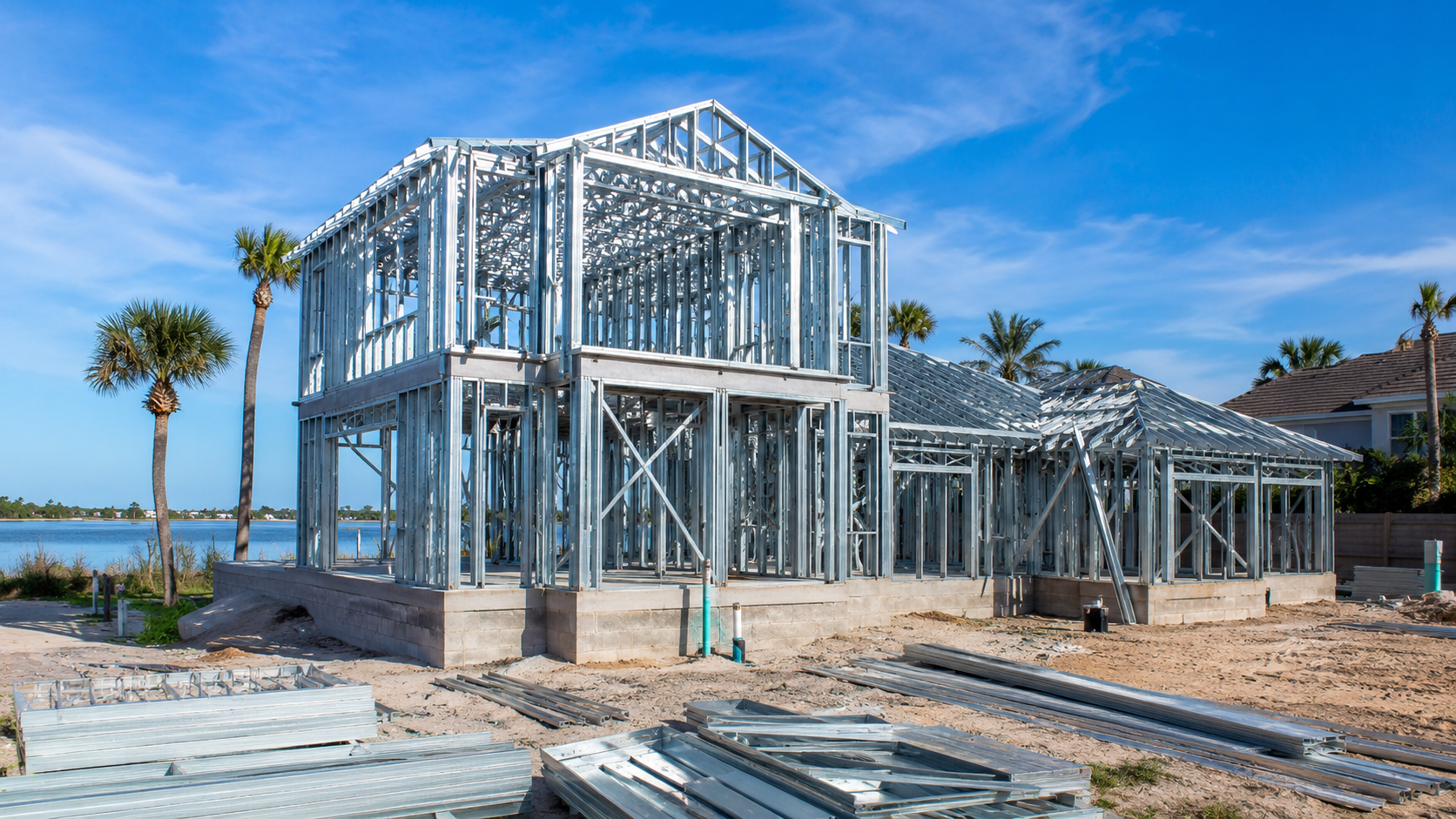
Light-gauge steel framing is typically engineered, detailed, and fabricated to precise dimensions off site. That produces real advantages — speed, accuracy, and less waste — but it front-loads cost. A deposit is due to the fabricator, the package is manufactured, and it may be delivered and stored before erection begins. From the lender’s inspection standpoint, none of that is progress on the lot.
There are three ways to handle this, and all three are conversations to have before closing rather than mid-build. The first is negotiating a stored materials provision so that delivered, insured, and secured material on site is fundable. The second is weighting the draw schedule so that the framing and structure milestone carries a percentage that reflects steel’s actual share of cost. The third is a deposit or materials draw written explicitly into the schedule. Lenders differ substantially on all three, which is why the loan terms should be reviewed alongside the construction contract rather than after it.
The Inspection That Releases the Money
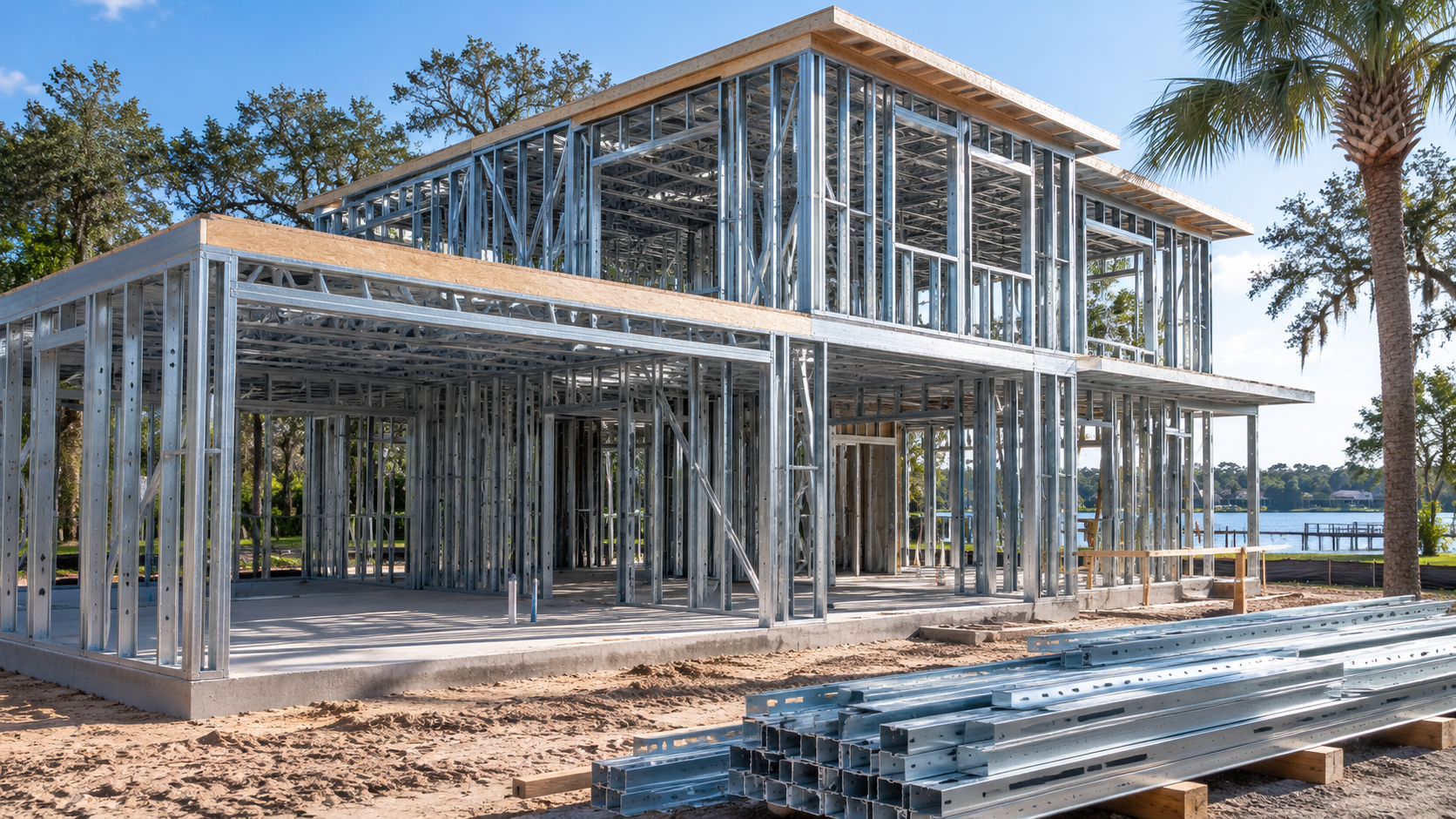
Each draw is released against an inspection, and the inspector is verifying completion of the defined stage rather than the quality of the engineering. For a steel-framed home the framing draw generally requires the structure erected, connections made, and the framing inspection passed by the building department. Two documents matter here: the engineered drawings showing the connection details, and the building department’s inspection approval. A steel structure that is standing but has not passed its structural inspection is not a completed milestone.
Owners should also expect the lender’s inspector to be less familiar with light-gauge steel than with wood or block. That is not usually a problem, but ambiguity slows things down. Having the engineered package and connector schedule available on site removes most questions before they become a delayed draw.
Appraisal and the Steel Question
Construction loans are underwritten against an as-completed appraisal, and the appraiser values the finished home against comparable sales. In most of Northeast Florida there are few directly comparable steel-framed sales, so the appraiser will use block and wood-framed comps and make no structural adjustment. That is generally a neutral outcome, but it means an owner should not assume the steel package will justify a higher appraised value on its own.
Where it can matter is when a steel build costs more than the equivalent conventional build and the appraisal comes in at conventional-comp value. The loan sizes to the appraisal, so the borrower covers the difference. Running that scenario before closing is far more comfortable than discovering it at the framing draw. Standards the appraiser and inspector both reference are published at FloridaBuilding.org.
What Actually Delays a Draw
Missing lien waivers. The most common cause and the most mundane. Lenders require waivers from the contractor and, depending on the loan, from subcontractors and suppliers. Collecting them takes time nobody scheduled.
A milestone that is nearly complete. Draws are binary. Ninety percent of a stage funds nothing, so partial completion produces a full delay.
Failed or unscheduled building inspections. The lender’s inspection is not a substitute for the county’s. A stage that has not passed its code inspection generally will not fund.
Change orders not documented. Work performed outside the approved budget creates a reconciliation problem the lender must resolve before releasing further funds.
Stored materials without a provision. The specific steel-build trap described above.
Insurance and permit lapses. Builder’s risk coverage and an active permit are conditions of funding, and both have expiry dates that arrive quietly.
Getting the Schedule Right Before You Close
Bring the builder into the loan conversation. A contractor who has run steel projects through Florida lenders can tell the borrower where the schedule needs weighting and what documentation the inspector will want at each stage. Agree the draw percentages against the real cost curve of the project, confirm in writing how stored materials and fabricator deposits are treated, and build the lien waiver collection process into the schedule rather than treating it as paperwork done after the fact.
See how we build with light-gauge steel on our steel frame construction page, review the ground-up process under new construction, or contact Ofir Engineering to align a draw schedule with a steel build before you close a loan.
Frequently Asked Questions
Will a Florida lender finance a steel-framed home?
Yes. Light-gauge steel is a code-compliant, engineered structural system and construction lenders finance it routinely. The practical work is in structuring the draw schedule around when the steel package is paid for, not in persuading the lender that the structure is acceptable.
Can a lender fund the steel package before it is erected?
Only if the loan includes a stored materials provision or an explicit materials draw. Many do not by default. Delivered material sitting on the lot is not progress under a standard schedule, which is why this must be negotiated before closing.
Does a steel-framed home appraise higher?
Usually it appraises in line with comparable block and wood-framed homes, because appraisers value comparable sales rather than structural systems. Expect a neutral adjustment and size the loan accordingly rather than counting on a structural premium.
What is the fastest way to keep draws on schedule?
Complete each milestone fully, pass the county inspection before requesting the draw, and have lien waivers collected in advance. Draws are all-or-nothing by stage, so a nearly finished milestone and a missing waiver produce the same result — no money this cycle.
Keep Building With Ofir Engineering
Related discussions & follow us: Facebook · Reddit
Latest & related guides: Explore more Steel Frame Construction guides →
