
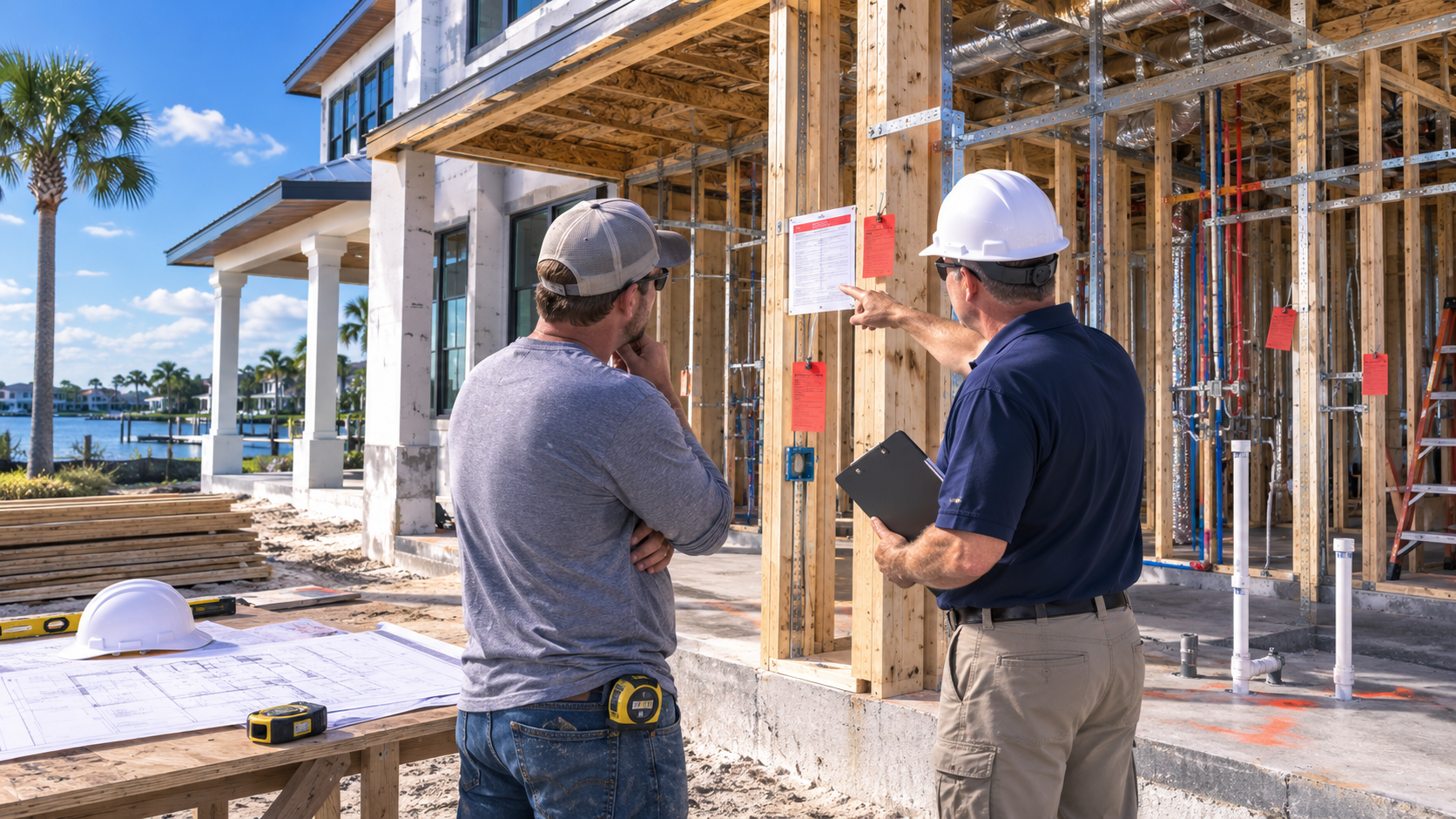
Home renovation contractors in Florida should be licensed, properly insured, familiar with Florida Building Code requirements, and experienced with local permitting and climate-related renovation challenges.
Before hiring, verify the contractor’s license, insurance, references, contract terms, and experience with projects similar to yours. Your renovation cost and timeline will depend on the project scope, materials, structural work, permitting, and unexpected moisture or storm-related issues.
This guide explains what Florida homeowners should check before choosing a contractor and planning a remodel.
Why Permitting Timelines in Florida Change Your Renovation Schedule
Your renovation timeline in Florida barely depends only on labor and materials. Local permitting offices in St. Johns, Duval, and Clay counties each run on their own review cycles, and home renovation contractors in Florida who understand these local nuances can keep your project from stalling before the first wall comes down.
- Permit review times vary by county and by project scope.
- Structural changes, electrical upgrades, and additions typically require separate inspections.
- Homes near flood zones or coastal areas may need additional documentation before work begins.
When you work with a contractor who submits accurate, complete plans the first time, you avoid the resubmission delays that push projects weeks behind schedule.
Our team factors permitting into every proposed timeline, so you know what to expect before the first invoice arrives, not after a delay has already cost you money.
How Florida Building Codes Shape Your Material and Design Choices
Florida’s building code is stricter than most states, and it directly affects what you can and cannot do during a remodel. Wind load requirements, impact-resistant glazing, and updated energy codes all influence your material selections, especially for exterior work.
If your renovation touches windows, doors, or roofing, your contractor needs a working knowledge of the Florida Building Code and not a generic national standard borrowed from a different climate.
This matters most for homeowners near the coast, where wind mitigation credits can also lower your insurance premiums once the work is documented correctly.
Homeowners who overlook these code requirements often discover the cost of doing so at inspection time, when work has to be redone.
This is one reason experienced home renovation contractors in Florida build code review into the earliest stages of design instead of treating it as a final checkbox.
What This Means for Your Bathroom and Kitchen Remodels
- Exterior wall modifications during a kitchen expansion may trigger a wind load review.
- Bathroom renovations that relocate plumbing may require updated venting to meet current code.
- Energy-efficient window replacements can qualify you for both code compliance and long-term utility savings.
Comparing Renovation Contractors in Florida on the Details That Matter
Homeowners compare renovation contractors in Florida on price more than any other factor, which can be a costly mistake. Licensing status, insurance coverage, warranty terms, and communication style matter just as much as the number at the bottom of the bid.
| Factor | Licensed Florida Renovation Contractor | Unlicensed or Handyman Crew |
| Permitting handled correctly | Yes, included in scope | Rarely; homeowner assumes risk |
| Liability and workers’ comp
insurance |
Verified and current | Missing or unclear |
| Warranty on workmanship | Written, typically 1+ years | Verbal or none |
| Familiarity with wind load and hurricane code | Standard practice | Inconsistent |
| Accountability if issues arise later | Licensed, traceable, bonded | Difficult to locate or hold accountable |
You can confirm any contractor’s license status directly through MyFloridaLicense.com, which is one of the simplest ways to protect yourself before signing a contract with home renovation contractors in Florida.
How to Vet a Contractor’s Portfolio and Past Projects Before You Commit
A polished website is not proof of quality work. Before you commit your budget to a Florida renovation contractor, look past the photos and dig into the details that reveal how a company operates.
- Ask to see completed projects in your neighborhood or a similar home style.
- Request contact information for at least two recent clients, not just testimonials on a website.
- Look for consistency in finish quality across multiple projects, not just one showcase home.
Visiting an active job site, even briefly, tells you more about a crew’s organization and cleanliness than any portfolio photo can. Reviewing a contractor’s past projects directly gives you a sense of scope, scale, and finish quality before you sign anything.
Pay attention to how projects were maintained during construction, since a tidy, well-organized site is usually a good indicator of how carefully your own home will be treated once work begins.
Key Questions to Ask a Florida Contractor Before Hiring
Before you sign anything, ask direct questions that reveal how a contractor operates on a job site.
- How do you handle permit delays or inspection failures?
- Who supervises subcontractors on site day-to-day?
- What is your process for change orders once construction begins?
- Can you share references from projects similar in scope to mine?
- How do you document progress and communicate updates?
A contractor who answers these questions clearly, without vague or rehearsed responses, is usually one who runs an organized operation. Vague answers about supervision or change orders are one of the clearest warning signs you can catch early, long before a contract is signed.
Budgeting for Humidity, Moisture, and Mold-Related Renovation Work
Florida’s climate introduces renovation costs that homeowners in drier states don’t always face. Moisture intrusion behind walls, mold remediation, and humidity-related material degradation can surface once demolition begins, even in homes that look fine on the surface.
- Older homes with outdated vapor barriers are more prone to hidden moisture damage.
- Bathrooms and laundry rooms should be inspected for mold before finishes are installed.
- Humidity-resistant materials, such as moisture-rated drywall, may cost more upfront but reduce long-term maintenance.
Reserving an extra 10 to 15 percent in your renovation budget gives you room to address these issues without derailing your project. This is one of the more overlooked planning details when comparing residential renovation services, yet it consistently affects whether a project stays on budget from start to finish.
Experienced home renovation contractors in Florida flag these risks during the walkthrough stage, well before demolition begins, so surprises are the exception rather than the norm.
Deciding Between a Full Remodel and a Phased Renovation Approach
Not every homeowner needs to renovate an entire home at once. Your budget, timeline, and expected length of stay can determine whether completing your residential renovation services in stages makes more financial sense than doing everything at once.
When a Full Remodel Makes Sense
- You are preparing the home for long-term family use and want everything updated together.
- Structural or systems work, like electrical and plumbing, needs to happen before cosmetic finishes.
- You want to minimize repeated disruption to daily life by consolidating construction into one period.
When Phasing Your Renovation Works Better
- Your budget is better suited to spreading costs across multiple years.
- You are prioritizing high-impact spaces, such as kitchens and primary bathrooms, before secondary areas.
- You want to keep living comfortably in the parts of the home not under construction.
Our team helps homeowners map out a home addition or a phased remodel that aligns with both lifestyle needs and long-term property value, so you are not pushed into a one-size-fits-all approach that does not fit your household.
Discussing this early with your contractor makes the difference between a renovation that feels organized and one that feels like it is happening to you instead of for you, which is why sequencing conversations belong at the very start of the process with home renovation contractors in Florida who take planning seriously.
Working With the Best Home Renovation Services in Florida for Long-Term Value
If resale value or long-term equity is part of your motivation, the best home renovation services in Florida will guide material and design choices with that goal in mind, not just aesthetics.
Kitchens, primary bathrooms, and curb appeal upgrades tend to hold the strongest return, but the right sequencing and finish quality matter just as much as the scope itself.
Homeowners considering a larger investment, such as a custom addition or a move toward a luxury home build, benefit from a contractor who can advise on which upgrades align with neighborhood value and which may be overbuilding for the area.
Reviewing which specific upgrades tend to add the most resale value in your market is a smart step before finalizing your scope, and it is a conversation worth having with your contractor early, not after materials are already ordered.
Signs a Contractor Understands Northeast Florida’s Renovation Landscape
Not every contractor licensed in Florida has deep experience in Northeast Florida specifically.
Local familiarity with Jacksonville, Ponte Vedra, and St. Johns County soil conditions, permitting offices, and preferred subcontractor networks can shape how efficiently your project moves from demolition to final walkthrough.
- Ask how many projects they have completed in your specific county.
- Ask whether they maintain relationships with local permitting offices.
- Ask how they source materials during periods of regional supply delays.
A contractor with established local relationships can resolve issues in days rather than weeks, simply because they know who to call and how local processes work.
This is a meaningful advantage among home renovation contractors in Florida and one that rarely shows up in a written proposal.
What to Expect During the First Few Weeks of Your Renovation
Once you have selected among the renovation contractors in Florida you interviewed, the early weeks of your project set the tone for everything that follows. A clear kickoff process signals whether the rest of the project will run smoothly.
- A detailed walkthrough confirming scope, materials, and finish selections.
- A written schedule outlining major milestones and inspection points.
- Clear communication channels for questions, updates, and unexpected issues.
Homeowners who ask for this structure upfront tend to experience fewer surprises later, since expectations are documented, not assumed.
Home renovation contractors in Florida who build this clarity into their process from day one are typically the ones who finish projects with the fewest disputes.
Conclusion
Renovating a home in Florida involves more moving pieces than most homeowners expect, from permitting cycles and building codes to humidity-related surprises that only show up once work begins.
The right home renovation contractors in Florida do more than swing a hammer. They anticipate these challenges, communicate clearly, and protect your investment at every stage.
If you are planning a remodel, addition, or full renovation in Jacksonville or the surrounding Northeast Florida area, our team at Ofir Engineering is ready to walk you through the process from the first conversation to the final walkthrough.
Contact us today to discuss your project and get a clear, honest plan for bringing your renovation to life.
FAQs
How much does it typically cost to hire home renovation contractors in Florida?
The total cost depends largely on scope, materials, and whether structural work is involved. Getting a detailed, itemized estimate from a Florida renovation contractor is the best way to understand your specific project cost.
How long does a typical home renovation take in Florida?
Timelines depend on permitting speed, project size, and material availability. Simple improvements may take a few weeks, while full renovations with structural changes can take several months.
Do renovation contractors in Florida handle permits for me?
Most licensed residential renovation services include permit filing and inspection scheduling as part of their process, which reduces the administrative burden on you as the homeowner.
What should I look for in the best home renovation services in Florida?
Look for verified licensing, clear communication, documented warranties, and experience specific to your region’s codes and climate conditions, not a generic national approach.
Can I stay in my home during a renovation?
In many cases, yes, especially with a phased approach, though full remodels involving major systems work may require temporary relocation for parts of the project.
