
Home addition builders near me warranty coverage is rarely compared closely by homeowners collecting bids — and on an addition it deserves more scrutiny than on almost any other project, because an addition is new construction bolted to a building you already own. That creates a question no new-home warranty ever has to answer: if the new work damages the old house, whose warranty responds? Florida law supplies part of the answer and your contract has to supply the rest. Ofir Engineering is a licensed Florida general contractor (License #CGC 1540016) with 15+ years serving Jacksonville, Ponte Vedra, St. Johns, and Northeast Florida.
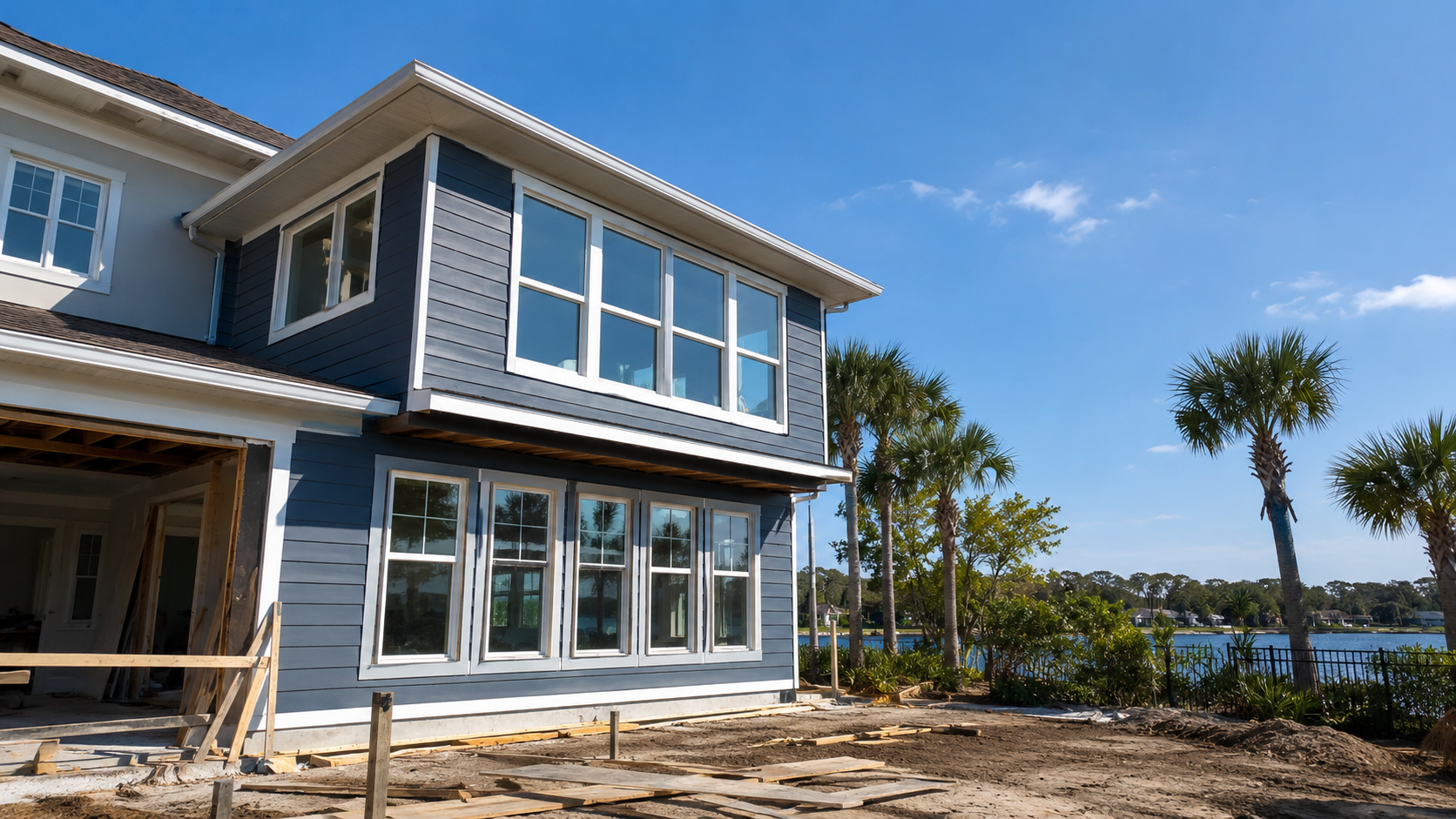
Home Addition Builders Near Me Warranty Coverage: The Gap Unique to Additions
A new home warranty covers a complete building constructed by one party. An addition covers only part of a building, and the part it does not cover is attached to it. Three failure modes live in that seam.
Differential settlement. The existing house settled onto its soil decades ago; the addition’s foundation is new and will settle on its own schedule, often onto disturbed or filled soil. When the two move differently, cracks open at the junction — in drywall, at the ceiling line, and sometimes in the slab. Is that a defect in the addition, or the existing house responding to a new neighbour? A contract that does not address it leaves you arguing.
Water intrusion at the tie-in. Roof-to-wall flashing where the new roof meets the old, the wall junction, and the transition in the drainage plane are the most common leak locations on any addition. Damage typically appears inside the existing house, not the new space.
Overloaded existing systems. If the addition is served by the existing electrical panel, cooling equipment or plumbing, and those were already near capacity, failures can follow that are neither purely the builder’s fault nor purely pre-existing.
The fix is contractual and simple to ask for: require that the builder’s workmanship warranty explicitly extends to damage to the existing structure arising from the addition work, including the tie-in details and any existing system the builder connected to or modified. That single sentence removes the argument. Our home additions scope treats the tie-in as part of the delivered work rather than as a boundary of responsibility.
What Florida Law Provides Without Being Asked
Florida recognises implied warranties on new residential construction — that the work is performed in a workmanlike manner and that the result is fit for its intended use. These apply by operation of law rather than because they appear in your contract, and they reach latent defects that a reasonable inspection would not have revealed. They are not unlimited: they are directed at defects affecting structure and habitability rather than cosmetic dissatisfaction, and contracts sometimes attempt to limit them, which is a reason to have the warranty language read before signing rather than after a problem.
Above that baseline sits the express warranty — the written promise in the contract. It states the workmanship period, the exclusions, how a claim is submitted, how fast the builder must respond, and whether coverage transfers on sale. Because the implied layer is general and the express layer is specific, the express warranty governs ordinary life in the first years after the addition is finished.
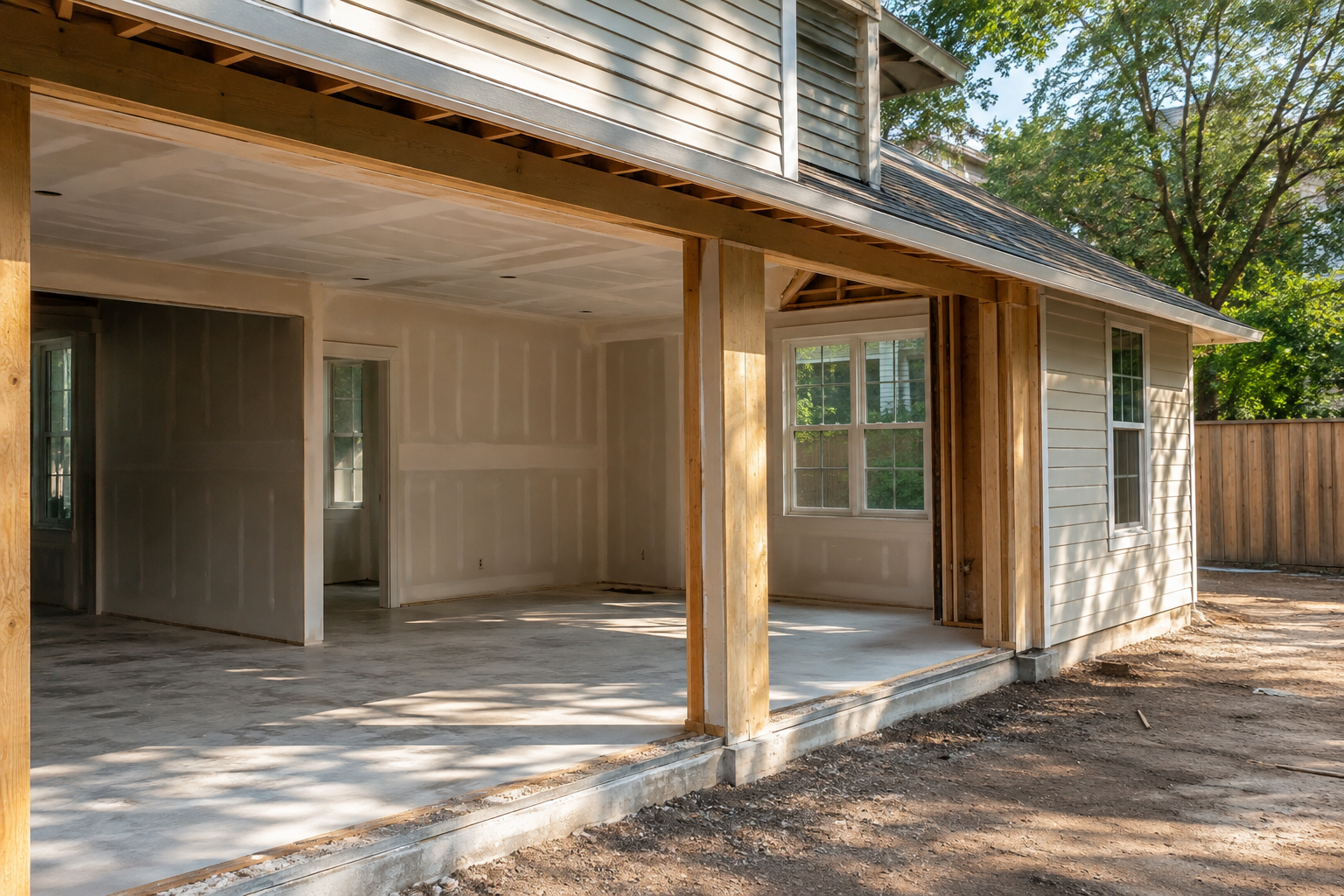
The Deadlines That Control Your Rights
Two clocks limit construction defect claims in Florida, and they matter more than the number of years printed in the contract. A limitations period runs from when the defect was discovered or should reasonably have been discovered. Separately, a statute of repose bars claims entirely once a fixed number of years has passed from the later of specified completion events — regardless of when the defect became apparent.
For an addition there is a practical wrinkle worth understanding: the clock relates to the completion of the permitted work, not to the age of the original house. Keep the permit records, the final inspection approvals and the certificate of completion or occupancy in your file, because those documents establish the date everything else is measured from. The legislature has revised these periods in recent years, so the window applicable to your project depends on when it completed — confirm against the current text in the Florida Statutes rather than a figure quoted from memory.
Because settlement cracking and slow leaks are exactly the defects that surface late, the most valuable habit an owner can adopt is a deliberate inspection at the end of the first year, while the workmanship warranty is still live and the clocks have barely started.
Chapter 558: The Step Before Any Claim
Florida requires a pre-suit notice process for construction defect claims under Chapter 558. Before filing an action, an owner generally must serve written notice describing the claimed defects in reasonable detail and give the builder an opportunity to inspect and to respond — with an offer to repair, an offer of settlement, or a denial. The process runs on defined timeframes, and treating it as a formality can weaken a claim that would otherwise succeed. Describe defects specifically, and document everything in writing with dates and photographs from the moment a problem appears.
What to Require in Writing Before You Sign
Require the workmanship warranty period stated plainly, with the extension to damage to the existing structure described above. Require assignment of all manufacturer warranties — roofing, windows, mechanical equipment, appliances — with documentation and serial numbers delivered at closeout rather than promised. Require a defined warranty response time, with an emergency standard for water intrusion or loss of cooling. Require a named warranty contact who is not the salesperson. Confirm whether coverage transfers to a subsequent owner. And require a closeout package with permits closed and final inspections passed, because an open permit on an addition surfaces at the worst possible moment, when you sell.
Then confirm the entity behind the warranty. A warranty is only worth the company standing behind it, so verify an active Florida general contractor licence, confirm the licensed entity is the one signing your contract rather than an affiliated marketing company, and check how long the business has operated under that name. Licence status and disciplinary history are public through the Florida DBPR licence portal. If the project also touches the existing house significantly, coordinate the warranty terms with any whole home remodeling scope so one agreement governs both. To scope an addition with the tie-in covered explicitly, contact Ofir Engineering.
Frequently Asked Questions
Does an addition warranty cover damage to my existing house?
Only if the contract says so. This is the most important warranty term on an addition, because settlement cracking, flashing leaks and overloaded existing systems typically show up as damage in the original house. Require language extending the workmanship warranty to damage to the existing structure arising from the addition work.
Is a builder legally required to warrant a home addition in Florida?
Florida recognises implied warranties of workmanlike construction and fitness that apply by operation of law to new residential work. Beyond that baseline, the length, exclusions and claim process of the express written warranty are contractual, so they must be negotiated and stated in writing.
How long do I have to claim a defect on an addition?
A limitations period runs from discovery of the defect, and a statute of repose bars claims a set number of years after specified completion events regardless of discovery. The clock relates to the permitted addition work, so keep permits, final inspections and completion documents; these periods have been amended recently, so the applicable window depends on your completion date.
What should I inspect before the first year ends?
The tie-in joint for cracking, all roof-to-wall flashing and the ceiling below it for staining, the slab and drywall junction between old and new, and the performance of any existing system extended to serve the addition. Late-appearing defects are the ones the statutory clocks are most likely to cut off.
Keep Building With Ofir Engineering
Related discussions & follow us: Facebook · Reddit
Latest & related guides: Explore more Home Additions guides →
