
A high end home builders draw schedule is the payment spine of a custom construction loan: the lender does not hand over the loan amount at closing, it releases funds in stages as verified work is completed in place. On a luxury build in Jacksonville that usually means somewhere between six and twelve draws, each one triggered by a milestone, confirmed by a third-party inspection, and cleared by lien waivers from everyone who worked on that stage. Understanding the mechanism matters because almost every draw delay traces to paperwork rather than construction. Ofir Engineering is a licensed Florida general contractor (License #CGC 1540016) with 15+ years serving Jacksonville, Ponte Vedra, St. Johns, and Northeast Florida.
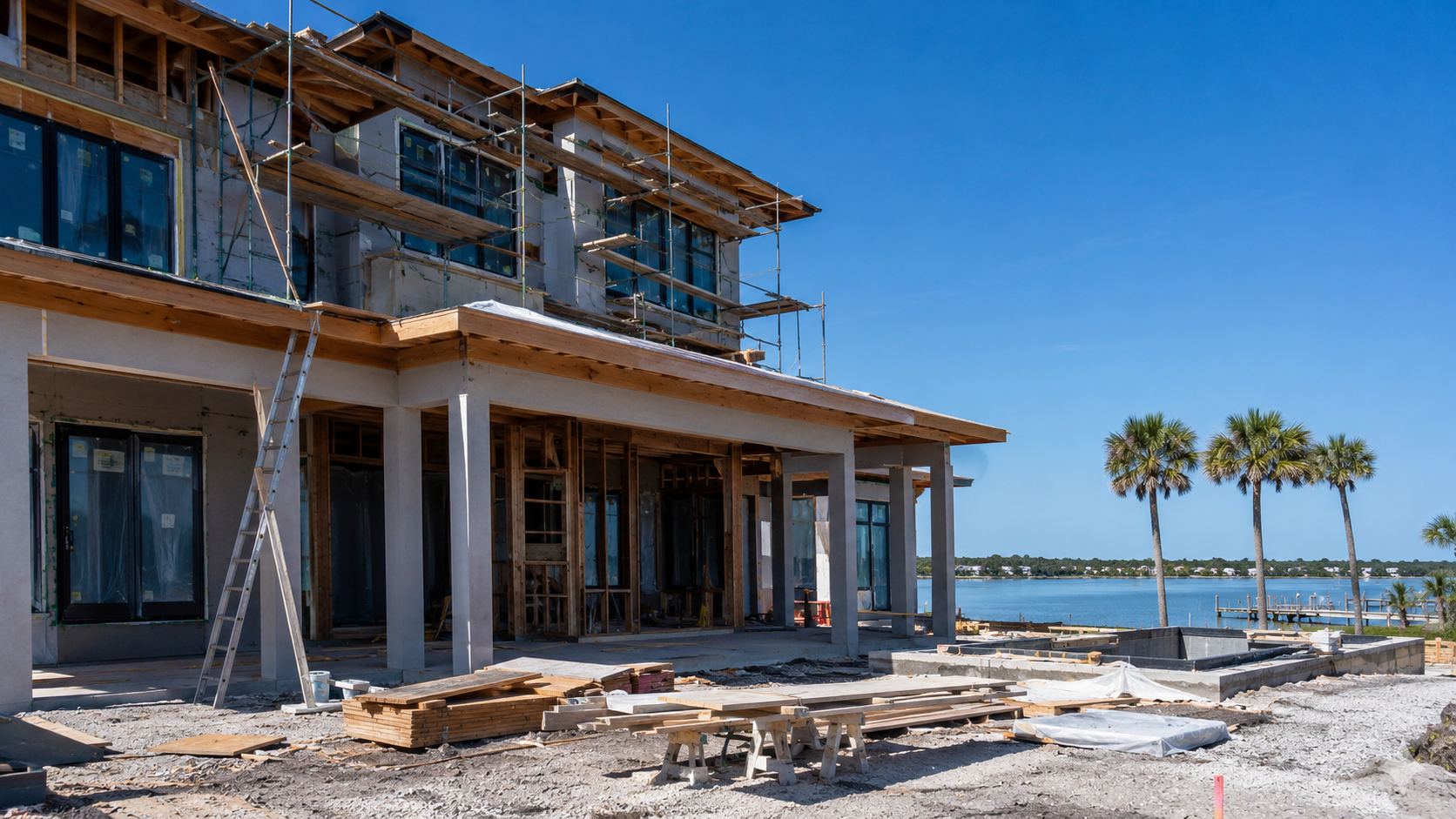
What a High End Home Builders Draw Schedule Actually Is
A construction loan funds in arrears. The builder performs a defined stage of work, the lender verifies it exists, and only then are funds released — first to cover that completed stage, never to prepay the next one. The draw schedule is the agreed table that maps each stage to a percentage of the loan.
Three parties depend on it. The lender uses it to keep the loan balance behind the value in place, so the collateral is always worth more than what has been advanced. The builder uses it to fund subcontractors and material buys without carrying the whole project on its own balance sheet. The owner uses it as a progress ledger — a draw request is a claim that a specific stage is finished, and it is the natural point to inspect and question.
On a luxury project the schedule is usually more granular than on a production build. Longer lead times on imported finishes, custom millwork, and specialty systems mean more stages and more allowance line items, which makes the documentation discipline more important, not less.
The Typical Draw Stages on a Florida Custom Build
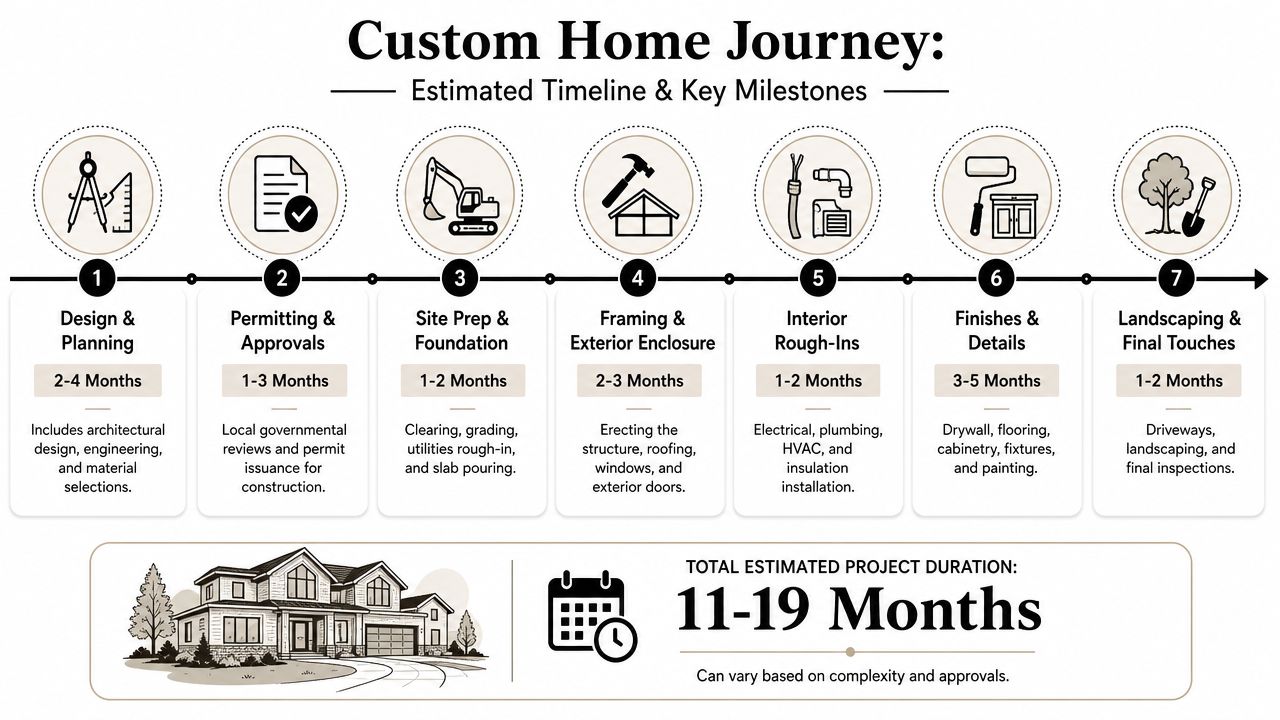
Schedules vary by lender, but the sequence is broadly consistent. An initial draw at closing usually covers land, permits, plans, and engineering already paid for. The foundation draw follows site work, footings, and the slab or stem wall, and is confirmed against the foundation inspection.
Framing is often the largest single draw, releasing when the structure, roof deck, and sheathing are complete. Dry-in follows when the roof, windows, and exterior doors are installed and the building is weather-tight — a meaningful milestone in Florida for obvious reasons. Rough mechanical, electrical, and plumbing releases after those systems are installed and have passed rough inspection.
Insulation and drywall come next, then interior finishes and cabinetry, then exterior finish, driveways, and landscape. The final draw, often ten percent or more of the loan, is held until the certificate of occupancy is issued and the punch list is closed. That retention is deliberate: it is the lender’s leverage to ensure the house is genuinely finished and not merely occupiable.
What Has to Be True Before a Draw Is Funded
Four conditions are typically checked, and any one of them can stop the release.
The work is complete and in place. Materials delivered to site but not installed generally do not count. Stored-materials provisions exist on some loans but require specific documentation and insurance, and they are the exception rather than the rule.
An inspection confirms it. Most lenders send an independent inspector to photograph and verify percentage completion. Their report, not the builder’s invoice, is what the lender funds against.
Lien waivers are current. Under Florida’s construction lien law, anyone who supplied labour or materials can record a claim against the property. Lenders therefore require conditional or unconditional waivers from the general contractor and every subcontractor and supplier tied to the draw. Missing waivers are the single most common reason a complete stage does not fund on time.
The remaining budget still covers the remaining work. Lenders monitor whether the undrawn balance is sufficient to finish. If a change order or an allowance overrun puts the project underwater, the lender may require the owner to deposit the shortfall before releasing further funds.
What Actually Delays a Draw
In practice, delays cluster into a short list. Incomplete lien waiver packages lead by a wide margin. Inspection scheduling is second — the report is ordered after the request, and in busy periods the site visit is the bottleneck. Third is a partially complete stage: a milestone that is ninety percent done funds at ninety percent or not at all, depending on the loan.
Then there are the structural causes. Unapproved change orders create a gap between what was built and what the budget documents describe, and lenders will not fund into that gap. Allowance overruns on high-end finish packages do the same thing. Title update issues — a recorded notice of commencement problem, or an intervening lien — will hold funding regardless of how finished the work is.
None of these are construction problems, which is the point. The builders who keep draws moving are the ones who assemble each request as a complete package the day the milestone closes, rather than chasing signatures afterwards. Owners financing a custom build can review how we manage draw documentation across our luxury home builder projects and on ground-up new construction.
How Owners Should Manage the Draw Process
Negotiate the draw schedule before closing, not during construction. Ask how many draws the loan allows, whether there is a fee per draw, how long funding takes after a complete request, whether stored materials are fundable, and how much is retained until the certificate of occupancy. Those answers shape the builder’s cash flow and therefore the schedule.
During construction, insist on seeing the inspection report and the lien waiver package for each draw. It is the cheapest project control available to you: a monthly, third-party, documented statement of what exists on your site. General guidance on construction lending and closing documents is published by the Consumer Financial Protection Bureau, and it is worth reading before you sign a construction loan rather than after.
If you are budgeting a custom home and want the draw schedule mapped against a realistic construction sequence before you approach a lender, contact Ofir Engineering to review the scope, allowances, and milestone structure.
Frequently Asked Questions
How many draws does a Florida custom home construction loan usually have?
Commonly six to twelve, depending on the lender and the size of the project. Luxury builds tend toward the higher end because longer lead times and larger allowance packages justify more granular milestones.
What is the most common reason a draw is delayed?
Incomplete lien waivers. Florida’s construction lien law means lenders require waivers from the general contractor and every subcontractor and supplier tied to that stage, and a single missing signature holds the entire release.
Does a lender fund materials that have been delivered but not installed?
Usually not. Most construction loans fund work completed and in place. Some lenders allow stored-materials draws, but only with specific documentation and insurance, so it should be confirmed in writing before the order is placed.
How much does a lender hold back until the end?
Retention of roughly ten percent of the loan until the certificate of occupancy is issued and the punch list is closed is typical. The exact figure and the conditions for release are set in the loan documents and are worth negotiating before closing.
Keep Building With Ofir Engineering
Related discussions & follow us: Facebook · Reddit
Latest & related guides: Explore more Luxury Home Builder guides →
