
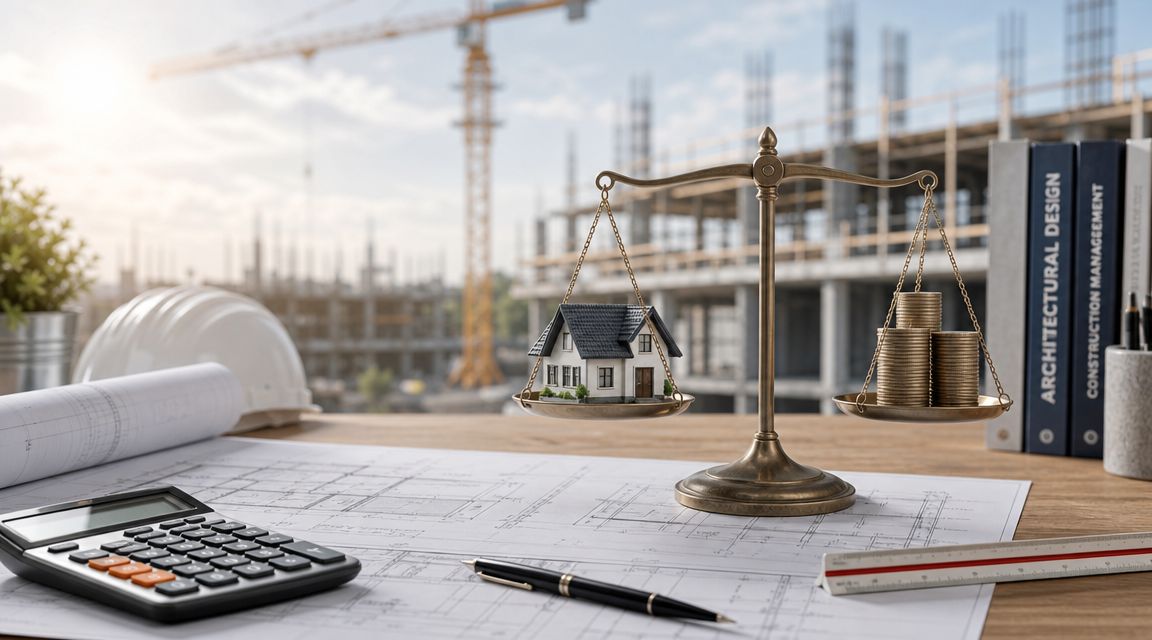
If you're pricing a renovation, new build, or investor rehab in Jacksonville right now, you're probably feeling the same pressure most owners feel before work starts. The budget looks workable on paper, but one permit delay, one bad subcontractor handoff, one hidden site issue, or one weather disruption can turn a profitable project into a stressful one fast. That's why cost control in construction matters so much in Florida. It protects ROI before overruns become permanent. Ofir Engineering is a fully licensed Jacksonville general contractor (License #CGC 1540016) trusted by homeowners and real estate investors throughout Northeast Florida.
In real projects across Northeast Florida, the job rarely goes off course because of one giant mistake. More often, a project drifts. Small scope changes stack up. Procurement runs late. Rework shows up where supervision was weak. Owners see the damage only after invoices have already landed. Good cost control stops that drift early.
Table of Contents
- What Is Construction Cost Control Really
- The Pre-Construction Phase Where Budgets Are Won or Lost
- The End-to-End Cost Control Framework in Action
- Key KPIs and Templates for Tracking Project Health
- Common Cost Drivers and Risks in Florida Construction
- How Professional Project Management Enforces Cost Control
- Frequently Asked Questions About Construction Cost Control
What Is Construction Cost Control Really
Most owners hear “cost control” and think accounting. That's too narrow. In practice, cost control in construction is a management system for making better decisions while there's still time to affect the outcome.
It isn't random budget cutting. It isn't telling the field to use cheaper materials after the estimate is already broken. And it isn't waiting for the end of the month to find out the project is drifting. Real cost control means tying scope, schedule, procurement, labor, quality, and approvals to a working budget from day one.
That matters because construction doesn't leave much room for error. Matterport notes that the vast majority of firms operate on average net profit margins of just 3% to 7%, which is why even small overruns in labor, materials, or rework can erase profit quickly according to Matterport. Owners should read that as a warning. A contractor doesn't have much buffer, and neither does your project.
Practical rule: If the team finds problems only in the books, they found them too late.
A disciplined cost control system usually does four things well:
- Sets a real baseline: The team starts with a detailed budget that reflects actual scope, not a rough allowance-heavy placeholder.
- Tracks cost by work package: Labor, materials, subcontractors, permits, and changes are separated clearly enough to spot trouble by category.
- Connects money to progress: Spending gets compared with actual work completed, not just with calendar dates.
- Forces timely decisions: Owners approve selections, scope changes, and schedule shifts before they snowball into rework.
There's also a difference between financial reporting and financial control. Reporting tells you what happened. Control helps you decide what to do next. For contractors who want cleaner records behind that process, this guide to financial management for contractors is useful because the accounting side has to support field decisions, not lag behind them.
In Jacksonville and Saint Johns, this distinction is especially important on renovations. Older homes, phased work, municipal approvals, and owner-driven changes can all create budget pressure. If no one is actively steering the project, the budget becomes a history lesson instead of a tool.
The Pre-Construction Phase Where Budgets Are Won or Lost
The most expensive problems on a project are usually the ones nobody addressed before mobilization. By the time crews are on site, the cost of changing direction goes up fast. That's why pre-construction is where serious cost control starts.
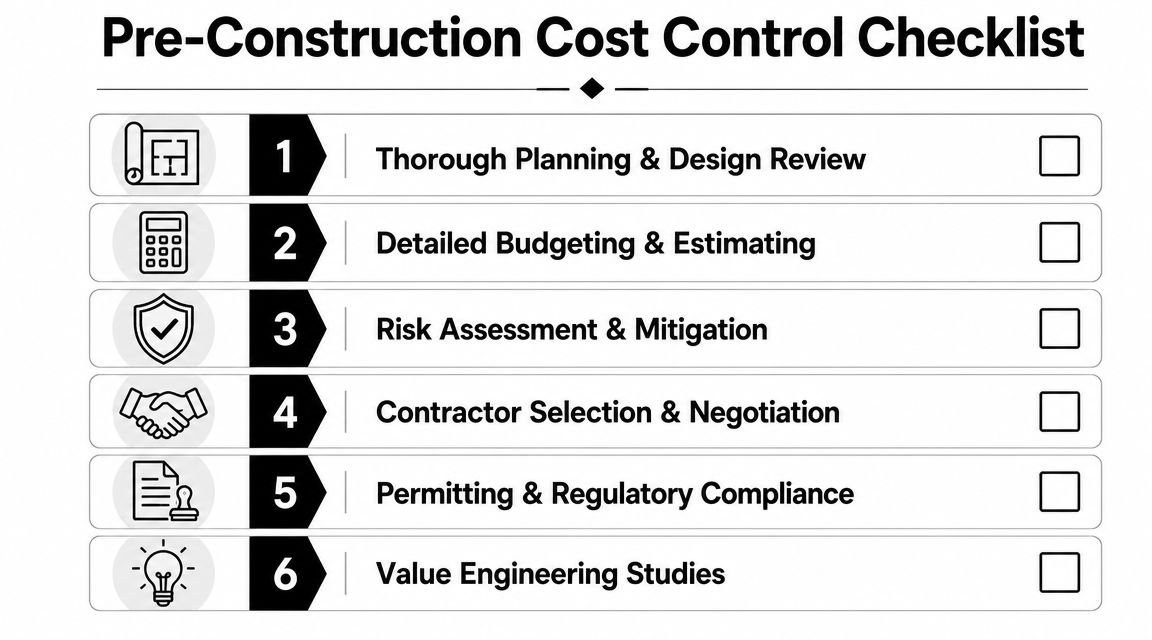
In Florida, pre-construction has to do more than produce a nice estimate. It needs to pressure-test the job. Renovations can uncover structural surprises. Site work can expose drainage issues. Design intent can collide with code requirements or local review comments. If those risks aren't addressed early, the budget starts absorbing decisions that should have been settled on paper.
Outbuild notes that a key and often overlooked part of cost control is managing risk before construction begins. Thorough site inspections during preconstruction can reveal hidden regulatory and environmental issues that might force costly redesigns, and building contingency for those unknowns is essential as Outbuild explains.
What owners should demand before work starts
A serious pre-construction process should include more than a lump sum number and a start date.
- Detailed estimating: Line items should reflect the actual scope, not vague placeholders that get corrected later through change orders.
- Scope alignment: Drawings, finish selections, engineering requirements, and owner expectations need to match before pricing is locked.
- Site and condition review: On remodels, that means looking hard at access, hidden conditions, utilities, moisture exposure, and existing structural limitations.
- Permit path review: Jacksonville-area permitting and inspections can affect sequencing, especially when structural, electrical, plumbing, and zoning issues overlap.
- Contingency planning: Unknown conditions should be acknowledged directly instead of ignored to make the initial budget look cleaner.
On Florida jobs, bad assumptions in pre-construction don't stay theoretical for long. They show up as delay, redesign, or rework.
Where value engineering actually helps
Value engineering gets abused when people use it to mean “cut things until the number drops.” That approach usually creates deferred costs. Smart value engineering protects function and durability while adjusting choices that don't carry enough return.
Examples include revisiting finish levels in non-critical spaces, simplifying assemblies that are labor-heavy to install, or changing sequencing to reduce downtime between trades. For investors, the test is simple. Spend where the property gains value, rents faster, or avoids future repair. Cut where the owner won't lose performance or resale appeal.
For a Florida-specific budgeting perspective, Ofir Engineering's guide on how to keep a renovation project on budget in Florida is a practical companion because it keeps the conversation tied to local execution, not generic estimating theory.
The End-to-End Cost Control Framework in Action
A budget doesn't hold itself. Once the estimate is approved, cost control becomes a live operational process. The strongest systems use a Cost Breakdown Structure, or CBS, so budget lines connect directly to work packages. Giatec explains that a technically sound system starts with that structure because it helps teams compare actuals against the estimate, identify category-specific overruns early, and use Earned Value Management metrics to forecast drift in its construction cost control guide.
That sounds technical, but the field translation is simple. Every dollar needs a place. Every cost category needs an owner. Every variance needs an explanation.
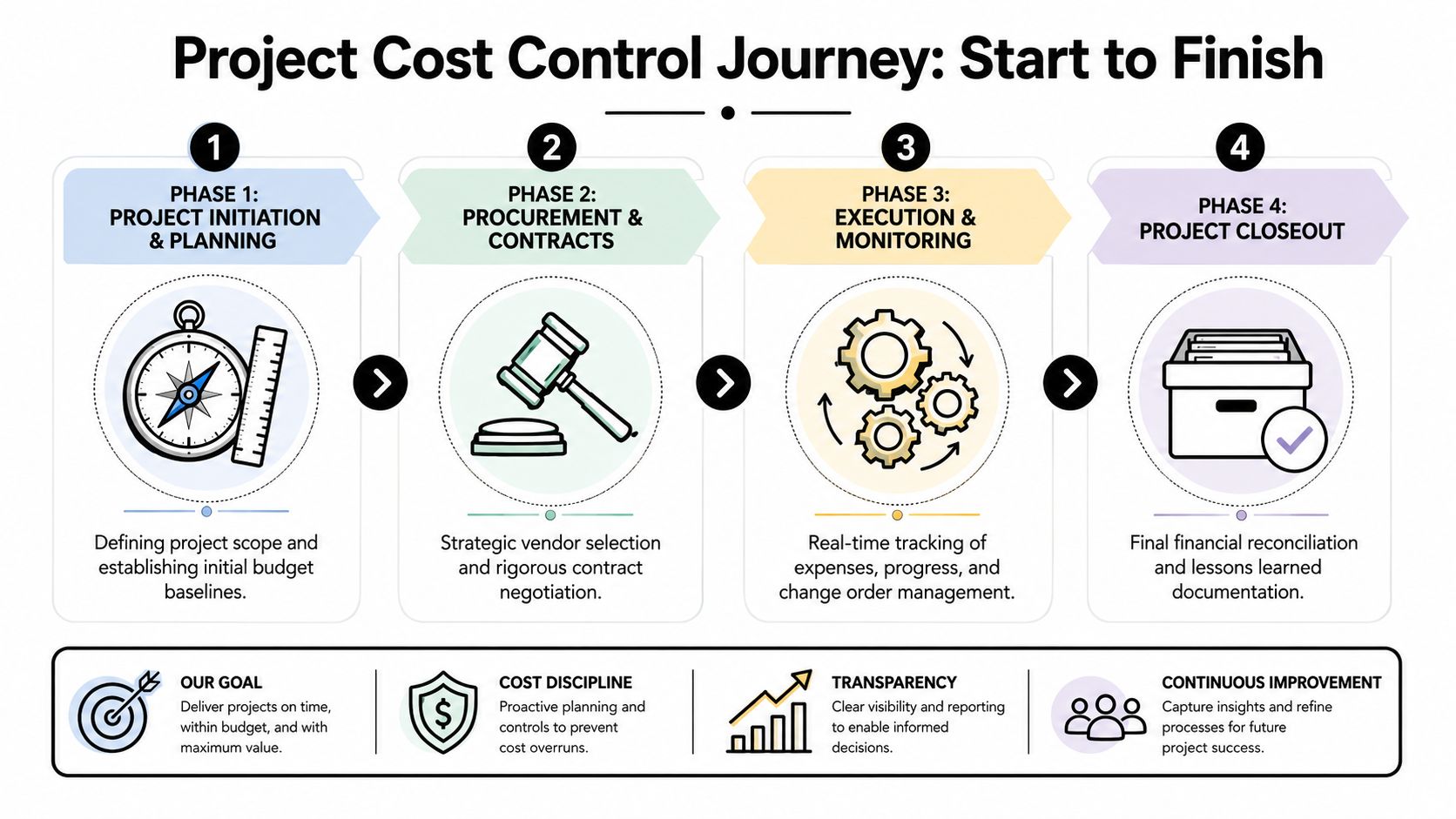
Procurement and Buyout
Procurement is where budgets either gain protection or lose discipline. A weak buyout phase leads to scope gaps, delayed materials, substitution fights, and rushed purchasing.
Good buyout work includes clear scopes, apples-to-apples bid leveling, realistic lead-time review, and contract terms that match the estimate assumptions. In Jacksonville, that also means thinking through weather exposure, storage, delivery access, and local trade availability before orders are placed.
For investor projects, Fix and Flip Renovation Services can fit this phase because that service includes renovation budgeting, contractor management, project scheduling, and ROI-focused construction planning for real estate investors in Jacksonville, Florida.
Scheduling and Timeline Management
A project schedule is a cost document whether people admit it or not. Delays increase supervision time, carry overhead longer, create labor inefficiencies, and push material deliveries out of sequence.
The schedule has to be detailed enough to show handoffs between trades, inspection timing, owner selections, and long-lead procurement. If the schedule lives only in the superintendent's head, cost problems arrive without warning. Owners usually notice this when one trade is waiting for another and invoices keep moving anyway.
A useful discipline here is matching each major activity to the cost code it affects. That's what lets the team see whether spending is lining up with real progress instead of just effort.
Before invoices pile up, some teams also streamline invoice data processing so commitments, receipts, and pay applications can be reconciled faster against the working budget.
Proactive Change Order Management
Most projects have changes. The issue isn't whether they happen. The issue is whether they're priced, approved, and logged before the work moves forward.
A clean change order process includes:
- Written scope definition: Everyone needs the same description of what is changing.
- Cost impact review: Labor, materials, schedule effects, and markup assumptions should be visible.
- Approval before execution: Field teams should not treat verbal direction as budget authority.
- Running log maintenance: Pending, approved, and rejected changes need separate tracking.
Changes don't wreck budgets by themselves. Unpriced changes and undocumented field decisions do.
Here's a practical distinction owners should watch closely:
| Situation | Healthy response | Risky response |
|---|---|---|
| Owner wants a finish upgrade | Price it before ordering | Install first and “sort it out later” |
| Hidden condition appears | Document, assess, reprice | Patch forward without revising budget |
| Inspector requires revision | Update scope and schedule | Push crews ahead and hope it clears |
Quality Control
Cheap work is expensive when it has to be redone. That's especially true in Florida where moisture, exterior exposure, and code-sensitive installations can punish sloppy execution.
Quality control protects the budget by reducing rework. That means pre-installation review, field supervision, trade coordination, and punch-list discipline before issues spread through multiple scopes. If tile, waterproofing, framing, and rough-ins aren't coordinated tightly, one mistake can force three trades back into the same room.
This video gives a useful visual overview of cost control thinking during active project execution.
Financial Closeout
Closeout isn't just collecting final invoices. It's the stage where the team reconciles committed cost, actual cost, unresolved changes, retainage, and lessons learned.
Owners should expect a final review that answers clear questions. Where did the project gain or lose money? Which allowances were realistic? Which trades drifted? Which decisions created avoidable cost? A project that closes without that review leaves useful information on the table.
Key KPIs and Templates for Tracking Project Health
Most owners don't need to become cost engineers. They do need to understand the few indicators that reveal whether a project is healthy or drifting. That's where KPIs help. The right ones turn a pile of invoices into a readable picture.
One historical foundation for this is the use of budget baselines and earned-value style measurement. Carnegie Mellon's construction project management text describes the estimate as the baseline for financial monitoring and gives an example where 20% completion at a direct cost of $180,000 is compared against expected revenues of $1,000,000 in the CMU project management text. The lesson still applies. Cost only makes sense when you compare it with actual progress.
The KPIs That Matter
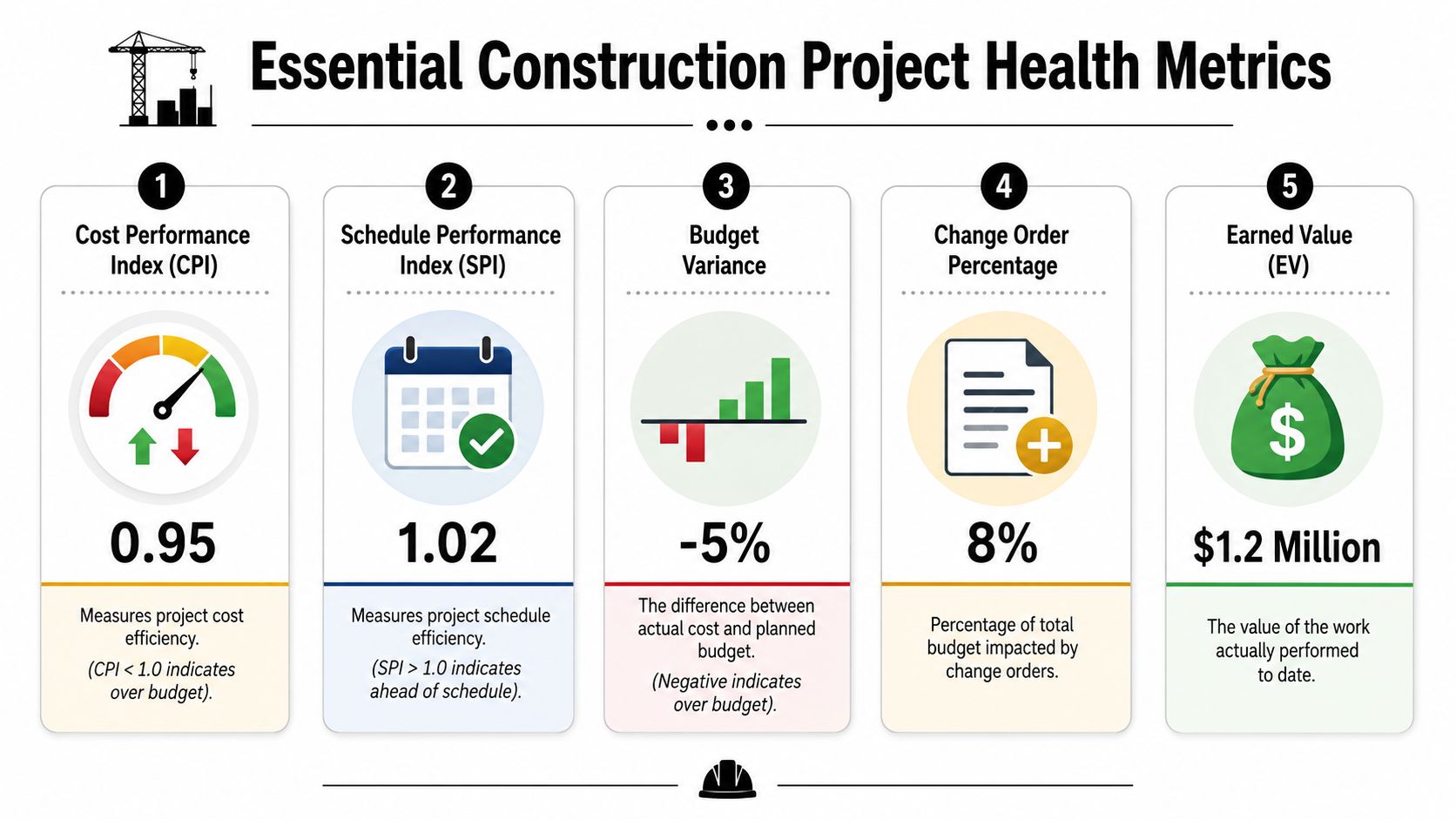
You'll hear a lot of acronyms in construction reporting. These are the ones worth knowing.
- Cost Performance Index (CPI): This tells you whether the value of completed work is keeping up with actual spending. If CPI trends poorly, the project is burning money faster than it is producing completed work.
- Schedule Performance Index (SPI): This shows whether work is advancing as planned. A weak SPI often becomes a cost problem because delays usually trigger labor inefficiency and sequencing issues.
- Budget variance: This is the gap between planned cost and actual cost for a scope, trade, or phase. On its own, variance is only a signal. The important question is why it changed.
- Committed cost versus actual cost: Committed cost shows what the team has already obligated through contracts and purchase orders. Actual cost shows what has hit the books so far. Both matter.
A project can look fine on cash spent and still be in trouble if committed costs are stacking up faster than progress.
The templates owners should expect to see
If a contractor says the budget is under control but can't produce the documents behind that statement, take that seriously. At minimum, a professionally managed project should maintain:
| Template | Why it matters |
|---|---|
| Budget vs actuals report | Shows where each category is holding or drifting |
| Cost Breakdown Structure template | Ties the budget to scopes of work and schedule activities |
| Change order log | Prevents pending changes from disappearing into field conversations |
| Procurement log | Tracks approvals, ordering status, and delivery timing |
| Forecast report | Projects the likely final cost, not just current spend |
For teams building owner-facing reporting, these steps to build Excel dashboards can help turn raw budget and schedule data into something decision-makers can use.
Common Cost Drivers and Risks in Florida Construction
Florida construction has its own financial pressure points. A national budgeting article might tell you to watch labor and materials. That's true, but it misses the local triggers that push a Jacksonville project off budget.
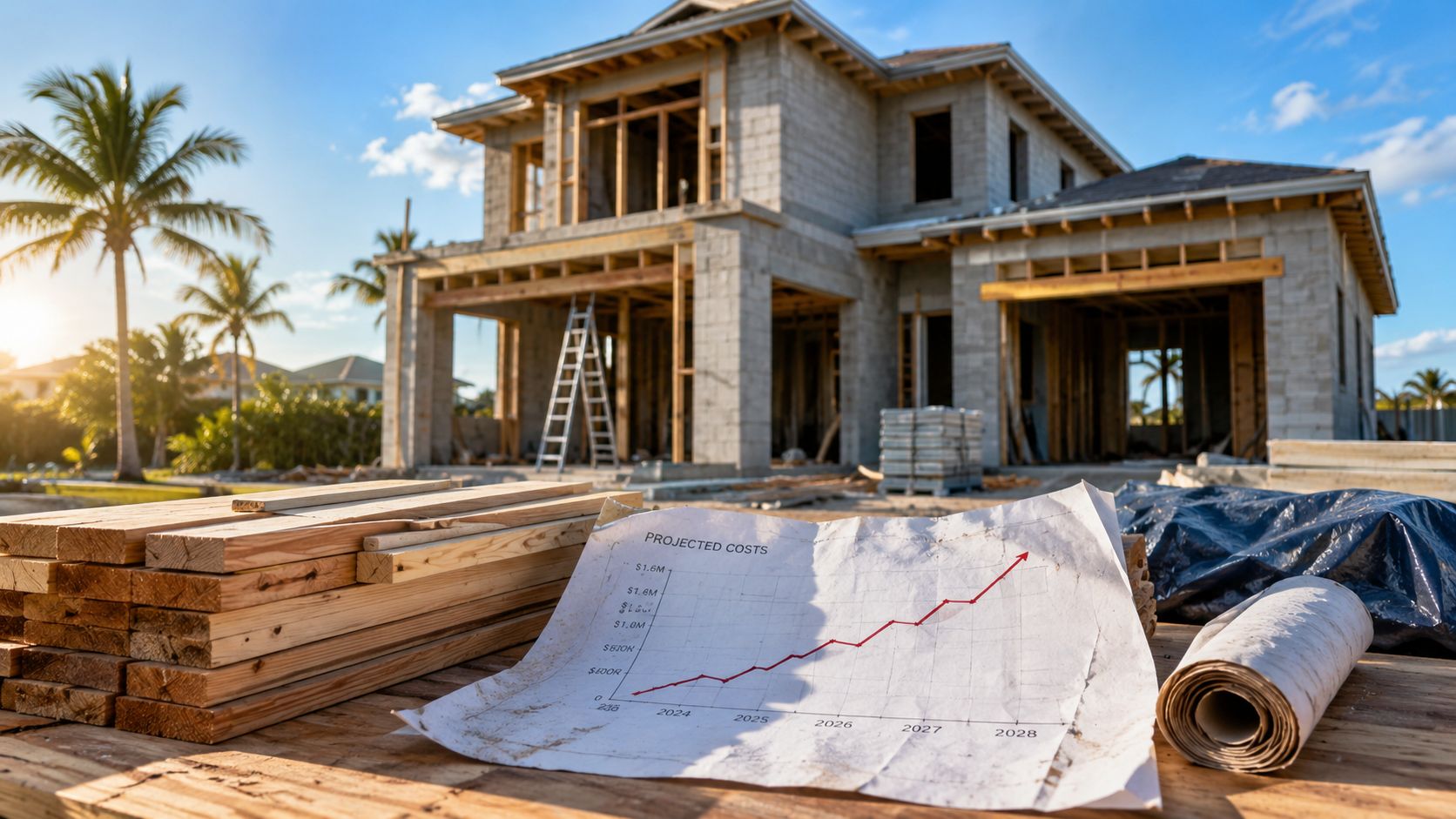
Where Florida jobs usually get hit
The first issue is weather. Rain exposure, storm prep, moisture management, and schedule interruption all affect sequencing. Exterior scopes, site work, roofing, and envelope activities can't be treated the same way they might be in a more stable climate.
The second issue is code and permitting complexity. Florida projects often involve detailed compliance work around structural requirements, wind exposure, flood considerations, and inspection sequencing. Those items aren't just administrative. They affect design choices, lead times, and when work can legally proceed.
Then there's the local labor market. Crew availability changes. Trade coverage can get thin during busy periods. The practical result is simple. If subcontractors are overcommitted, quality drops or schedules stretch.
A fourth issue is site reality. Sandy soils, drainage concerns, older slab conditions, existing structural surprises, and renovation access constraints can all trigger redesign or resequencing. That's one reason subcontractor timing and coordination matter so much. This article on subcontractor coordination is especially relevant because a cost overrun often starts as a coordination failure before it ever appears in the ledger.
Why predictive oversight matters more here
CMiC notes that modern cost control has shifted toward predictive systems that unify financial data, resource planning, and risk signals so teams can intervene before variances escalate, which is especially important in volatile markets where rapid swings in labor and material costs can erase project margins as discussed by CMiC.
That approach fits Florida well. Waiting for month-end reporting is weak protection when key drivers are permit lag, weather windows, crew availability, and procurement timing. Owners need a team that flags risk while there's still a cheaper fix available.
A practical Florida mindset looks like this:
- Watch sequence risk early: Delayed inspections and weather-sensitive scopes should be visible before the crew mobilizes.
- Lock decisions faster: Finish selections and owner approvals need to happen on schedule or procurement starts sliding.
- Track local dependencies: Municipal review comments, utility coordination, and trade availability should sit inside the budget conversation, not outside it.
How Professional Project Management Enforces Cost Control
A cost control plan only works if someone owns it daily. That's the core value of project management. The project manager isn't just updating a spreadsheet. That person is coordinating the moving parts that protect the budget.
On a well-run project, the manager aligns estimating assumptions with field reality, monitors procurement, verifies schedule impacts, controls change orders, and keeps documentation current. That work becomes even more important on Jacksonville remodels and investor rehabs where unknown conditions and trade coordination can move quickly from inconvenience to cost issue.
Professional management also creates accountability. When labor drifts, somebody has to ask why. When a selection is late, somebody has to show the schedule effect. When a subcontractor misses scope, somebody has to catch it before the owner pays for the gap later.
For homeowners and investors who want a clearer picture of that role, this guide to construction project management for Jacksonville homes is a useful next read because it connects site supervision, scheduling, and budget discipline in the local market.
The larger point is simple. Management fees are easy to see. Unmanaged waste is harder to see until the project is already over budget. On complex Florida jobs, professional oversight is often what keeps small problems from becoming expensive ones.
Frequently Asked Questions About Construction Cost Control
Owners usually ask the same practical questions once the budget gets real. Here are direct answers.
FAQ Quick Answers
| Question | Answer |
|---|---|
| What's the first sign a construction budget is slipping? | Pending changes, delayed decisions, procurement gaps, and schedule drift usually show up before the accounting report does. |
| Is cost control just the contractor's responsibility? | No. Owners affect cost through selections, approvals, scope decisions, and timing. Good control requires both sides to act quickly and document changes. |
| Are fixed-price contracts always safer? | Not always. They can reduce uncertainty in some scopes, but they don't eliminate risk from design gaps, hidden conditions, or owner-driven changes. |
| What should I ask for during the project? | Ask for a current budget vs actuals report, change order log, procurement status, and a forecast of likely final cost. |
| What should I do if I think my project is going over budget? | Stop relying on verbal updates. Request written cost tracking, identify unresolved scope items, and review pending changes before approving more work. |
Common owner concerns
One frequent question is about contingency. There isn't one universal number that fits every Jacksonville renovation or new build. The right amount depends on project type, design completeness, property condition, and how much hidden work is likely. Older homes and heavy remodels usually require more caution than clean, well-documented scopes.
Another question is whether software alone solves the problem. It doesn't. Software helps organize information, but cost control still depends on estimating quality, field supervision, subcontractor accountability, and timely owner decisions.
If you want to know whether a job is under control, ask to see the current forecast, not just the original budget.
And if a contractor can't explain where the money is going by cost category, the project probably isn't being managed tightly enough.
If you're planning a renovation, new build, or investor project in Jacksonville, Florida, Ofir Engineering can help you approach the job with tighter budgeting, stronger contractor coordination, and practical project management that protects ROI. Reach out to discuss remodeling, investor-focused renovations, construction consulting, or end-to-end project oversight in Northeast Florida.
Focus keyword: cost control in construction
Meta title: Smart Cost Control in Construction for Jacksonville Florida Projects
Meta description: Learn how cost control in construction works in Jacksonville, Florida. Get practical budgeting, risk management, scheduling, and ROI advice for renovations and new builds.
Suggested internal linking opportunities:
- Investors page
- Home Remodeling page
- Keep renovation project on budget in Florida
- Subcontractor coordination
- Construction project management guide for Jacksonville homes
Suggested image ideas and alt text
Hero image filename: cost-control-in-construction-jacksonville-florida.jpg
Alt text: Cost control in construction planning meeting for a Jacksonville Florida renovation
Description: Project manager reviewing budget, plans, and schedule with owner at a residential renovation site in Northeast Florida. Recommended size: 1731 x 909 pixels.Secondary image filename: florida-construction-budget-tracking.jpg
Alt text: Construction budget tracking documents and plans for Florida remodeling project
Description: Desk scene with plans, budget sheets, and schedule notes for a Jacksonville remodel. Recommended size: 1731 x 909 pixels.Secondary image filename: jacksonville-project-management-site-walk.jpg
Alt text: Jacksonville construction project manager conducting site walk for budget and quality control
Description: Site walkthrough showing supervision, trade coordination, and active cost control in construction. Recommended size: 1731 x 909 pixels.
Frequently Asked Questions About Construction Cost Control
What is cost control in construction?
Cost control is the ongoing process of planning, tracking, and managing a project’s budget so actual spending stays aligned with the estimate. It covers accurate pre-construction budgeting, change-order management, procurement timing, and regular budget-versus-actual reviews so problems are caught early rather than at the end of the job.
How can I keep my construction project on budget in Jacksonville?
Start with a detailed, line-item budget and a realistic contingency, lock the scope before work begins, get firm subcontractor bids, and review costs weekly. Working with a licensed general contractor who manages procurement and change orders is the single biggest factor in avoiding overruns.
How much contingency should a construction budget include?
Most well-run projects carry a contingency of about 10 to 15 percent of the construction cost, with renovations and older properties on the higher end because of hidden conditions. The contingency absorbs surprises like code upgrades, material price changes, or concealed damage without derailing the project.
What causes construction cost overruns?
The most common causes are incomplete scope and design at the start, frequent change orders, poor subcontractor coordination, material price swings, and weak budget tracking. Disciplined pre-construction planning and active project management prevent most of them.
