Build to rent builder permit requirements in Duval County are not one permit but a sequence of approvals that must happen in the right order, and the order is what determines the schedule. A build to rent community is entitled and reviewed more like a subdivision or a commercial site than like a single house: the land development approvals, civil infrastructure, and utility agreements all have to clear before a vertical building permit means anything. Investors who budget only for the building permit are usually the ones surprised by the calendar. Ofir Engineering is a licensed Florida general contractor (License #CGC 1540016) serving Jacksonville, Ponte Vedra, St. Johns County, and Northeast Florida.
What Build to Rent Builder Permit Requirements Cover in Duval County
A build to rent project in Jacksonville typically passes through five distinct approval tracks. Zoning and land use confirms the parcel allows the density and product type proposed, and is where a rezoning or a planned unit development amendment would occur if the current designation does not fit. Land development and civil engineering review covers the site plan, stormwater management, utilities, access and traffic, landscaping, and tree mitigation. Utility agreements with the water and sewer provider establish capacity, connection points, and the fees due. The building permit itself covers the vertical structures, with separate trade permits for electrical, plumbing, mechanical, and gas. Finally, fire review applies to site access, hydrant placement, and, for attached or multi-story product, the life-safety systems inside the buildings.
The order matters more than the list. Civil approvals gate the vertical permit, utility capacity gates the civil approval, and zoning gates everything. A project that starts building design before the entitlement path is confirmed is spending money on drawings that may need to change.
Where the Real Time Goes
Owners consistently underestimate the front end. Zoning confirmation on a parcel already correctly designated can be quick; a rezoning or PUD amendment is a public process with hearing calendars that do not compress. Civil engineering and land development review is usually the longest single stage on a build to rent project, because stormwater design in Northeast Florida is genuinely demanding — sandy soils, a high water table, and, on many sites, St. Johns River Water Management District involvement alongside the county.
Building plan review is comparatively predictable, but it is not instantaneous, and every review cycle that generates comments adds another round trip. The most reliable schedule improvement available to a build to rent builder is submitting a complete, coordinated set the first time so that the project takes one review cycle rather than three. Current permit applications, fee schedules, and review status for Duval County are published by the City of Jacksonville.
The Inspection Sequence on a Build to Rent Site
Once permits are issued, inspections follow the construction sequence and each one gates the next. Site and civil inspections cover erosion control, underground utilities, and stormwater structures before they are buried. Foundation inspections cover the footing and slab, including reinforcement placement, under-slab plumbing, vapour barrier, and termite pre-treatment documentation. Framing and structural inspections verify connectors, straps, shear nailing, and the continuous load path — the items Florida code cares about most.
Rough mechanical, electrical, and plumbing inspections then occur before insulation and drywall, followed by insulation and energy inspections, then the building envelope. Fire inspections for hydrant placement, access, and any required life-safety systems run in parallel. The final inspection and certificate of occupancy conclude the sequence, and on a multi-building site the CO is typically issued per building rather than site-wide, which is what allows phased lease-up.
What Actually Delays a Build to Rent Permit
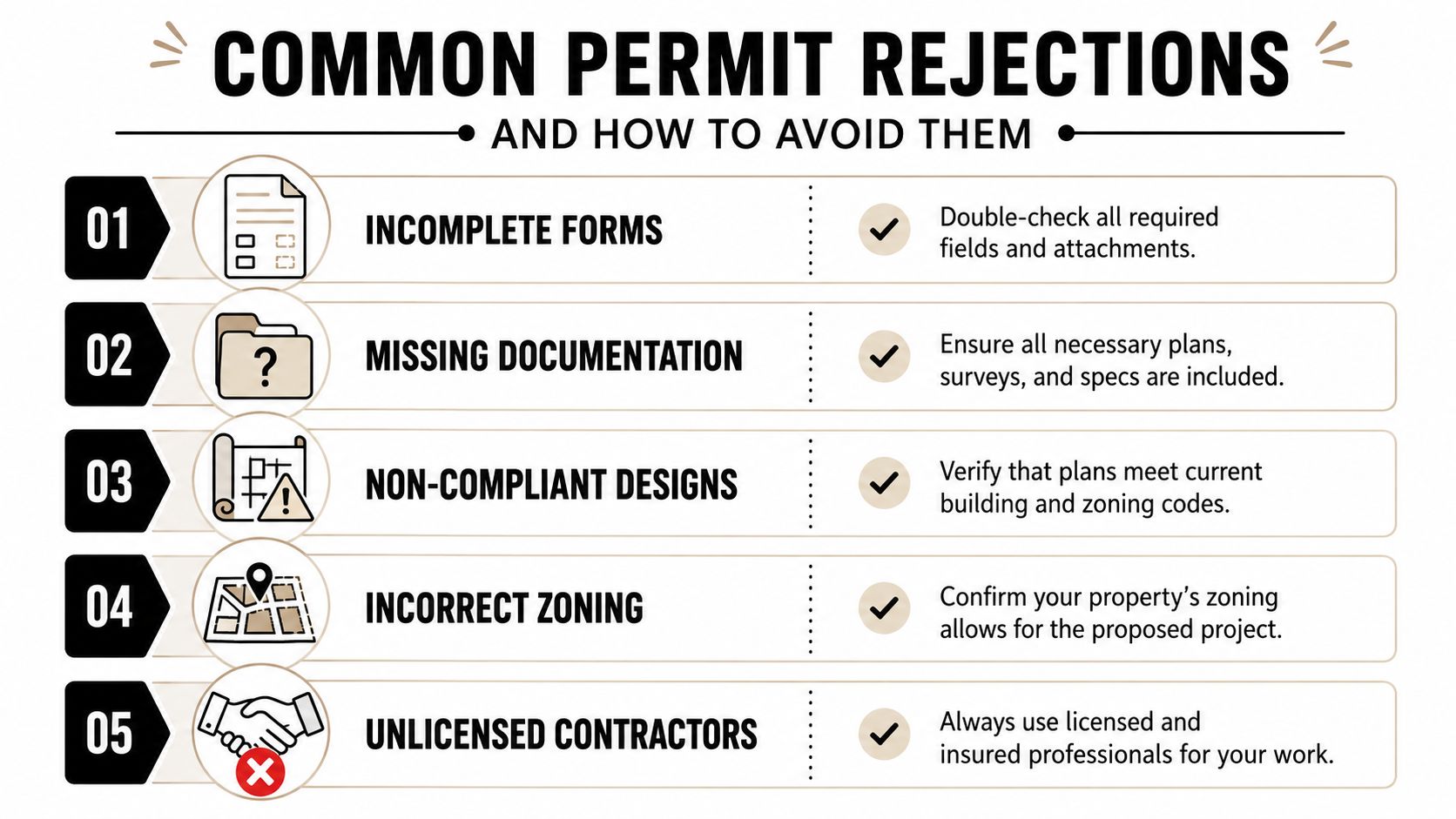
Incomplete submittals. The most common cause and the most avoidable. A set missing a required calculation, signature, or supporting report starts the clock over.
Stormwater design. Retention and treatment volumes drive the site layout. A stormwater solution developed after the lot layout is fixed usually forces a redesign of both.
Utility capacity and agreements. Capacity confirmation, connection point negotiation, and fee calculation take real time and are frequently discovered late.
Tree, landscape, and buffer requirements. Mitigation obligations can be significant and can change the developable area on a wooded parcel.
Traffic and access. Projects at a certain size trigger traffic study requirements and driveway or turn-lane conditions, sometimes involving the state if the access is onto a state road.
Phasing that does not match the permit structure. A phasing plan that lets buildings and infrastructure be completed and inspected in sequence is worth designing deliberately, because it determines when the first units can begin producing rent.
How Permitting Interacts With Financing
On a build to rent project the permit calendar and the loan calendar are the same calendar. Construction loans release funds against verified progress, and progress is verified against completed and inspected work. A stalled civil approval does not merely delay construction; it delays the draw, extends the interest-only period, and pushes the stabilisation date that the loan was underwritten against. The cheapest insurance against that is a permitting schedule built into the pro forma with realistic durations rather than optimistic ones, and a builder who has run the same sequence in the same jurisdiction before.
You can review how we deliver multi-unit and income-producing projects on our commercial construction page, see the ground-up process under new construction, or contact Ofir Engineering to walk a specific Duval County parcel and its approval path.
Frequently Asked Questions
Does a build to rent project need a different permit than a normal subdivision?
The approval tracks are largely the same — zoning, land development, utilities, building, and fire — but a build to rent community is typically held under single ownership and operated as rental, which affects the site plan, parking, amenity, and sometimes the utility metering arrangement rather than the permit types themselves.
What is the longest stage in Duval County permitting?
Civil and land development review, driven by stormwater design, utilities, and access. Building plan review is usually more predictable. Anything requiring a rezoning or PUD amendment is longer still because it follows a public hearing calendar.
Can vertical construction start before all site approvals are complete?
Not generally. Civil approvals and infrastructure gate the vertical building permit. Some jurisdictions allow limited early work under specific permits, but treating that as the plan rather than the exception is how projects end up stopped mid-schedule.
Is the certificate of occupancy issued for the whole community at once?
Usually per building, which is what makes phased lease-up possible. Designing the phasing plan so that infrastructure, access, and life-safety are complete for each phase is what allows the earliest buildings to start producing income while later ones finish.
Keep Building With Ofir Engineering
Related discussions & follow us: Facebook · Reddit
Latest & related guides: Explore more Commercial Construction guides →
