
The build to rent builder insurance impact on a Florida rental portfolio runs in two directions at once: a temporary construction-period exposure that many owners underestimate, and a permanent change to the annual cost of insuring the finished asset. In coastal Northeast Florida, insurance is one of the largest and least controllable lines in a rental pro forma — which makes it one of the few operating costs that construction decisions can genuinely move, and move for the entire hold period. Ofir Engineering is a licensed Florida general contractor (License #CGC 1540016) with 15+ years serving Jacksonville, Ponte Vedra, St. Johns, and Northeast Florida.
The Construction Period: Builders Risk and Liability
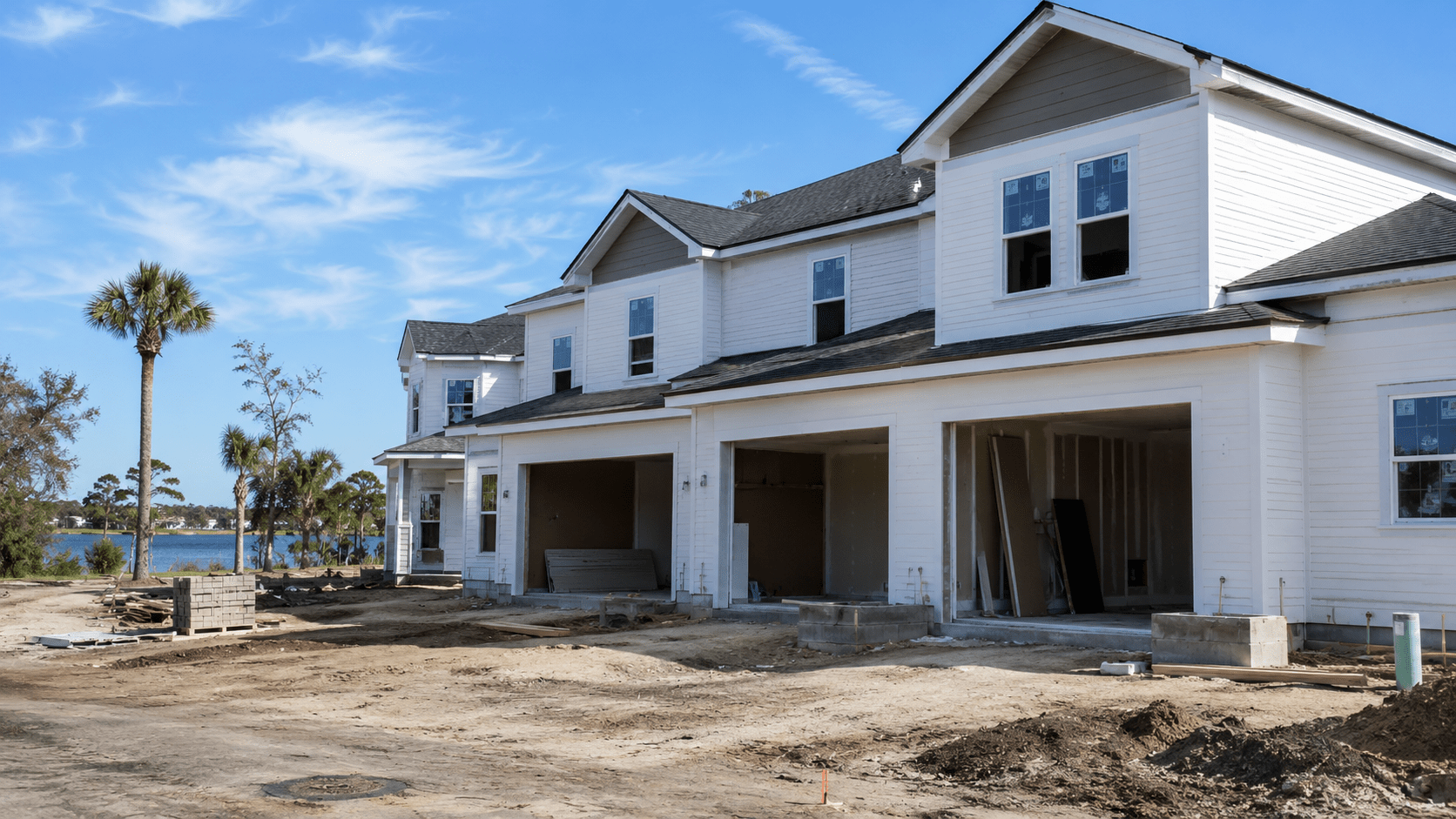
A property under construction is not covered by a landlord or dwelling policy. It requires builders risk, and the terms matter more than the premium.
Confirm who carries the policy — owner or contractor — and that it names the correct interests including the lender. Confirm the limit reflects completed value rather than current spend, since a fire late in construction destroys a nearly finished building. Confirm it responds to wind and to water intrusion through an open envelope, which is the realistic Northeast Florida exposure during summer. Confirm whether materials stored off site or in transit are covered, and whether there is a soft cost or delay in start-up extension covering interest carry and lost rent if a covered loss pushes delivery.
Alongside that, the contractor’s general liability and workers compensation certificates should be verified with the issuing agent, not accepted as a PDF. And builders risk generally ends at occupancy — the transition to a landlord policy must be scheduled deliberately, because the gap between the two is where owners are most often exposed. Our overview of build-to-rent construction for Jacksonville investors covers how that sequence fits the delivery schedule.
Why New Construction Insures Better
Once the asset is in service, the advantages of purpose-built rental product are structural and durable.
Wind features. Florida carriers credit specific verifiable features — roof covering compliance, deck attachment, roof-to-wall connections, roof geometry, secondary water resistance and opening protection. A code-current new build achieves most of them by design, and impact-rated openings and hip geometry can be specified rather than retrofitted. Doing this on a multi-unit community applies the same benefit across every door. Our guide to build to rent wind mitigation requirements covers the features in detail.
System age. Roof age is a primary underwriting factor in Florida, and carriers also weigh the age of electrical, plumbing and HVAC. A new asset starts every one of those clocks at zero, which affects both availability of coverage and price for years.
Elevation. A new building can be designed above base flood elevation with freeboard, which changes flood rating meaningfully compared with an older structure built to earlier standards.
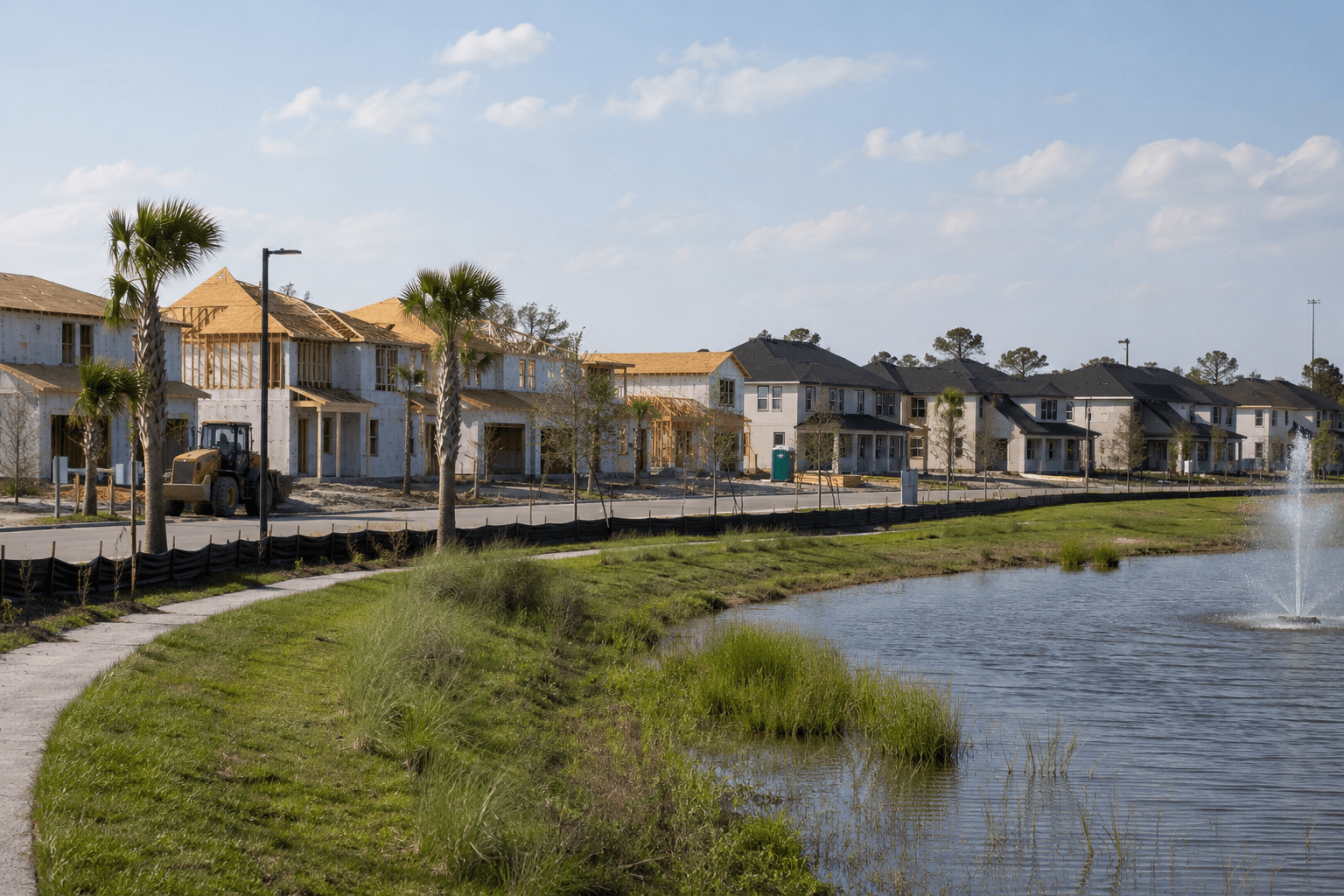
Uniformity. A community of identical units is simpler to underwrite and simpler to schedule than a scattered portfolio of different vintages, and it usually consolidates into a single commercial policy rather than many individual ones.
The Coverages a Rental Owner Actually Needs
A finished rental is insured differently from an owner-occupied home. The core policy covers the dwelling for its replacement cost and provides liability for the premises; it does not cover a tenant’s belongings, which is why a renters insurance requirement belongs in the lease.
Beyond that, four items are routinely underinsured. Loss of rents pays rental income while a damaged unit is uninhabitable — after a hurricane the repair queue is long, and a short limit runs out before the contractor arrives. Flood is a separate policy in every case, and being outside a mandatory zone is not the same as being safe. Ordinance or law coverage pays the extra cost of rebuilding to current code after a loss, which in Florida is not a trivial gap. And umbrella liability over the underlying policies is inexpensive relative to the exposure a landlord carries. Consumer guidance is published by the Florida Department of Financial Services.
Deductibles need equal attention. Florida wind and hurricane deductibles are typically percentage-based on the insured value rather than flat, so the out-of-pocket figure on a portfolio can be large and should be reserved against rather than discovered after a storm.
Making the Construction Decisions Pay
Bring the insurance broker into design rather than into closing. Ask which specifications change the quote — opening protection across every unit, hip roof geometry, secondary water resistance, elevation and freeboard, and the placement of mechanical and electrical equipment above flood level. Then price those against the annual saving across the whole community and the hold period, not against the first year alone.
Assemble the evidence as the buildings go up: product approvals, permits and inspection records, elevation certificates, and a wind mitigation inspection at completion for each structure. Underwriters price what they can verify, and a feature that exists but is undocumented earns nothing. Because a durable reduction in the insurance line improves net operating income every year, it is capitalized into value at exit — which is why this is a construction decision rather than a procurement one. To plan a project around it, see our commercial construction service or contact Ofir Engineering.
Frequently Asked Questions
Does new construction lower insurance costs on a Florida rental?
Generally yes. New buildings start with zero-age roof and systems, achieve the credited wind features by design, and can be elevated above base flood elevation. Those factors affect both the availability of coverage and the price for years after delivery.
What insurance is needed while the rentals are being built?
Builders risk covering completed value, written to respond to wind and to water intrusion through an open envelope, plus verified contractor general liability and workers compensation. Confirm the transition to a landlord policy at occupancy so there is no gap.
What coverage do build to rent owners most often miss?
Loss of rents at a realistic limit, flood as a separate policy even outside mandatory zones, ordinance or law coverage for rebuilding to current code, and umbrella liability. Percentage-based hurricane deductibles are also frequently underestimated.
Should the insurance broker be involved during design?
Yes. Opening protection, roof geometry, secondary water resistance, elevation and equipment placement all change the quote, and they are inexpensive to specify in design and expensive to retrofit. Involving the broker early converts construction choices into a permanently lower operating cost.
Keep Building With Ofir Engineering
Related discussions & follow us: Facebook · Reddit
Latest & related guides: Explore more Commercial Construction guides →
