Build to rent builder energy efficiency has to be judged on different arithmetic than a homeowner’s, because in most rental communities the tenant pays the electricity bill and the owner pays for everything the specification does to the property over decades of hard use. The measures that pay back for a build-to-rent owner are therefore the ones that reduce maintenance calls, extend equipment life, lower turn cost and improve leasing performance — and only some of them are the same measures a homeowner would prioritise. Ofir Engineering is a licensed Florida general contractor (License #CGC 1540016) with 15+ years serving Jacksonville, Ponte Vedra, St. Johns, and Northeast Florida.
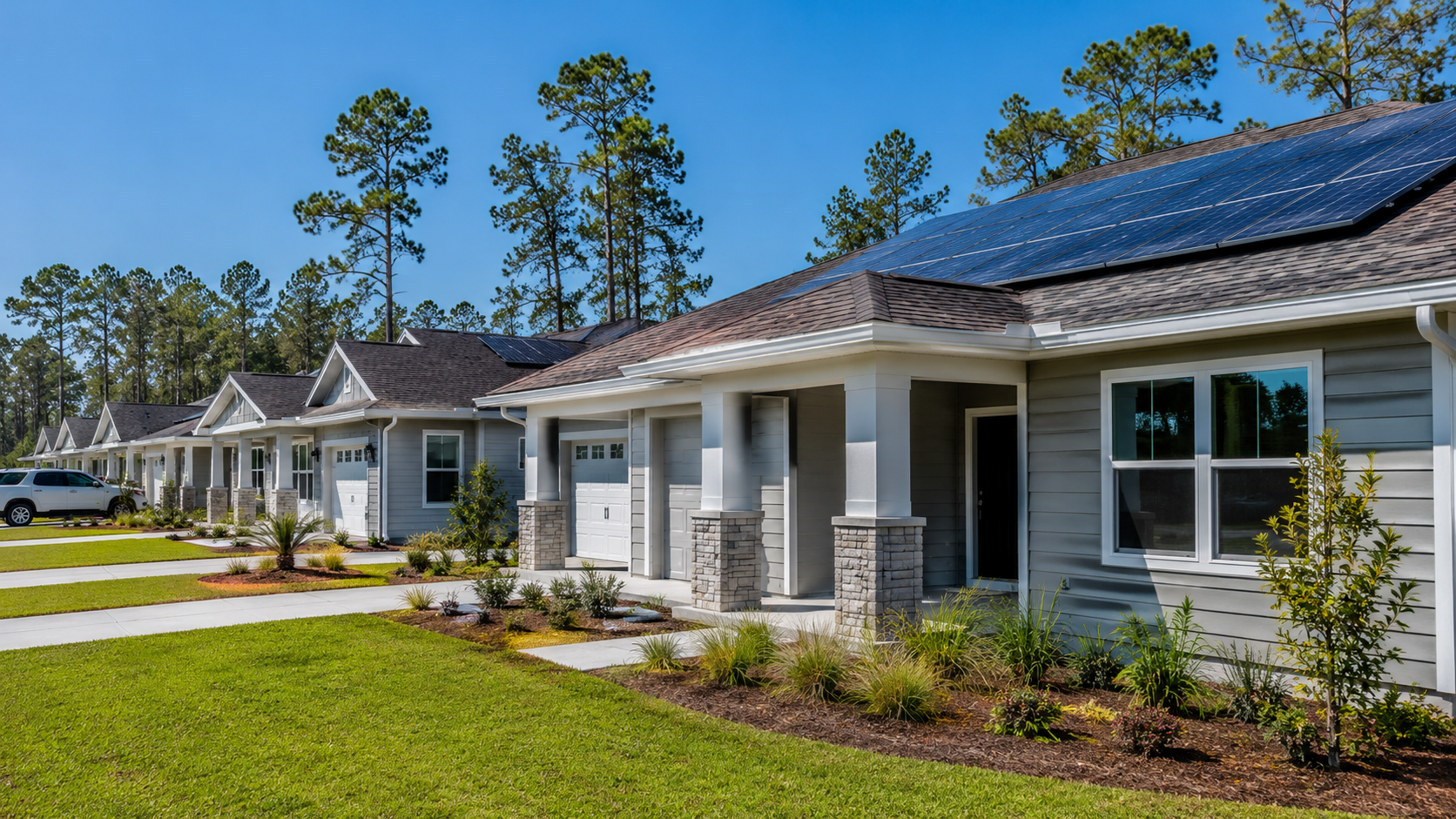
Why Build to Rent Builder Energy Efficiency Is an Owner Economics Question
The split-incentive problem is real: an owner who pays to install a better envelope does not receive the utility savings a tenant enjoys. Conclude from that the wrong thing and you underbuild the community and pay for it every year in operating expense. The correct conclusion is that a build-to-rent owner should invest where efficiency and durability converge — where the same decision that lowers energy use also lowers the owner’s own costs.
Four owner-side returns matter. Maintenance and callbacks: a humidity or comfort complaint generates a service call, and across hundreds of units those calls are a permanent line item. Equipment life: right-sized, long-cycling cooling equipment lasts materially longer than oversized equipment that short-cycles, and replacement across a portfolio is a capital event. Turn cost: moisture damage, mould remediation and finishes degraded by humidity are among the most expensive things found at turnover. Leasing performance: a comfortable, quiet, dry unit with predictable utility bills renews tenants, and retention is worth more than almost any specification saving. Programmes of this type sit within our commercial construction practice precisely because they are priced as operating assets rather than as houses.
What Climate Zone 2 Actually Demands
Nearly all of Florida is climate zone 2 — hot and humid, cooling-dominated, with negligible heating demand. Humidity, not temperature, is the design problem. That reorders the specification.
Air sealing and duct integrity rank first. Humid infiltrating air costs twice, once to cool and once to dehumidify, and it is also the mechanism behind condensation, musty odour and mould — the exact complaints that generate service calls and turn costs. Ducts should be sealed and, wherever the design allows, kept inside the conditioned envelope rather than run through a vented attic that reaches punishing temperatures.
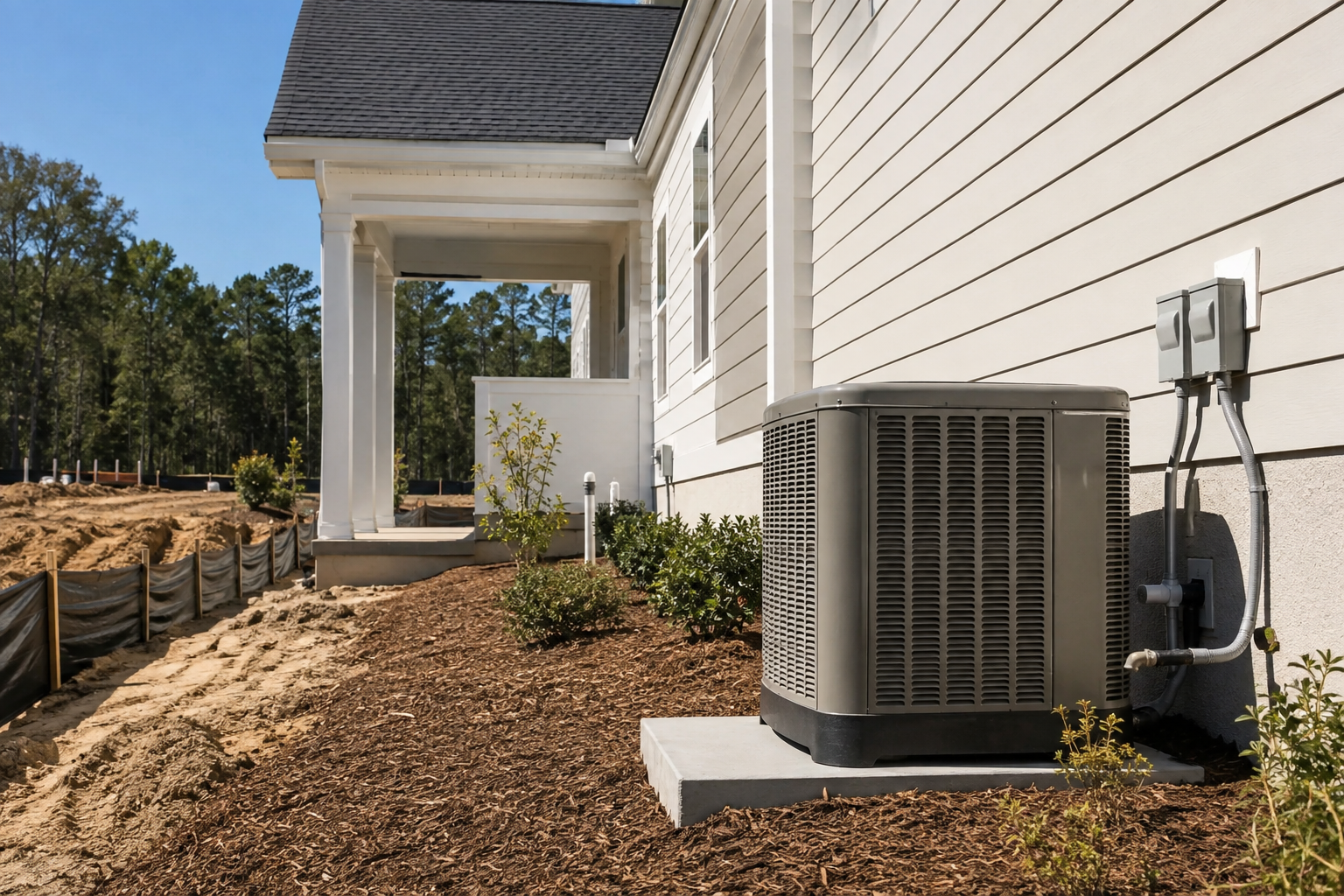
Right-sized cooling with genuine humidity control ranks second. Oversizing is the most common and most expensive error in Florida rental construction. An oversized unit satisfies the thermostat fast, never runs long enough to dry the air, and leaves a cold, clammy unit — the tenant complains, the technician finds nothing broken, and the call repeats. Sizing to a real calculated load and specifying variable-capacity equipment that runs long, gentle cycles addresses comfort, humidity, callbacks and equipment life at once.
Roof and attic strategy ranks third, since the roof takes the sun: radiant barriers, reflective surfaces, generous insulation at the correct plane, or a sealed unvented attic that brings the ducts inside the envelope by definition.
Glazing ranks fourth, judged by Solar Heat Gain Coefficient rather than U-factor, weighted to east and west elevations where low sun angles defeat overhangs. Heating equipment ranks last — a high-efficiency heating upgrade has almost nothing to do in Jacksonville.
Specify Once, Build Hundreds of Times
The structural advantage of build-to-rent is repetition, and it applies to efficiency more than anything else. On a single custom home an error is absorbed once. Across a community it is replicated in every unit, and so is a good decision.
That justifies engineering the envelope and mechanical package properly at the prototype stage: model the unit types, verify the assemblies, and test the first units built. Blower-door and duct-leakage testing on early units catches an installation error while it can still be corrected in the remaining buildings — the single highest-leverage quality step available on a phased project, and one that costs almost nothing relative to what it prevents.
Repetition also rewards standardising equipment across the portfolio. A property manager stocking filters and parts for one system rather than four, and technicians who know that system, produce lower maintenance cost and faster response than a community assembled from whatever was available at each phase.
Durability Is an Efficiency Decision in Disguise
Rental units are used harder than owner-occupied homes and are turned over regularly, so specifications should be chosen for service life rather than lowest first cost. Moisture-resistant assemblies, finishes that tolerate cleaning, corrosion-appropriate hardware near the coast, and accessible service locations for filters and equipment all reduce the recurring cost of ownership.
Humidity control belongs in this category too. Where units may sit vacant between tenants — or where a tenant sets the thermostat high while away — supplemental dehumidification or humidity-aware controls prevent the vacancy period from producing a mould remediation bill. That is not an energy upgrade in the conventional sense; it is an insurance policy that happens to run on the mechanical system.
Compliance, Documentation and Verification
Every unit’s energy compliance is documented on the form submitted with its permit, and the statewide requirements behind it are published by the Florida Building Commission. Treat that as a floor, not a target. Ask your builder for the compliance path used, the specific assemblies credited, and the tested results from early units rather than the modelled assumptions. Require that as-built documentation, equipment data and maintenance intervals reach the property manager at turnover — a community handed over without them loses efficiency year by year as filters go unchanged and settings drift. Owners weighing build-to-rent against for-sale product can compare how the same decisions play out in our new construction work, where the tenant-owner split does not apply.
Frequently Asked Questions
Is energy efficiency worth it when tenants pay the utility bills?
Yes, but the justification is owner-side. The measures that pay back are those that also reduce service calls, extend equipment life, lower turn cost and improve retention — principally air sealing, duct integrity and right-sized cooling with real humidity control. Measures that only reduce the tenant’s bill deserve a different priority.
What is the most common efficiency mistake in Florida rental construction?
Oversizing the cooling equipment. An oversized system short-cycles, never runs long enough to dehumidify, and produces a cold but clammy unit. That drives recurring comfort complaints, shortens equipment life through frequent starts, and creates the moisture conditions behind expensive turnover damage.
Should build-to-rent units be blower-door tested?
On a phased community it is one of the highest-value steps available. Testing early units reveals installation errors while later buildings can still be corrected, which converts a one-unit finding into a portfolio-wide fix at negligible cost.
Does standardising equipment across a rental community matter?
Considerably. A single standardised system lets a property manager stock one set of filters and parts and lets technicians work faster, lowering maintenance cost and response time compared with a community assembled from different equipment at each phase.
Engineer the Specification Before the First Phase
On a build-to-rent community the efficiency specification is written once and built hundreds of times, which is exactly why it deserves engineering rather than defaulting to code minimum. If you are planning a build-to-rent community in Jacksonville or Northeast Florida, contact Ofir Engineering to develop the envelope and mechanical package before the prototype is set.
Keep Building With Ofir Engineering
Related discussions & follow us: Facebook · Reddit
Latest & related guides: Explore more Commercial Construction guides →
