

A commercial build out schedule in Jacksonville runs through six milestones — lease and work letter, design, permitting, demolition and rough-in, finishes, and final inspections leading to a certificate of occupancy — and the two that most often decide your opening date are the ones before construction even starts. Tenants who plan around construction duration alone are usually the ones who miss a rent commencement date. Here is what each milestone involves and where the time actually goes. Ofir Engineering is a licensed Florida general contractor (License #CGC 1540016) with 15+ years serving Jacksonville, Ponte Vedra, St. Johns, and Northeast Florida.
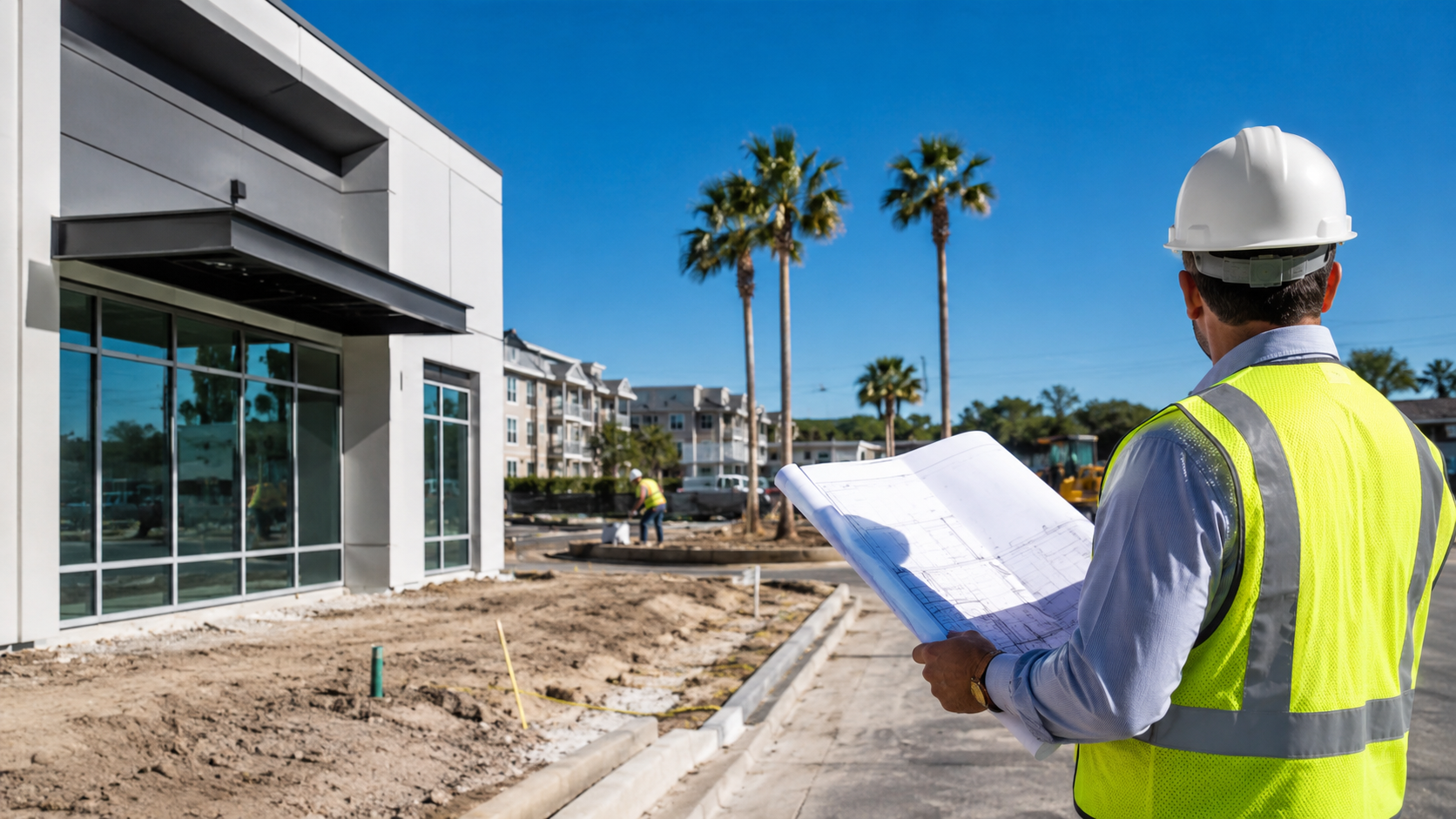
Milestone 1: Lease Execution and the Work Letter
The schedule starts at the lease, not at the permit. The work letter attached to your lease defines what the landlord delivers versus what you build, how the tenant improvement allowance is paid, and — critically — when rent commences. If rent starts on a fixed date rather than on occupancy, every week of schedule risk is your money. Read the delivery condition carefully: taking a space as raw shell is a very different build than taking a second-generation space with usable systems in place.
Landlord approval of your plans is also a real step with real duration. Most leases require the landlord to review and approve construction documents before you submit for permit, and that review is not always fast. Building it into the schedule prevents the most common early surprise.
Milestone 2: Design and Construction Documents
Design moves in two stages: a space plan that establishes the layout, then full construction documents with architectural, structural where required, mechanical, electrical, plumbing, and life-safety drawings. The space plan is quick. The construction documents are not, and rushing them is counterproductive because incomplete drawings are the single largest cause of permit delay downstream.
This is also when long-lead equipment must be identified. Electrical switchgear, rooftop HVAC units, storefront glazing, and specialty equipment can carry lead times measured in months, and no amount of construction speed recovers a component that has not arrived. Ordering at design rather than at mobilization is the highest-leverage scheduling decision on the whole job.
Milestone 3: Permitting
Permit submittal goes to the City of Jacksonville building department, with parallel reviews that depend on your use. Fire-marshal review applies to most commercial spaces. Restaurants add health department review and grease-interceptor requirements. Medical and dental spaces carry their own equipment and plumbing considerations. Signage is typically a separate permit that tenants forget until opening week.
Review duration depends on submittal completeness and departmental volume, so the honest planning assumption is a range with a contingency for one round of comments. A complete, code-ready package reviewed once is dramatically faster than a thin package corrected twice. Our guide to tenant improvement build-outs in Jacksonville covers the submittal package in detail.
Milestone 4: Demolition, Framing, and Rough-In
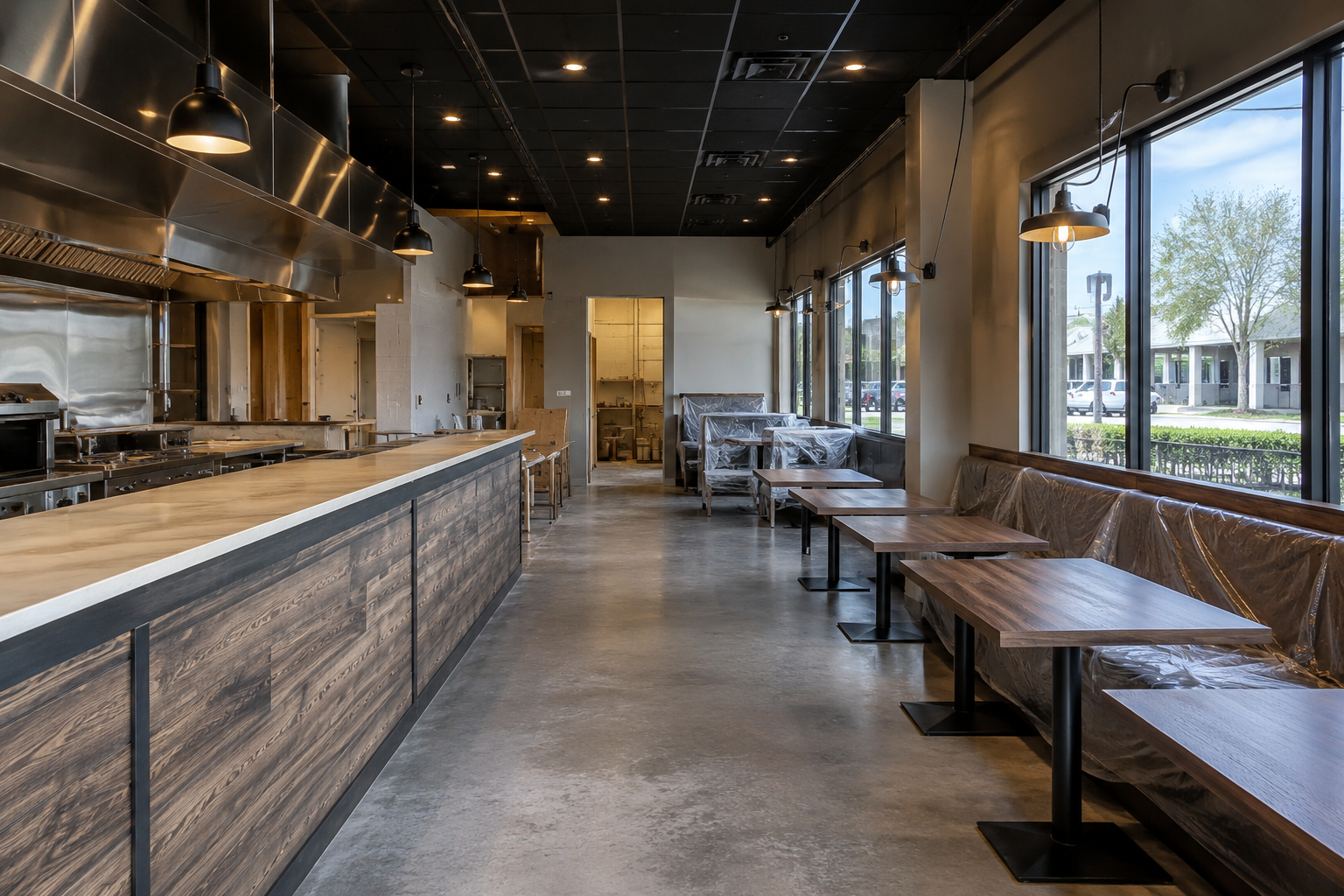
Construction opens with selective demolition and any structural modification, then interior framing that establishes the layout. Once walls are up, the trades run overhead and in-wall: ductwork and equipment, electrical distribution and conduit, plumbing supply and waste, fire sprinkler modifications, and low-voltage rough for data and security. This phase is dense with coordination, and it is where a general contractor earns the fee — three trades working the same ceiling need sequencing, not just scheduling.
Rough-in inspections close the phase. Electrical, plumbing, mechanical, and fire-protection inspections must pass before anything is concealed, and a failed inspection here stops drywall entirely. Building inspection time into the schedule rather than assuming same-day availability is what keeps this milestone honest.
Milestone 5: Drywall, Finishes, and Fixtures
With rough-in approved, the space closes up: insulation, drywall, tape and finish, then ceilings, flooring, paint, millwork, and the finish trades. Lighting fixtures, plumbing fixtures, and equipment get set, and the space begins to look like the renderings. This is generally the most predictable stretch of the schedule because the unknowns behind the walls have already surfaced.
The exception is owner-supplied items. Furniture, specialty equipment, and tenant-provided fixtures that arrive late will hold up final inspections even when the contractor’s work is complete. Clear responsibility for procurement dates prevents an otherwise finished space from sitting idle.
Milestone 6: Final Inspections and the Certificate of Occupancy
Closeout means trade finals, fire-marshal final, and the building final, which together release the certificate of occupancy. Only after the CO can you legally occupy and open. Punch list work, staff training, and merchandising happen alongside, but the CO is the gate. Requesting finals before the space is genuinely complete is the classic last-week mistake, because a failed final can cost several days on the inspector’s calendar.
For how these milestones translate into cost, see our guides to office build-out costs and the broader commercial construction timeline in Jacksonville. Statewide code requirements are published at FloridaBuilding.org.
How to Protect Your Commercial Build Out Schedule
The tenants who open on time do three things: they finish construction documents before submitting rather than after, they order long-lead equipment at design, and they negotiate rent commencement tied to occupancy rather than to a fixed calendar date. Ofir Engineering is a licensed Florida general contractor, License #CGC 1540016. If you have a space under letter of intent, our commercial construction team can build a milestone schedule from your work letter — reach us through our contact page.
Frequently Asked Questions
How long does a commercial build out take in Jacksonville?
Total duration is driven more by design, landlord approval, permitting, and equipment lead times than by construction itself. Simple second-generation spaces move fastest; restaurants and medical spaces take longest because they add health department review and specialty systems.
Which milestone causes the most delays?
Permitting, and almost always because construction documents were submitted incomplete. A package that draws two rounds of comments can lose more calendar time than the entire finishes phase takes. Long-lead equipment ordered late is the close second.
When should I order long-lead equipment?
At design, not at mobilization. Electrical switchgear, rooftop HVAC units, storefront glazing, and specialty equipment can carry lead times measured in months, and construction speed cannot recover a component that has not arrived on site.
Can I occupy the space before the certificate of occupancy?
No. The CO is the legal gate for occupancy and it is released only after trade finals, fire-marshal final, and the building final all pass. Plan staff training and merchandising around that date rather than assuming it.
Keep Building With Ofir Engineering
Related discussions & follow us: Facebook · Reddit
Latest & related guides: Explore more Commercial Construction guides →
