
When it comes to termite proof steel in Jacksonville, FL, working with a licensed general contractor makes the difference. For homeowners worried about pests, termite-proof steel framing offers a structural answer that wood simply cannot: steel is not a food source for termites, so a steel-framed home eliminates the termite bond and annual termite treatment that wood homes in Florida rely on. In one of the most aggressive termite zones in the country, building the frame out of a material termites cannot eat changes the equation for the life of the home. Ofir Engineering is a licensed Florida general contractor (License #CGC 1540016) serving Jacksonville, Ponte Vedra, St. Johns, and Northeast Florida.
Termite Proof Steel: Florida’s Termite Pressure Is Real
Northeast Florida’s warmth and humidity make it ideal territory for termites, including subterranean species that attack from the soil and can do serious damage before they are ever seen. That is why wood-framed homes here typically carry a termite bond and require ongoing annual treatment, and why a missed treatment or a lapsed bond is a genuine risk to the structure. Termite damage is also commonly excluded from homeowners insurance, so the cost of an infestation often falls directly on the owner.
This is the backdrop against which steel framing makes its strongest case. The goal is not just to fight termites every year, but to remove the food source entirely. Our overview of custom steel-frame homes in Florida explains how the material choice plays out across the whole build.
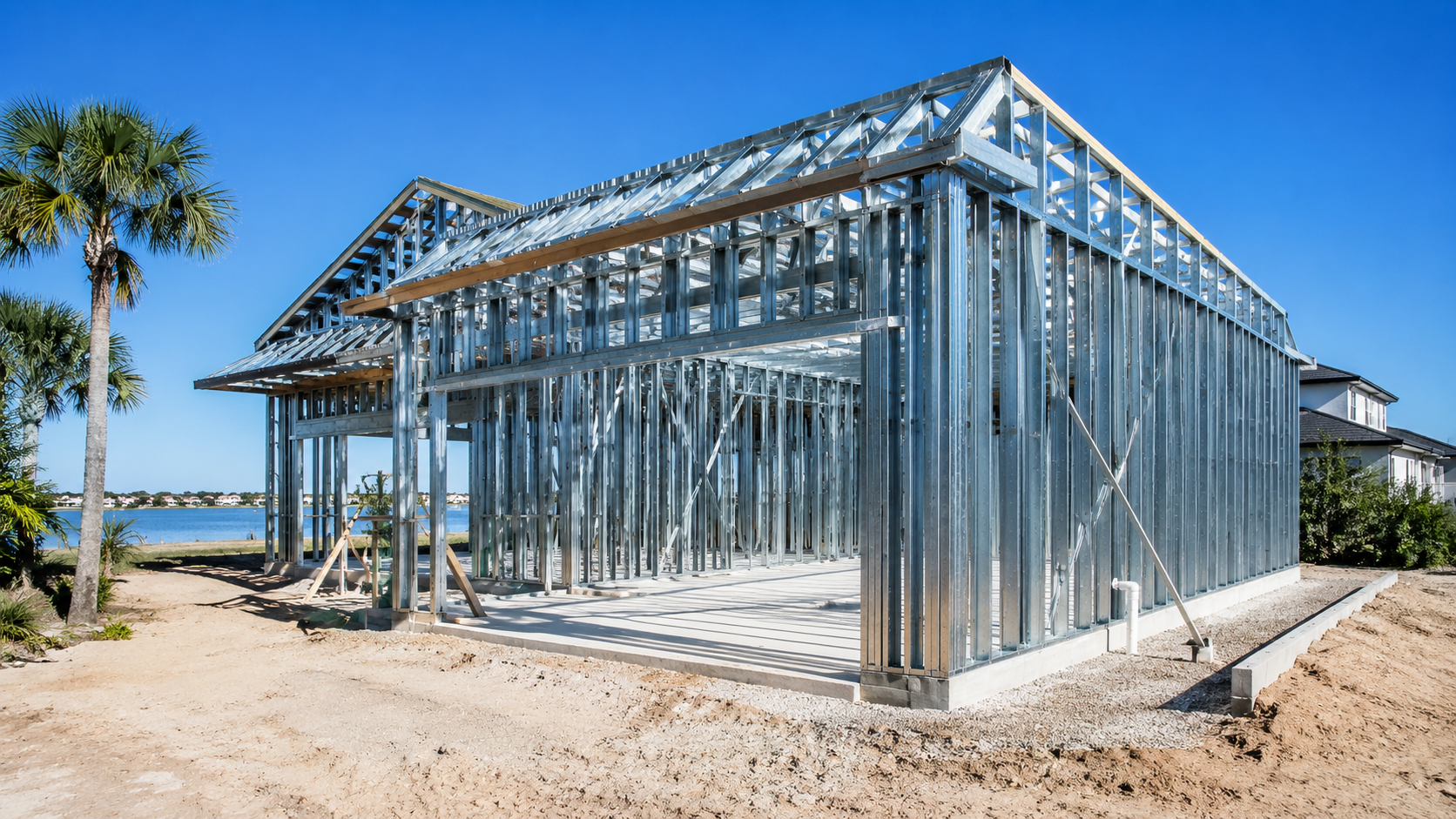
Why Termite-Proof Steel Framing Works
The logic is simple and physical. Termites eat cellulose, which is the structural sugar in wood. Light-gauge metal framing uses galvanized cold-formed steel studs, which contain no cellulose and offer termites nothing to feed on. Steel is not a food source, so the frame itself is not vulnerable to termite consumption the way a wood frame is.
We choose our words carefully here. The steel frame is not on the menu, which removes the structural framing from termite risk. A complete house still contains some other materials, so the smartest builds pair a steel frame with sensible detailing and material choices. But the load-bearing skeleton of the home, the part that is most expensive and disruptive to repair, is made of something termites cannot eat. That is the heart of termite-proof steel framing.
No Termite Bond, No Annual Treatment
Because the frame is not a food source, a steel-framed home does not need the recurring termite treatment that wood homes depend on. Over the decades you own the home, skipping the annual treatment and the bond renewals is a real, repeating saving, and it removes the risk of a treatment lapse leading to structural damage. We cover this in our cost analysis of block vs wood vs steel construction.
Pest Resistance Is Part of a Bigger Durability Story
Termite resistance does not stand alone. The same galvanized steel that termites cannot eat also does not rot, warp, twist, shrink, or burn. In Florida’s humidity that combination matters: you are protected from pests and from the moisture-driven decay that creates the damp, damaged wood termites are often drawn to in the first place. A dry, stable, non-combustible frame is simply a tougher target for everything the Florida environment throws at a home.
That stability pays off in everyday living, too. Because the studs do not move, walls stay straight, so tile, cabinetry, and trim install true and stay true for years. You get a home that resists pests and also feels solid and finished. Our light-gauge steel frame construction page goes deeper on these benefits.
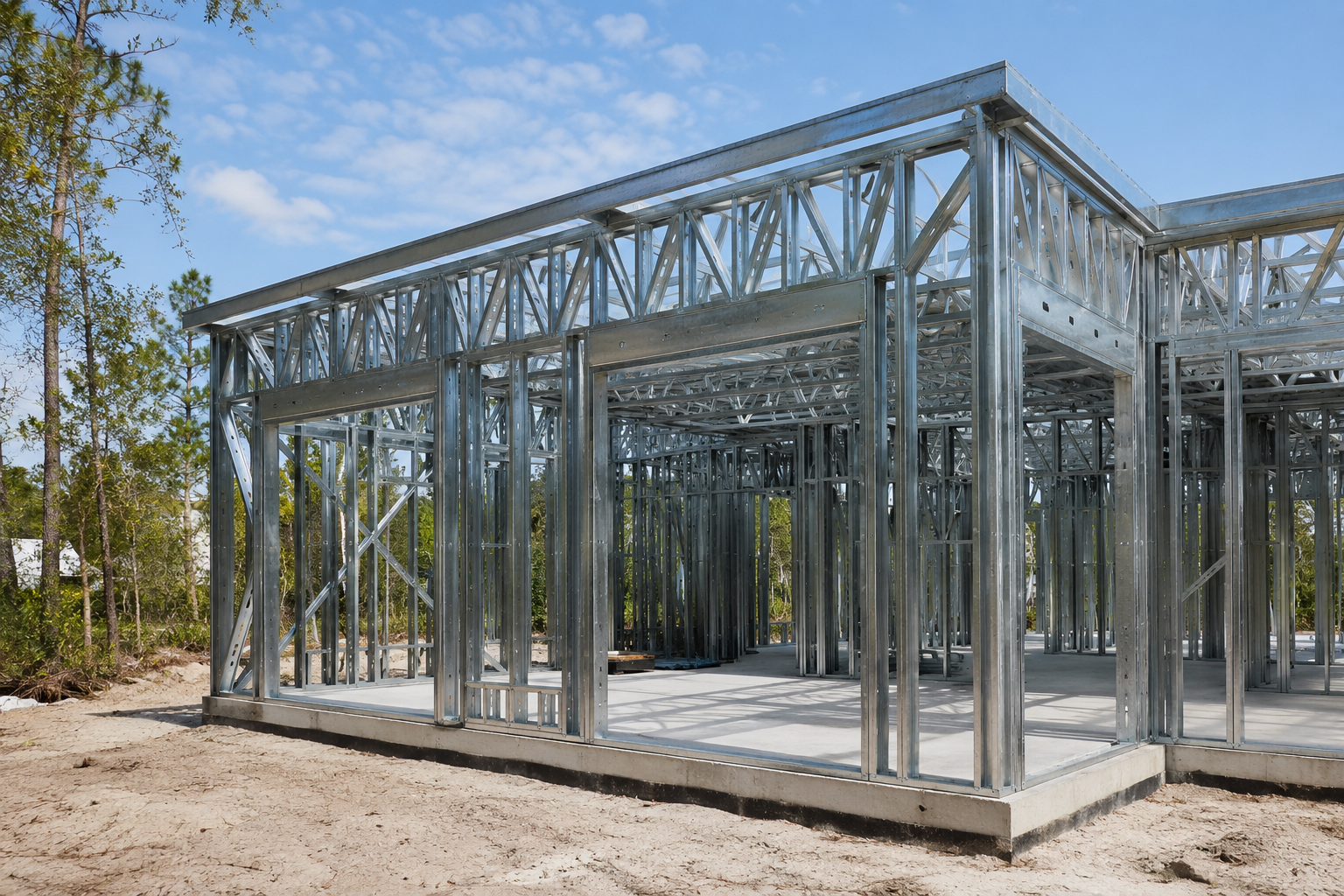
What About the Rest of the House?
Honesty matters, so we say it plainly: choosing a steel frame protects the structural framing, but a thoughtful build still uses good detailing, treated or non-cellulose materials where appropriate, and proper moisture control throughout. The point of termite-proof steel framing is that the most critical and costly part of your home, the structure itself, is removed from termite risk. As a licensed Florida general contractor (CGC 1540016), we design the whole envelope with Florida’s pest and moisture pressures in mind, not just the studs.
Frequently Asked Questions
Is steel framing really termite-proof?
Steel is not a food source for termites because it contains no cellulose, so termites cannot eat the frame. That removes the structural framing from termite risk. A complete house contains some other materials, so good detailing still matters, but the load-bearing skeleton itself is not vulnerable to termite consumption.
Do steel-frame homes need a termite bond or annual treatment?
No. Because the steel frame is not a food source, a steel-framed home does not require the termite bond and annual treatment that wood homes in Florida rely on. Over the years you own the home, eliminating that recurring treatment is a real and repeating saving.
Why does termite resistance matter so much in Florida?
Northeast Florida’s warmth and humidity create heavy termite pressure, including subterranean species that can damage a structure before they are seen. Termite damage is also commonly excluded from homeowners insurance, so the cost often falls on the owner. Building the frame from a material termites cannot eat removes that risk at the source.
Does steel framing protect against other problems besides termites?
Yes. The same galvanized steel that termites cannot eat also does not rot, warp, twist, shrink, or burn. In Florida’s humidity that means protection from pests and from moisture-driven decay, plus straight, stable walls that keep tile, cabinetry, and trim true for years.
Build a Home Termites Cannot Eat
If recurring termite treatment and the worry of hidden damage have worn on you, a steel frame offers a structural way out. Ofir Engineering builds termite-resistant steel-frame homes designed for Florida’s pest and moisture pressures. Explore our steel construction capabilities, then contact us to talk about termite-proof steel framing for your Jacksonville or Northeast Florida home.
For local permitting and building codes, see the City of Jacksonville Planning & Development.
