
When you compare steel frame home cost vs wood in Florida, the honest answer is that light-gauge steel framing is often a modest premium over wood at the time of construction, but over a 30-year ownership horizon the gap typically narrows or even reverses. The upfront sticker price is only one line in a much longer ledger that includes termite treatment, rot repair, insurance, and durability. Ofir Engineering is a licensed Florida general contractor (License #CGC 1540016) serving Jacksonville, Ponte Vedra, St. Johns, and Northeast Florida.
The Upfront Premium: What You Actually Pay to Frame in Steel
Light-gauge metal framing (LGMF) uses galvanized cold-formed steel studs in place of dimensional lumber. On the framing line item alone, steel is usually a few percent more than a comparable wood package in Northeast Florida. The exact figure depends on the design, the local price of lumber on the day you buy, labor availability, and how complex the floor plan is. We avoid quoting a single magic number because lumber prices swing dramatically from quarter to quarter, and a steel quote can look better or worse depending on when you compare.
What is consistent is that the premium is modest, not dramatic. Steel framing is not a luxury upgrade that doubles your budget; it is a different structural choice with a different long-term cost profile. For homeowners weighing the full picture, our guide to the cost to build a custom home in Jacksonville breaks down where framing sits within the overall budget.
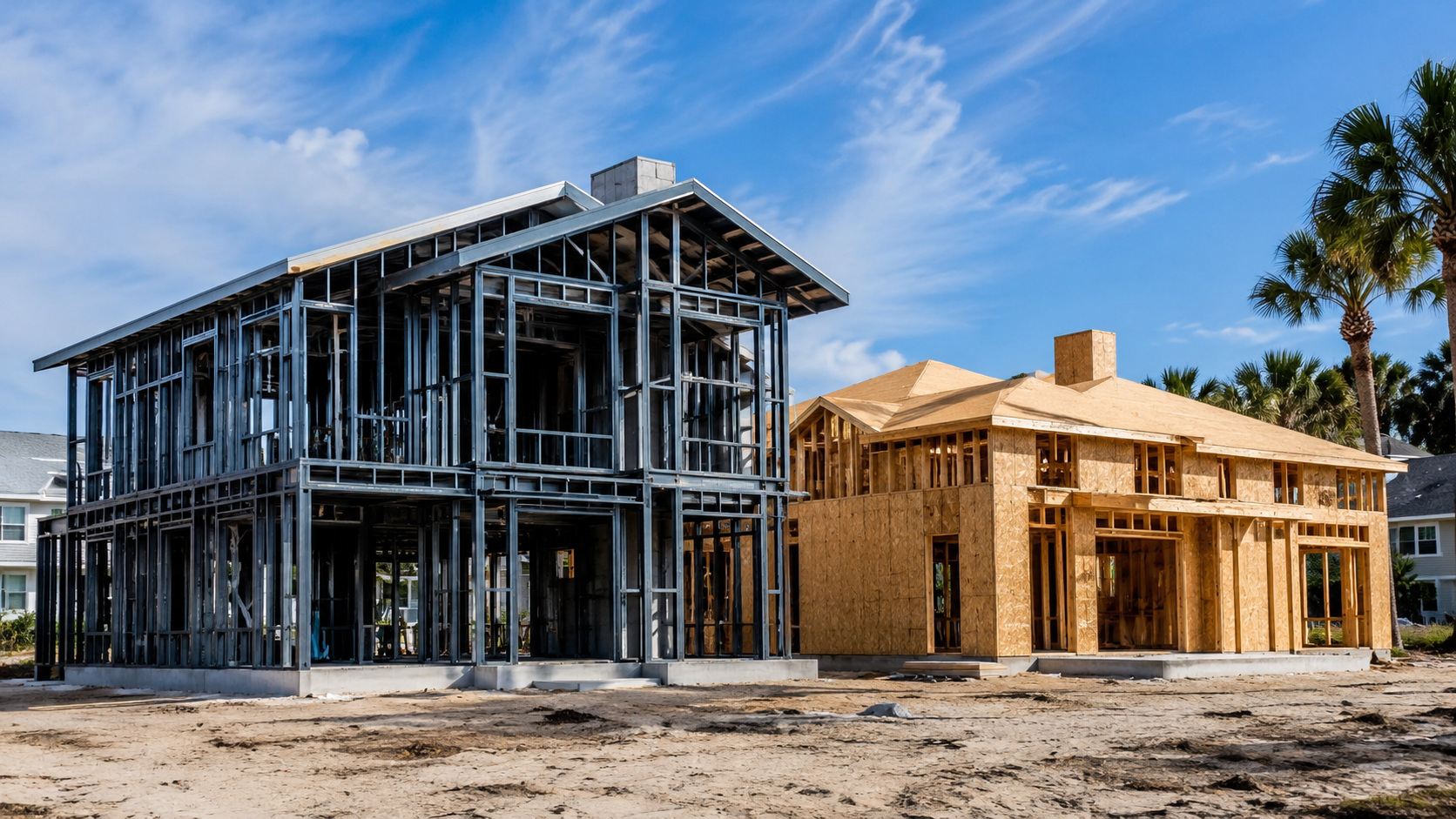
Why Steel Frame Home Cost vs Wood Looks Different Over 30 Years
The reason the comparison flips over time is that wood carries recurring and unpredictable costs that steel simply does not. When you own a Florida home for decades, a few categories add up.
Termite Prevention and Treatment
Florida sits in one of the most aggressive termite-pressure zones in the country. Wood-framed homes generally require a termite bond and ongoing annual treatment to stay protected, and a serious infestation can mean structural repair. Steel is not a food source for termites, so a steel-framed home does not need that recurring termite treatment. Over 30 years, eliminating annual treatment and the risk of termite repair is a meaningful saving. You can read more in our piece on custom steel-frame homes in Florida.
Rot, Warping, and Moisture Damage
Florida humidity, summer storms, and the occasional roof or plumbing leak all punish wood. Wood absorbs moisture, which can lead to rot, mold-friendly conditions, warping, and twisting over the years. Galvanized steel does not rot, warp, or shrink. That dimensional stability means fewer callbacks for sticking doors, cracked drywall seams, and nail pops, and it removes an entire category of moisture-driven repair from your long-term budget.
Insurance Premiums
Non-combustible, wind-resistant construction can qualify for lower insurance premiums in Florida, though this is never guaranteed and depends on your insurer and on documented wind mitigation features. Because steel is non-combustible and can be engineered for strong wind performance, a steel home may help lower the insurance line over the life of the policy. We treat this as a potential benefit rather than a promise, but it belongs in any honest 30-year comparison.
Putting the Numbers Together
Think of it as two ledgers. The wood ledger starts lower at closing but adds termite treatment every year, carries rot and moisture repair risk, and may run higher insurance. The steel ledger starts with a modest premium but then stays quiet: no termite treatment, no rot repair, stable walls, and potentially lower insurance. Add those columns over 30 years and the initial gap often closes or reverses.
Just as important, steel buys you qualities that are hard to price. Studs that do not move mean tile, cabinetry, and trim install true and stay true for the life of the home. The high strength-to-weight ratio of steel supports tall, open two-story plans without the bounce you can feel in some wood floors. For a full structural comparison, see our block vs wood vs steel construction guide.
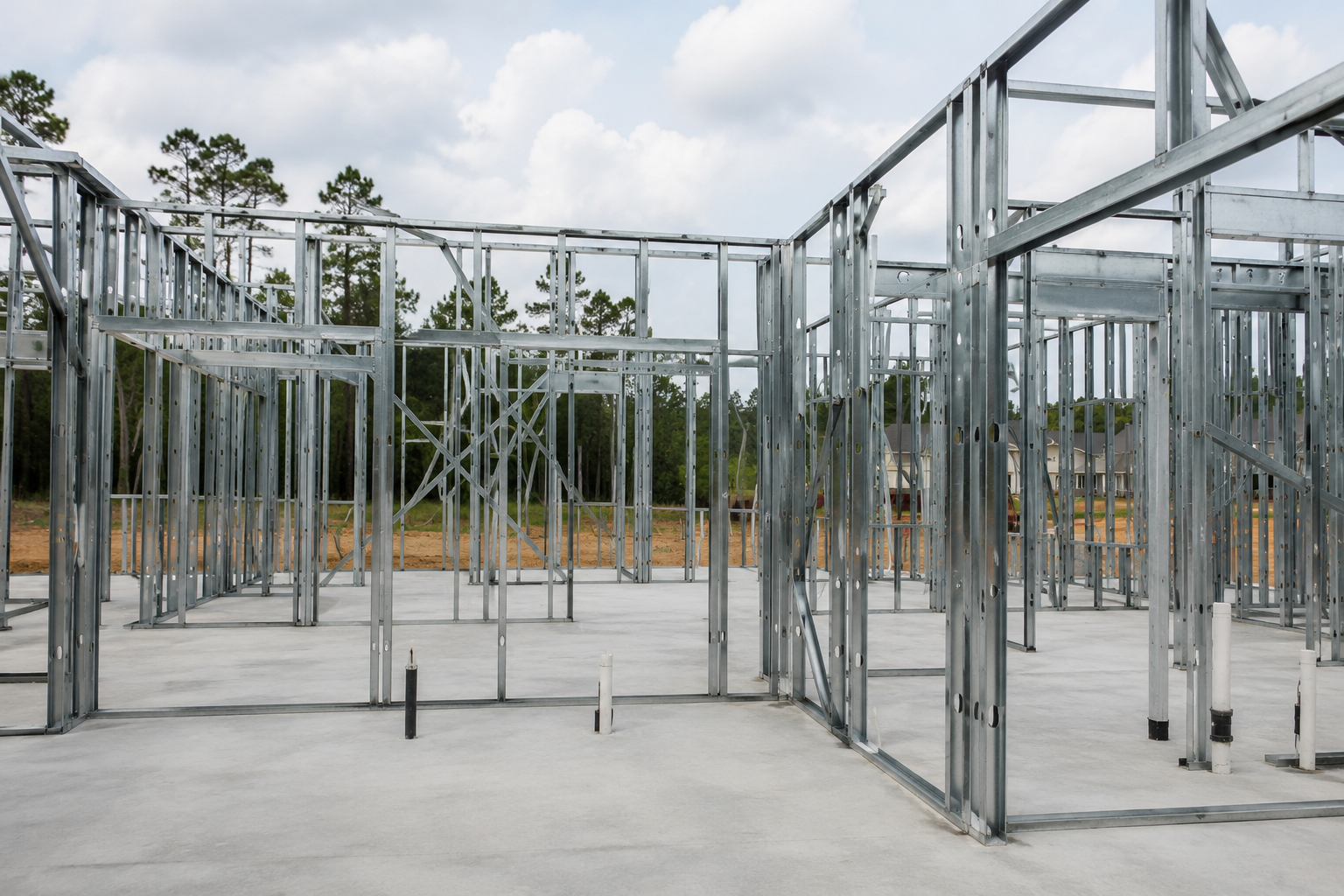
One Honest Design Detail: Thermal Bridging
We never sell steel as flawless. Steel conducts heat, so without proper detailing a steel-framed home could lose energy efficiency through thermal bridging at the studs. The solution is well understood: continuous exterior insulation and a radiant barrier keep a steel home comfortable and efficient in the Florida climate. This is a design detail we handle on every steel project, and it is built into the budget from the start rather than discovered later. Honest planning here is part of why our light-gauge steel frame construction performs well in our heat and humidity.
Frequently Asked Questions
Is a steel-frame home always more expensive than wood?
At the framing stage steel is usually a modest premium over wood, often a few percent more, but lumber prices fluctuate so the exact gap varies. Over a 30-year ownership period the difference often narrows or reverses once you account for termite treatment, rot repair, durability, and potential insurance savings.
How much more does steel framing cost upfront?
It is typically a few percent more on the framing line item, not a dramatic increase. We avoid quoting one fixed number because the answer depends on your floor plan, labor, and the price of lumber on the day of comparison.
Does steel framing really save money on termites and insurance?
Steel is not a food source for termites, so it does not need annual termite treatment, which is a real recurring saving in Florida. Non-combustible, wind-resistant steel construction may also help lower insurance premiums, though that depends on your insurer and documented wind mitigation and is never guaranteed.
Will a steel home cost more to keep cool in Florida?
Only if it is detailed poorly. Steel conducts heat, so a properly built steel home uses continuous exterior insulation and a radiant barrier to prevent thermal bridging. Done correctly, a steel-framed home stays energy efficient in the Jacksonville climate.
Talk Through Your Numbers With Ofir Engineering
The smartest way to compare steel frame home cost vs wood is to run both scenarios against your actual plan, lot, and timeline. Ofir Engineering will walk you through the upfront premium and the 30-year picture honestly, with no inflated promises. See how we build in our steel construction capabilities, then contact us to start a transparent cost conversation about your Northeast Florida home.
For local permitting and building codes, see the City of Jacksonville Planning & Development.
