
When it comes to choose steel frame in Jacksonville, FL, working with a licensed general contractor makes the difference. Light-gauge steel framing is a smart choice for coastal Florida — but only with a contractor who actually knows how to build with it. Here’s how to choose a steel-frame contractor you can trust. Ofir Engineering is a licensed Florida general contractor (License #CGC 1540016) serving Jacksonville, St. Johns, and Northeast Florida.
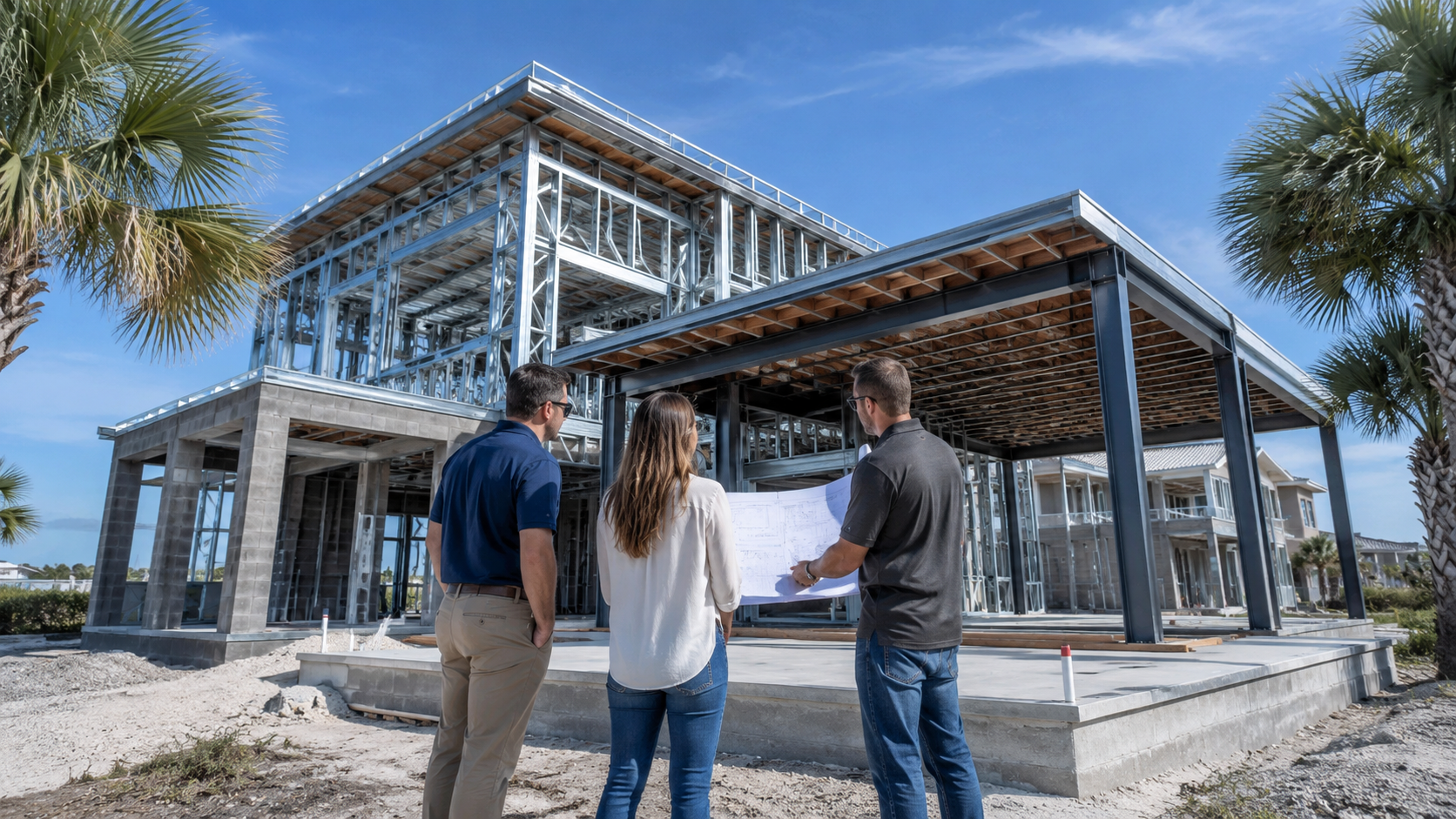
Choose Steel Frame: How to Choose a Steel-Frame Contractor: What Matters Most
Steel framing rewards experience and punishes shortcuts. The right contractor understands cold-formed steel connections, coastal corrosion protection, and thermal bridging; the wrong one treats steel like wood and creates problems that surface years later. The steps below are how to choose a steel contractor who will build a durable, code-compliant home in Northeast Florida’s heat, humidity, and wind.
Coastal Northeast Florida is a demanding environment for any structure. Salt air accelerates corrosion, summer humidity drives moisture into wall assemblies, and hurricane-season wind loads test every connection. Light-gauge steel performs superbly here — it will not rot, warp, or feed termites, and it can be engineered for high wind — but only when the builder details it correctly. That is why choosing the right steel-frame contractor matters more in Jacksonville, Ponte Vedra, and St. Johns than almost anywhere else in the country. A contractor who understands these coastal pressures designs the wall assembly, corrosion protection, and structural connections around them from the very first drawing, rather than adapting a wood-frame habit to a material it was never meant for.
1. Verify the License
In Florida, structural work requires a licensed general contractor. Confirm an active CGC license before anything else — Ofir Engineering holds CGC 1540016. Ask for the license number and verify it is current and in good standing with the state. An unlicensed builder is a risk no material choice can offset.
2. Look for Real LGMF Experience
Steel framing is not the same as wood. Ask to see completed light-gauge metal framing projects and how the contractor handles connections, thermal bridging, and coastal corrosion protection. Our steel vs. wood framing guide covers why these details matter. Ask specifically about the gauge of steel they use, how they insulate to prevent thermal bridging, and whether they have engineering support for the connections. A contractor fluent in these answers has genuinely built with steel; one who deflects has not.
3. Check References & Coastal Track Record
Talk to past clients, especially anyone who built within 40 miles of the coast where humidity, salt air and wind loads are punishing. A good steel builder will welcome the questions and offer references without hesitation.
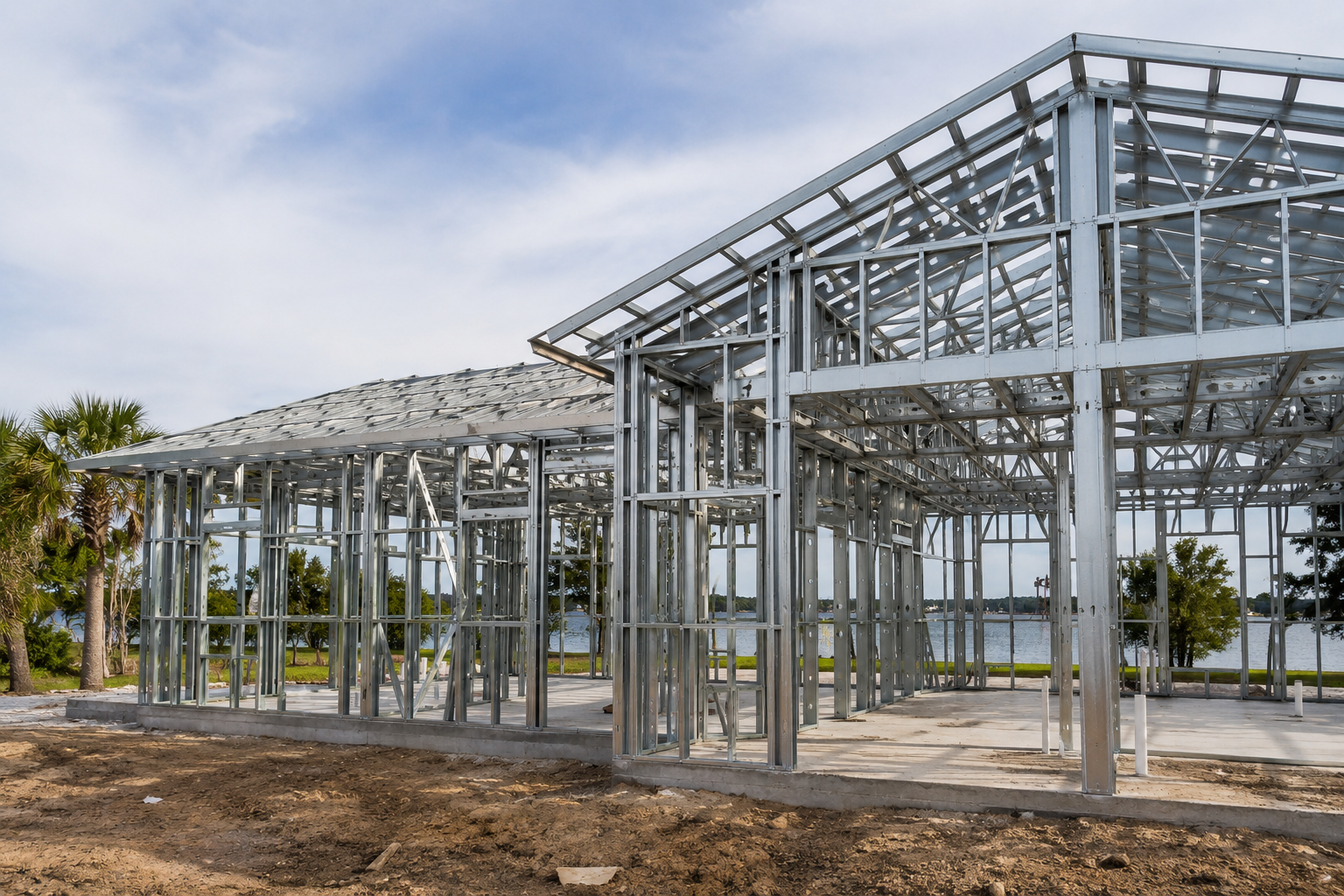
4. Ask About Corrosion and Wind Detailing
In a coastal climate, the details decide durability. Ask how the contractor protects galvanized steel from moisture, how they detail flashing and the water-resistive barrier, and how the frame is engineered to Florida Building Code wind loads. Confident, specific answers here are the clearest sign of a genuine steel builder.
5. Understand the Whole Scope
The right contractor manages design coordination, permitting, and inspections — not just the framing. See our steel construction capabilities, then contact us for a consultation.
What Belongs in a Steel-Frame Proposal
A trustworthy steel-frame contractor gives you a clear, written proposal — not a vague number. It should spell out the structural engineering scope, the gauge and type of steel, the corrosion-protection and insulation approach, who handles permitting and inspections, the construction schedule, and how allowances and change orders are managed. A detailed proposal is itself a signal of competence: a builder who has delivered steel homes knows exactly what the work entails and is not afraid to put it in writing.
Questions to Ask Before You Sign
Before you commit, ask a steel-frame contractor how many light-gauge steel homes they have completed, who does the structural engineering, how they handle thermal bridging in the Florida climate, what their corrosion-protection approach is near the coast, and how permitting and inspections are managed. Ask for a written scope and a realistic schedule. The answers reveal whether steel is a core competency or an occasional experiment.
Red Flags to Avoid
Walk away from a contractor who cannot show completed steel projects, who is vague about corrosion and wind detailing, who lacks an active license, or who prices steel exactly like wood without explaining the difference. The cost of choosing wrong on a structural frame is far higher than the cost of taking the time to choose right.
The Bottom Line
Choosing a steel-frame contractor comes down to four things: proven light-gauge steel experience, an active license, real coastal detailing know-how, and a clear written scope. Get those right and steel will reward you with a home that resists rot, termites, fire, and Florida’s storms for decades. Ofir Engineering builds exactly that as a licensed general contractor (CGC 1540016) serving Jacksonville, Ponte Vedra, St. Johns, and Northeast Florida.
For local permitting and building codes, see the City of Jacksonville Planning & Development.
