

A lot of Jacksonville investors hit the same point in a project. The numbers look good on paper, the scope feels manageable, permits are moving, and then energy code compliance starts showing up in plan review comments, HVAC paperwork, insulation details, or final testing. That's usually when people realize this isn't just a box to check. As a licensed Jacksonville general contractor (CGC 1540016), Ofir Engineering brings hands-on construction expertise to every project throughout Northeast Florida.
In Northeast Florida, energy code compliance affects design decisions, contractor coordination, inspection timing, and long-term operating cost. It also affects whether a project closes out cleanly or burns time on rework. If you're flipping a house, holding a rental, adding square footage, or building new, the code touches real money. Better compliance supports lower utility costs, fewer surprises at inspection, and a stronger finished asset.
The bigger mistake is treating compliance like an isolated permit item. It isn't. It's part of construction strategy. Federal code milestones have long recognized that adoption and field compliance are different things, with a U.S. baseline pushing states toward 90% compliance by 2017, and later analysis projecting multi-year adoption and compliance phases rather than instant real-world conformance (EIA analysis of code adoption and compliance rates). That distinction matters on actual job sites in Jacksonville, where approved plans don't always mean installed work will pass.
This guide looks at energy code compliance the way a construction manager does. What applies in Northeast Florida, which pathway makes sense for your project, where investors usually lose time, and how to keep the work profitable from pre-construction through final inspection.
Table of Contents
- Introduction
- Understanding Northeast Florida's Energy Code Landscape
- Choosing Your Energy Code Compliance Pathway
- Key Areas for Design and Construction Success
- Navigating Documentation and Mandatory Inspections
- Common Compliance Pitfalls and How to Avoid Them
- Frequently Asked Questions About Energy Code Compliance
- Your Partner for Compliant and Profitable Jacksonville Projects
Introduction
Energy code compliance in Jacksonville usually becomes urgent after a design choice, a permit comment, or a failed inspection forces the issue. By then, the cheapest fixes are already gone. The practical move is to treat compliance as part of budgeting and scope control from the beginning.
For investors, that changes the conversation. Instead of asking only what a renovation costs, ask whether the insulation plan, window package, duct layout, and HVAC selection still work together under the code path you chose. A project can look value-engineered and still become more expensive if late changes trigger redesign, retesting, or field corrections.
That's especially true in Florida's hot, humid climate. Air leakage, poor duct installation, oversized HVAC equipment, and weak attic transitions don't just create code issues. They create comfort problems, moisture risk, and operating cost problems that show up after the sale or during tenant turnover.
Practical rule: The least expensive time to solve an energy code problem is before permit submittal. The most expensive time is after finishes are in.
A disciplined process keeps the job moving:
- Start with the scope: New build, addition, major remodel, and change-of-use work don't all trigger the same conversations, but they all need early review.
- Match the code path to the project: Straightforward homes and difficult remodels rarely benefit from the same compliance strategy.
- Coordinate the trades: Framers, insulators, window crews, HVAC installers, and electricians all affect the final result.
- Verify before inspection: Field checks during construction are cheaper than correction after testing.
For Jacksonville and Northeast Florida projects, that approach protects two things investors care about most. Schedule and margin.
Understanding Northeast Florida's Energy Code Landscape
Jacksonville projects sit at the intersection of state code, local permitting practice, and real construction conditions like heat, humidity, attic temperatures, wind exposure, and renovation constraints. If you simplify energy code compliance too much, you miss the part that affects cost.
Why the code matters in Jacksonville
Florida energy code requirements are built around building performance, not just materials lists. In practical terms, the code cares about how the home or building limits unwanted heat gain, controls air leakage, supports efficient heating and cooling, and documents those decisions in a way the jurisdiction can review.
For investors, that means energy code compliance is tied to more than new construction. Renovations, additions, and alteration work increasingly matter too. A useful example comes from New York City's current code update, where the city notes that its 2025 Energy Conservation Code began enforcement on March 30, 2026, historic buildings are no longer automatically exempt, and many alteration filings now require energy analysis and supporting documentation (NYC Energy Conservation Code page). The local rule set is different from Florida, but the direction is relevant. Alteration work is getting more scrutiny, not less.
That's why investors doing older-home repositioning in Jacksonville should stop assuming energy code is only a new-build issue.
The terms that actually affect your project
Two technical ideas drive most site decisions.
Building thermal envelope means the parts of the structure that separate conditioned space from unconditioned space or the outdoors. Think roof assemblies, exterior walls, windows, doors, slab edges, and transitions around penetrations.
Air barrier means the continuous layer or system that limits uncontrolled air movement. In Northeast Florida, this matters because humid outside air finding its way into the wrong place can increase cooling load and create moisture trouble.
A simple way to understand it is:
| Term | Plain-language meaning | Why investors should care |
|---|---|---|
| Envelope | The shell around the conditioned space | Poor detailing can raise operating costs and create inspection issues |
| Air barrier | The seal that stops unwanted air movement | Gaps often hide behind finishes and are costly to fix late |
| Mechanical system | HVAC equipment and distribution | Bad coordination can undo good envelope work |
Roof and attic behavior are part of that picture. Even though it's written for another market, Vivid Skylights' roof ventilation guide is a useful practical reference on how ventilation strategy affects roof assemblies, moisture behavior, and overall performance. The principle translates well when you're reviewing attic conditions and heat management in Florida homes.
For remodel-heavy properties, the scope also matters. Home Remodeling Jacksonville covers kitchen remodeling, bathroom renovations, flooring installation, interior upgrades, and full residential renovation projects managed by licensed contractors. That kind of work often triggers hidden envelope and mechanical questions once walls, ceilings, or openings are changed.
The code book doesn't build the project. Details do. The line where window flashing, air sealing, insulation, and HVAC meet is where most problems show up.
Choosing Your Energy Code Compliance Pathway
The right compliance path depends on how locked-in the design is, how aggressive the value engineering has been, and how much flexibility you need if materials or scope change midstream. This decision is strategic, not administrative.

DOE guidance makes this especially important for difficult projects because different methods allow different trade-offs, including balancing insulation and glazing when a project changes late in design or construction (DOE compliance paths guidance).
Prescriptive path
This is the cleanest route when the design is simple and the team wants a checklist-style process. You follow the required component values and installation rules for items like insulation, fenestration, and equipment.
It works well when:
- The design is conventional: Standard window areas, straightforward rooflines, and uncomplicated mechanical layouts.
- The project team wants fewer moving parts: Less modeling, less back-and-forth, and easier permit review.
- You're controlling risk through simplicity: Fewer trade-offs mean fewer chances to break compliance with a late substitution.
The downside is rigidity. If the investor wants larger glass areas, product substitutions, or design-driven exceptions, this path can get tight fast.
UA trade-off path
This path is useful when one part of the envelope underperforms the prescriptive target, but another part performs better and compensates for it. That's often where investors regain flexibility on a remodel or semi-custom spec build.
A good example is window selection. If glazing choices are driving design or resale appeal, the trade-off method may offer a practical route, especially when paired with stronger insulation or other envelope improvements. For a window-focused technical explainer from another code regime, California Title 24 window requirements guide gives a useful overview of how fenestration performance gets evaluated in code frameworks.
This path is often a smart fit when the design is already partly baked and you need room to solve around constraints rather than redesign everything.
Performance path
This is the most flexible option and usually the most analytical. Instead of checking each component against a fixed list, the project demonstrates overall compliance through whole-building energy modeling or related performance-based methods.
It tends to fit:
- Custom homes
- Complex additions
- High-glass designs
- Projects with multiple late changes
- Investors targeting stronger efficiency positioning in the market
The trade-off is effort. Performance-based compliance usually needs more coordination, more documentation, and a team that understands how one design decision affects the modeled result.
A Jacksonville investor dealing with solar-related upgrades or envelope changes may also want to review how building systems interact across the whole property. This piece on integrating solar air heating in Jacksonville is useful context for thinking beyond one isolated component.
For investors managing tighter timelines, Fix and Flip Renovation Services covers renovation budgeting, contractor management, project scheduling, and ROI-focused construction planning in Jacksonville Florida. That matters because the compliance path you choose can either protect the schedule or complicate it.
Choose the path that gives you enough flexibility to finish the project you actually have, not the project you started sketching months ago.
Key Areas for Design and Construction Success
Most energy code failures don't come from one dramatic mistake. They come from a handful of ordinary misses repeated across the job. In practice, the biggest wins usually come from envelope work, HVAC decisions, duct installation, and lighting coordination.
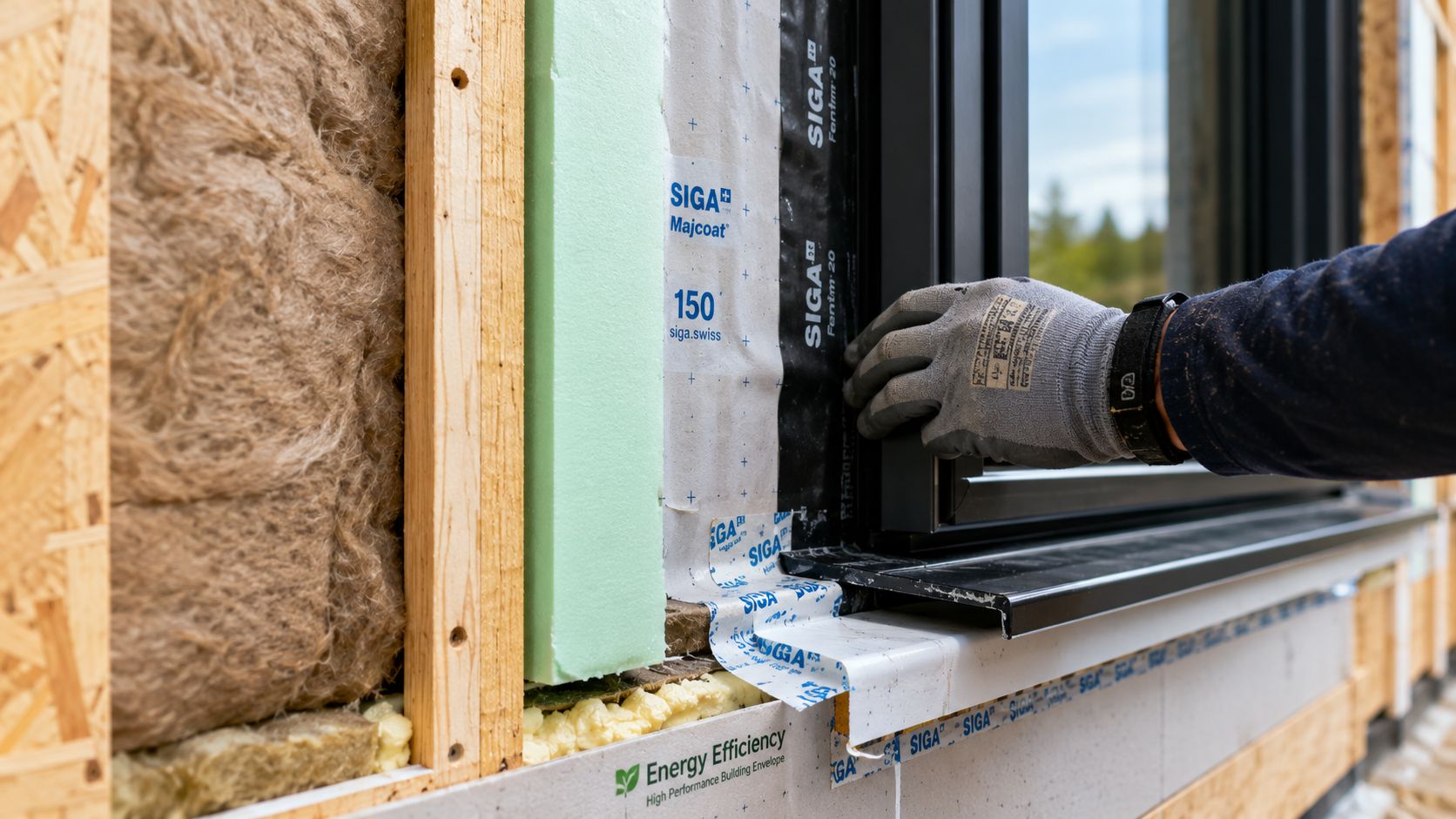
Field evidence backs up that focus. DOE analysis found that improved compliance can recover about 15% of annual energy costs in a commercial-building pilot study, which is why envelope, HVAC, and lighting deserve priority instead of assuming permit approval proves field performance (DOE compliance data analysis).
Building envelope and insulation
In Jacksonville, insulation only performs as intended when installation quality is controlled. Gaps, compression, poor alignment, and sloppy transitions around framing members can undermine a good material choice.
Focus your attention on:
- Attic and roof transitions: These are common leakage points in Florida homes.
- Window and door openings: Flashing, sealing, and continuity matter more than product brochures.
- Penetrations: Plumbing, electrical, bath fans, and recessed fixtures need coordinated sealing.
For practical assembly thinking in Florida conditions, this article on better insulation and energy savings in steel homes built in Florida is worth reviewing.
HVAC system selection and sizing
Investors often overspend on equipment and underspend on design. Bigger HVAC isn't automatically better. An oversized system can short cycle, miss moisture control targets, and create comfort complaints even in a newly renovated property.
The better sequence is load calculation first, equipment selection second, installation quality third. On houses being repositioned for resale or rental, this matters because cosmetic upgrades won't offset a system that feels wrong once the buyer or tenant moves in.
If you want a practical trade perspective on installation stages, Precision Air Solutions' HVAC rough-in is a useful reference for understanding how rough-in quality affects final system performance.
Duct sealing and distribution
Ductwork is where a lot of projects often lose performance. Flex duct that's kinked, poorly supported runs, leaky boots, loose connections, and unsealed joints can undo a decent equipment package.
A site superintendent should be checking:
- Whether runs are laid out cleanly before concealment.
- Whether boots and plenums are properly connected and sealed.
- Whether trade sequencing protects ducts from damage before final close-in.
This is especially important in attic-heavy layouts common in Northeast Florida. Once finishes go in, correction gets more expensive.
Lighting and equipment choices
Lighting won't usually rescue a weak envelope or bad duct system, but it can help complete a compliant package without much drama. The key is coordination. Fixture selection, controls, trim packages, and equipment substitutions should be reviewed before procurement, not at the supply-house counter the week of installation.
New Construction Jacksonville covers licensed new construction contracting in Jacksonville Florida, including custom home building, residential construction management, project supervision, scheduling, and quality construction services. In any new build, that kind of coordination is what keeps lighting, HVAC, and envelope decisions aligned instead of colliding at inspection time.
Navigating Documentation and Mandatory Inspections
On a well-run project, documentation and inspections follow a sequence. On a poorly run one, they arrive as emergencies. The difference is usually whether someone assembled the compliance package early and then verified the field work before the inspector or tester saw it.

A structured compliance workflow is typically multi-phase. It starts with permit submittals and plan review, moves into on-site verification, and ends with reconciliation of findings so the final result reflects what was built (City Energy Project compliance assessment overview).
What gets assembled before work starts
For most residential projects, the early package needs to support the chosen compliance path and the planned mechanical design. That often includes HVAC sizing and selection documents, envelope details, window and insulation data, and any project-specific calculations needed for permit review.
The biggest scheduling mistake is submitting a permit set that isn't coordinated with what purchasing and field crews are planning to install. If the approved paperwork says one thing and the jobsite receives another, the closeout process gets messy.
For Jacksonville owners and investors who haven't dealt with local approvals before, this overview of the building permit process helps frame how plan review and inspection timing affect the construction schedule.
What happens in the field
Once work starts, documentation alone doesn't carry the project. Site verification matters. Insulation gets checked for installation quality. Air barrier details get reviewed where trades tend to break continuity. Window and door openings need to match the approved intent, not just look finished from a distance.
Then come the final verification steps, which often include air leakage and duct-related testing. These tests are easiest to pass when the superintendent has already walked the project with the same checklist mindset the tester or inspector will use.
Good documentation gets you through review. Good field control gets you through final.
A practical closeout routine usually includes:
- Pre-drywall review: Catch missed sealing and insulation defects while access is easy.
- Mechanical verification: Confirm installed equipment and distribution match the approved design.
- Pre-final punch for compliance items: Fix obvious gaps before third-party testing or jurisdictional inspection.
- Paperwork reconciliation: Make sure final documents reflect installed conditions.
That process feels slower only if you compare it to doing nothing. Compared to failed inspections and rework, it's the faster path.
Common Compliance Pitfalls and How to Avoid Them
The expensive problems are usually the ordinary ones. A crew leaves small insulation voids around wiring. A window opening gets flashed inconsistently. A duct joint is “good enough” until testing says otherwise.

Field studies show why that matters. In one California Energy Commission funded report, residential HVAC permit compliance rates ranged from 3% to 29%, and the same report cites commercial-building impacts with lost energy cost savings valued at $2,868 per 1,000 square feet in present value terms across studied buildings (California compliance report). That's a warning against assuming permitted work is automatically compliant work.
The quiet failures that hurt ROI
The first bad assumption is, “My contractor handles it.” Sometimes they do. Sometimes each trade handles only its own slice, and nobody owns the seams between them.
Common trouble spots include:
- Insulation installed around obstacles poorly: The fix is to inspect before concealment. Prevention is giving installers clear access and a punch list before drywall.
- Window and wall transitions left to separate crews: The fix is a defined responsibility line. Prevention is deciding before installation who handles flashing, sealing, and final continuity.
- Ductwork hidden before anyone checks it: The fix is rework. Prevention is a rough-in review before finishes cover mistakes.
- Late substitutions: The fix is recalculation or field correction. Prevention is reviewing replacement materials against the chosen compliance path before ordering.
This video gives a useful visual look at building-performance issues that often overlap with code problems during construction and testing:
If you wait until final inspection to discover how the house performs, you're using the inspector as your quality-control manager.
Frequently Asked Questions About Energy Code Compliance
Does energy code compliance only matter for new construction
No. It often comes up in additions, major renovations, reconfigured spaces, and projects where envelope or mechanical systems change. Investors should assume any meaningful scope change deserves an early code review.
What if my project is already partly designed
That's common. The practical question is which compliance path still gives you room to finish the project without redesigning everything. Difficult and value-engineered projects often need a more flexible approach than a strict checklist path.
What happens if a project fails an inspection or test
The team usually has to identify the defect, correct it, and schedule reinspection or retesting. In real terms, that can affect trades, drywall timing, closeout, and turnover. The cost is usually less about the correction itself and more about disruption.
How can an investor reduce energy code risk early
Start before permit submittal. Review the envelope, HVAC concept, window package, and likely substitutions together. Then make one person responsible for tracking compliance details through construction instead of leaving it split across trades.
Is permit approval proof that the job is compliant
No. Permit approval means the submitted documents were accepted. Field installation still has to match the approved intent and pass verification in the building itself.
Your Partner for Compliant and Profitable Jacksonville Projects
Energy code compliance isn't paperwork for paperwork's sake. In Jacksonville, it affects how well the building handles heat, humidity, air leakage, and mechanical performance. It also affects whether your renovation or new build stays on budget and closes out without avoidable friction.
Investors usually feel the impact in four places. Change orders, delays, utility performance, and resale or rental quality. When compliance is handled early, those risks get smaller. When it's handled late, every correction competes with schedule and finish budget.
That's why experienced project management matters. Someone has to connect the permit set to purchasing, connect purchasing to installed work, and connect installed work to inspection readiness. That's where many profitable projects are protected or lost.
For owners, investors, and property managers in Jacksonville and Northeast Florida, the practical goal is simple. Build or renovate in a way that satisfies the code, supports long-term performance, and preserves ROI instead of eroding it through preventable mistakes.
If you're planning a renovation, addition, new build, or investor-focused improvement project in Jacksonville, Ofir Engineering can help you evaluate scope, coordinate trades, manage compliance, and keep the job aligned with budget and schedule from pre-construction through final delivery.
