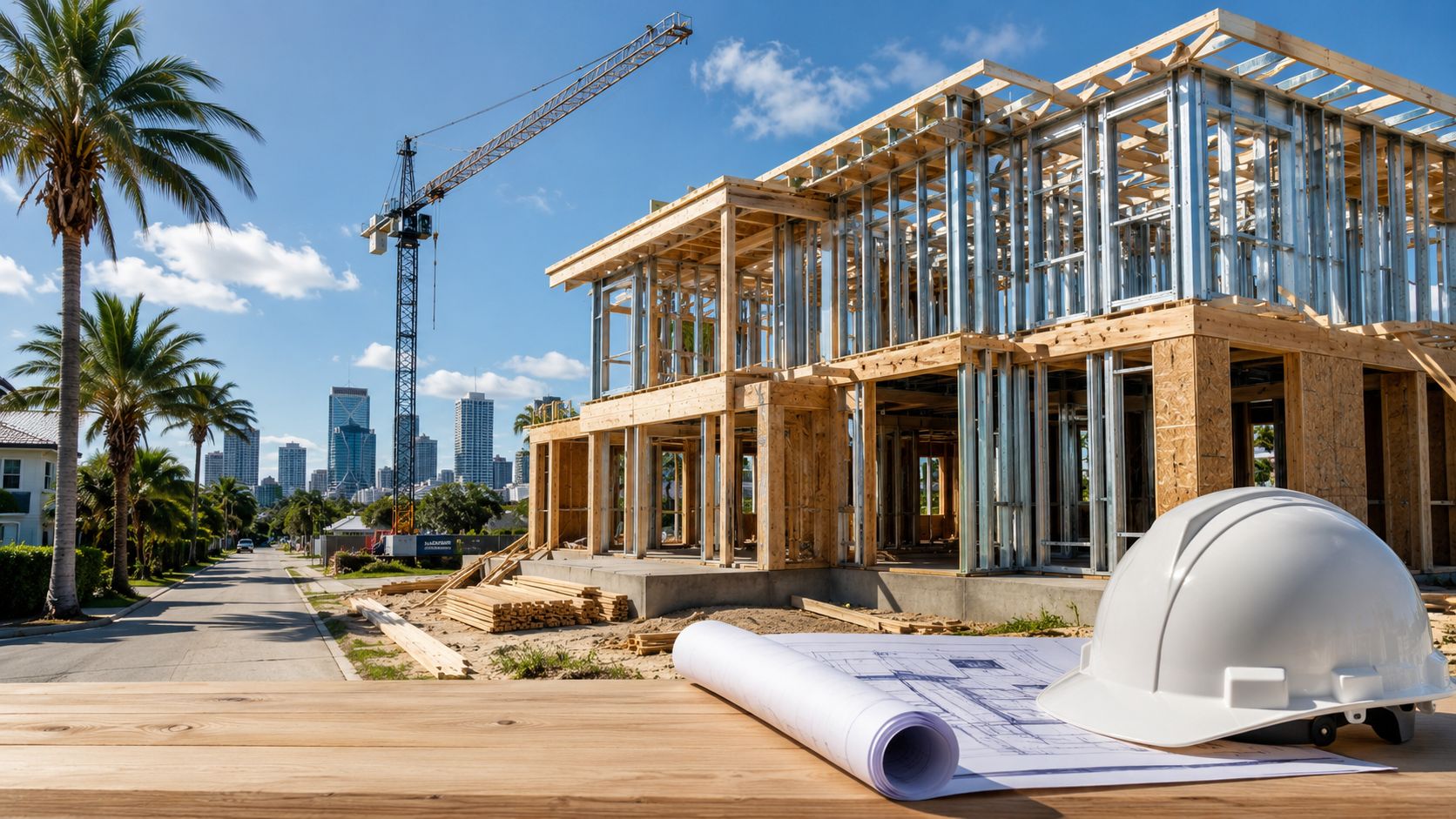
Construction Company Jacksonville Fl is an important decision for Jacksonville and Northeast Florida property owners, and the right licensed contractor makes all the difference. Finding a construction company in Jacksonville, FL, means you're probably already in the hard part of the process. You have a property, a plan, and a budget range in mind, but now you need to decide who can carry the work from idea to finished project without losing control of quality, timeline, or long-term value. In Northeast Florida, that decision matters more than most owners expect because weather, code requirements, trade coordination, and project management discipline all show up in the final result.
As a licensed Jacksonville general contractor (CGC 1540016), Ofir Engineering brings hands-on construction expertise to every project throughout Northeast Florida.A strong building partner doesn't just price the job. They help you make better decisions about scope, sequencing, materials, permits, and resilience so the project performs well after handover, not just on inspection day.
Table of Contents
- Choosing the Right Construction Partner in Jacksonville's Growing Market
- Our Construction Services for Homeowners and Investors
- Advanced Building Systems for Florida Resiliency and Value
- Our Project Process Explained From Concept to Keys
- Navigating Jacksonville Construction Costs and Building Codes
- Featured Projects and Client Success in Northeast Florida
- Begin Your Project with Jacksonville's Trusted Construction Partner
- Frequently Asked Questions
- How do I choose the right construction company in Jacksonville, FL
- Should I prioritize the lowest bid
- Is Light Gauge Steel better than wood framing in Jacksonville
- What matters most during pre-construction
- How should investors evaluate a contractor
- Why is code compliance such a big issue in Northeast Florida
Choosing the Right Construction Partner in Jacksonville's Growing Market
Jacksonville is active enough right now that almost every owner sees the same problem. There are many contractors in the market, but not all of them are equipped to manage a project with the level of planning that Northeast Florida requires.
The local construction labor base has expanded quickly. Construction employment in the Jacksonville MSA rose from about 45,800 workers in 2020 to roughly 52,700 in 2024, a 15% increase, according to FRED's Jacksonville construction employment data. Growth creates opportunity, but it also makes contractor selection harder because more firms are chasing work across remodels, additions, new builds, and light commercial jobs.
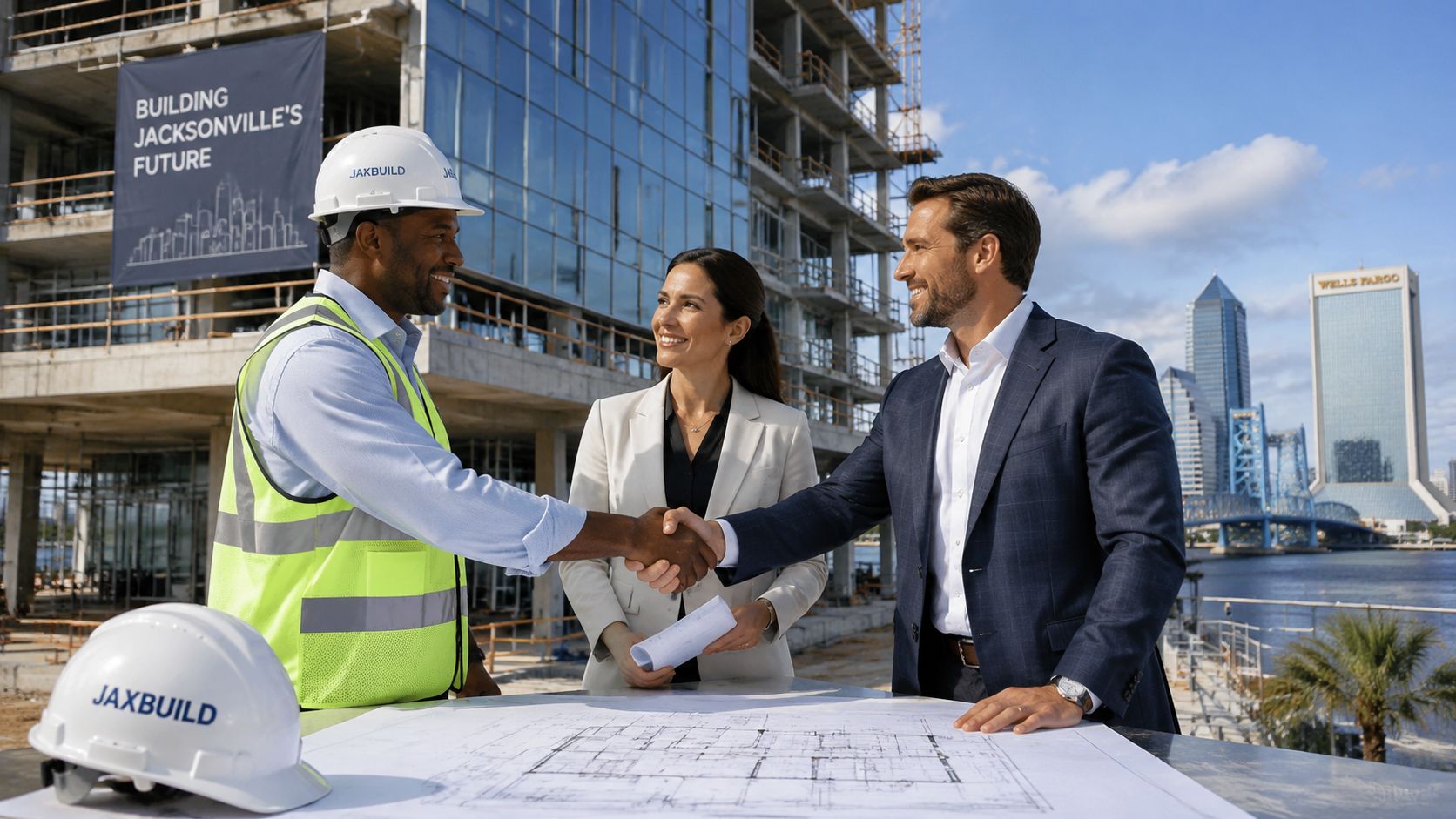
What separates a strong partner from a bidder
The right partner asks different questions early:
- Scope clarity: They want to know what must be built, what can wait, and what drives value for your property.
- Risk exposure: They look at wind, moisture, drainage, existing structural conditions, and sequencing risk before they talk about finishes.
- Decision control: They establish who approves changes, when allowances are reviewed, and how schedule impacts are communicated.
That approach is what keeps a project from turning into a chain of reactive decisions.
Practical rule: If a contractor talks mostly about square footage and finishes but not about coordination, inspections, and risk points, you're probably looking at a sales process, not a construction process.
What to look for before you sign
A good screening process should include license verification, scope review, schedule logic, and project management expectations. It should also include a direct conversation about who is supervising the job day to day.
If you want a deeper checklist before hiring, this guide on how to hire a general contractor is a useful place to start.
For most owners, the best choice isn't the cheapest number or the flashiest portfolio. It's the team that can connect engineering, budgeting, field supervision, and local code knowledge into one disciplined process.
Our Construction Services for Homeowners and Investors
Construction needs vary a lot in Jacksonville. A homeowner building a primary residence isn't making the same decisions as an investor repositioning a rental or preparing a resale. The service model should reflect that.
What homeowners usually need
Homeowners usually need a builder who can translate lifestyle goals into buildable scope without losing control of budget or quality. Common service categories include:
- New home construction: Site review, planning, structural coordination, scheduling, and field supervision matter as much as the design itself. New Construction Jacksonville covers licensed custom home building, residential construction management, project supervision, scheduling, and quality construction services.
- Whole-home remodeling: Sequencing makes or breaks the job. Demolition, framing corrections, rough-ins, inspections, drywall, cabinetry, finishes, and punch work have to move in the right order.
- Kitchen and bathroom renovations: These projects look finish-driven from the outside, but most problems start behind the walls with plumbing layout, electrical load, ventilation, waterproofing, and dimensional coordination.
- Additions and structural improvements: Matching old conditions to new work takes careful review. Foundation tie-ins, roof transitions, and moisture control details need real attention.
A homeowner should expect direct guidance on what adds livability and what adds only cost.
What investors and property managers usually need
Investors usually care about a different set of outcomes. They need speed, scope discipline, durable material choices, and renovation planning tied to resale or rental strategy.
That often includes:
- Fix-and-flip project management: Scope planning, trade sequencing, draw oversight, and finish standards based on target buyer expectations.
- Rental property improvements: Upgrades that hold up under tenant use, reduce maintenance calls, and avoid over-improving the asset.
- Pre-purchase construction review: Identifying hidden scope before acquisition or before finalizing a renovation budget.
- Contractor supervision and budget tracking: Keeping the work moving while controlling change orders and preventing scope creep.
For owners evaluating payment options early, this real estate agent's guide to remodel financing is helpful because it frames financing decisions around project type and borrowing context rather than treating every remodel the same.
The right scope is rarely the biggest scope. It's the one that supports the property's use case, holds up in the field, and doesn't create expensive surprises halfway through the job.
Whether the project is a custom build, a major remodel, or an investor renovation, the service should solve the owner's actual business or lifestyle objective. That's the difference between construction activity and construction strategy.
Advanced Building Systems for Florida Resiliency and Value
In Jacksonville, material selection isn't just about preference. It's a performance decision. The wrong structural approach can create avoidable problems with moisture exposure, storm durability, maintenance cycles, and insurance conversations after severe weather.
A gap in many local contractor pages is the lack of practical discussion around post-storm resilience. As noted by ARCODB's Jacksonville office page, property owners in Northeast Florida need clearer guidance on how systems such as Light Gauge Steel and properly engineered Wood Framing handle roof tie-downs, water intrusion details, and storm loads.
Why the structure decision matters in Jacksonville
Residential and light commercial projects in this area operate in a high-wind, high-moisture environment. That changes what good construction looks like.
A durable build in Northeast Florida depends on more than the frame itself. It depends on how the frame works with the roof system, sheathing, connectors, openings, flashing, drainage paths, and dry-in sequencing. If those details are weak, the building may pass through construction but underperform over time.
The key trade-off is simple. Some systems offer stronger resistance in specific conditions, while others may offer easier field adjustment or broader familiarity among trades. The right choice depends on the project type, site, budget tolerance, and long-term ownership plan.
Light Gauge Steel vs. Wood Frame for Jacksonville Homes
| Attribute | Light Gauge Steel (LGS) | Wood Frame |
|---|---|---|
| Moisture exposure | Doesn't absorb moisture the way organic material can, but still requires correct envelope detailing | Widely used and practical, but needs disciplined moisture protection and dry-in execution |
| Storm-oriented engineering | Can be a strong fit when paired with proper connections and engineered load paths | Can perform well when properly engineered with correct tie-downs and bracing details |
| Termite considerations | Avoids the wood-related exposure owners often worry about | Requires standard protection strategies and ongoing awareness |
| Field familiarity | May require crews comfortable with system-specific coordination | Commonly understood by many residential trades |
| Design flexibility | Strong option for projects prioritizing resilience and precision | Strong option for cost-conscious or conventional residential builds |
| Long-term planning | Often chosen for durability-focused ownership strategies | Often chosen when budget, familiarity, and availability drive the decision |
Build for the weather you have, not the weather you hope for.
The common mistake is treating LGS and wood as marketing categories. They aren't. They're project delivery decisions. If the design, fasteners, connectors, and water management details aren't coordinated correctly, neither system will perform the way the owner expects.
For owners specifically evaluating storm-focused design choices, this guide to hurricane-resistant home construction in Florida adds useful context around structural resilience.
A practical contractor should be able to explain not only which system they recommend, but why that recommendation fits your property, your hold period, and your risk profile. That's where engineering judgment creates real value.
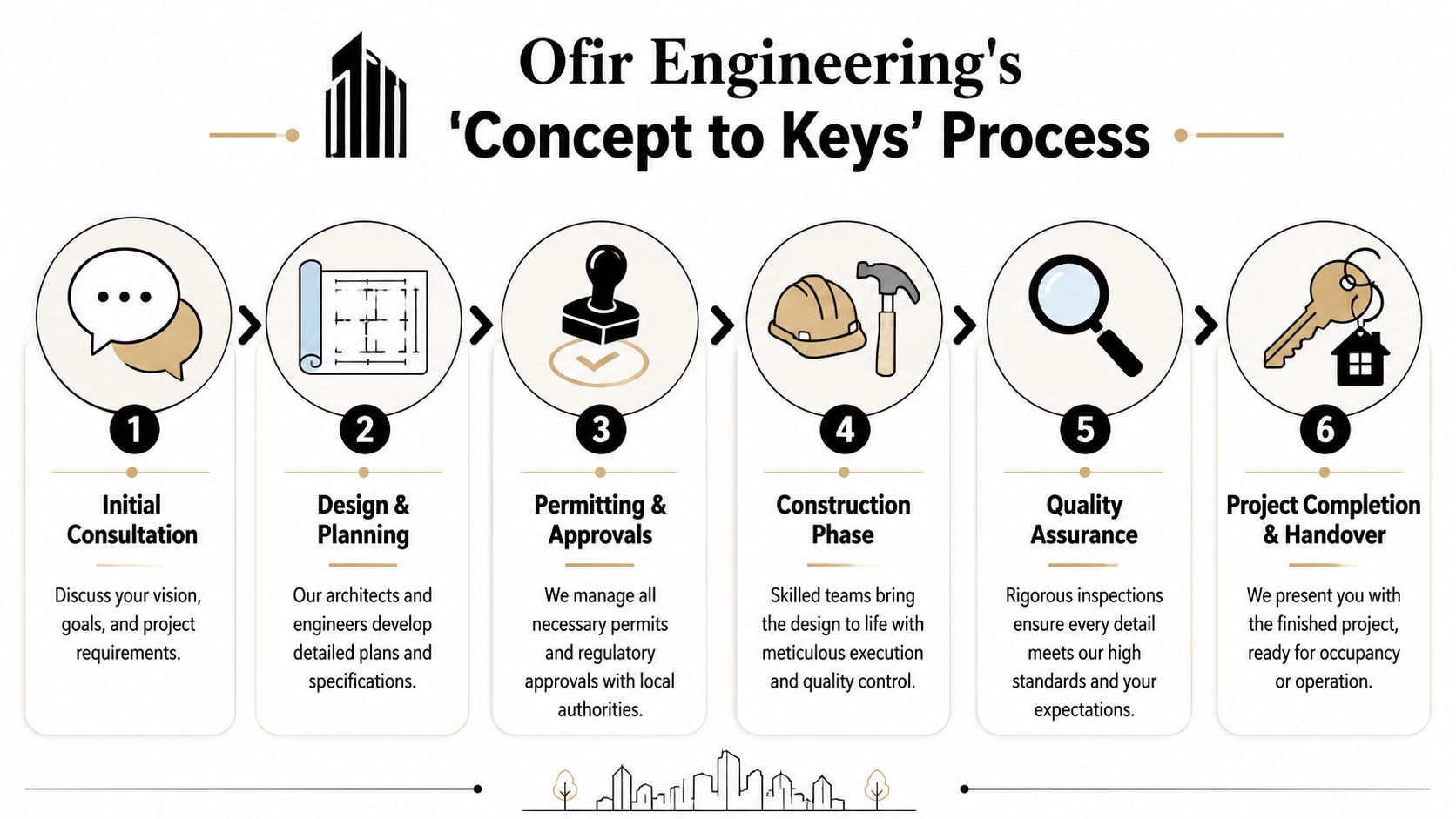
Our Project Process Explained From Concept to Keys
Most project problems don't start in the field. They start earlier, when scope is vague, responsibilities are blurry, and decisions are made too late. A good construction process removes those failure points before crews ever arrive on site.
What happens before construction starts
The first phase is consultation and planning. That means defining the actual objective, not just the wish list. A homeowner may want better layout flow, more light, and a stronger kitchen. An investor may want a renovation scope that supports a target exit without overbuilding the property.
After that, design and engineering decisions need to become executable documents. That includes structural intent, room dimensions, rough-in requirements, finish direction, and coordination between disciplines. If those pieces are incomplete, the field team ends up solving design problems during construction, and that usually costs more.
Pre-construction should also lock down the items that owners most often underestimate:
- Permit path: What needs approval and what needs lead time.
- Procurement timing: Long-lead materials can affect schedule early.
- Allowance discipline: Owners need clear rules for selections and substitutions.
- Site logistics: Access, protection, debris handling, and staging affect daily efficiency.
Field note: When pre-construction is rushed, the project pays for it later through rework, schedule drift, and approval delays.
What happens during active construction
Once construction begins, management matters more than promises. The daily questions are straightforward. Are trades showing up in the right order? Are inspections being tracked? Are framing, mechanical, plumbing, and electrical scopes coordinated before walls close?
A disciplined build phase usually includes regular progress checks, issue logging, quality reviews, and owner communication tied to actual milestones. It should also include active budget management. Small scope changes become expensive when they interrupt multiple downstream trades.
The strongest project managers don't just keep crews moving. They protect sequence. That's what keeps drywall from going in before rough corrections are complete, cabinets from arriving before surfaces are ready, or exterior work from being exposed longer than necessary.
What handover should actually include
Final delivery isn't just keys on a counter. It should include a serious walkthrough, punch resolution, closeout items, and a clear understanding of what was installed.
A proper handover usually covers:
- Finish review: Confirming visible items meet the agreed standard.
- System orientation: Explaining major components the owner will operate or maintain.
- Documentation transfer: Providing the records the owner needs for future reference.
- Punch completion plan: Setting expectations for final remaining corrections.
When the process is tight from start to finish, the owner feels it. Decisions come earlier, communication gets cleaner, and fewer problems make it to the end of the job.
Navigating Jacksonville Construction Costs and Building Codes
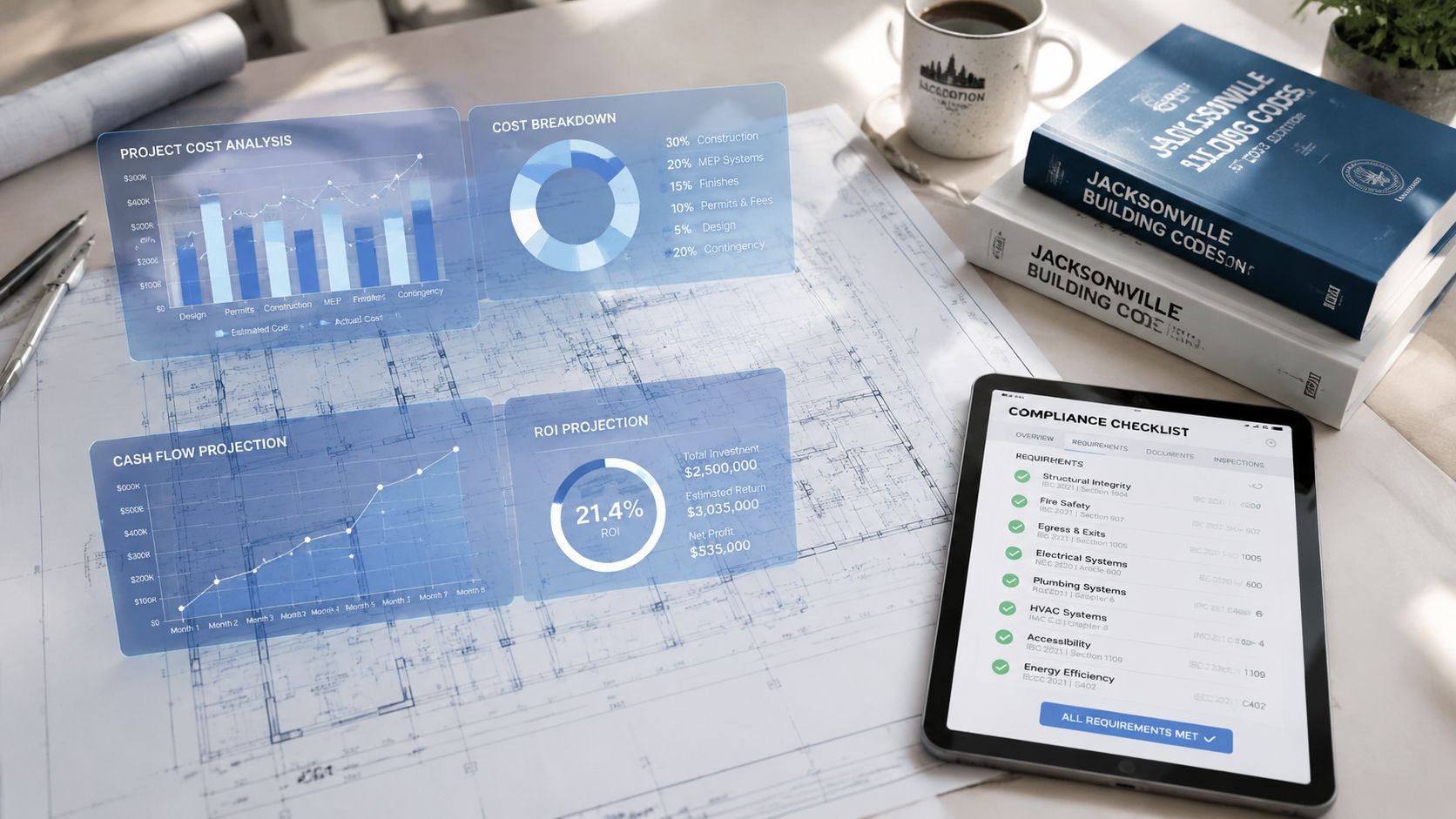
Construction budgets in Jacksonville don't fail only because labor or material pricing changes. They often fail because the initial scope wasn't defined tightly enough, or because the project team treated code and climate requirements like box-checking instead of core design inputs.
Cost control starts with scope control
The cleanest way to protect budget is to get specific early. Vague drawings, open-ended finish decisions, and unclear owner allowances are where cost friction starts.
Budget discipline usually comes from a few repeatable habits:
- Define must-haves early: Structural work, layout changes, and envelope improvements should be decided before decorative upgrades.
- Choose materials by use case: Durable, serviceable materials often outperform trend-driven selections in both ownership and maintenance terms.
- Protect sequence: Rework is expensive because one late change can force multiple trades back into the same area.
- Review alternates before construction: If budget pressure appears, value decisions should happen on paper, not mid-installation.
Owners who want broader planning ideas can also review strategies used to reduce construction costs. The most useful lesson isn't cutting corners. It's reducing waste, redesign, and coordination mistakes.
Code compliance protects timeline and asset value
In Northeast Florida, the primary technical risk is climate loading, which means structures must be engineered for hurricane-force winds and high moisture. According to Danis' Jacksonville office overview, disciplined project management and code-compliant engineering are essential to avoid rework and protect timelines.
That has practical implications on nearly every project decision:
- Structural connections matter: Roof tie-downs and lateral load paths can't be treated as minor details.
- Water management matters: Flashing, drainage, and dry-in sequencing affect durability long after the job is complete.
- Inspection readiness matters: A missed code issue in framing or rough-ins can stall the whole schedule.
Owners trying to understand permitting expectations before committing to scope should read through the building permit process, because permits influence both schedule planning and document quality from the start.
This short video gives additional context on project planning and construction oversight in Florida:
A smart budget isn't the lowest initial number. It's the one that accounts for code, sequencing, durability, and the actual conditions the building will face in Jacksonville.
Featured Projects and Client Success in Northeast Florida
Owners usually trust examples more than promises. That's fair. What matters is how a team handles the kind of decisions that show up on real projects, especially when scope, schedule, and durability are all in play.
Investor renovation planning
One common scenario in Northeast Florida is the investor who buys a dated property expecting a cosmetic update, then discovers layout inefficiencies, aging rough systems, and exterior exposure issues. The successful projects aren't the ones that chase every upgrade. They're the ones that tighten the scope around resale or rental priorities, preserve sequence, and avoid low-return changes.
A good investor renovation plan removes surprises before demolition starts and avoids upgrades the market won't pay for.
That usually means stronger pre-construction walkthroughs, disciplined finish packages, and clear rules for change approvals.
Resilient home building decisions
A different type of project is the homeowner building or remodeling for long-term occupancy. In those jobs, the right decision often isn't the flashiest finish. It's the one that improves durability in a humid, storm-exposed environment.
Examples of successful outcomes often come from choices like better envelope detailing, more thoughtful drainage planning, and structural decisions that fit the owner's long-term hold strategy.
"We wanted a finished home that felt solid, practical, and built for Florida conditions, not just something that looked good for photos."
The strongest client experiences usually have the same pattern. Expectations are clear early. Scope is documented well. Problems are addressed directly. The finished project feels organized because the process was organized.
That matters whether the job is a custom residence, an addition, a major remodel, or an investor-focused property improvement.
Begin Your Project with Jacksonville's Trusted Construction Partner
Choosing a construction partner in Jacksonville isn't only about who can start soonest. It's about who can manage risk, make sound building decisions, and protect your investment from planning through handover.
The right team should understand local code expectations, climate-driven design choices, trade coordination, and the financial reality behind each scope decision. For homeowners, that means a home that performs well and holds up. For investors, it means a project strategy aligned with ROI, timeline control, and durable execution.
If you need a practical path for new construction, remodeling, renovation planning, or project management in Jacksonville and Northeast Florida, Ofir Engineering is one option to consider. The company works on investor-focused renovations, home improvements, new construction, and construction management with a concept-to-keys approach grounded in planning, supervision, and code-aware execution.
Frequently Asked Questions
How do I choose the right construction company in Jacksonville, FL
Start with process, not price. Ask how the company handles scope definition, permitting, supervision, change management, and quality control. A reliable contractor should be able to explain who manages the project, how communication works, and how they address structural or moisture-related risk in Northeast Florida.
Should I prioritize the lowest bid
Usually, no. A low bid can hide missing scope, weak allowances, thin supervision, or unrealistic sequencing. Owners often get better outcomes by comparing proposals line by line and identifying what each contractor included for planning, permitting, engineering coordination, and finish expectations.
Is Light Gauge Steel better than wood framing in Jacksonville
It depends on the project. Light Gauge Steel can be attractive for owners focused on durability and certain resilience considerations. Properly engineered wood framing can also perform well in Jacksonville. The important point is that the structure, connectors, load path, water management details, and execution quality all need to work together.
What matters most during pre-construction
Clear scope. That's what drives budget, schedule, permitting, and procurement. Before construction starts, the owner should understand layout decisions, structural needs, finish selections, approval responsibilities, and what can trigger changes later.
How should investors evaluate a contractor
Investors should focus on schedule control, scope discipline, reporting, and decision-making speed. The contractor should understand which upgrades support rental performance or resale positioning and which ones only add cost. Strong contractor oversight matters most when multiple trades, inspections, and budget constraints are moving at the same time.
Why is code compliance such a big issue in Northeast Florida
Because the local environment is demanding. Wind exposure, moisture, drainage, and envelope performance all affect how a project holds up over time. Code-compliant engineering isn't just about passing inspection. It supports durability, helps avoid rework, and protects the property's long-term value.
If you're planning a remodel, new build, or investor-focused renovation in Jacksonville, contact Ofir Engineering to discuss the project scope, construction strategy, and management approach before work begins. A clear plan early usually saves time, protects budget, and leads to a better finished result.
Choosing Ofir Engineering for Construction Company Jacksonville Fl
When it comes to construction company jacksonville fl, Ofir Engineering brings the experience of a fully licensed Florida general contractor (License #CGC 1540016) serving Jacksonville, Duval County, and Northeast Florida. From planning and permitting through to final inspection, our team manages every detail so your project is built right.
