
Anyone searching for home additions near me wind mitigation is really asking two questions at once: what will the building department make me do, and what will the insurance company give me back for doing it. In Jacksonville the answer is unusually clear, because new conditioned square footage is treated as new construction — the addition must meet current Florida Building Code wind loads even when the house it attaches to was grandfathered decades ago. That requirement adds cost, and it also creates verifiable mitigation features that earn premium credits for the life of the home. Ofir Engineering is a licensed Florida general contractor (License #CGC 1540016) with 15+ years serving Jacksonville, Ponte Vedra, St. Johns, and Northeast Florida.
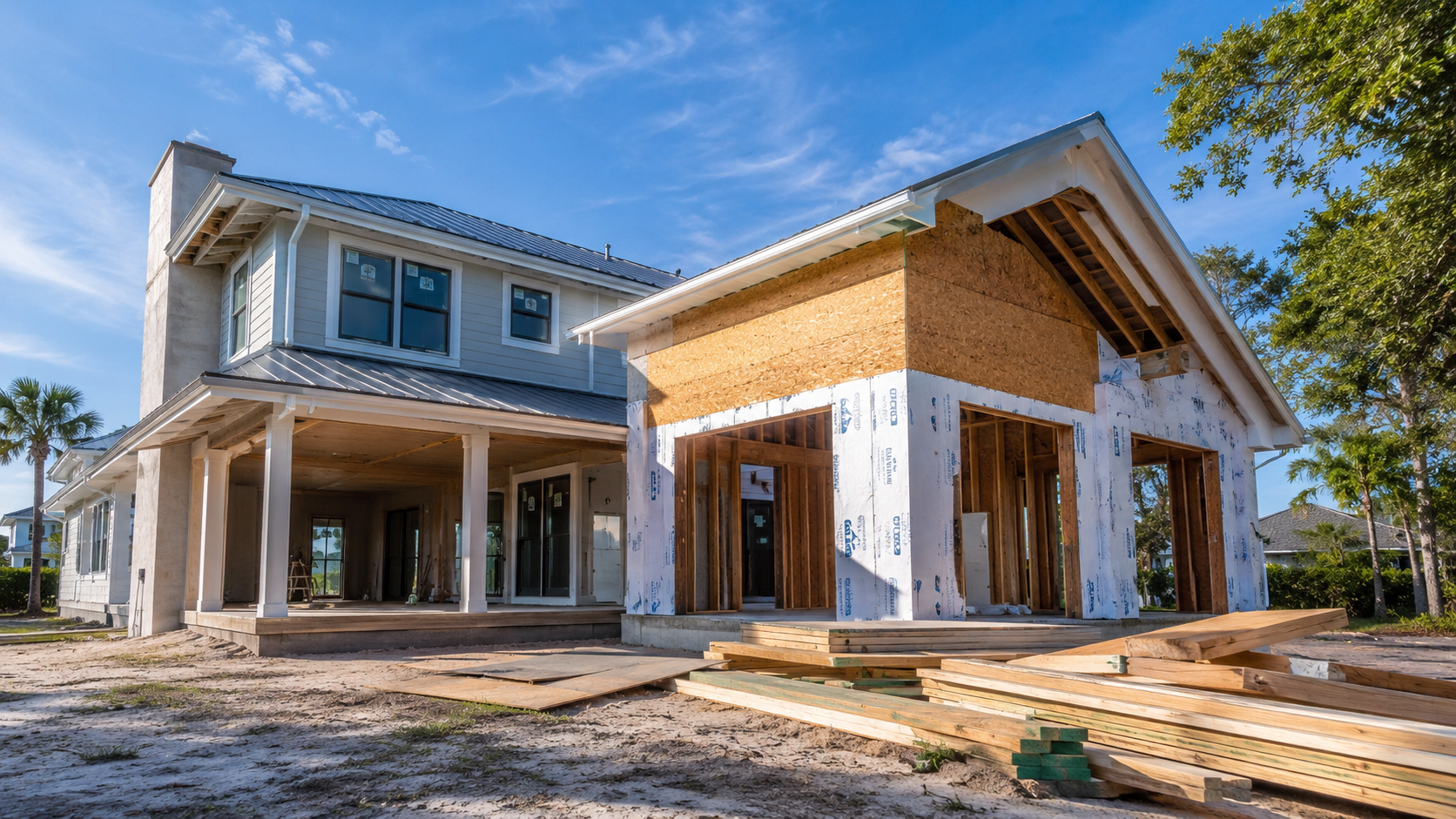
Why Home Additions Near Me Wind Mitigation Rules Are Stricter Than You Expect
The governing principle is simple: an existing house may be legally non-conforming, but anything you build new is not. Your 1978 ranch does not have to be retrofitted to today’s standard, but the family room you attach to it does. That means current wind-speed design criteria, current opening-protection requirements, and a continuous load path engineered from roof to foundation for the new structure.
Duval County sits in a wind-borne debris region across much of its area, with design wind speeds that rise as you move toward the coast — St. Johns, Ponte Vedra, and the beaches communities carry higher criteria than western Duval. Your addition’s structural design is driven by the specific design wind speed at your address, not by a county-wide number, and it is one of the first things a competent contractor confirms.
The Code Requirements That Actually Drive the Budget
Opening protection. Every window and exterior door in the new work needs impact-rated glazing or an approved shutter system. Impact glass costs more up front and needs no action during a storm; shutters cost less and require someone present to deploy them. Both satisfy code; only one of them helps when you are out of town in September.
Roof-to-wall connections. Hurricane straps or clips tying the roof structure to the walls are required in new work, and they are also the single highest-value item on the insurance side. The connection type is inspected and documented, which is what makes it creditable later.
Continuous load path. Wind uplift has to travel from the roof deck through the walls into the foundation without a weak link. On an addition this includes the tie-in to the existing structure, which is the detail most often done poorly — the new work can be perfect and still fail if it is fastened to an existing wall that cannot carry the load.
Roof deck attachment and secondary water barrier. Nailing pattern and deck fastening are specified and inspected, and a sealed roof deck adds resistance to water intrusion once the covering is compromised.
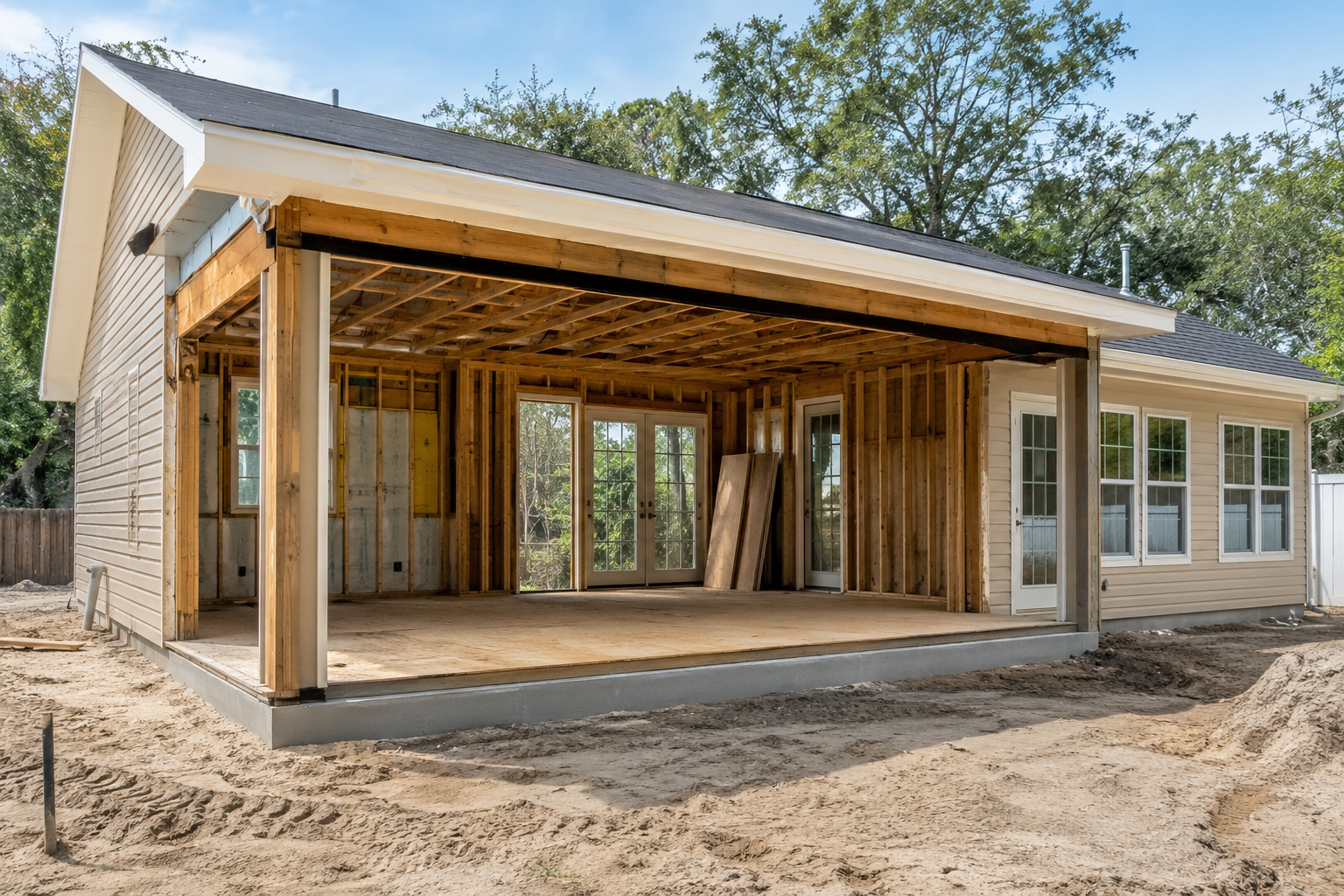
Flood Zone and the Substantial Improvement Rule
Wind is only half the picture. If your property sits in a special flood hazard area, the addition must be elevated to or above the base flood elevation, and the fifty-percent rule enters the conversation: when the cost of improvement equals or exceeds half the market value of the existing structure, the entire building — not just the new part — can be required to be brought into compliance, including elevation.
That threshold is the single largest cost cliff in Jacksonville addition work, and it is knowable in advance. Confirming your flood zone, base flood elevation, and the assessed structure value before design lets you scope the project on the right side of the line deliberately, rather than discovering it during plan review. FEMA publishes the substantial improvement framework and current flood maps, and both are worth checking at FEMA before you commit to a scope.
What the Insurance Credits Are Worth
Florida requires insurers to provide discounts for verified wind-mitigation features, which is why the money spent on code compliance is not purely a cost. After construction, a licensed inspector completes a uniform mitigation verification form documenting roof covering compliance, roof deck attachment, roof-to-wall connection, roof geometry, secondary water resistance, and opening protection.
The credits are applied to the wind portion of your premium and they compound — roof-to-wall connections and full opening protection are typically the two largest line items. Because a partial retrofit rarely qualifies, an addition that brings a meaningful share of the home’s openings up to standard can move the whole policy into a better position. The credits also transfer with the house, which is why mitigation features show up in resale conversations as well as renewal ones.
Two practical notes. First, the inspection has to happen after completion and the form has to reach your carrier — the discount is not automatic. Second, if the addition brings the home’s total protected openings to a qualifying level, ask your agent to re-rate the entire policy rather than just noting the new square footage.
Planning the Addition So the Code Work Pays Off
Three decisions determine whether compliance is an expense or an investment. Confirm the design wind speed and flood zone for your exact address before drawings are finalised. Choose opening protection deliberately, weighing impact glass against shutters on total cost of ownership rather than bid price. And schedule the mitigation inspection as a closeout item in the contract, not as something you remember to arrange months later.
A contractor who works Duval, St. Johns, Clay, and Nassau routinely submits complete, code-ready plans the first time, which shortens review and avoids correction cycles. You can review the scope we handle on our home additions page, see how the same code logic applies to a whole-house scope under home remodeling, or read our companion guide on how addition financing draws work in Florida. To have the wind and flood requirements checked against your specific lot, contact Ofir Engineering.
Frequently Asked Questions
Does a home addition have to meet current wind code if the house does not?
Yes. New conditioned square footage is treated as new construction and must meet the current Florida Building Code wind requirements for your address, including opening protection and a continuous load path — even though the existing house remains legally non-conforming.
Do I need impact windows on a Jacksonville addition?
You need approved opening protection on the new work, which means either impact-rated glazing or an approved shutter system. Impact glass costs more initially and requires no action during a storm; shutters are cheaper but must be deployed. Both satisfy code.
How much can wind mitigation features reduce my insurance premium?
Florida requires carriers to discount the wind portion of the premium for verified features, and roof-to-wall connections plus full opening protection are typically the largest credits. The savings are only applied after a licensed inspector completes a uniform mitigation verification form and it reaches your insurer.
What is the fifty-percent rule and how does it affect an addition?
In a special flood hazard area, if the cost of improvement reaches half the market value of the existing structure, the whole building can be required to meet current flood requirements, including elevation. Confirm your flood zone, base flood elevation, and structure value before design so the scope is planned deliberately.
Keep Building With Ofir Engineering
Related discussions & follow us: Facebook · Reddit
Latest & related guides: Explore more Home Additions guides →
