
Build to rent builder wind mitigation decisions carry a financial weight in Jacksonville that they simply do not carry on a single house. A BTR community repeats the same roof, the same window package and the same connection details across dozens or hundreds of units, which means every mitigation choice is multiplied — and so is every mitigation credit. Insurance is one of the largest operating expenses in Florida rental housing, and because a stabilized community is valued on net operating income, a permanently lower premium capitalizes directly into asset value. Ofir Engineering is a licensed Florida general contractor (License #CGC 1540016) with 15+ years serving Jacksonville, Ponte Vedra, St. Johns, and Northeast Florida.
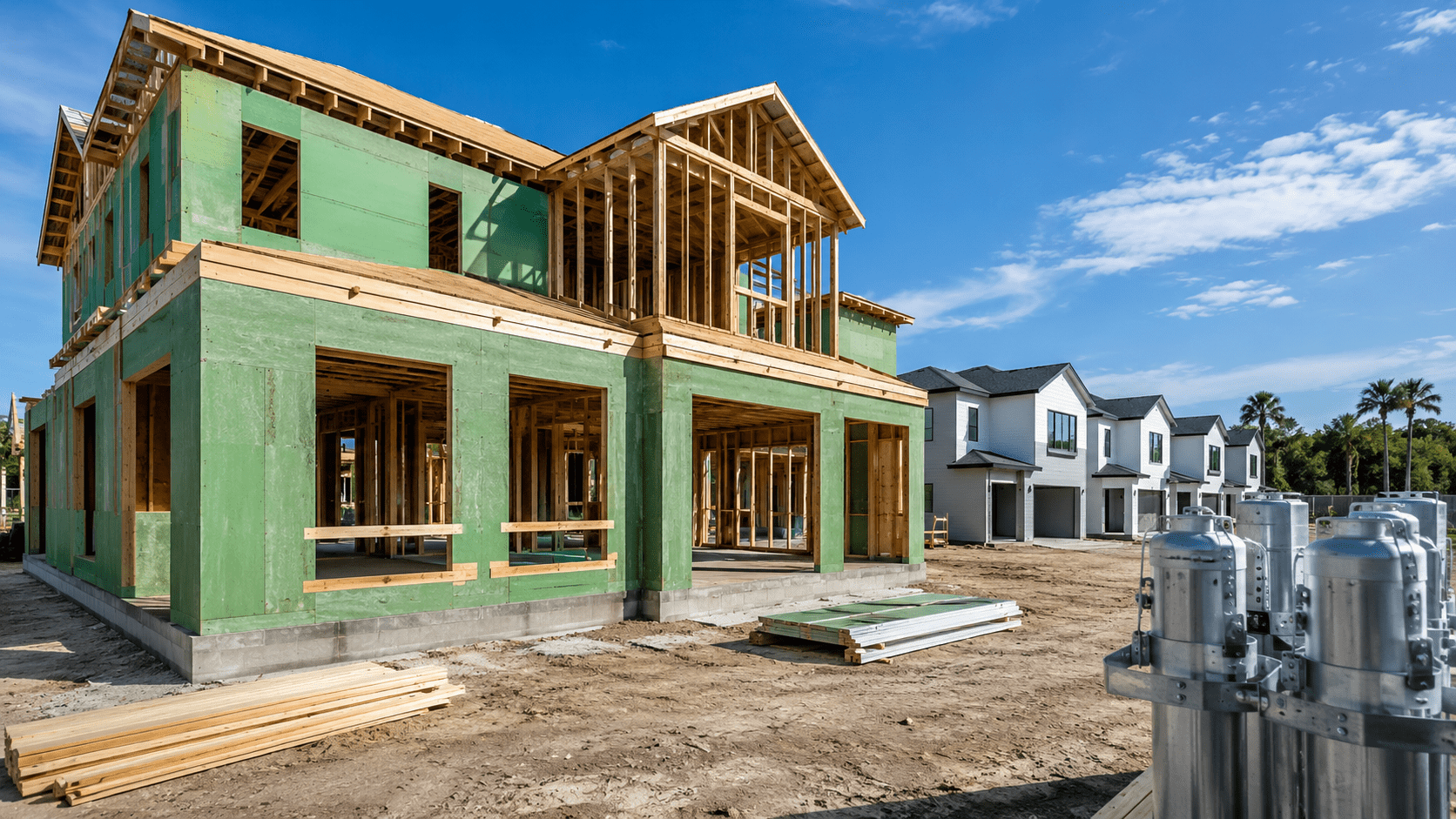
Why Build to Rent Builder Wind Mitigation Is an Underwriting Decision, Not Just a Code One
On an owner-occupied house, wind mitigation is a compliance requirement with a pleasant insurance side effect. On a BTR portfolio it is a core underwriting input, because the insurance line runs through the entire investment model.
The arithmetic is straightforward and unforgiving. Property insurance is an operating expense. Operating expenses reduce net operating income. Stabilized value equals net operating income divided by the market capitalization rate. So a dollar of annual premium removed is not worth a dollar — it is worth a multiple of itself at sale, permanently, for as long as the mitigation features remain in place and documented. Multiply that across every unit in the community and the mitigation package becomes one of the highest-return line items in the construction budget.
The reverse is equally true. A community that misses a mitigation category on every unit carries that penalty on every unit, every year, and a buyer at exit will underwrite it into the price. Our overview of build to rent construction for Jacksonville investors covers how these decisions fit the broader investment model.
What Florida Code Requires of New BTR Construction
New construction in Duval and the surrounding counties is designed to current wind loads from the outset, so the baseline is already substantially better than the existing housing stock. Structures are engineered for the design wind speed applicable to the site, with a continuous load path carrying uplift from the roof through the walls to the foundation.
Opening protection is required, satisfied either by impact-rated glazing and doors or by tested shutter systems, with Florida product approval numbers documented on the permit. Roof coverings must be installed to their approval conditions, and roof deck attachment must meet current fastening requirements. Garage doors, where units have them, must be rated for the design pressures.
Because the baseline is high, the meaningful question for a BTR builder is not whether the community complies. It is whether the community reaches the best reported category in each mitigation classification rather than merely a passing one — and whether that is documented in a form an insurer will accept. The code text is published by the Florida Building Commission.
The Categories That Actually Move a Portfolio Premium
Florida’s uniform mitigation verification inspection reports a defined set of features, and a few of them do most of the work.
Roof-to-wall connection is typically the single largest credit. Engineered connections designed to the calculated uplift load, installed consistently, reach the strongest category. On a repeated BTR product this is a design-once, build-many advantage — the detail is engineered a single time and repeated correctly across the community.
Roof deck attachment rewards a tighter fastening schedule than the minimum. The marginal cost per unit is small; the credit is not.
Secondary water resistance — a sealed underlayment layer that keeps water out if the covering is lost — is inexpensive at construction and is frequently omitted. It is one of the clearest missed opportunities in Florida multifamily.
Opening protection is scored close to all-or-nothing. Partial protection earns dramatically less than a complete protected envelope, which makes a fully impact-rated package materially better value than protecting most openings. This is where garage doors matter: an unrated garage door caps the credit for the entire unit regardless of how good the windows are, and it is the most common single failure point.
Roof geometry is set at design. Hip geometry rates better than gable, and unlike the other categories it cannot be changed later — it is decided once, on the drawing board, for the life of the asset.
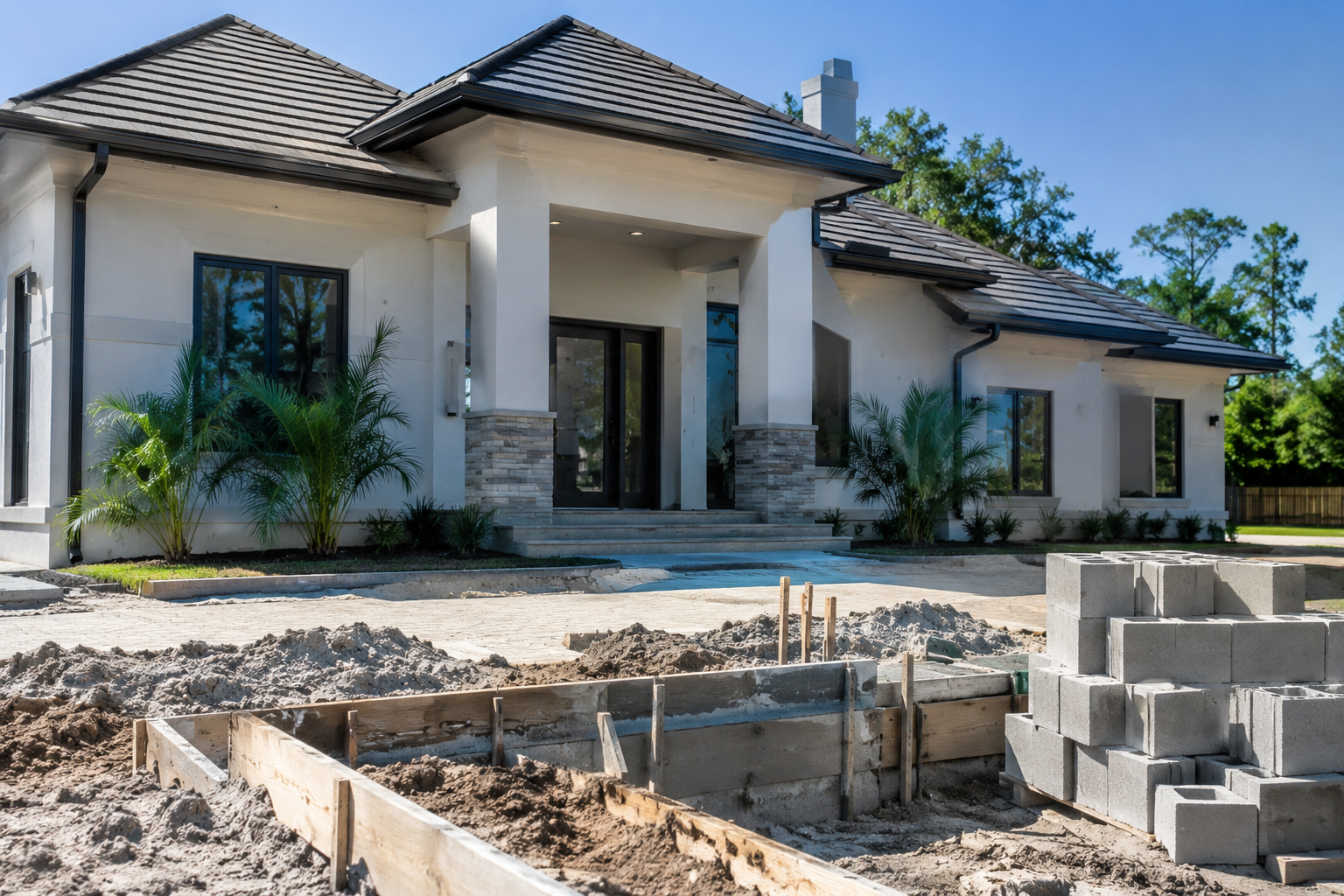
Flood Zone and Elevation Across a Community
Wind is not the only climate exposure. Much of Northeast Florida sits in or near mapped flood zones, and flood is a separate policy priced overwhelmingly on elevation relative to base flood elevation.
On a BTR community this becomes a site planning decision rather than a per-building one. Where units sit on the site, how the pads are elevated, and how stormwater is managed determine flood premium across the whole community for its entire life. Building with freeboard above the minimum costs fill and grading once and reduces a recurring expense permanently — which, on an income-valued asset, capitalizes into value the same way a premium reduction does. Keep an elevation certificate for every structure. Our guide to flood zone construction in Northeast Florida covers the elevation requirements.
Documentation Is What Converts Construction Into Savings
This is where BTR projects most often leave money on the table, and it is entirely avoidable. Underwriters credit what is documented. A community can be built to an excellent standard and still pay a mediocre premium because nobody produced the paperwork.
The closeout package should include, per structure: the uniform mitigation verification inspection ordered as soon as the certificate of occupancy issues, the elevation certificate where applicable, Florida product approval numbers for every window, door, garage door and roof covering, the engineered connection details and roof deck fastening schedule, and the full permit and final inspection record.
Because BTR units are repetitive, this package is far cheaper to assemble than it looks — the engineering and product approvals are common across the community, and only the per-structure inspections and certificates vary. File the mitigation inspections with the carrier immediately rather than waiting for renewal, and have the insurance broker review the mitigation package during design rather than after completion, when nothing can be changed. Rate filings and consumer resources are published by the Florida Office of Insurance Regulation.
Getting the Decisions Made in the Right Order
Set roof geometry and site elevation at master planning, because neither can be revisited. Engineer the connection details and fastening schedules once, to the best category rather than the minimum, and repeat them. Specify a complete opening protection package including garage doors rather than a partial one. Include secondary water resistance in the base roof specification. Then build the documentation into closeout as a deliverable, not an afterthought.
For related reading, see impact windows and hurricane hardening and hurricane resistant home construction in Florida. To scope a build to rent community, see our commercial construction service or contact us.
Frequently Asked Questions
Why does wind mitigation matter more on a BTR community than a single house?
Because the decision repeats across every unit and the savings are capitalized. Insurance is an operating expense, operating expenses reduce net operating income, and stabilized value equals income divided by the cap rate — so a dollar of premium removed is worth a multiple of itself at sale, on every unit.
Which mitigation category gives the largest return on a rental portfolio?
Roof-to-wall connection is typically the largest single credit, and it suits BTR especially well because the detail is engineered once and repeated across the community. Full opening protection is close behind, since it is scored close to all-or-nothing.
Does new construction already satisfy wind mitigation requirements?
It satisfies code, which is a high baseline. The financial question is different: whether each unit reaches the best reported category in every classification rather than a merely passing one, and whether that is documented on an inspection form an insurer will accept.
What is the most commonly missed item?
Two things. Secondary water resistance, which is inexpensive during construction and frequently omitted, and unrated garage doors, which cap the opening protection credit for an entire unit no matter how good the windows are. After that, the most common miss is simply failing to file the mitigation inspection with the carrier.
Keep Building With Ofir Engineering
Related discussions & follow us: Facebook · Reddit
Latest & related guides: Explore more Commercial Construction guides →
