
The question of whether do steel frame homes rust in Florida’s humidity comes up in almost every conversation we have about light-gauge steel, and the galvanized truth is reassuring: properly galvanized, correctly detailed steel framing is engineered to resist corrosion for the life of the home, even in coastal salt air. The fear of a rusting frame is rooted in raw, untreated steel, not the zinc-coated cold-formed studs used in modern homes. Ofir Engineering is a licensed Florida general contractor (License #CGC 1540016) serving Jacksonville, Ponte Vedra, St. Johns, and Northeast Florida.
What Galvanized Steel Actually Is
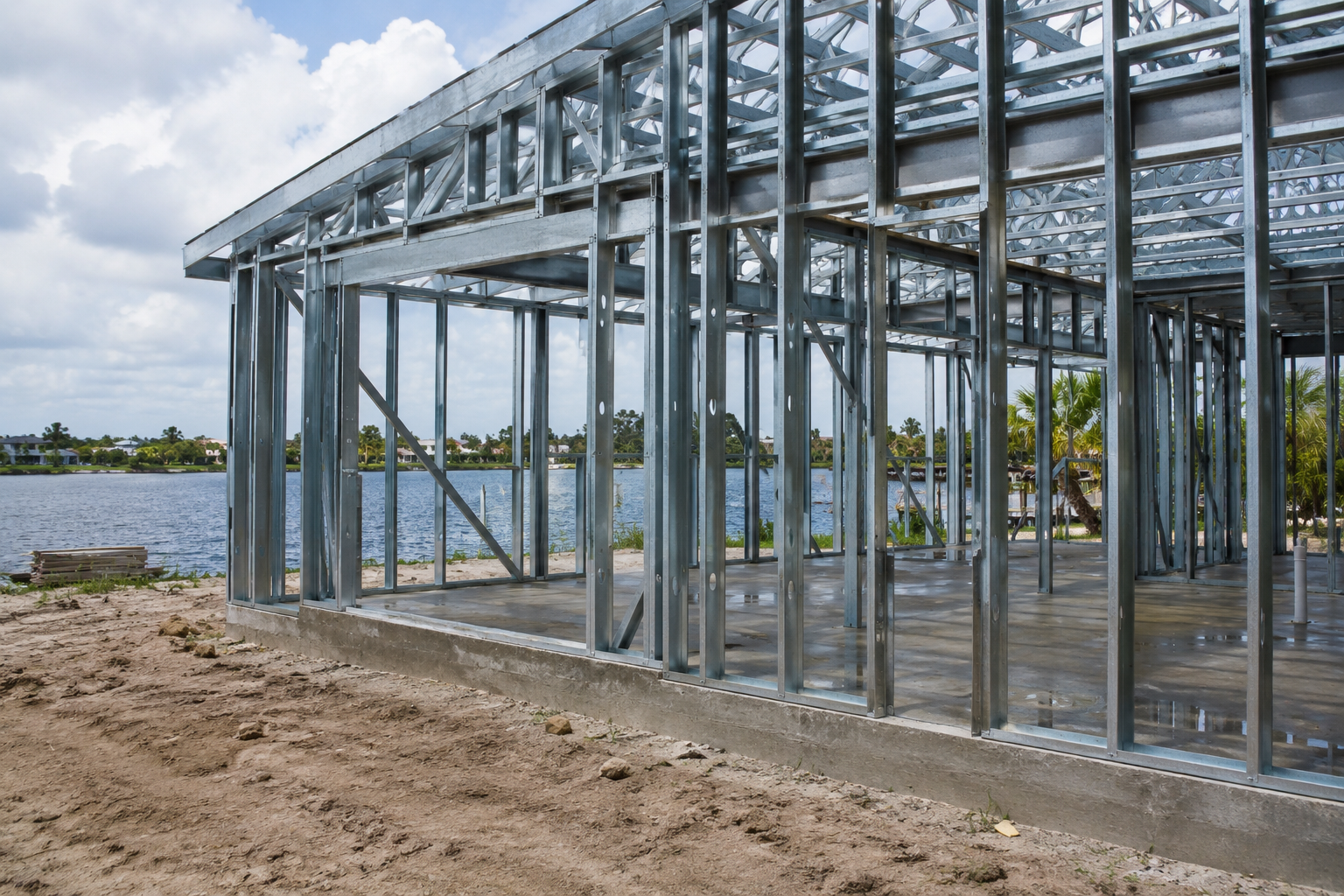
Light-gauge metal framing uses cold-formed steel studs that are galvanized, meaning they are coated in zinc. That zinc layer is not paint that chips off; it is a metallurgical coating engineered to protect the steel underneath. Zinc corrodes far more slowly than bare steel and also provides sacrificial protection, meaning it shields small scratches and cut edges rather than letting them become rust points. This is the same family of corrosion protection used on highway guardrails and structural steel that stands outdoors for decades.
So when people ask whether steel framing rusts, the accurate framing is that bare steel rusts, but the galvanized steel used in homes is specifically designed not to. The myth comes from imagining a plain steel beam left in the rain, which is not what goes into your walls. Our overview of custom steel-frame homes in Florida explains the materials in more detail.
Do Steel Frame Homes Rust in Coastal Salt Air?
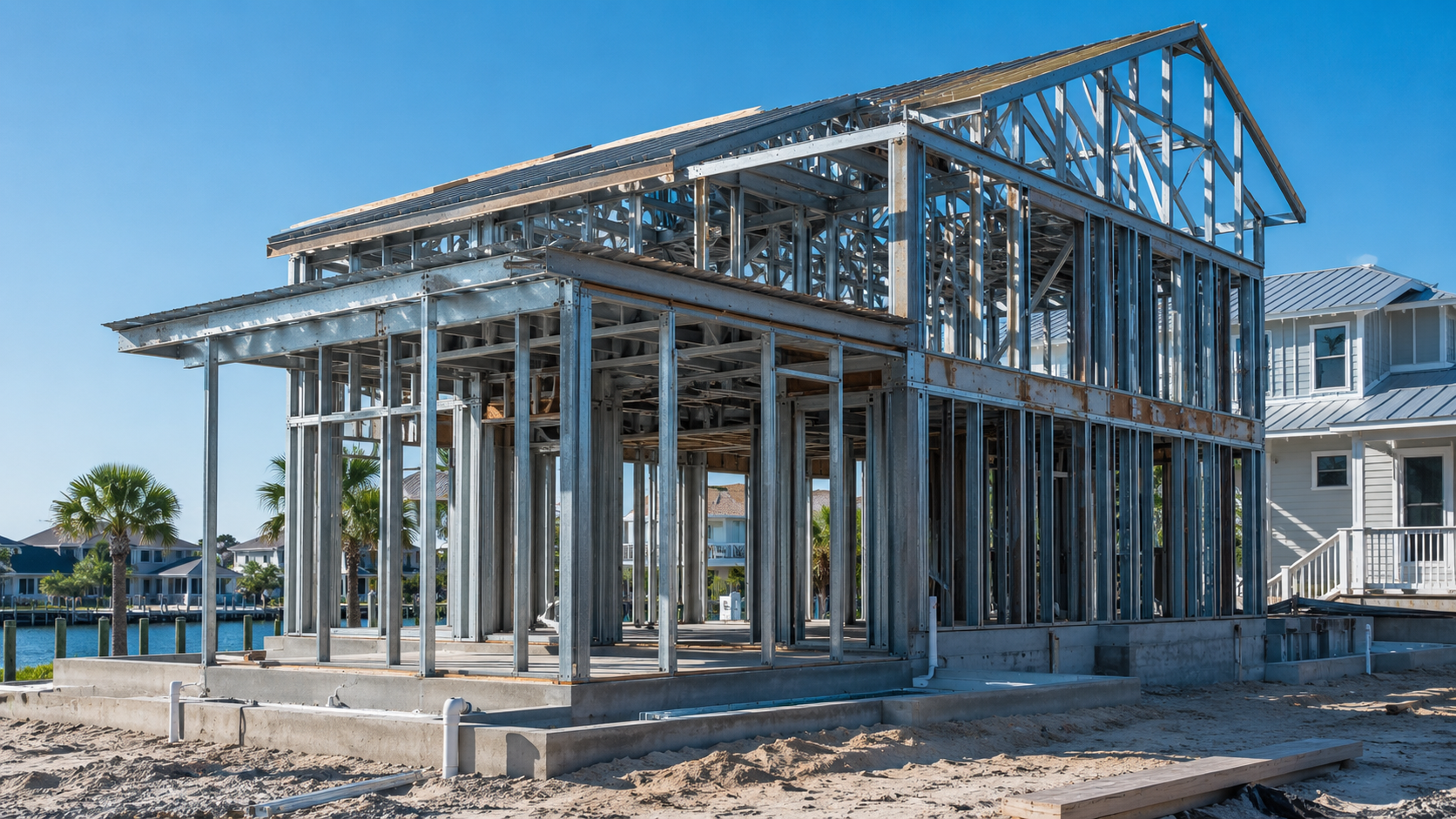
Northeast Florida adds two pressures: high humidity year-round and salt air near the coast in places like Ponte Vedra and the beaches. Salt accelerates corrosion of unprotected metal, which is a fair concern to raise. The answer is that the right galvanized coating thickness plus correct detailing handles coastal exposure, which is exactly why detailing matters so much.
The Studs Live Inside a Dry Wall Assembly
It helps to remember where the framing actually sits. Steel studs are not exposed to the weather; they live inside a wall assembly behind cladding, sheathing, a water-resistive barrier, and insulation. A correctly built wall keeps bulk water and salt spray away from the framing entirely. The galvanizing is the second line of defense, not the only one.
Detailing Is Everything
Corrosion problems in any steel structure come from water that is allowed to sit and from poor detailing, not from the steel being inherently doomed. Proper flashing, a continuous water-resistive barrier, correct fastener selection, and good drainage all keep moisture moving away from the frame. This is craftsmanship, and it is the part a licensed contractor earns its keep on. Our approach to light-gauge steel frame construction in Jacksonville is built around exactly this kind of moisture detailing.
Dimensional Stability: The Quiet Benefit
Beyond corrosion resistance, galvanized steel does not rot, warp, twist, shrink, or burn. In a humid climate that is a major advantage over wood, which swells and shrinks with moisture. Because the studs stay put, your walls stay straight for the life of the home. That means tile lines, cabinetry, and trim install true and stay true, and you see fewer drywall cracks and nail pops as the years pass. The same stability that resists corrosion also keeps the house feeling tight and solid.
How Long Does a Galvanized Steel Frame Last?
When galvanized correctly and kept dry inside a properly detailed wall, a steel frame is designed to last the life of the home without the corrosion concerns people imagine. There is no annual maintenance ritual for the steel itself. Contrast that with wood, which in Florida demands termite protection and is always vulnerable to moisture and rot, and the durability case for steel becomes clear. If you are weighing the structural options, our block vs wood vs steel comparison lays them side by side, and our hurricane-resistant construction guide covers how steel performs under Florida Building Code wind loads.
Frequently Asked Questions
Do steel frame homes rust in Florida’s humidity?
Properly galvanized steel framing is engineered to resist corrosion for the life of the home, even in Florida humidity. The zinc coating protects the steel and the studs sit inside a dry, weather-protected wall assembly. Rust is a concern for bare, untreated steel, not the galvanized studs used in homes.
What about salt air near the Florida coast?
Salt air does accelerate corrosion of unprotected metal, which is why galvanizing and correct detailing matter near the coast. With the right zinc coating, proper flashing, a continuous water-resistive barrier, and good drainage, a galvanized steel frame stands up to coastal exposure in places like Ponte Vedra and the beaches.
Does galvanized steel need maintenance to prevent rust?
The steel frame itself does not require an annual maintenance ritual. The protection comes from the galvanizing and from the wall being detailed correctly so water never sits against the framing. Good design and construction do the work, not ongoing upkeep.
Is galvanized steel better than wood in a humid climate?
In a humid climate galvanized steel has clear advantages: it does not rot, warp, twist, shrink, or burn, and it is not a food source for termites. Wood swells, shrinks, and is vulnerable to moisture and termites, so steel offers more dimensional stability and durability in Florida.
Build With a Frame That Lasts
If the rust question has been holding you back from steel, the galvanized truth should put it to rest, provided the home is detailed by someone who knows Florida’s climate. Ofir Engineering builds steel-frame homes designed to resist corrosion for the long haul. See our steel construction capabilities, then contact us to talk through how we protect your frame in Jacksonville’s humidity and coastal salt air.
For local permitting and building codes, see the City of Jacksonville Planning & Development.
