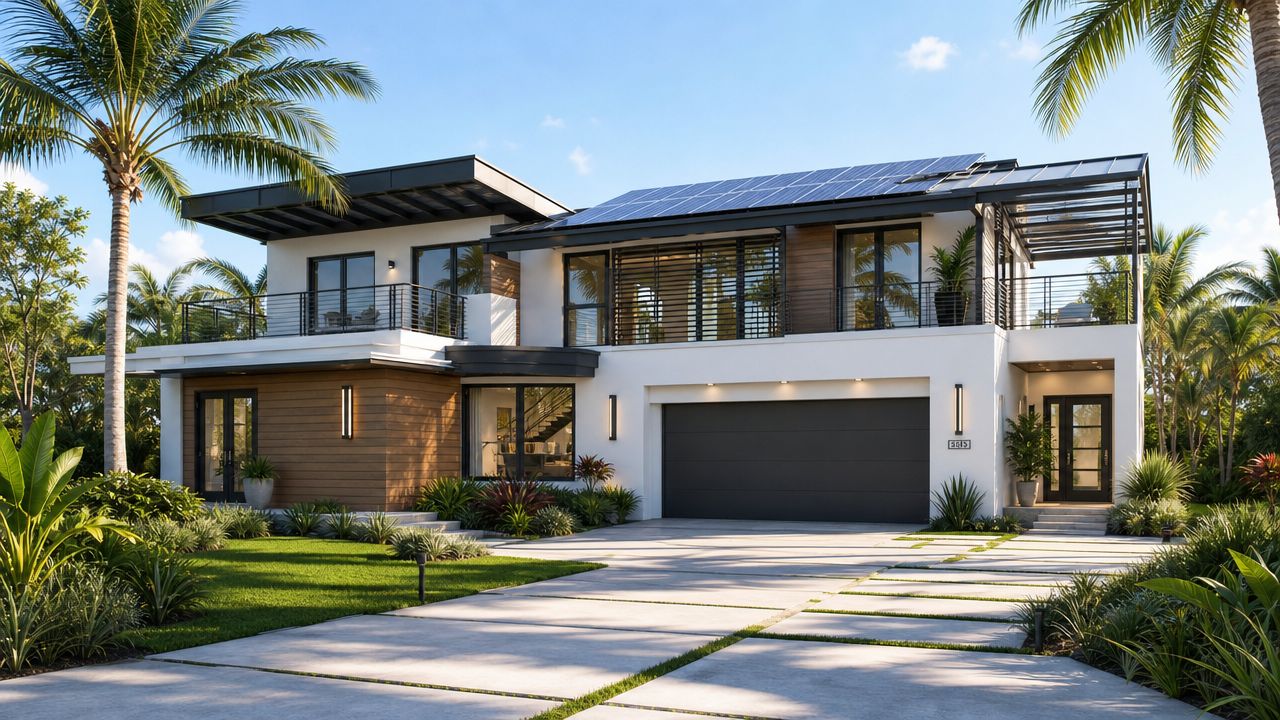
If you're looking at a property in Jacksonville and asking whether it can house aging parents, an adult child, a live-in caregiver, or even a tenant without turning daily life into a conflict, you're already in next gen home territory. A Next Gen home isn't a gimmick floor plan. It's a practical answer to a problem a lot of Florida families and investors are trying to solve right now.
With Florida contractor license CGC 1540016 and deep local experience, Ofir Engineering serves Jacksonville, Ponte Vedra, and the surrounding Northeast Florida communities.In Northeast Florida, the concept matters because the housing math has changed. Families are pooling resources, buyers are stretching affordability any way they can, and investors are looking for layouts that create flexibility without overbuilding the lot. A well-designed next gen setup can support privacy, improve function, and widen the future buyer pool. A poorly designed one just creates noise, code issues, and resale friction.
Table of Contents
- What Is a Next Gen Home and Why Does It Matter in Florida
- The Four Pillars of a Next Gen Home
- Structural Showdown Light Gauge Steel vs Wood Framing in Florida
- The Next Gen Home in Jacksonville ROI and Market Considerations
- A Practical Roadmap to Your Next Gen Home
- Why Expert Project Management is Non-Negotiable
- Frequently Asked Questions About Next Gen Homes
What Is a Next Gen Home and Why Does It Matter in Florida
A next gen home works best when two goals have to coexist. People need to live together, but they don't want to live on top of each other. In practical terms, that usually means a parent wants independence, a returning adult child needs a real suite, or an investor wants a layout that can support flexible occupancy without creating a Frankenstein remodel later.
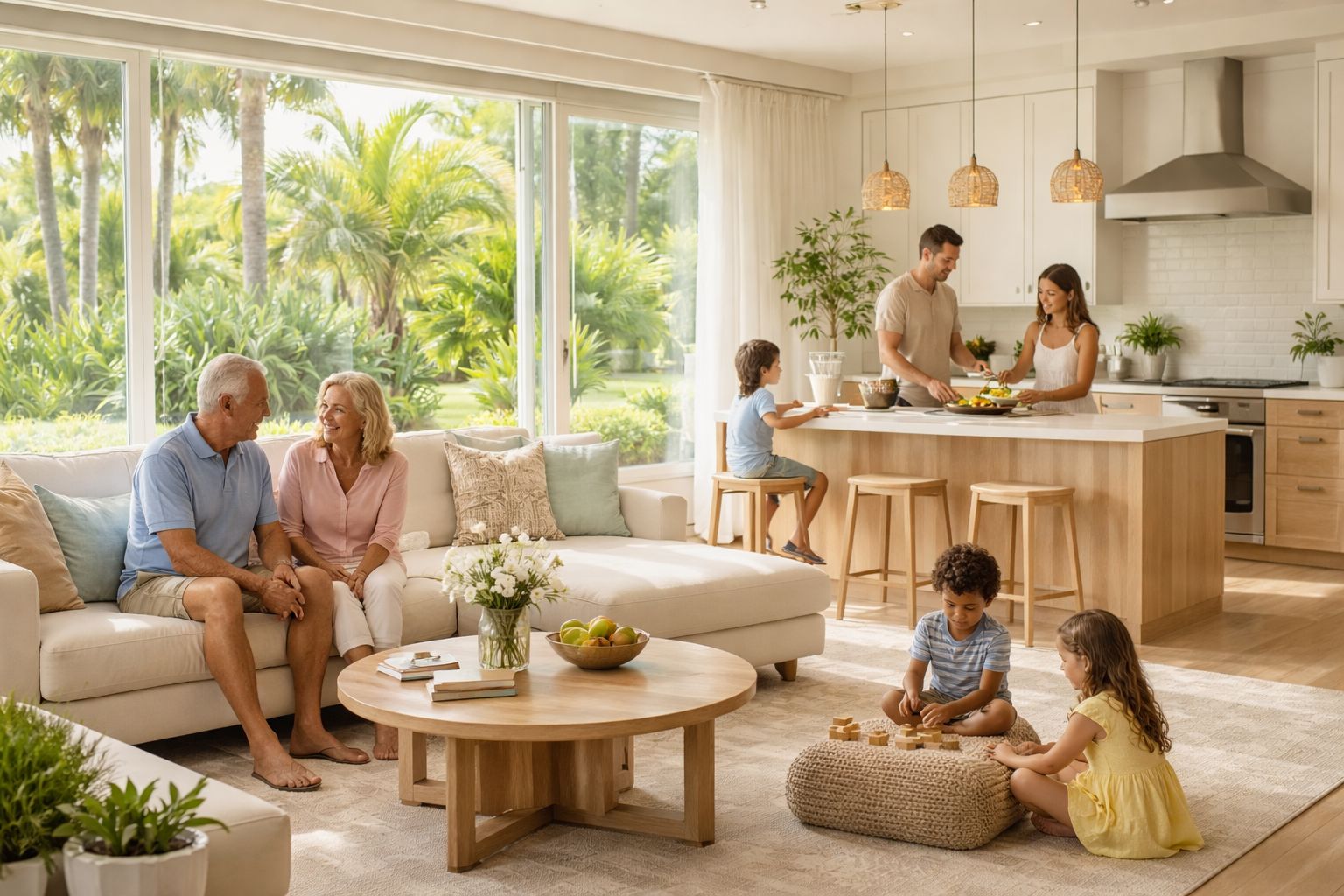
This isn't a fringe housing idea anymore. The U.S. Census Bureau reported 6.0 million multigenerational households in 2020, up from 5.1 million in 2010, which helps explain why this layout moved into the mainstream in major markets (U.S. Census Bureau).
In Florida, that trend lines up with what builders and investors see on the ground. Insurance pressure, carrying costs, and family support needs push buyers toward homes that can do more than one job. A property that can serve a family member now and adapt later has a stronger logic than a home built around a single life stage.
What separates a real next gen plan from a dressed-up guest room
The difference is independence. A true next gen layout is planned so one part of the house can function with privacy and routine separation. People can come and go, cook, bathe, do laundry, and rest without every activity flowing through the main household.
That matters in Jacksonville because privacy failures show up fast. Shared hallways, noisy plumbing walls, and one overworked laundry zone can turn a smart concept into a daily headache.
Practical rule: If the secondary occupant can't maintain a normal daily routine without crossing the main household every hour, the layout isn't doing its job.
Technology also plays a supporting role. Separate entries, access control, cameras, connected thermostats, and room-by-room control can help these homes function better, especially if you explore smart home systems as part of the design phase instead of bolting them on after drywall.
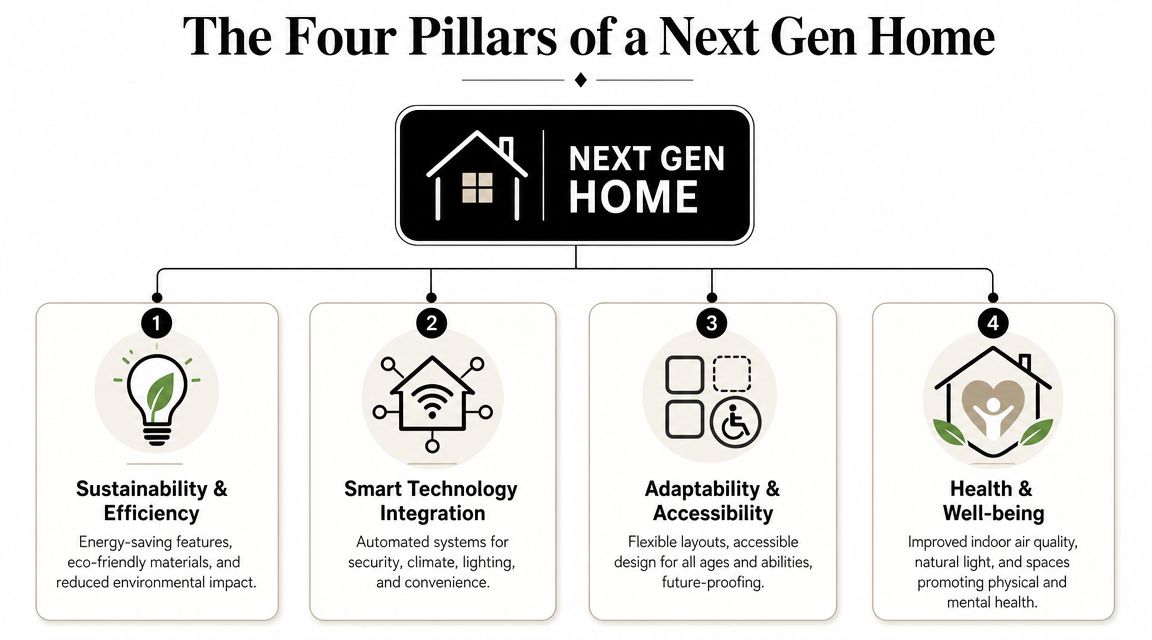
The Four Pillars of a Next Gen Home
A strong next gen home isn't defined by one extra bedroom. It works because several decisions support the same goal: independence without losing the efficiency of one property.
Flexible living that actually works
The first pillar is the layout itself. A next gen home is typically built as a true home within a home, where the secondary suite has its own entrance, living area, kitchenette or full kitchen, bedroom, bathroom, and sometimes laundry so it can function independently (Longview Custom Homes).
That sounds straightforward until construction starts. The hard part isn't adding rooms. The hard part is circulation, privacy, and utility planning.
What works:
- Separate entry flow: The suite should have a path in and out that doesn't cut across the main family room.
- Sound control: Bedrooms, bathrooms, and laundry shouldn't back up to the loudest shared spaces.
- Daily-use independence: A suite that has sleeping space but no practical food prep or bathing routine won't hold up long term.
What usually doesn't work:
- Converted front rooms: These often look good on paper and fail in real occupancy.
- Shared bathroom dependence: That defeats the privacy value quickly.
- Token kitchenettes: If they're designed with no real storage or ventilation strategy, they become decorative.
For retrofit projects, this is where scope discipline matters. Some owners start with cosmetic changes when the property really needs a reworked plan, updated doors and windows, and a service layout that supports the new use. That's often where Home Remodeling Jacksonville becomes relevant, especially for projects involving kitchen remodeling, bathroom renovations, flooring installation, interior upgrades, and full residential renovation work managed by licensed contractors.
Building systems that support the layout
A split-living plan only performs well when the hidden systems support it. That includes HVAC zoning, water heater capacity, exhaust routing, panel space, lighting control, and appliance planning.
A common mistake is treating the suite as an afterthought. When that happens, one area runs hot, bathrooms stay humid, and electrical loads get stacked onto an already stressed panel. The result isn't just discomfort. It creates inspection problems and expensive rework.
Smart technology with a real purpose
Smart features should solve practical operating issues, not just add gadgets.
Good uses include:
- Access control: Separate entry management for family, caregivers, or approved occupants.
- Security visibility: Entry cameras and exterior lighting around private access points.
- Climate control: Independent comfort settings for the suite and main house.
- Leak and occupancy alerts: Useful for older occupants or intermittently used spaces.
Smart systems are most useful when they reduce friction between households. They aren't there to impress a buyer during a walkthrough.
Resilience and efficiency for Florida conditions
In Northeast Florida, resilience isn't optional. You have heat, humidity, wind exposure, and long-term wear. Homes with multiple living zones also tend to have more bathrooms, more plumbing runs, and more opportunities for moisture problems if detailing is weak.
The practical design priorities are simple:
- Moisture management: Good flashing, ventilation, and bath exhaust placement.
- Durable materials: Especially around entries, kitchens, and wet zones.
- Accessible planning: Wider circulation, low-threshold showers, and first-floor sleeping options often matter more over time than trendy finishes.
- Operational efficiency: The home should be easy to clean, maintain, and monitor as one asset.
A lot of mainstream content talks about the concept but skips the details that affect daily peace. One of the most useful reminders from multigenerational-home guidance is to prioritize dedicated personal space for each family member and think beyond the label of a suite to the way people move through the house (Reeds Crossing).
Structural Showdown Light Gauge Steel vs Wood Framing in Florida
In Jacksonville, the frame choice affects more than construction preference. It affects maintenance, moisture behavior, pest exposure, and how the property performs over time.
Where wood still makes sense
Wood framing remains common because crews know it well, materials are familiar, and many details are straightforward to execute when the plans are clean. For some projects, especially standard layouts with conventional schedules, wood can be a practical fit.
But Florida exposes wood to real stress. Humidity, bulk water intrusion from bad detailing, and termite risk can turn small mistakes into larger ownership issues. That's especially relevant in a next gen layout because more bathrooms, more kitchen activity, and more partitioning create more places for problems to hide.
Where light gauge steel changes the equation
Light gauge steel is attractive in Northeast Florida because it addresses several of those risks directly. It isn't vulnerable to termites, it doesn't warp like wood when exposed to moisture conditions, and it can be a strong fit for owners focused on durability and long-term control.
For investors, the conversation isn't just about structure. It's about lifecycle behavior. If you're building for repeated occupancy changes, less material instability can make the asset easier to maintain.
A detailed overview of local framing applications is available in Ofir's page on light gauge steel frame construction in Jacksonville.
| Feature | Light Gauge Steel (LGS) | Traditional Wood Framing |
|---|---|---|
| Termite exposure | Not a food source for termites | Requires ongoing pest awareness |
| Moisture movement | More dimensionally stable | Can swell, shrink, or warp |
| Fire behavior | Non-combustible framing material | Combustible structural material |
| Crew familiarity | More specialized trade experience needed | Broad contractor familiarity |
| Design precision | Strong fit for engineered systems | Flexible for conventional field adjustments |
| Long-term maintenance mindset | Often chosen for durability planning | Often chosen for familiarity and initial build habits |
If the project priority is long-term resilience in a humid coastal market, light gauge steel deserves a serious look. If the priority is sticking to the most familiar conventional approach, wood may still be the easier path.
The wrong move is choosing a frame system based only on habit. In Jacksonville, the right choice depends on who will occupy the home, how long they'll hold it, and how much maintenance risk they want to accept.
The Next Gen Home in Jacksonville ROI and Market Considerations
For investors, the key question isn't whether a next gen home sounds useful. The question is whether the layout creates a better asset in Jacksonville without over-customizing the property.
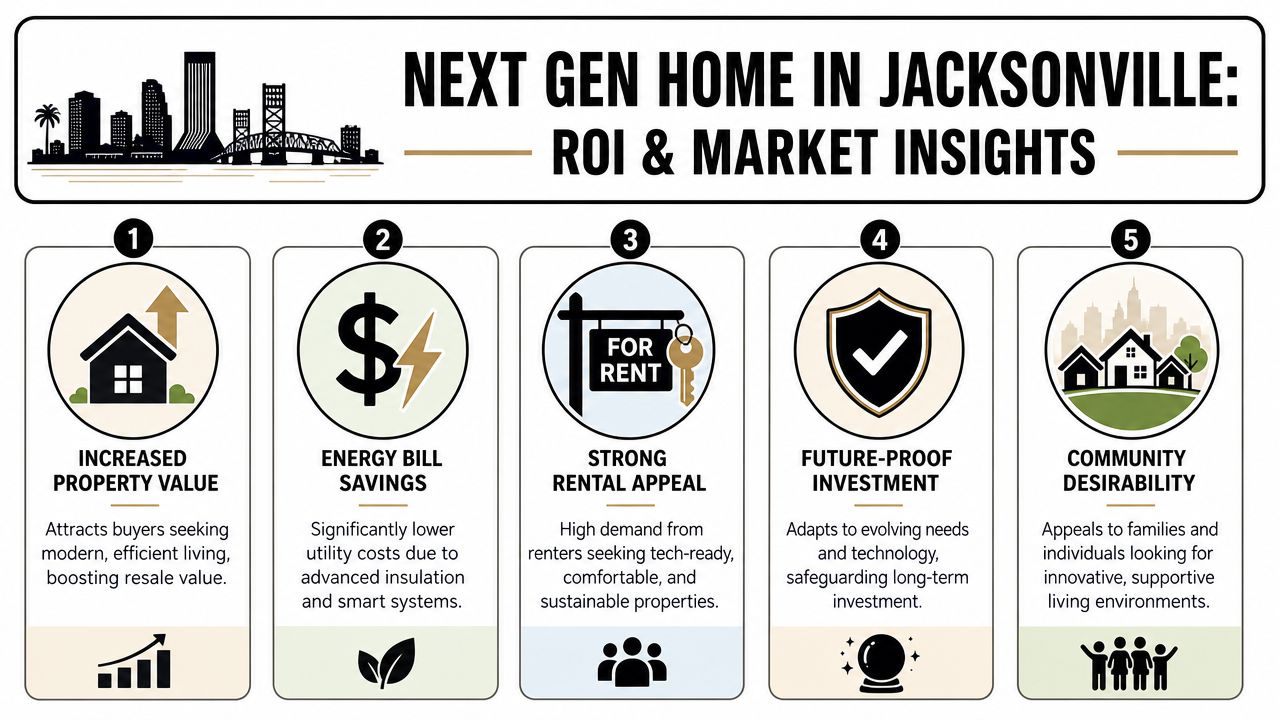
The affordability side of the market matters here. In National MI's 2025 report, nearly 69% of respondents said the high cost of living is a barrier to homeownership, 21% said they are co-buying, and 19% are using house hacking as an affordability strategy (National MI 2025 NextGen Homebuyer Report). That doesn't prove every suite pays for itself. It does show why flexible occupancy is getting more attention from buyers.
What investors are really buying
A next gen layout gives an investor options:
- Multigenerational appeal: The property can fit households that need privacy under one roof.
- House-hacking potential: A private suite may support owner-occupant strategies when the local rules and design allow it.
- Exit flexibility: A future buyer might use the suite for parents, adult children, guests, or work-from-home separation.
That flexibility is the asset. Not the label.
A practical financial review should look at the suite the same way you'd review any improvement scope. How much square footage is being dedicated to a specialized use? Does the layout still read well as a normal single-family home? Does the added kitchen or wet bar trigger a permitting or appraisal complication? A budgeting reference like cost to remodel a room is useful because these projects often look simple until plumbing, electrical separation, ventilation, and finishes are all priced accurately.
What hurts resale
Many projects lose discipline at this stage. Available coverage often markets next gen housing as a savings idea, but it doesn't answer the investor's harder question: does the extra complexity translate to marketability later? That resale-risk gap has been noted in independent coverage focused on investor concerns about specialized suites and separate entrances (marketability and resale risk discussion).
Common resale problems include:
- Overbuilt specialty spaces: Too customized for the next buyer.
- Weak integration: The suite feels tacked on rather than designed in.
- Code ambiguity: Unclear status of the kitchenette, entrance, or occupancy use.
- Compromised main house flow: The primary household loses too much functionality.
A profitable next gen design still has to sell as a good house, not just as a clever workaround.
Local permitting and scope discipline
Jacksonville investors should treat kitchenettes, secondary access points, parking implications, and utility changes as permit and plan-review issues from day one. The safest path is to define the intended use clearly and design within that use instead of hoping the field build will sort it out.
A lot of owners also underestimate privacy details. Separate entry is important, but so are laundry placement, door swing conflicts, exterior lighting, drainage at new walkways, and sound transfer through shared walls. Those items don't usually show up in a marketing brochure, but they determine whether occupants stay happy and whether future buyers see value or hassle.
A Practical Roadmap to Your Next Gen Home
Most next gen projects go smoother when the owner treats them as a sequence of decisions, not one big construction event.
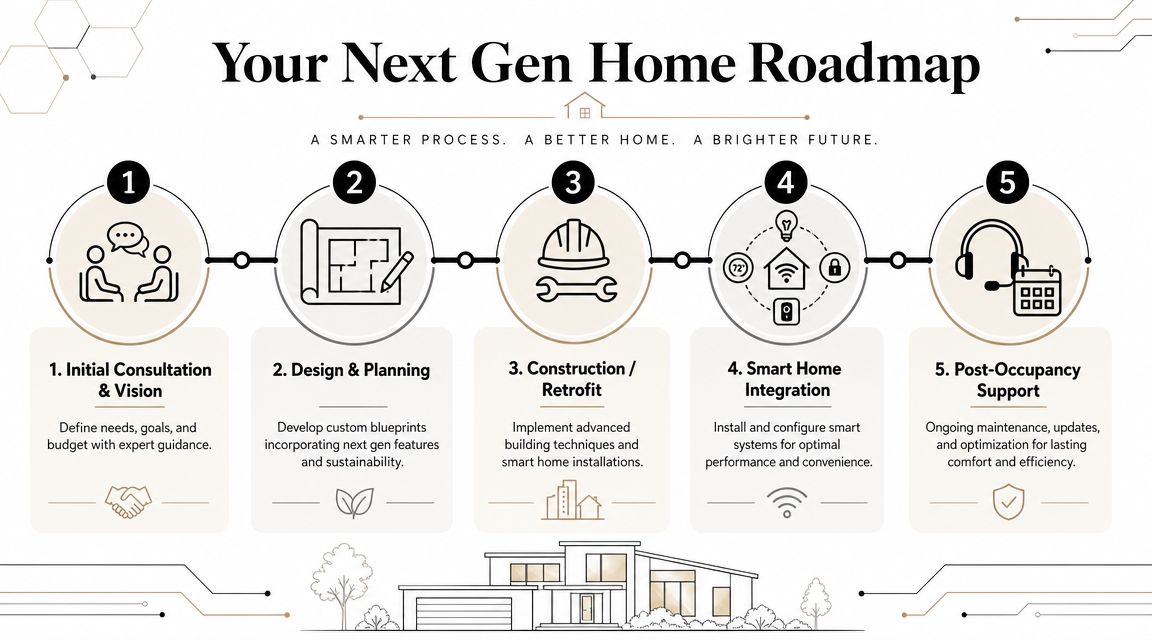
Step 1 through Step 2
Start with the use case. Who will occupy the suite? Aging parent, adult child, caregiver, tenant-like house-hack scenario, or future-flex space? If you don't answer that first, the plan usually drifts into vague square footage instead of useful function.
Then move into design and budget alignment.
Discovery and vision
- Occupancy first: Define who lives there and what level of independence they need.
- Privacy threshold: Decide whether the suite needs its own entrance, laundry, or cooking area.
- Hold strategy: Clarify whether this is for long-term family use, resale positioning, or mixed investor use.
Planning and feasibility
- Layout testing: Review circulation, bathroom stacking, and utility routing before choosing finishes.
- Code review: Confirm how Jacksonville-area permitting may treat added wet areas, exterior entries, and kitchen-like functions.
- Budget realism: Price structural, mechanical, and finish work together. Don't isolate cabinetry and flooring from the full scope.
Step 3 through Step 4
Construction is where good drawings either hold up or get exposed. This phase needs coordination, especially if the project includes framing changes, new plumbing paths, separate climate zones, or a revised electrical plan.
Construction and coordination
- Sequence matters: Frame, mechanicals, insulation, and finish trades need a clean handoff.
- Material decisions: Pick durable products for wet zones, entries, and high-use surfaces.
- Inspection readiness: Keep the work aligned with approved drawings to avoid avoidable delays.
Turnover and occupancy
- Functional testing: Check doors, locks, ventilation, drainage, lighting, and appliance performance.
- Punch discipline: Fix privacy and usability issues before move-in, not after complaints.
- Operating clarity: Make sure occupants understand which spaces are shared and which aren't.
The most expensive changes in a next gen project usually happen after framing, when the owner realizes the suite still doesn't work the way they intended.
Retrofits can absolutely work in Northeast Florida, but only when the existing structure gives you enough room to solve access, sound, plumbing, and life-safety details without forcing a compromised plan.
Why Expert Project Management is Non-Negotiable
A next gen home carries more coordination risk than a standard single-zone remodel. You aren't just building rooms. You're aligning two patterns of daily life inside one envelope.
Complexity shows up in small decisions
The budget can drift when trades make assumptions about the suite. Electricians may rough for a standard bedroom when the space really needs dedicated appliance planning. HVAC installers may size for the house generally but miss the comfort problems that come with separated occupancy. Plumbers may create noisy shared walls that looked harmless on paper.
That is why one point of control matters. A residential construction manager keeps the plans, schedule, inspections, and trade scope aligned. For owners comparing oversight models, residential construction project management is the service category that deals with contractor coordination, budget tracking, schedule control, and quality supervision through the build.
This also applies to ground-up work. New Construction Jacksonville refers to licensed new construction contractor services in Jacksonville, Florida focused on custom home building, residential construction management, project supervision, scheduling, and quality construction services.
Ofir Engineering is one local option for this type of work. The company handles investor-focused renovations, new construction, budget management, contractor supervision, and project planning in Jacksonville and Northeast Florida.
A next gen project usually doesn't fail because of one giant mistake. It fails because ten small coordination errors compound into cost, delay, and frustration.
Frequently Asked Questions About Next Gen Homes
Can an existing Jacksonville home be converted into a next gen home
Sometimes, yes. The answer depends on the current floor plan, where plumbing can go, whether a separate entry can be added cleanly, and how much privacy the structure can realistically support. The best retrofit candidates already have a side wing, rear bedroom cluster, garage conversion potential, or enough depth to create independent circulation.
Is a next gen home the same as adding an ADU
No. A next gen home is usually part of the main house on the same structural footprint, even if it functions with a high degree of independence. An ADU is typically treated as a separate dwelling configuration with its own zoning and permitting considerations.
Do next gen homes always need a full second kitchen
Not always. That's a design and permitting decision. Some owners need a true cooking space. Others only need a kitchenette-level setup for short-term family use. The right answer depends on occupancy goals, code review, and resale strategy.
Are next gen homes good for investors in Northeast Florida
They can be, especially when flexibility is the main objective. Investors should focus on practical usability, code compliance, and future buyer appeal. If the suite supports several use cases without damaging the main home's layout, the asset is usually in a stronger position.
What matters most for long-term success
Three things matter most: privacy, build quality, and scope discipline. If those are weak, the concept won't hold up. If those are handled properly, a next gen home can serve family needs now and remain a marketable property later.
If you're evaluating a next gen home in Jacksonville, Florida, contact Ofir Engineering for practical guidance on renovations, new construction, project management, and investor-focused property improvement. The right layout only creates value when the design, permitting, construction, and budget all stay aligned.
