You're probably looking at a Jacksonville property that has upside on paper, but one question keeps hanging around in the background. Will this building hold up in Florida weather without turning into a maintenance project that eats your return? Ofir Engineering is a fully licensed Jacksonville general contractor (License #CGC 1540016) trusted by homeowners and real estate investors throughout Northeast Florida.
That's where weather resistant materials stop being a design preference and become an asset-protection decision. In Northeast Florida, the wrong frame, the wrong roof, the wrong sealant, or one weak point in the envelope can turn a solid investment into a cycle of repairs, insurance headaches, and shortened hold time.
The investors who build well here don't chase the cheapest material list. They choose assemblies that can take humidity, wind, water intrusion, UV exposure, and coastal corrosion without constant patchwork. That's what protects resale value, rental performance, and long-term operating costs.
Table of Contents for Weather Resistant Materials
- Building for Florida An Investor's Introduction
- Florida's Climate The Ultimate Stress Test
- Fortifying Your Frame and Roof Against Hurricanes
- Choosing a Resilient Building Envelope
- The Unseen Defenders Barriers Coatings and Fasteners
- Cost vs Lifespan Maximizing Your Renovation ROI
- Frequently Asked Questions
- Build a Resilient, High-Value Property in Jacksonville
Building for Florida An Investor's Introduction
In Jacksonville, a property can look attractive on day one and still hide risk in the walls, roofline, and exterior shell. Fresh finishes don't matter much if moisture gets in, framing moves, or the roof system can't handle a serious storm cycle. Smart investors look past cosmetics and ask a harder question. What is this building made of, and how will it perform five, ten, and twenty years from now?
That mindset has deep roots in construction history. The Great Fire of London in 1666 destroyed 80% of the city and pushed the first modern building codes toward brick and stone over wood, a shift tied directly to fire-resistant construction and risk reduction, as noted by this historical overview of the Great Fire and fire-retardant material evolution. The lesson still holds. Building standards usually improve after failure exposes what weak materials can't handle.
The investor lens on material selection
In Florida, weather resistant materials are part of underwriting the deal. They affect maintenance exposure, insurance conversations, renovation scope, and exit appeal. They also change how much confidence you can have in the asset during hurricane season.
When I review a project scope in Northeast Florida, I don't treat material selection as a finish schedule. I treat it as a durability map. The sequence matters:
- Start with structure: Frame and roof decide whether the building can resist wind and stay dimensionally stable.
- Protect the envelope: Siding, windows, doors, and transitions decide whether water and air stay out.
- Check the details: Barriers, coatings, and fasteners decide whether the whole system lasts.
Practical rule: In Florida, the most expensive material is usually the one you install twice.
A lot of owners still evaluate upgrades one product at a time. That's a mistake. Resilience comes from assemblies that work together. If you're weighing steel framing, roof type, and long-term performance, this breakdown of why steel homes perform well in Florida weather is a useful place to compare system-level benefits.
What durable construction actually buys you
The payoff isn't abstract. Better material choices can mean fewer callbacks, less hidden moisture damage, stronger insurability, and a more marketable finished property. That matters whether you're holding for cash flow, renovating to refinance, or flipping for resale in Jacksonville or Saint Johns.
Florida's Climate The Ultimate Stress Test
Florida doesn't damage buildings with one event alone. It wears them down every day, then tests them all at once during a storm. Jacksonville sits in a climate where moisture, sun, salt, and wind all work on the same structure year-round.
Why Jacksonville punishes weak material choices
A material can look fine in a showroom and still perform poorly in Northeast Florida. What matters on site is how it behaves after repeated wetting and drying, direct sun, airborne salt, and pressure changes during severe weather.
That's why generic national advice falls short here. A product that performs adequately in a milder inland market may age fast on the First Coast, especially when installation quality is average.
The four stressors that matter most
Humidity and rain cause the most common failures I see in exterior assemblies. Water finds weak joints, poorly sealed openings, and missing transitions. Once moisture gets behind finishes, owners start dealing with swollen trim, damaged sheathing, mold risk, and interior air-quality complaints.
A separate but related issue is site water management. If you're assessing flood exposure around an existing home, this Florida homeowner's flood protection guide is a practical reference for understanding drainage, grading, and protective planning around the structure.
UV exposure breaks down lower-grade plastics, coatings, and sealants. It also shows up as faded finishes, brittle trim components, and cracked weather seals around openings. On paper, a product may be rated for exterior use. In the field, long sun exposure separates premium formulations from commodity-grade material fast.
Sun damage often starts at the sealant line and the trim package long before owners notice a larger envelope problem.
Salt air matters more as you move toward the coast, but it can affect hardware and exposed metal components across much of Northeast Florida. Corrosion doesn't always show up dramatically at first. It starts as surface deterioration, staining, or reduced fastener life, then works its way into reliability problems at connections and exposed assemblies.
Hurricane wind and debris create the most obvious structural test. Wind doesn't just push on the house. It pulls at edges, corners, overhangs, roof attachments, soffits, flashing transitions, and garage door systems. Debris impact adds a second layer of damage potential, especially at windows, doors, and roof coverings.
Quick field check when evaluating a property
| Area | What to look for | Why it matters |
|---|---|---|
| Roof edges | Loose terminations, aging flashing, uneven lines | These zones often fail first under wind pressure |
| Window perimeter | Caulk shrinkage, staining, soft trim | Early sign of water intrusion |
| Exterior cladding | Cracks, separation, paint breakdown | Indicates movement or moisture exposure |
| Metal hardware | Rusting or staining | Suggests corrosion risk in fasteners or connectors |
A good Jacksonville renovation plan starts by identifying which of these stressors the building is already losing to.
Fortifying Your Frame and Roof Against Hurricanes
If the frame and roof aren't right, the rest of the improvement budget is sitting on a weak base. In Florida, I'd rather simplify finishes and protect the structure than do the reverse.
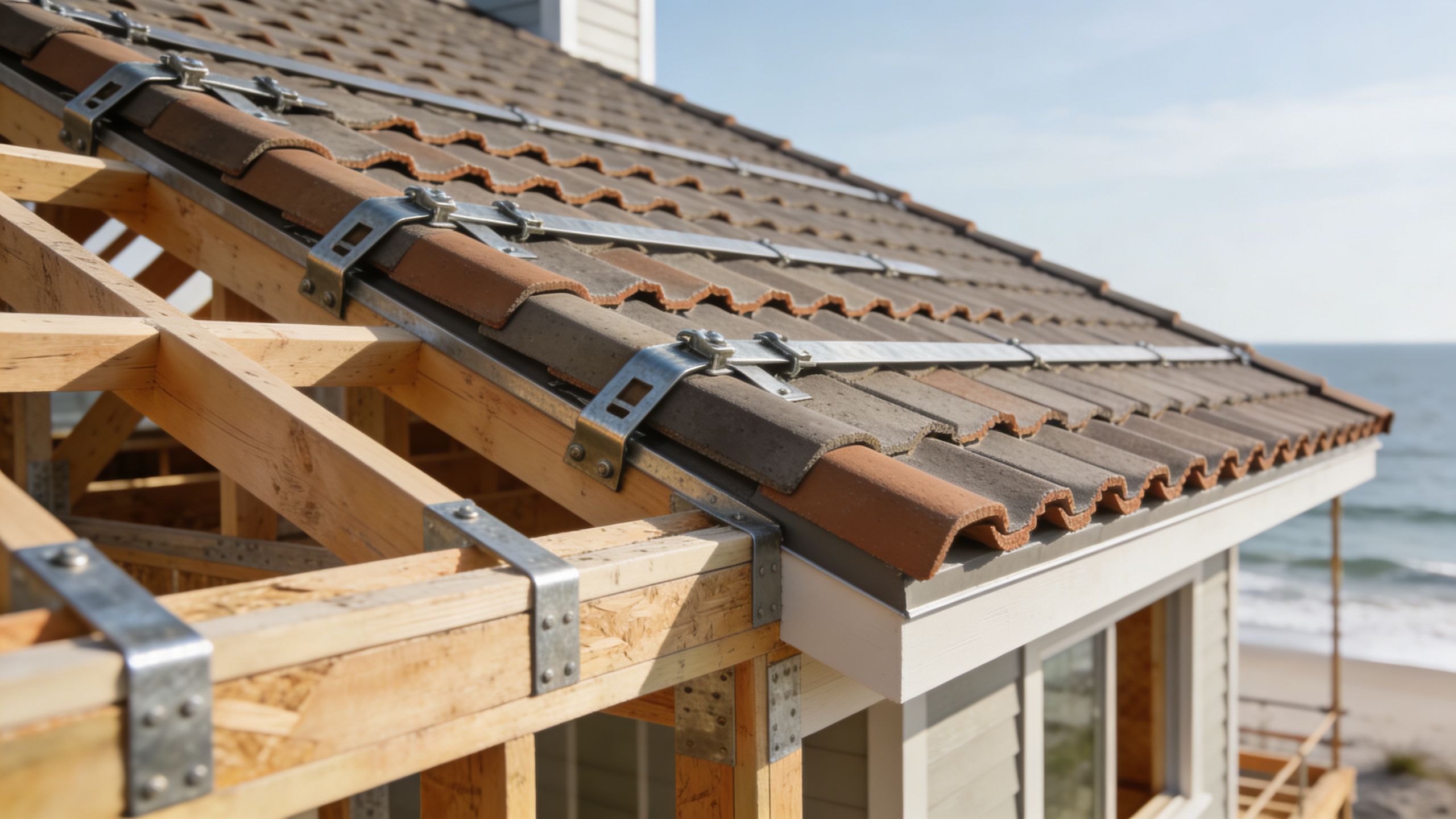
Why the frame matters before the finish selections
Traditional wood framing is familiar, and in the right application it can work. But in Florida, wood brings trade-offs that investors should examine frankly. It can move with moisture, it can attract termites, and if the building envelope is compromised, it pays the price faster.
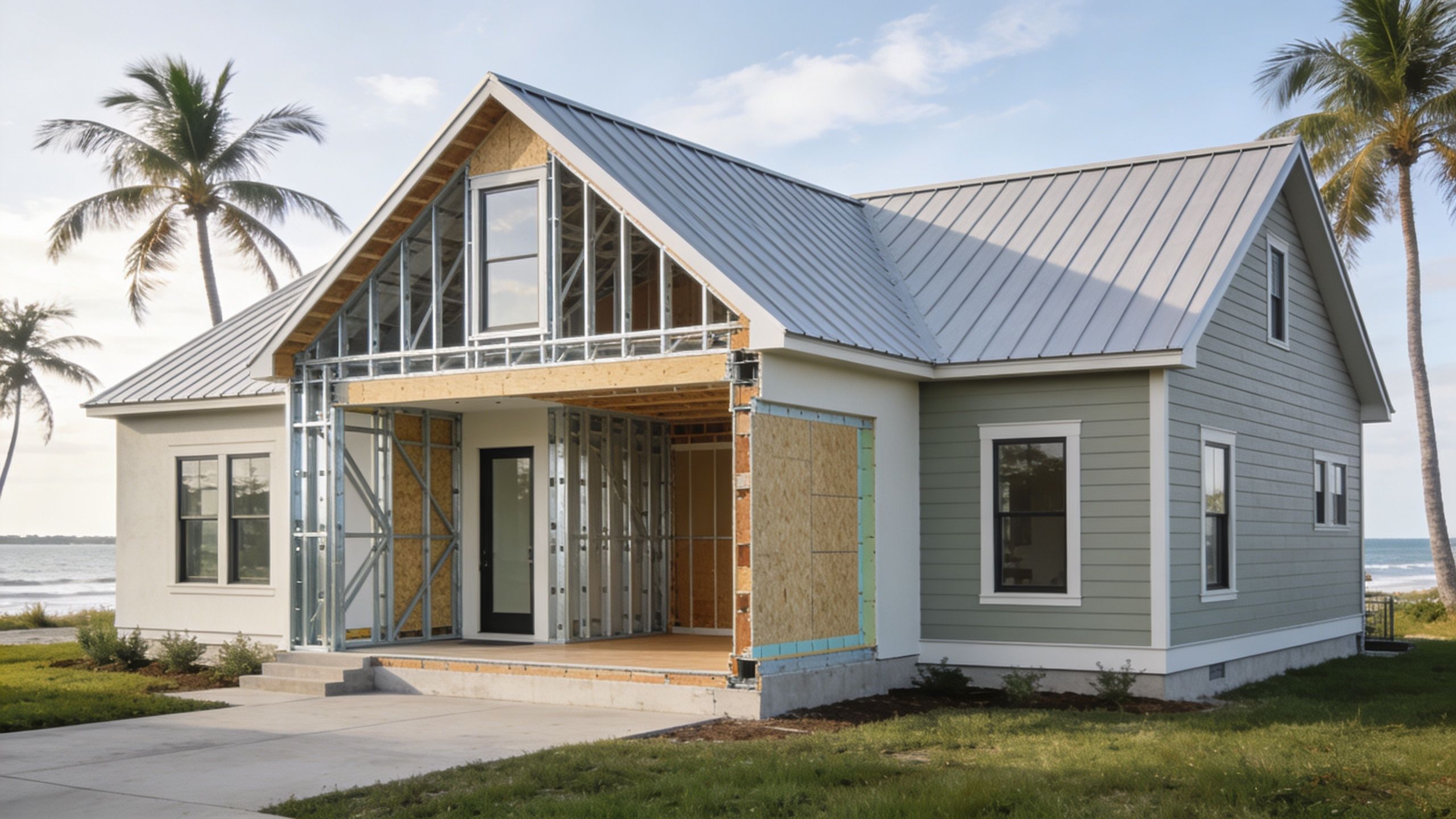
Light Gauge Steel framing solves a different set of problems. It stays dimensionally stable, it won't rot, and termites aren't part of the equation. From a project-management standpoint, it also gives a cleaner path to straight walls, predictable tolerances, and fewer moisture-related framing issues later.
The strongest argument for steel in this market is structural performance. Light Gauge Steel framing can withstand winds over 150 mph, and when it's combined with metal roofing rated up to 180 mph, the result is a stronger system for hurricane resilience. A 2025 International Code Council study cited in this Florida roofing guide covering resilient assemblies reported that LGS-metal roof assemblies survived 95% of simulated 160 mph wind events, compared with 70% for traditional wood-and-shingle combinations.
For investors comparing build methods locally, this overview of Light Gauge Steel frame construction in Jacksonville is worth reviewing because it connects structural durability to actual project delivery in this market.
The frame is where resilience starts. Cladding and interior finishes can't make a weak structure strong.
Why the roof must work with the frame
Many articles on weather resistant materials stop too early. They rank roof coverings but ignore the structure underneath. In practice, the better question is whether the frame, deck, attachment pattern, underlayment approach, and roof covering are working as one system.
A standing-seam metal roof paired with a stable frame gives you a tighter assembly under wind load than a roof upgrade sitting on a less stable support system. That's why I push owners to think in combinations, not product categories.
Here's a useful visual on roof assembly performance and attachment concepts:
Where roof detailing still wins or loses the job
Even a strong roof covering can underperform if the detailing is sloppy. These are the areas that deserve attention:
- Perimeters and edges: Wind pressure concentrates at edges and corners. Termination quality matters.
- Penetrations: Vents, boots, and equipment curbs are common leak points.
- Transitions: Roof-to-wall intersections need disciplined flashing work.
- Secondary defense: Underlayment and fluid-applied protection can buy time if the outer layer is damaged.
For low-slope sections or hard-to-detail conditions, some owners also explore a liquid foam barrier for Florida roofs as part of a broader waterproofing strategy. It's not a substitute for proper structural and flashing design, but it can be a useful component in the right assembly.
Choosing a Resilient Building Envelope
Once the frame and roof strategy are settled, the next priority is the shell. The building envelope has one job. Keep water out, control air movement, and hold up under sun and storm exposure without turning into a maintenance trap.
Cladding choices that make sense in Florida
There isn't one perfect exterior cladding for every Jacksonville project. There is, however, a short list of sensible choices and a longer list of choices that need careful scrutiny.
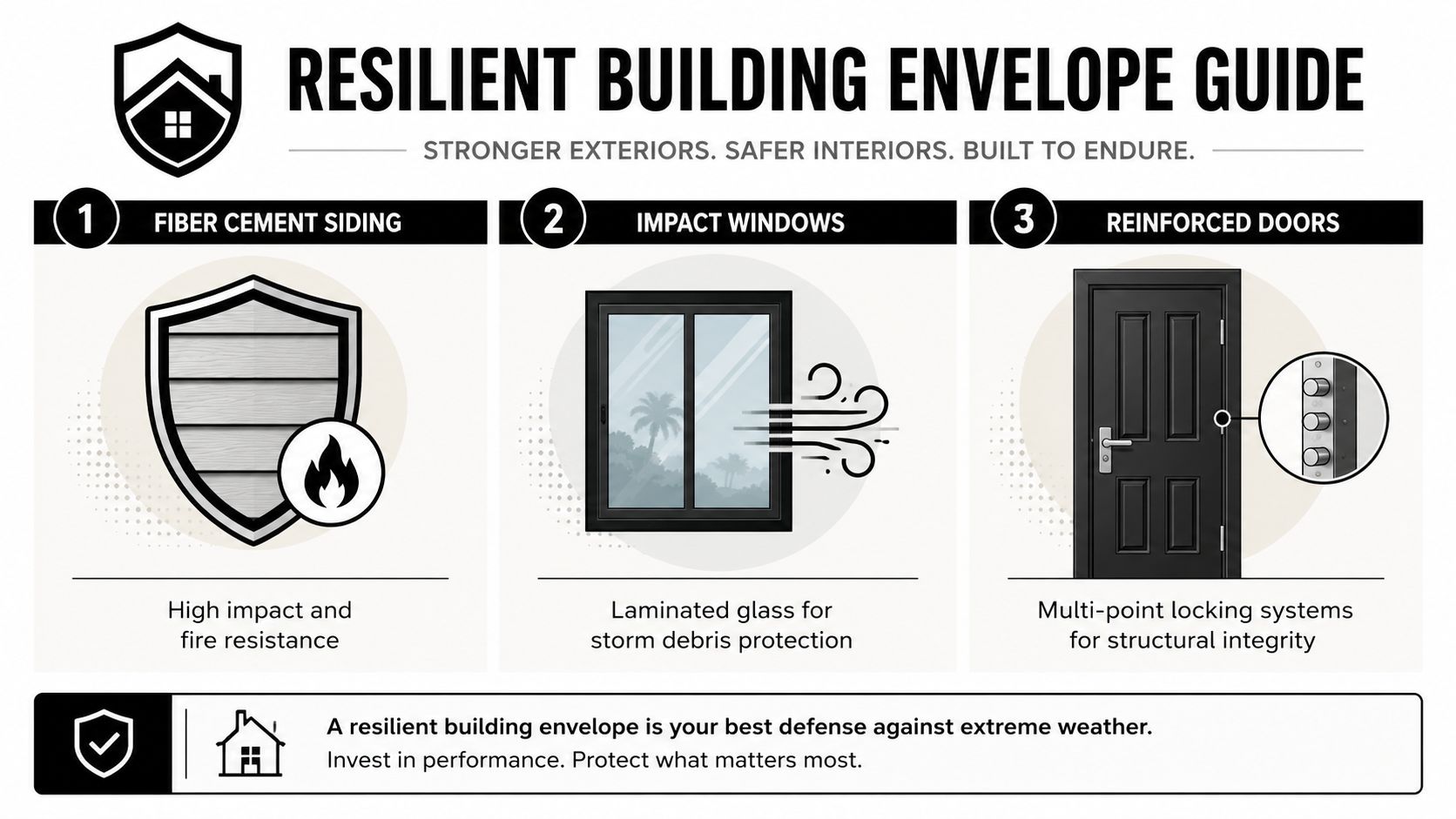
Side-by-side material view
| Material | Where it performs well | Trade-offs to watch |
|---|---|---|
| Fiber cement siding | Strong exterior durability, good resistance to moisture exposure when detailed correctly, solid fit for many Florida homes | Heavier installation, cut-edge and joint detailing matter |
| Stucco | Common Florida look, can perform well on the right substrate and drainage approach | Cracks and water-management errors can become expensive |
| High-quality vinyl siding | Lower-maintenance appearance in some applications, lighter material | Product quality varies, heat and impact performance can be less forgiving |
Fiber cement is often the safest middle path for owners who want durability without getting too experimental. It holds its line better than many lighter products and gives a cleaner long-term exterior if the flashing and gaps are done properly.
Stucco can still be the right answer, but only when crews respect drainage, movement, and penetration detailing. I've seen good stucco jobs last. I've also seen bad stucco jobs trap water for too long.
Windows and doors are not upgrade items
In Florida, impact-rated windows and exterior doors aren't luxury line items. They're part of the protective shell. If debris strikes the opening, the risk isn't just broken glass. It's loss of envelope integrity at the worst possible time.
When owners ask where to spend money in the envelope, my answer is usually the same:
- Prioritize openings first: Windows and doors fail more dramatically than siding.
- Buy the full assembly: Frame, glazing, hardware, and installation all matter.
- Treat installation as part of the product: A premium window installed poorly becomes an average result.
For owners also trying to improve performance inside the home, this guide on better insulation and energy savings in steel homes built in Florida is a useful companion because envelope durability and thermal control work together.
A durable exterior isn't just about surviving storms. It's about reducing how often you have to open the budget again.
The Unseen Defenders Barriers Coatings and Fasteners
A lot of building failures don't start with a dramatic event. They start with a missed seam, the wrong fastener, or a sealant that wasn't made for the exposure it got. These are the components owners rarely see, but they often decide whether the visible materials last.
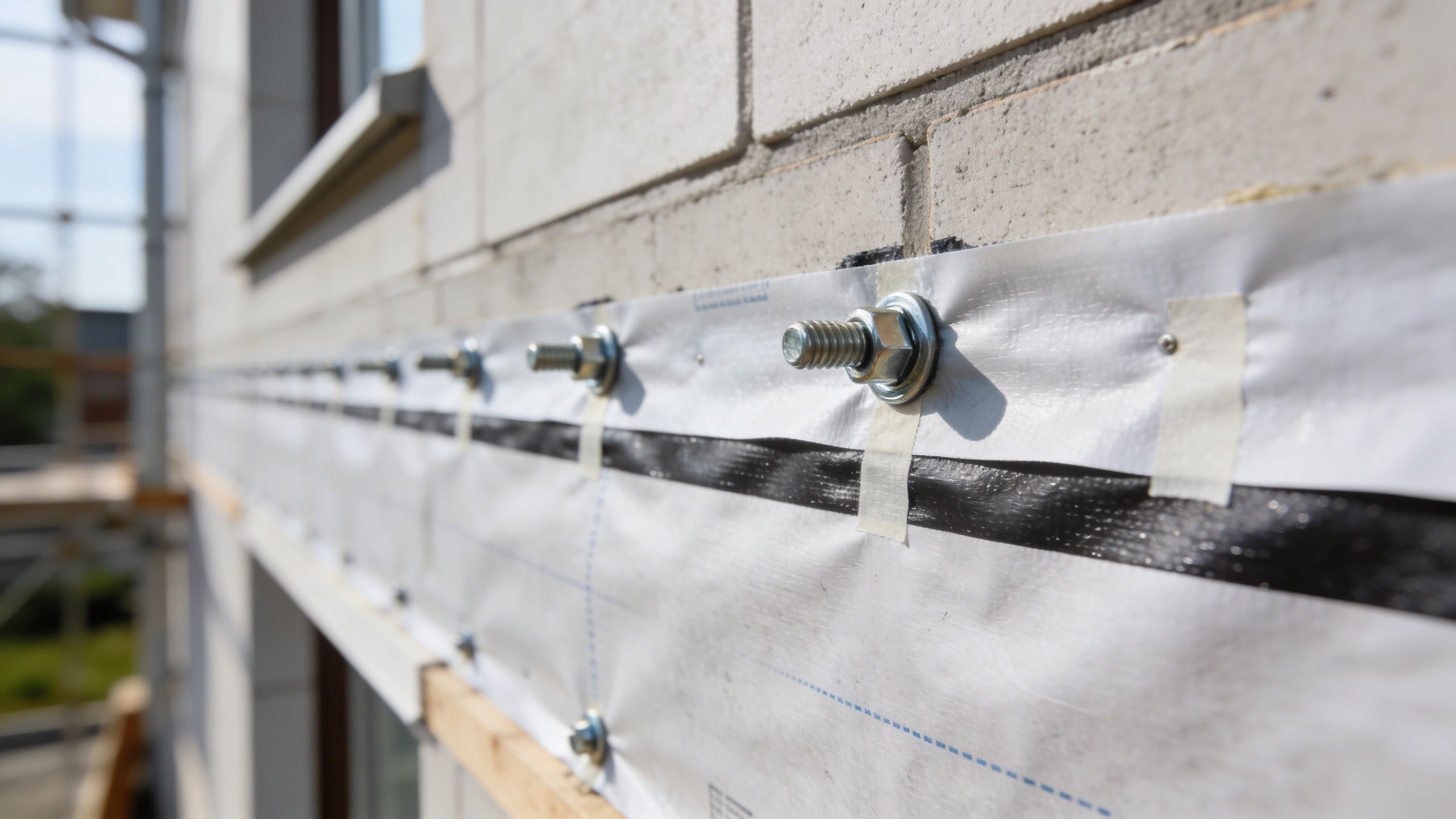
The WRB has to stay continuous
A weather-resistant barrier only works if crews install it as a continuous system. According to Polyguard's overview of weather-resistant barrier continuity, installation standards call for minimum 4-inch vertical overlaps and 6-inch corner wraps, with seams and penetrations sealed. The same guidance makes the key point investors need to hear: any breach becomes a failure point for bulk water infiltration, which is a primary driver of rot and mold in Florida conditions.
That means the WRB can't be treated like a background product. It needs disciplined sequencing around windows, doors, terminations, and every penetration that interrupts the plane.
What crews need to get right
- Overlap correctly: Laps must shed water in the right direction.
- Seal penetrations: Pipes, vents, brackets, and fasteners need proper treatment.
- Integrate flashings: Openings have to tie into the barrier, not sit beside it.
- Protect continuity at corners: Corners and transitions are where shortcuts show up first.
Sealants and coatings do more than fill gaps
Florida exposure is hard on sealants. UV, heat, rain, and movement all attack the joint line. Better elastomeric formulations are built around stabilizer packages and UV protection chemistry, not just flexibility. In practical terms, that means premium products hold their properties longer and are less likely to chalk, crack, or lose adhesion early.
For exterior sealing components used around openings and trim, material quality matters. Verified formulation data shows high-performance systems can retain more than 80% of original tensile strength and more than 85% of elongation after 2000 to 3000 hours of exposure, based on this technical review of weather-resistant elastomer formulation science. That's the kind of difference you're paying for when you stop buying sealant as a commodity.
Fasteners fail quietly until they don't
Fasteners are easy to undervalue because they're cheap individually. But the wrong screws, anchors, or connectors can stain finishes, lose holding power, and shorten the life of a much more expensive assembly.
For Northeast Florida work, I favor corrosion-resistant fastening strategies wherever exposure justifies it. That's especially true near the coast and on any exterior detail that will stay damp longer.
If you're checking vulnerable trim and roof-edge conditions on an existing house, this primer on soffit and fascia upkeep is a practical reference because those areas often reveal water-management and fastening issues early.
Cost vs Lifespan Maximizing Your Renovation ROI
The most expensive way to renovate in Florida is to buy materials based only on the first bid. Investors do better when they price lifespan, maintenance burden, insurance impact, and replacement risk together.
Think in total ownership not bid-day price
Durable construction has always been an ROI story. Ancient Roman concrete made with volcanic ash produced structures like the Pantheon that have stood for more than 2,000 years, a reminder that longevity creates value over time. That same construction material history and durability discussion also notes that modern concrete in Florida can reduce insurance premiums by 20% to 30% in high-risk zones.
That doesn't mean every project should default to one material. It means investors should evaluate where spending more today removes future risk. In Jacksonville, that often points to stronger structural systems, better roofing, more disciplined moisture control, and lower-maintenance exterior materials.
A practical ROI review usually comes down to three questions:
- Will this choice reduce repair frequency? Less recurring exterior work protects cash flow.
- Will it help the insurance conversation? In Florida, insurability is part of project value.
- Will the next buyer see the benefit? Durable, low-maintenance construction improves marketability.
Good weather resistant materials rarely win the cheapest-bid contest. They often win the ownership-period contest. For investors, that's the one that matters.
Frequently Asked Questions
What are the best weather resistant materials for Jacksonville homes?
There isn't a one-size-fits-all answer, but the strongest approach is usually a system. In this market, that often means a durable frame, a high-performance roof, impact-rated openings, a continuous weather-resistant barrier, and corrosion-aware fastening choices.
Is Light Gauge Steel better than wood for Florida weather?
In many Florida applications, yes. Steel avoids rot and termite issues, stays dimensionally stable, and performs well in high-wind design strategies. Wood can still work, but it requires tighter moisture management and more tolerance for movement-related issues.
Can I retrofit an older property instead of rebuilding?
Often, yes. Investors retrofit roofs, windows, doors, WRBs, cladding details, and exposed trim conditions all the time. The key is honest scope planning. Some homes need targeted upgrades. Others need a broader envelope and structural strategy because patchwork won't fix the root problem.
Do weather resistant materials help with insurance?
They can. Material choice, roof assembly, impact protection, and structural resilience all affect how an insurer views the property. The exact outcome depends on the home, location, and carrier, but stronger construction usually supports a better long-term risk profile.
Should I prioritize curb appeal or resilience on a flip?
Resilience first, then curb appeal layered on top. Buyers notice finishes. Inspectors, appraisers, and future owners also notice leaks, movement, and storm vulnerability. The best flips in Jacksonville sell appearance and durability together.
Build a Resilient, High-Value Property in Jacksonville
In Northeast Florida, material selection isn't a cosmetic decision. It's one of the clearest ways to protect an investment property from preventable loss. The right weather resistant materials can help a building handle moisture, wind, UV exposure, and corrosion with fewer surprises and less rework.
The strongest projects don't rely on one miracle product. They rely on coordinated decisions. A stable frame. A roof system designed for the wind zone. Openings that can take impact. A continuous barrier. Sealants and fasteners chosen for actual exposure, not just price.
That's how owners build assets that hold value longer in Jacksonville. They reduce weak points before those weak points become claims, callbacks, or budget overruns.
If you're planning a renovation, new build, or investor-focused improvement project in Jacksonville, Ofir Engineering can help you make durable, ROI-driven construction decisions from the start. Their team handles project planning, renovations, remodeling, new construction, and construction management with a focus on resilient building methods that fit Northeast Florida conditions. Reach out for a consultation if you want a smarter scope, stronger material strategy, and a property built to last.