For homeowners and real estate investors in Florida, especially those new to the state, the idea of a basement often comes up. But the quick answer is that true, fully-underground basements in Florida are almost unheard of—and for very good reasons. Backed by Florida general contractor license CGC 1540016, the Ofir Engineering team serves clients across Jacksonville, St. Johns, and Clay County.
While it's technically possible to build one, a functional, dry basement is a massive uphill battle against nature and economics. This is particularly true in low-lying coastal areas like Jacksonville and Northeast Florida. For an investor, understanding why this is the case is crucial to making sound, ROI-focused decisions.
Table of Contents
- Why Basements in Florida Are So Uncommon
- Understanding Jacksonville's Challenging Ground Conditions
- The True Engineering and Cost of a Florida Basement
- Smarter Alternatives to Gain Space in Florida
- Are Walkout Basements a Viable Florida Compromise?
- Partnering With a Local Expert for Your Construction Project
- Frequently Asked Questions About Florida Basements
Why Basements in Florida Are So Uncommon
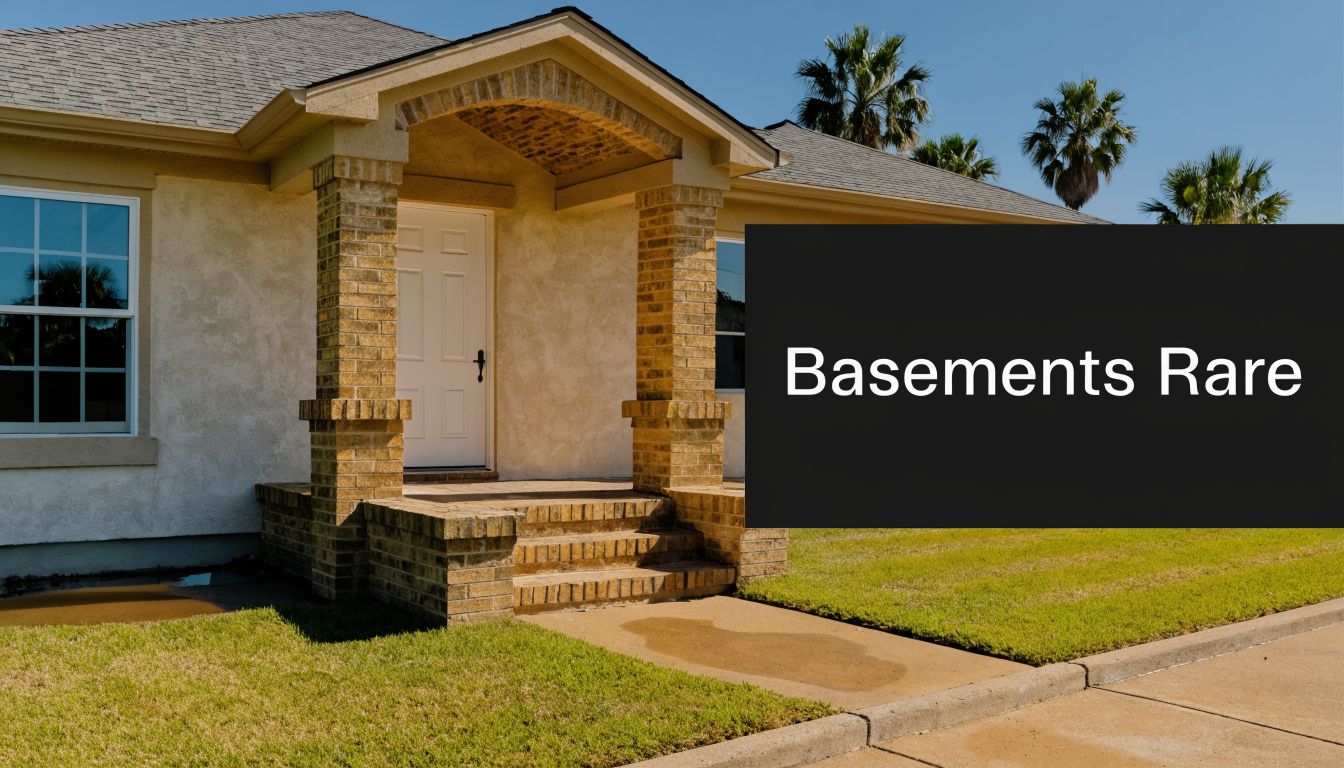
If you're used to homes up north, the total absence of basements across the Sunshine State can feel strange. In those colder climates, building codes require foundations to be dug deep below the frost line to prevent the ground from freezing and heaving the structure. Since you’re already excavating that deep, turning that space into a basement is a logical and cost-effective move.
Florida, however, presents a completely different set of challenges. Our geology and climate make any below-ground construction a high-risk, high-cost project. This reality dictates nearly everything about residential construction here, from the initial design all the way to long-term maintenance. As project management experts in Jacksonville, we guide investors away from such high-risk ventures and toward renovations that maximize returns.
Florida vs. Northern States: Foundation at a Glance
The table below gives you a quick snapshot of why a basement that's a standard feature up north is a major engineering feat down here. For an investor, these differences translate directly to risk and cost.
| Factor | Typical Northern State | Northeast Florida |
|---|---|---|
| Primary Driver | Frost line requires deep foundations | No frost line; focus is on stability and flood elevation |
| Water Table | Typically low; several feet below surface | Extremely high; often just a few feet below surface |
| Soil Type | Stable clay or loam | Loose, porous sand |
| Key Risk | Frost heave cracking foundation walls | Hydrostatic pressure, water intrusion, flooding, mold |
| Result | Basement is a logical, cost-effective addition | Slab-on-grade is the standard, safest, and most affordable foundation |
This comparison highlights the fundamental differences. In Florida, we're not fighting the cold; we're fighting water from every direction—a battle that has a negative impact on any potential ROI.
The Primary Obstacles to Building a Basement
The reasons why building a basement here is so impractical from an investment perspective boil down to three huge environmental hurdles:
- High Water Table: Much of Florida, especially Jacksonville, sits just a handful of feet above sea level. This means the ground is saturated with water very close to the surface. If you try to dig a hole for a basement, it will fill with water almost immediately—it’s like trying to dig a hole in a bucket of wet sand.
- Porous, Sandy Soil: Our soil is mostly sand, which is not only unstable but also incredibly porous. It just doesn’t have the structural integrity to support traditional basement walls against immense water pressure, and groundwater flows through it with ease.
- Hurricane and Flood Risk: During Florida's intense rainy seasons and, of course, hurricanes, the ground becomes even more saturated. A subterranean basement effectively becomes a swimming pool, acting as the lowest point and natural collection basin for all that floodwater.
This constant moisture creates a perfect breeding ground for mold. In fact, a huge factor in avoiding basements is our state's never-ending battle with humidity. Understanding why most Florida homes have mold is crucial to appreciating just how risky and costly any below-grade construction truly is for a property owner.
The data backs this up. Statewide, fewer than 5% of existing homes have what you’d call a true basement. In coastal counties like Duval and St. Johns, that figure plummets to just 1-2%. You simply don’t see them because they don't make financial sense.
Understanding Jacksonville's Challenging Ground Conditions
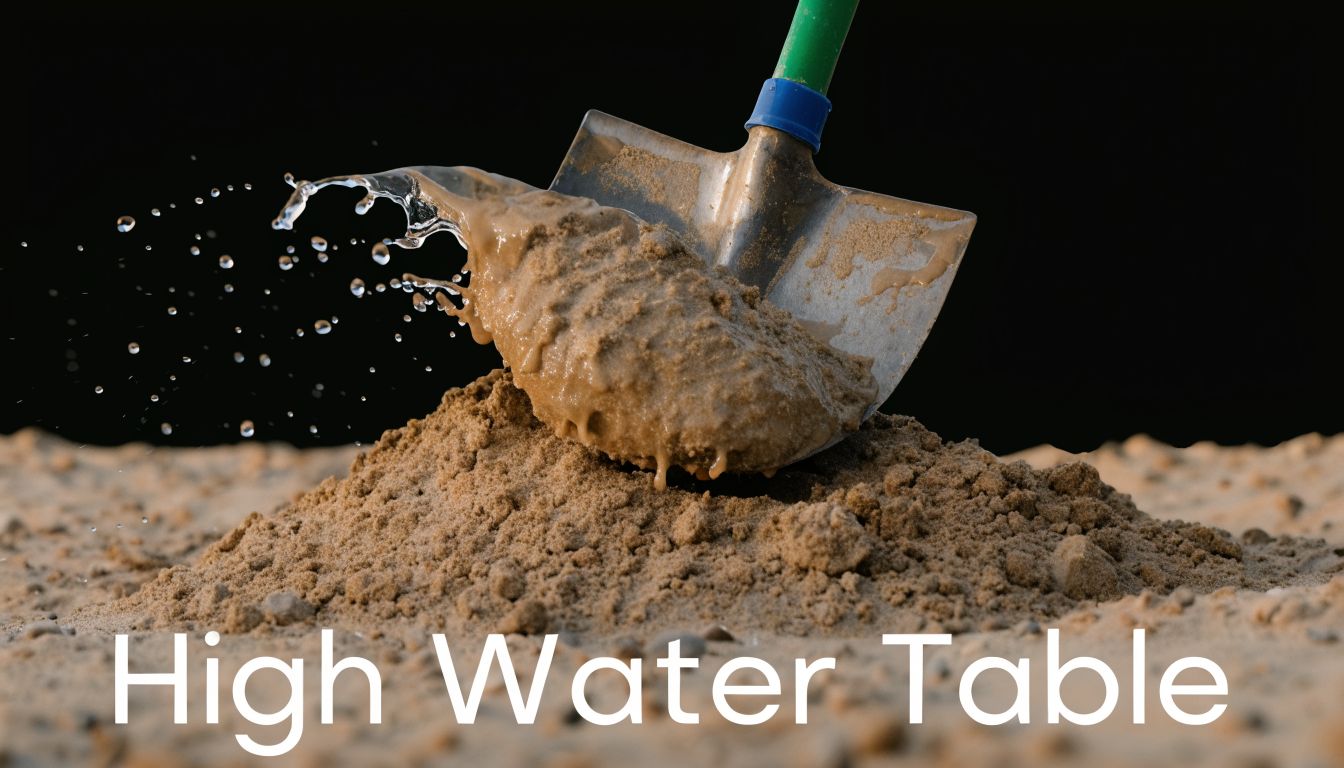
To understand why basements in Florida are a poor investment, you have to look at what’s happening in the ground beneath our feet. The simplest way to think about the land across most of the state—especially in coastal areas like Jacksonville—is as a giant, water-logged sponge. This one image explains the two biggest geological hurdles every builder in Florida faces.
The first, and most significant, is our notoriously high water table. This isn't just a term engineers throw around; it’s the level underground where the soil is completely saturated with water. In many states, you might have to dig dozens of feet to hit water. Here in Northeast Florida, it’s often just a few feet below the surface.
This isn’t a seasonal fluke; it's a fundamental part of our environment. When you try to dig a standard 8 to 10-foot-deep basement, you’re essentially digging a hole in a lake. The pit immediately fills with water, creating what we call hydrostatic pressure—immense, constant force from groundwater pushing inward on your foundation walls.
The Problem with Sandy and Porous Soil
Making matters worse is the very dirt we're standing on. Most of Florida, including Jacksonville and St. Johns County, sits on a bed of sandy, porous soil. Geologically, this is often part of a karst topography, a landscape created over millennia as water dissolved the underlying limestone.
This soil creates two major problems for any subterranean construction:
- Instability: Sand simply doesn't have the cohesive strength of clay or rock. It won't hold its shape, making it a terrible foundation for the rigid, heavy walls of a basement. It's like trying to build a fortress on a sand dune.
- Permeability: Water flows through sand and porous limestone with almost zero resistance. Even if you managed to build basement walls, groundwater would relentlessly exploit every microscopic crack, joint, and seam.
Expert Insight for Investors: At Ofir Engineering, we translate these ground conditions directly into financial risk. Fighting a constant battle with water means radically higher upfront construction costs for specialized waterproofing and a lifetime of expensive maintenance and unacceptable flood risk. For a fix-and-flip or rental property, this is an ROI killer.
The Science Behind the Challenge
The numbers don't lie. In much of coastal Florida, including Jacksonville and Saint Johns County, the water table averages just 1–3 feet below the surface during the rainy season. Since a usable basement needs to be at least 8–10 feet deep, this means builders are digging far below the waterline. The project instantly becomes a permanent dewatering operation. A 2019 analysis from the U.S. Geological Survey confirmed just how close the Floridan Aquifer system is to the surface in our coastal regions. You can find more details on this in this in-depth analysis of Florida's aquifer system.
At the end of the day, these natural conditions create severe engineering and financial liabilities. The combination of a high water table and porous, sandy soil makes traditional basements a ticking time bomb of flooding, structural instability, and chronic mold—a nightmare for any homeowner or investor.
The True Engineering and Cost of a Florida Basement
If you’re still thinking about one of the few basements in Florida, you need to stop thinking of it as a home addition and see it as a major civil engineering project. The process is a world away from standard home construction, demanding highly specialized methods to even stand a chance against Florida’s waterlogged ground—all of which destroy any potential for positive ROI.
Your number one enemy is hydrostatic pressure—the constant, immense force of groundwater trying to crush the walls inward and push up through the floor. This isn’t a problem you can fix with a coat of sealant. It takes a robust, integrated system designed from the ground up.
Building a Concrete Bathtub
The most proven method is to create what’s called a monolithic foundation. Just think of it as building a massive, seamless concrete “bathtub” and sinking it into the earth. The entire structure must be heavily reinforced with steel rebar to handle the pressure from every direction.
But even a perfect concrete pour isn't enough. The entire exterior then gets wrapped in industrial-grade waterproofing membranes. These are thick, rubberized sheets with heat-welded seams, creating a single, continuous barrier. It’s a process far more involved and expensive than the simple damp-proofing used on typical slab-on-grade homes.
The Never-Ending Battle Against Water
Once the structure is built, the fight against water isn’t over. It's a permanent condition. A sophisticated drainage and pump system isn't an optional upgrade; it's a non-negotiable, costly requirement.
- Exterior and Interior Drains: Perforated pipes are installed around the entire foundation, both outside and inside beneath the slab, to collect any groundwater that gets close.
- Redundant Sump Pumps: All that collected water is funneled to a sump pit. You need at least two pumps—a primary and a backup for when the first one inevitably fails or gets overwhelmed during a storm.
- Battery Backup: Florida storms knock out the power. Your pumps must have a dedicated battery backup system to keep running when you need them most.
Investor Bottom Line: At Ofir Engineering, we advise our clients that a Florida basement is not an amenity; it's a high-stakes liability. The construction costs can easily be two to three times higher per square foot than any above-ground space, and the long-term risk of catastrophic failure and negative ROI remains unacceptably high.
Expert project management is absolutely essential to even attempt such a build and keep its soaring costs in check. Every single step, from excavation to the final seal, carries huge financial risk if it’s not done perfectly. It highlights why understanding all project costs is so critical, as trying to cut corners on permits can lead to financial disaster. If you want to see a real-world example, take a look at the true cost of skipping a permit—it’s a lesson in how small oversights on high-stakes projects can go terribly wrong.
Smarter Alternatives to Gain Space in Florida
Given the massive cost, risk, and engineering gymnastics required for a traditional basement in Florida, it’s no surprise that smart homeowners and investors look for better ways to add space. The goal is always the same: get more valuable living area for a positive return on investment. Thankfully, there are several practical and profitable ways to do that without starting a losing battle against Florida’s water table.
Instead of fighting Mother Nature to dig down, let’s look at the alternatives that are a much better fit for the Jacksonville and Northeast Florida market. Each one offers a clear path to increasing your square footage and property value.
Second-Story Additions
Building up is often the most direct route to adding serious square footage without expanding your home's footprint on the lot. A second-story addition can literally double your living space, giving you room for more bedrooms, bathrooms, or a bonus room.
While it’s a major construction project, the engineering is standard and the costs are predictable—a world away from the variables of a subterranean build. For investors, adding a second story to a smaller home on a good lot can be a game-changer, turning a starter home into a premium family residence and dramatically boosting its market value.
Garage Conversions
If you’re looking for the most cost-effective way to add finished living space, converting your garage is almost always the answer. The structure is already there—foundation, walls, and a roof—which slashes project costs and timelines. This is a perfect solution for a home office, a gym, a private guest suite, or a family media room.
From an ROI standpoint, a garage conversion delivers. You’re taking a space that’s often just used for storage and turning it into valuable, conditioned square footage. It's a go-to strategy for fix-and-flip investors in the Jacksonville area who want a fast, high-impact renovation with a predictable budget and timeline.
Accessory Dwelling Units (ADUs)
For properties with a bit of extra land, building a detached Accessory Dwelling Unit (ADU) is a fantastic play. These small, standalone homes can be used as long-term rental properties, in-law suites, or a quiet, separate home office.
ADUs are gaining a lot of traction in Northeast Florida because they offer both flexibility and a new income stream. If you’re heading down this path, knowing how to find a reliable builder is critical. A good place to start your research is a resource like CozyCube's buyer's guide for ADUs.
This chart breaks down exactly why these standard, above-ground options are so much more practical than trying to force a basement in Florida.
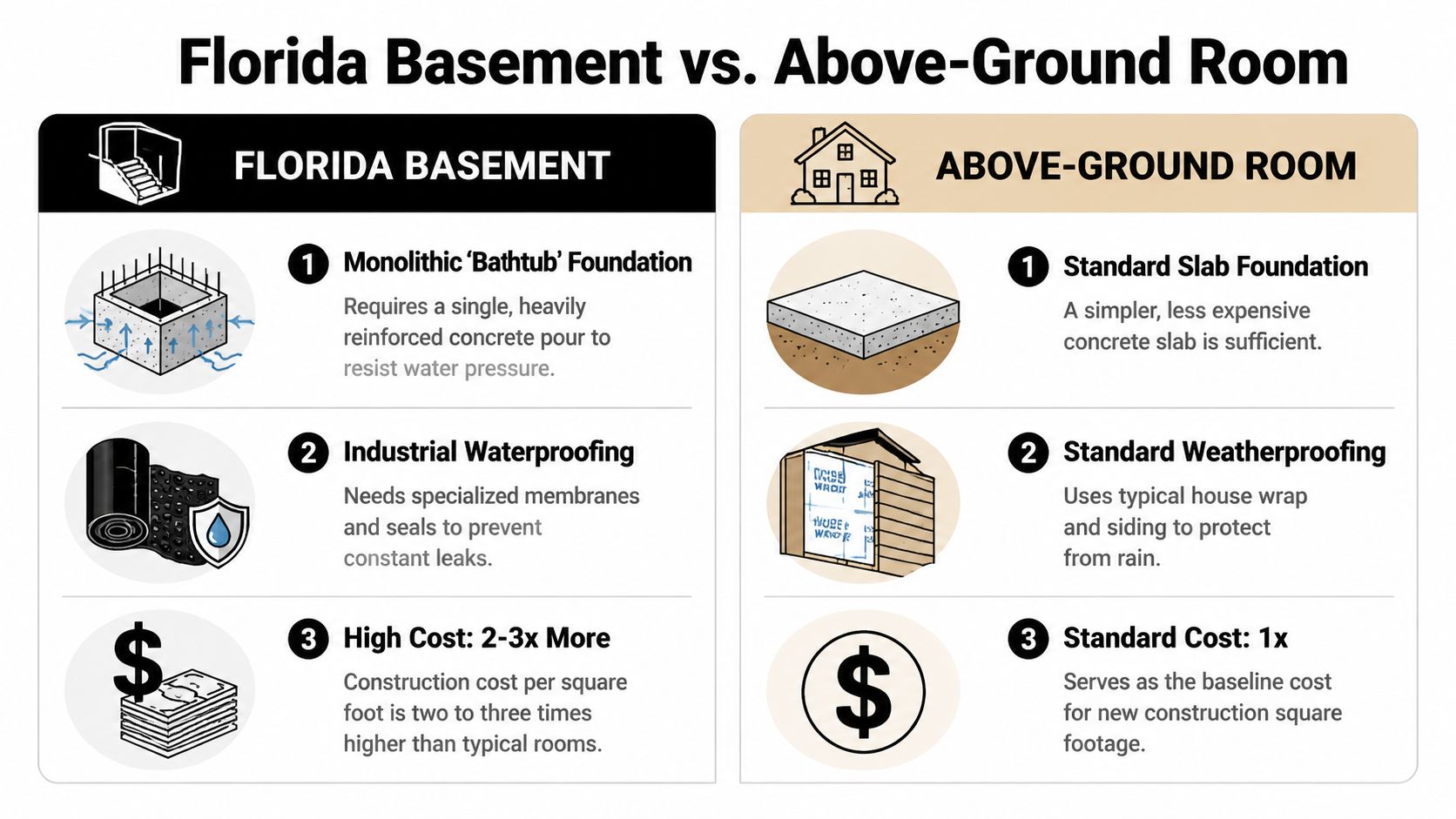
As you can see, the numbers just don't lie. The specialized, high-cost work needed for a basement makes a standard room addition a much more financially sound decision. To learn more about getting the most value from your property, exploring the top benefits of home remodeling for Jacksonville homeowners is a great next step.
Basement Alternatives: ROI Comparison for Jacksonville Investors
For investors in Northeast Florida, every dollar spent on a renovation needs to generate a return. This table compares the typical costs and ROI for the most common space-adding projects in our market, showing why digging down rarely makes financial sense.
| Alternative | Estimated Cost per Sq Ft | Typical ROI in Jacksonville | Best Use Case for Investors |
|---|---|---|---|
| Garage Conversion | $100 – $200 | 70% – 80% | Fast, cost-effective addition of living space for fix-and-flips. |
| Second-Story Addition | $200 – $400+ | 60% – 75% | Maximizing square footage and bedroom count on a small lot for higher resale value. |
| ADU (New Construction) | $250 – $500+ | Varies (Rental Income) | Generating rental income, increasing property appeal for long-term holds. |
| Room Addition (Slab) | $175 – $300 | 50% – 65% | Expanding the ground-floor footprint with a master suite or family room to increase ARV. |
Ultimately, the numbers show that converting existing space or building up or out offers a more predictable and often more profitable path than the high-risk, high-cost proposition of a Florida basement. By focusing on these proven strategies, you can add the space you need while making a smart, strategic investment in your property.
Are Walkout Basements a Viable Florida Compromise?
While a traditional, fully-underground basement in Florida is almost always a bad idea, there's one scenario that can work: the walkout or daylight basement. This design is a clever compromise with Florida’s challenging geology, but it's only an option on the rarest of properties—typically those in Northeast Florida with a significant natural slope.
A walkout basement isn’t fully submerged. Instead, it’s built directly into the side of a hill. One or more walls are completely exposed to the outside, allowing for normal doors and windows, while the other walls are partially or fully buried.
How Walkout Basements Mitigate Risk
This hybrid design neatly sidesteps many of the issues that make traditional basements so risky here. Because it's only partially buried and has a natural drainage path downhill, the immense hydrostatic pressure from the water table is dramatically reduced. Water isn’t trying to crush the structure from all sides; it has a path of least resistance to flow away from the foundation.
- Reduced Water Pressure: The open, "daylight" side provides a natural outlet, preventing the "bathtub effect" where water gets trapped against the foundation walls.
- Improved Drainage: Gravity becomes your ally, pulling both surface water and groundwater down and away from the home’s structure.
- Natural Light and Access: Unlike a dark, subterranean space, a walkout basement feels like a true lower level of the home, often opening onto a patio or into the backyard.
Expert Take: A walkout basement transforms from a high-risk liability into a premium feature that can boost property value. However, it's crucial to understand this is a site-specific luxury, not a universal solution.
A Niche, High-End Solution
It’s important to frame walkout basements correctly: they are a premium, custom-construction feature reserved for truly unique lots. Finding a property in Jacksonville or St. Johns County with enough natural elevation change to make one feasible is rare.
For homeowners and investors who happen to own such a lot, a walkout basement can add incredible value. It creates a highly desirable lower level with separate entrances, making it perfect for a guest suite, home office, or entertainment space.
Discussing this niche solution highlights Ofir Engineering’s expertise in ambitious, site-specific new construction. It shows our ability to execute complex, high-value projects by working with a property's unique strengths, not by trying to force a feature where it simply doesn't belong.
Partnering With a Local Expert for Your Construction Project
So, we've walked through the hard realities of building basements in Florida. Between the high water table, porous soil, and sky-high costs, it’s clear a traditional basement is an expensive and risky bet for any property in our area.
While there are plenty of smart, ROI-focused alternatives that can get you the space you need, the most important decision isn't what you build—it's who you hire to manage the project.
Trying to navigate a major construction project in Northeast Florida without a true local expert is a recipe for budget overruns and timeline delays. You need more than just a builder; you need a project management partner who lives and breathes Jacksonville’s specific building codes, soil challenges, and permitting processes. This isn't just a nice-to-have—it's essential for protecting your investment.
For a homeowner, this is the difference between a smooth remodel and a nightmare. For a real estate investor, it’s the key to protecting your margins and hitting your ROI targets on a fix-and-flip or rental property.
The Ofir Engineering Advantage: We are an investor-focused construction and project management firm. We combine precision planning with obsessive on-site execution. Our deep knowledge of the Jacksonville market means your project—whether it's a value-add renovation, a fix-and-flip, or a new build—is designed to succeed on budget, on schedule, and to the highest standard of quality.
Choosing the right professional is the true foundation of any successful project. To get a better handle on the roles and why they matter so much, take a look at our detailed guide on what a general contractor does for Jacksonville homeowners.
In the end, a successful project comes down to having expert management that aligns with your financial goals. Don't leave your investment to chance. When you partner with Ofir Engineering, you ensure your vision is built efficiently and profitably, turning your property into an asset that provides lasting value.
Frequently Asked Questions About Florida Basements
Even after laying out all the engineering and financial hurdles, we find homeowners and investors still have a few lingering questions. It’s a concept that’s hard to let go of. Here are the straight answers to the questions we hear most often at Ofir Engineering.
Can You Add a Basement to an Existing Florida House?
The short answer is no, not in any practical or financially sane way. The process would involve lifting the entire house up on supports—a monumental engineering task—and then trying to excavate underneath it while battling the high water table.
The risks to the home's structural integrity are immense, and the cost would almost certainly exceed the value of the house itself. For these reasons, retrofitting a basement is almost never a viable option for any property in the Jacksonville market. It’s a non-starter from an ROI perspective.
What About Storm Cellars or Safe Rooms?
This is a much more realistic conversation. A storm cellar isn't a basement; it's a small, purpose-built safety structure, not a living area.
These are typically pre-fabricated steel or concrete units, heavily reinforced and engineered from day one to be completely watertight. Their only job is to provide life-saving protection from extreme winds. They succeed where a traditional basement fails because their scope is limited and highly specialized. They offer incredible peace of mind during a hurricane but don't provide any of the storage or living space a basement does.
Key Takeaway: A dedicated storm cellar is a practical safety upgrade. A full basement is a high-risk, high-cost lifestyle addition with an entirely different set of rules and liabilities that make it a poor investment choice.
Does Northern Florida Have More Basements Than Southern Florida?
You are slightly more likely to find a basement in the panhandle or the northernmost inland parts of the state, but they are still exceptionally rare. Some of these areas sit at a higher elevation and have more stable, clay-heavy soil instead of the porous sand and limestone common in coastal regions like Jacksonville.
But even in these "better" locations, basements are a tiny anomaly in the housing market. The high water table and torrential rainy seasons are a statewide reality. For all practical purposes, whether you're in Jacksonville or Miami, a slab-on-grade foundation is the standard. A basement will always be a costly and complicated exception that rarely, if ever, provides a positive return on investment.
Navigating the complexities of construction in Northeast Florida requires genuine local expertise. Whether you are a real estate investor planning a fix-and-flip or a homeowner looking to remodel, the right project management partner is critical to maximizing your ROI.
For expert construction consulting and ROI-focused renovation services in the Jacksonville area, contact Ofir Engineering to discuss your project.
