
When it comes to steel frame home insurance in Florida, the realistic answer is that non-combustible, wind-resistant construction can qualify for lower premiums, but savings are never guaranteed and depend on your insurer and on documented wind mitigation features. Steel framing gives you several characteristics insurers value, yet the discount is earned through documentation, not automatically applied because the house is steel. Ofir Engineering is a licensed Florida general contractor (License #CGC 1540016) serving Jacksonville, Ponte Vedra, St. Johns, and Northeast Florida.
Why Insurers Care About How a Home Is Framed
Florida homeowners insurance is shaped heavily by two perils: wind and fire. A home’s construction directly affects how it stands up to both, and that is where steel framing enters the conversation.
Non-Combustible Construction
Steel does not burn. A non-combustible frame removes a fuel source from the structure, which is a fire-risk characteristic that some insurers weigh favorably. This will not single-handedly slash a premium, but it is one of the construction factors that can move the needle in your favor.
Wind Resistance and Florida Building Code Wind Loads
Northeast Florida homes must be engineered to meet Florida Building Code wind load requirements, and the coast carries higher design wind speeds than inland areas. Steel has a high strength-to-weight ratio, which lets it be engineered for strong wind performance. When that performance is documented through a wind mitigation inspection, it can translate into credits on the windstorm portion of your policy. Our hurricane-resistant home construction guide covers how we engineer for Florida wind loads.
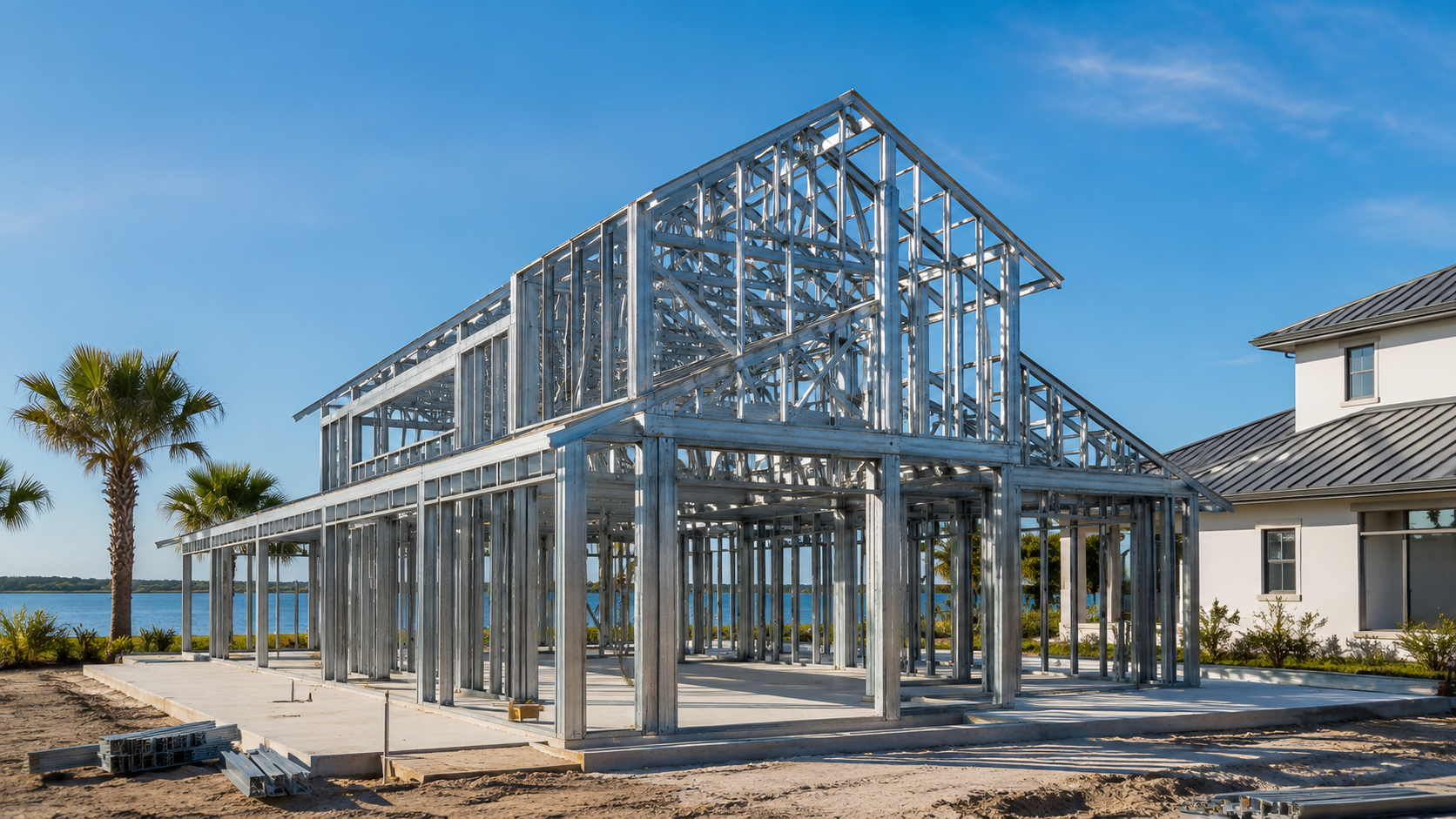
What Actually Drives Steel Frame Home Insurance Credits in Florida
This is the part homeowners most often misunderstand. Insurers in Florida do not simply hand out a discount because a home is steel. What earns credits is documented mitigation, and steel construction makes many of those features easier to achieve.
The wind mitigation inspection, often recorded on a standardized form, looks at specific features: roof shape, roof-to-wall connections, roof deck attachment, opening protection, and the secondary water barrier. A well-built steel home can score strongly on the structural side of that inspection, but the credit follows the documented inspection, not the marketing label. In other words, steel positions you to do well on the inspection, and the inspection is what your insurer actually prices.
It is also worth being clear about what does not change with framing. Your flood risk is governed by your flood zone and elevation, not by whether the walls are steel or wood, so flood insurance is a separate consideration. Being honest about this is part of how we set expectations. For the broader build picture, see our new construction services.
How to Position a Steel Home for the Best Premium
If insurance savings are a goal, the path is straightforward. Build to a high mitigation standard, then document it thoroughly so your insurer can credit you for it.
Document Everything
Keep the engineering, the permits, and the wind mitigation inspection report organized. Insurers price what they can verify. A steel home with strong documentation is in a far better position than an equally strong home with missing paperwork. As a licensed Florida general contractor (CGC 1540016), we make sure the paper trail supports your insurance conversation.
Combine Steel With Strong Opening Protection
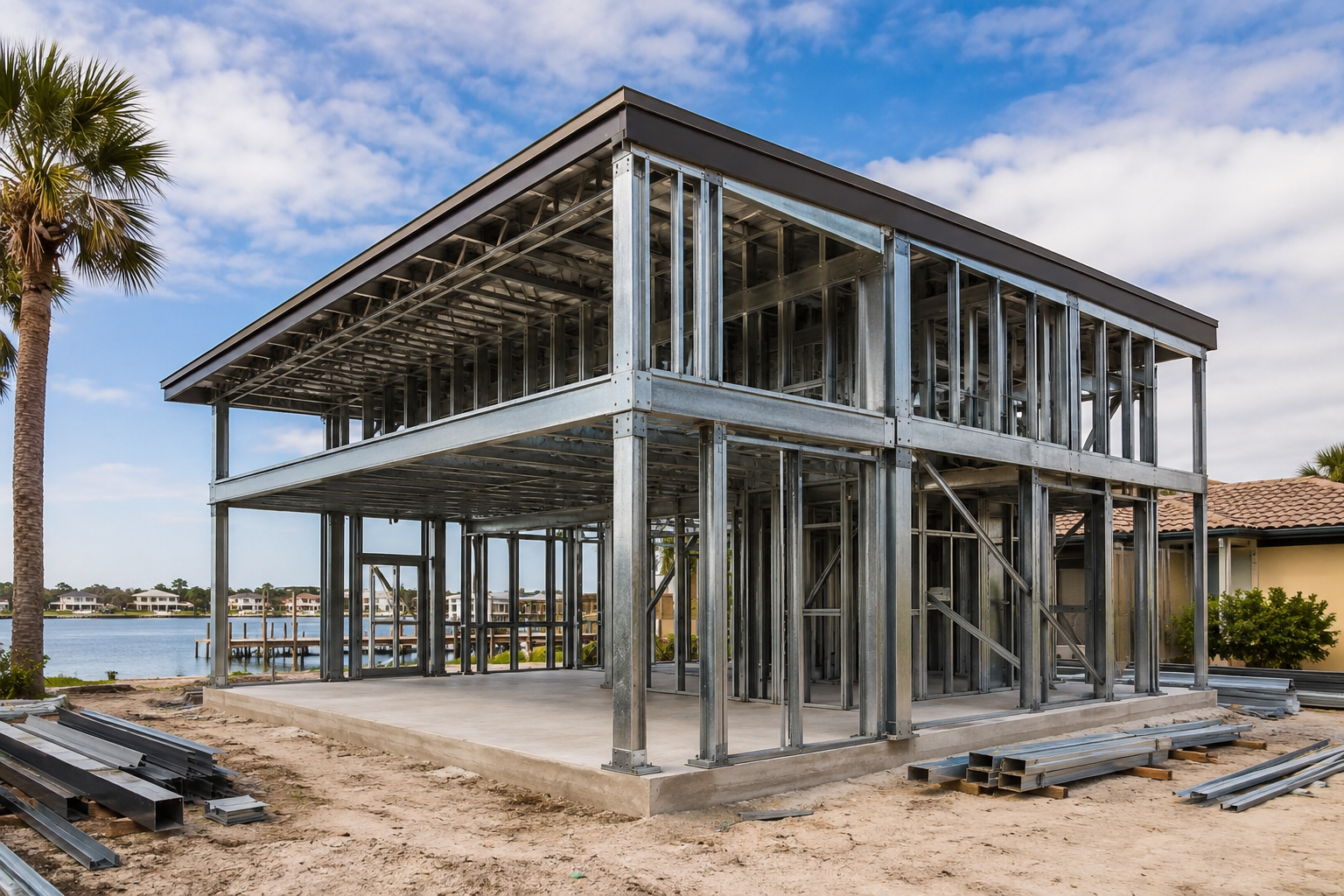
Even the strongest frame benefits from impact-rated windows and doors or shutters, because opening protection is a major line on the wind mitigation form. Pairing a steel frame with strong opening protection gives you the most complete mitigation profile. Our work on custom steel-frame homes in Florida integrates these features from the design stage.
A Realistic Expectation
So can you save on steel frame home insurance in Florida? Often yes, potentially, through the combination of non-combustible construction, strong wind performance, and documented mitigation. But we will never promise a specific dollar amount, because the final number is set by your insurer, your coverage, your location, and your inspection results. What we can promise is to build a home that is positioned to score well and to give you the documentation to make your case.
Frequently Asked Questions
Does a steel frame home automatically lower my insurance in Florida?
No. Non-combustible, wind-resistant steel construction can qualify for lower premiums, but it is not automatic. Credits in Florida follow documented wind mitigation features verified by inspection, so steel positions you well but the savings depend on your insurer and the documentation.
What features does a wind mitigation inspection look at?
A wind mitigation inspection typically reviews roof shape, roof-to-wall connections, roof deck attachment, opening protection, and the secondary water barrier. A well-built steel home can score strongly on the structural items, and that documented score is what your insurer uses to apply credits.
Will steel framing lower my flood insurance?
No. Flood insurance is driven by your flood zone and elevation, not by whether your home is framed in steel or wood. Steel may help with the windstorm and fire side of your homeowners policy, but flood is a separate consideration based on location and elevation.
How do I get the best insurance outcome with a steel home?
Build to a high mitigation standard, pair the steel frame with impact-rated opening protection, and document everything, including the engineering, permits, and wind mitigation inspection. Insurers price what they can verify, so thorough documentation is key to earning available credits.
Build a Home That Insurers Respect
If lowering your premium matters, the smartest move is to build with mitigation and documentation in mind from day one. Ofir Engineering builds non-combustible, wind-resistant steel homes and keeps the paperwork that supports your insurance case. Contact us to discuss steel frame home insurance positioning for your Northeast Florida home.
For local permitting and building codes, see the City of Jacksonville Planning & Development.