
A professional kitchen remodeling estimate in Jacksonville can range from $14,585 for a basic remodel to $41,534 for a typical professional project, while complete remodels can reach $65,000 to $130,000 or more according to Angi's kitchen remodel cost guide. If you're trying to decide whether to refresh a rental, modernize your own home, or scope a flip in Northeast Florida, the key question isn't just price. It's what drives that number, what delivers return, and what can blow up your budget if the estimate is vague.
Ofir Engineering — a licensed Florida general contractor (CGC 1540016) based in Jacksonville — pairs real construction experience with investor-focused project management.If you're staring at old cabinets, worn counters, and a layout that no longer works, you're in the same position as a lot of Jacksonville owners. They want a cleaner kitchen, a tighter budget, and fewer surprises. The problem is that many estimates are still too loose to be useful.
A solid estimate should tell you what you're buying, what risk you're taking on, and where the money is going. In Florida, that matters even more because permitting, trade coordination, product lead times, and moisture-resistant material choices can all affect the outcome. For investors, the target is controlled scope and resale logic. For homeowners, it's long-term function without paying for changes that don't add enough value.
Table of Contents
- Planning Your Jacksonville Kitchen Remodel
- What a Professional Kitchen Remodeling Estimate Includes
- Key Cost Drivers for Jacksonville Kitchen Remodels
- Sample Estimates for Jacksonville Properties
- How to Get Accurate Contractor Bids A Step-by-Step Process
- Evaluating Estimates Critical Questions and Red Flags
- Frequently Asked Questions about Florida Kitchen Remodels
- Do I need permits for a kitchen remodel in Jacksonville
- What gives the best ROI in a Florida kitchen remodel
- Should I choose the contractor with the lowest estimate
- How do I keep my kitchen remodeling estimate from growing during the job
- Is a kitchen remodel different for a flip versus a primary residence
Planning Your Jacksonville Kitchen Remodel
Most kitchen projects start with the same mistake. The owner picks finishes first and asks for pricing second. That usually leads to a number that sounds workable until the contractor accounts for demolition, code-related updates, layout conflicts, and the actual condition behind the walls.
A better starting point is budget reality. The 2025 Houzz & Home Study found a national median spend of $22,000 for kitchen projects, while large kitchens of 200 square feet or more held at a $55,000 median spend and smaller kitchens rose to a $35,000 median spend according to this Houzz & Home summary. That spread matters because it shows why a kitchen estimate isn't driven by square footage alone. Scope changes everything.
In Jacksonville, that gap shows up clearly between three common project types:
- Investor refreshes often keep the footprint, avoid moving plumbing, and focus on durable finishes that photograph well and appraise cleanly.
- Owner-occupied remodels usually prioritize storage, function, and appliance upgrades, which pushes the estimate higher.
- Full redesigns bring the highest risk because walls, ducts, openings, and permit review can all change labor and sequencing.
Practical rule: If you move fewer systems, your estimate usually stays more predictable.
For Northeast Florida owners, the estimate also needs to reflect local conditions. Humidity affects material selection. Trade scheduling can affect labor pricing and timeline stability. Permitting and inspection coordination can create delays if they're not built into the plan up front.
That is where a disciplined scope pays off. Before you compare contractors, decide whether your goal is resale, rental durability, or long-term personal use. Those are three different budgets, and they should produce three different kitchen remodeling estimates.
What a Professional Kitchen Remodeling Estimate Includes
A real estimate isn't a single total at the bottom of a page. It's a working document that shows the contractor understood the room, measured it correctly, and priced the work in a way that can be built.
Measured scope comes first
A proper estimate starts with a measured floor plan. It should account for traffic flow, the work triangle, windows, outlets, soffits, duct runs, and openings because those conditions directly affect cabinet layout, demolition, appliance placement, and labor. The contractor-oriented guidance from Magicplan's kitchen estimating article also notes that estimates should separately price materials, demolition, installation, cleanup, and structural changes, and that a typical gross profit margin target for kitchen work is 35% to 38%.
That margin isn't fluff. It's what allows a contractor to carry supervision, office overhead, scheduling, insurance, and the risk of coordinating multiple trades on one project.
Line items that should appear in writing
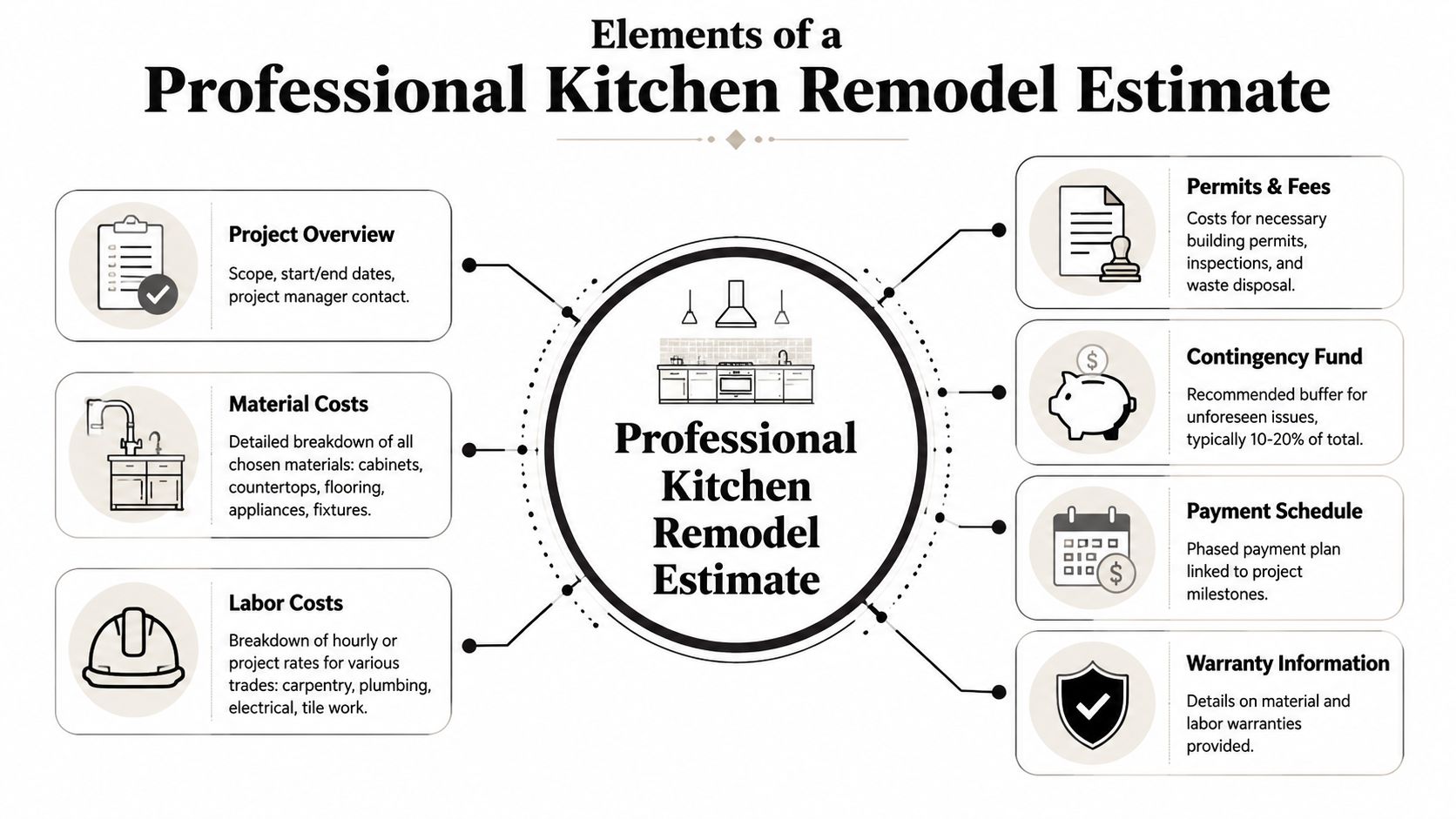
If the bid is professional, you should expect to see more than cabinetry and countertops. A useful kitchen remodeling estimate usually includes:
- Project description: Clear scope, exclusions, and who is responsible for selections.
- Demolition: Removal of cabinets, counters, flooring, and haul-off.
- Materials: Cabinets, countertops, backsplash, flooring, fixtures, hardware, and appliance allowances if applicable.
- Trade labor: Carpentry, plumbing, electrical, drywall, paint, tile, and finish work.
- Permits and inspections: Either listed directly or clearly assigned to one party.
- Cleanup and protection: Dust control, debris removal, and final clean.
- Structural or layout changes: Any pricing tied to moving walls, doors, windows, or ductwork.
- Contractor overhead and margin: Not always broken out publicly, but built into the proposal.
A vague quote creates risk in the field. That's when you hear, "That wasn't included."
A cheap-looking estimate often becomes an expensive project.
For kitchens with sink, dishwasher, or ice-maker changes, plumbing coordination needs special attention. If you want a plain-language reference on fixture and water-line considerations before you bid the job, this overview of reliable bath and kitchen plumbing is useful background.
The test is simple. If two contractors give the same total but only one shows demolition, rough-in work, cleanup, permit responsibility, and finish installation separately, the itemized estimate is the one you can manage.
Key Cost Drivers for Jacksonville Kitchen Remodels
A Jacksonville investor buys a dated house in Mandarin, budgets for cabinets, counters, and paint, then gets hit with permit revisions, electrical updates, and a three-week delay waiting on trades. That is how a kitchen estimate goes sideways in this market. The finish package matters, but the budget usually moves faster on layout changes, labor coordination, and choices that do not show up in listing photos.
Cabinets still carry a large share of the total. Labor does too. The practical difference is that cabinet costs are easier to control on paper, while labor costs grow once the crew opens walls, finds uneven framing, or has to rework plumbing and electrical to fit a new plan.
Scope decisions that raise or protect ROI
For rental property, flips, and value-driven remodels, layout discipline protects return better than design ambition. Keeping the sink, range, and refrigerator in roughly the same locations usually avoids a chain reaction of plumbing, electrical, patching, inspections, and schedule drag. A full reconfiguration can make sense in a high-end resale, but only if the neighborhood supports it.
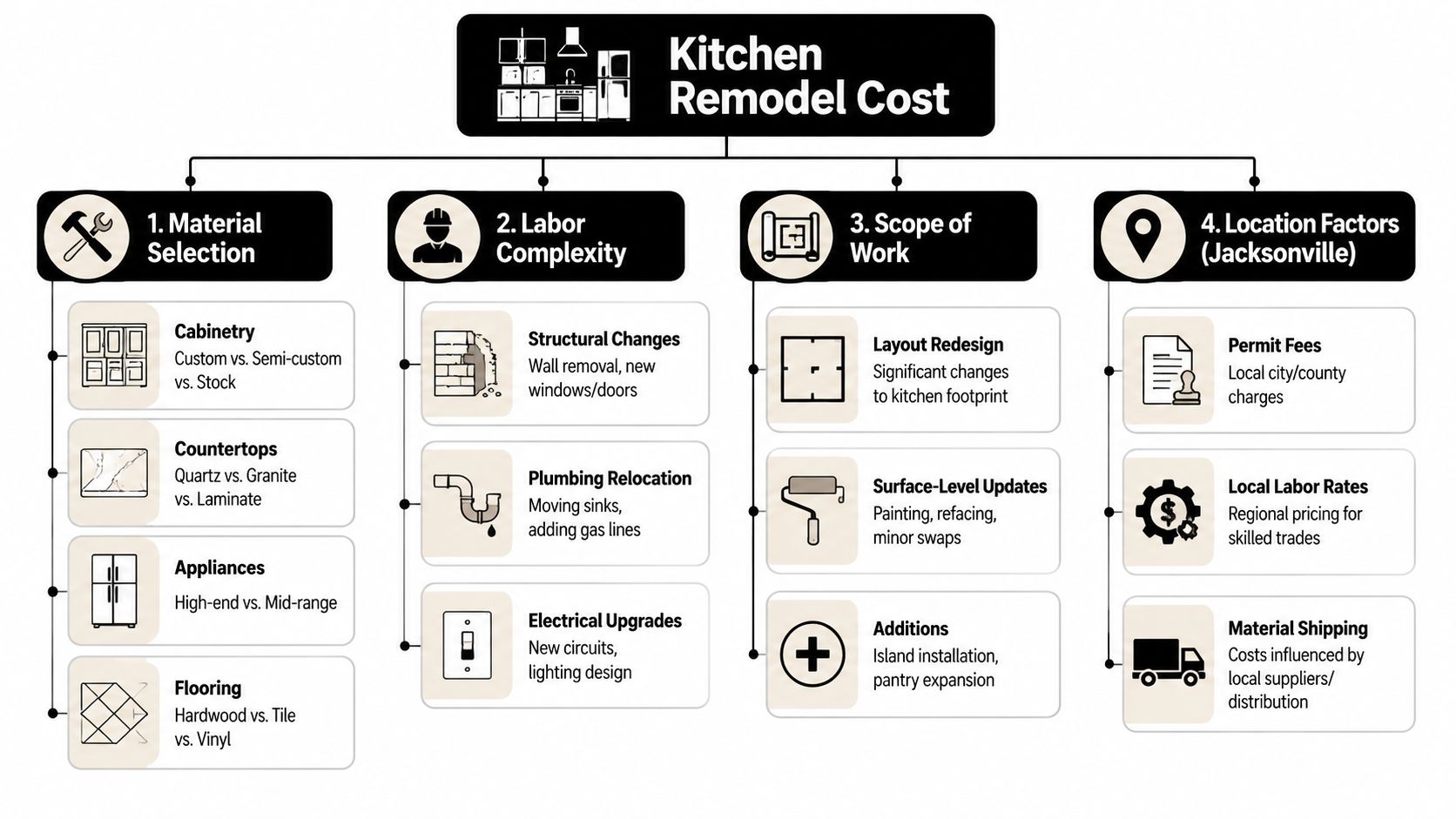
The highest-impact cost drivers usually include:
- Cabinet configuration: More boxes, taller uppers, pantry walls, custom fillers, and storage accessories raise both material cost and install time.
- Appliance selection: Standard freestanding units are simpler to price and replace. Panel-ready and built-in appliances often require cabinet modifications, added electrical planning, and tighter finish tolerances.
- Layout changes: Moving water, waste, gas, or major electrical circuits increases rough-in work and permit exposure.
- Finish complexity: Full-height splash, detailed trim, floating shelves, under-cabinet lighting, and specialty vent hoods add labor faster than many owners expect.
- Structural work: Removing walls, widening openings, or relocating ductwork changes the job from finish replacement to renovation.
I tell Jacksonville clients to separate upgrades into two groups. One group improves rentability, resale appeal, or daily function. The other group mainly satisfies preference. That second group is where investors often lose margin.
For a premium scope with custom detailing, larger layout moves, and a higher finish level, this guide to high-end kitchen remodeling in Jacksonville shows the type of project where design ambition starts to outweigh strict ROI math.
Florida-specific cost traps
Jacksonville remodels have a few local pressure points that deserve line-item attention.
Humidity changes material performance. Cabinet boxes, trim details, and flooring transitions need to hold up through seasonal moisture swings, especially in vacant properties without stable interior conditions. Cheap substitutions can photograph well at closing and fail early in service.
Permitting can also affect cost more than out-of-state investors expect. If the remodel changes plumbing locations, adds circuits, alters framing, or modifies openings, permit review and inspections need to be treated as part of the job plan, not as an afterthought. Miss that early and the estimate looks competitive until the change orders start.
Labor availability is another real cost driver in Northeast Florida. Good electricians, plumbers, tile setters, and countertop templaters stay booked. If one trade slips, the kitchen stays offline longer, and holding costs keep running. For an investor, that schedule risk belongs in the estimate just as much as cabinets and countertops.
The safest way to control a kitchen budget is simple. Keep the layout where it works, spend where buyers notice durability and function, and avoid hidden scope that turns a clean cosmetic remodel into a permit-heavy reconstruction.
Sample Estimates for Jacksonville Properties
A Jacksonville investor usually sees the same problem by the second walkthrough. The kitchen looks cosmetic at first, then the estimate grows once cabinets come off the wall, electrical gaps show up, or a simple finish update turns into code work. Sample ranges help, but only if they reflect the way these projects behave in Northeast Florida.
National kitchen cost benchmarks from USA Cabinet Store are a useful starting point. Jacksonville pricing still has to account for local labor pressure, permit exposure, product lead times, and the fact that material choices need to hold up in a humid climate. For investors, that means the cheapest line item is not always the cheapest decision.
Sample Jacksonville Kitchen Remodel Estimate Ranges 200 sq. ft. kitchen
| Line Item | Investor Flip (Basic) | Homeowner Remodel (Mid-Range) | Luxury Renovation (High-End) |
|---|---|---|---|
| Scope approach | Keep layout, replace visible finishes, avoid opening walls unless required | Improve function and finishes with selective upgrades | Rework layout, premium finish package, custom detailing |
| Cabinets | Stock cabinets or selective box replacement with new fronts and hardware | Better cabinet package with storage upgrades and cleaner fit | Custom or highly tailored cabinet package |
| Countertops | Durable entry-level surface with simple edge profile | Mid-range stone or comparable upgrade | Premium slab selection with more fabrication detail |
| Appliances | Standard replacement set sized to existing connections | Mid-range appliance package | High-spec or integrated appliance package |
| Plumbing and electrical | Fixture swaps and minor corrections where possible | Some upgrades, added lighting, and code-related changes | Significant rough-in changes likely |
| Flooring and backsplash | Durable, cost-controlled finishes with straightforward installation | Coordinated finish upgrades with more detail work | Premium material installation and detailed layout work |
| Labor complexity | Lower if footprint stays intact and trade coordination stays simple | Moderate, with more finish coordination | High because sequencing, fabrication, and inspections add time |
| Estimated range | Roughly $15,000 to $30,000 for a clean cosmetic update | Roughly $30,000 to $50,000 for a functional mid-range remodel | $75,000+ and often higher once layout and finish scope expand |
These are planning ranges, not quotes. I use this kind of framework early with Jacksonville clients because it sets the right expectation before we price the actual field conditions.
The investor flip column works when the property already has a serviceable layout, cabinets are not failing, and the sale price will not reward a major redesign. In that case, money usually performs better in doors, drawer hardware, counters, lighting, paint, and a clean appliance package than in moving plumbing across the room.
The mid-range lane fits owner-occupants and some higher-end resale projects. It usually includes better storage, stronger lighting, more durable finishes, and selective corrections that make the kitchen function better day to day. It also carries more schedule risk because more trades touch the job.
Luxury work has its place, but investors need discipline here. If the after-repair value does not support custom cabinetry, layout changes, upgraded service work, and longer lead times, the estimate may be technically accurate and still be a poor investment decision.
For larger renovation planning, compare the kitchen against other room budgets with this guide on room-by-room remodeling costs. Kitchens usually absorb more coordination, more contingency, and more inspection exposure than bathrooms, bedrooms, or living areas.
Good estimating also depends on process. Contractors using best contractor quoting software can usually present cleaner allowances, clearer exclusions, and faster revisions, which makes it easier to compare scope instead of chasing mismatched totals.
How to Get Accurate Contractor Bids A Step-by-Step Process
A Jacksonville investor gets three kitchen bids on the same rental. One is low, one is high, and one falls in the middle. The totals look useful until you read the line items and realize each contractor priced a different job.
That problem starts before the estimate. If the scope package is loose, bids will vary on cabinets, electrical, drywall repair, permit handling, and who carries the risk if hidden conditions show up after demolition. In Florida, that gap gets wider because permit requirements, inspection timing, storm-season delays, and labor availability can change both price and schedule.
Build comparable bids
Give every contractor the same job to price. That means the same measurements, photos, appliance specs, finish level, and written notes on what stays and what gets removed. If you are keeping the layout, state it clearly. If you are considering moving plumbing, adding recessed lights, or opening a wall, say that too.
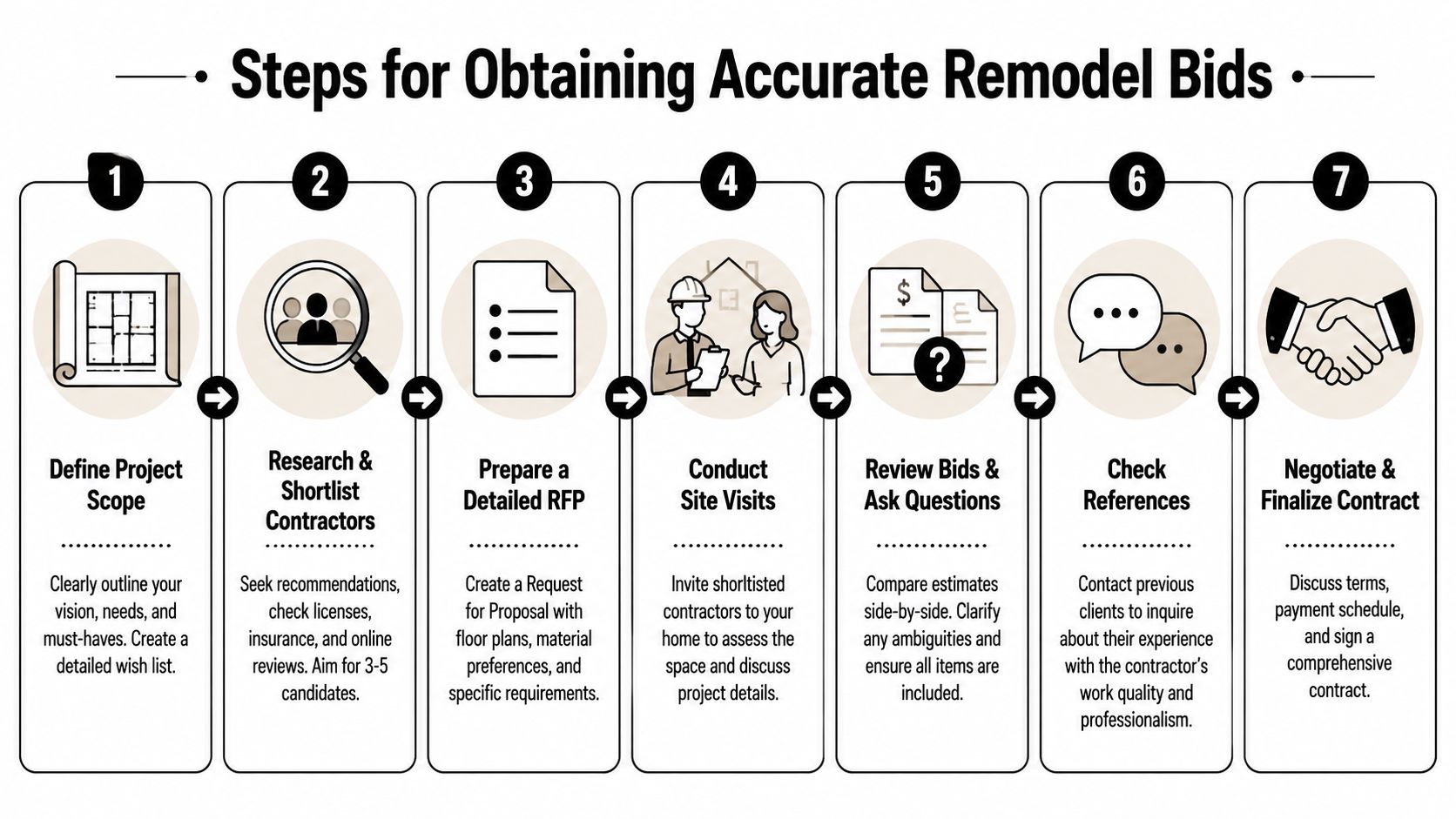
Use this process:
- Lock the scope before requesting numbers. List what is fixed, what is allowance-based, and what still needs a decision.
- Set the investment target. For a flip or rental turn, tell bidders whether you need a clean cosmetic update, a mid-range remodel, or a full repositioning of the asset.
- Invite contractors who specialize in kitchen renovations. Licensing and insurance matter, but so does trade coordination experience in occupied homes, older homes, and permit-driven remodels.
- Require a site visit. Good contractors inspect access, existing plumbing and electrical locations, floor level issues, soffits, and signs of prior unpermitted work before they put a price on paper.
- Ask for an itemized estimate. You need labor, materials, allowances, permit responsibility, and exclusions broken out.
- Press on Florida-specific assumptions. Ask whether the bid accounts for moisture-resistant materials where needed, disposal, inspection trips, and realistic lead times for cabinets and tops.
- Match the contract to the estimate. If the proposal says one thing and the contract says another, the contract controls.
Software can help on the contractor side, but only if the inputs are solid. Contractors using best contractor quoting software usually produce cleaner scopes, clearer allowances, and revisions you can compare without guessing what changed.
The video below gives another practical view of how bid accuracy improves when scope and expectations are defined clearly.
Review the bid process like a project manager
Accurate bids come from disciplined preconstruction. I trust an estimate more when the contractor measures the room, asks about decision deadlines, checks panel capacity if new appliances are planned, and puts assumptions in writing. That is how you control change orders before the job starts.
For Jacksonville investors, the goal is not only getting the lowest responsible number. It is getting a bid you can defend against your rehab budget, rent projection, or resale plan. A contractor selection process with that mindset usually produces better estimates than a fast price-shopping exercise. This guide on how to hire a general contractor is a useful filter for judging process, communication, and risk control.
If three bids cannot be compared line by line, do not average them and hope for the best. Tighten the scope, send clarifications, and have each contractor reprice the same work. That extra round is cheaper than discovering halfway through the job that one bid excluded permits, one excluded backsplash and paint, and one assumed builder-grade cabinets while you were budgeting for something else.
Evaluating Estimates Critical Questions and Red Flags
A Jacksonville investor gets three kitchen bids for the same rental. One comes in far below the others. Two weeks into demolition, the low bidder says the price did not include permit coordination, electrical updates for the new appliance package, or replacement for damaged drywall behind the old cabinets. That is how a cheap estimate turns into an expensive job.
A usable estimate should protect your budget before the first cabinet comes off the wall. In Florida, that means looking past the total and checking whether the contractor priced permit responsibility, lead times, supervision, and materials that can handle heat and humidity. If those items are vague, the risk is sitting in your lap.
Questions that expose weak estimates
Use these questions to test whether the number is real or just incomplete:
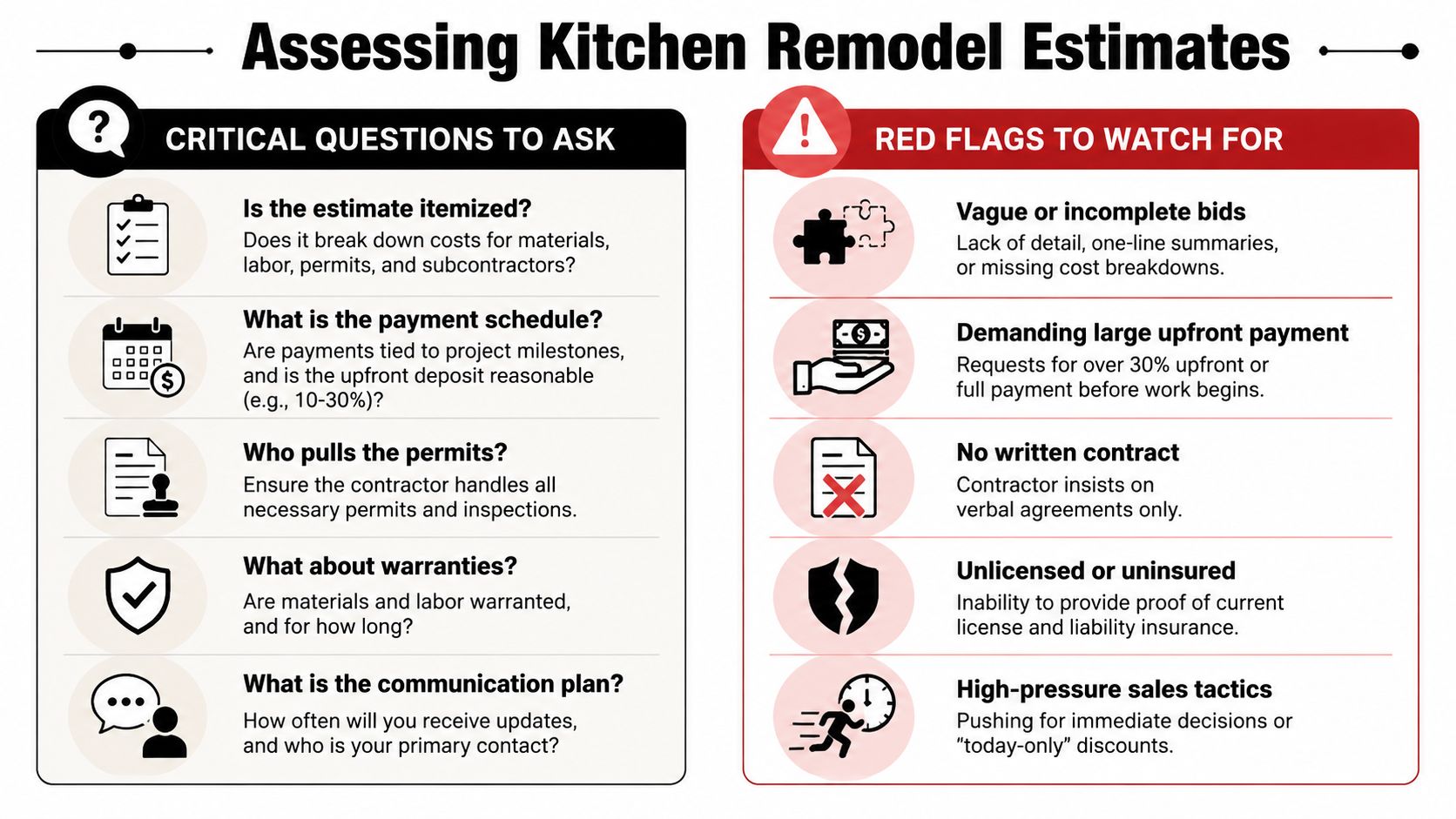
- Is the estimate itemized by trade or work category? You should be able to see cabinets, tops, electrical, plumbing, flooring, paint, and trim broken out clearly.
- What exclusions are listed in writing? Hidden costs usually show up here. Haul-off, drywall repair, appliance hookups, permit fees, and patch work are common misses.
- Who is responsible for permits, inspections, and reinspection fees if something fails? In Jacksonville, that needs to be assigned clearly before contract signing.
- Which selections are fixed, and which are allowances? Low allowances make a bid look competitive, then push the actual cost higher once materials are chosen.
- How does the contractor price change orders? The contract should explain markup, approval steps, and when added work affects the schedule.
- Who is supervising the job each day? Kitchens move fast, and trade coordination matters. A project without clear supervision usually slips.
- What assumptions were made about existing conditions? Older Florida properties can hide moisture damage, outdated wiring, and plumbing that does not match the plan.
Straight answers matter. If a contractor cannot explain the numbers cleanly, the estimate is not ready.
Red flags that usually mean expensive problems later
A one-page lump sum proposal is the first warning sign. If the bid says only "kitchen remodel" and a total price, there is no way to compare scope, check allowances, or hold anyone to specific deliverables. Investors need paperwork they can audit.
Watch for bids that skip field conditions. In Jacksonville, I look closely at floor flatness, wall condition, appliance circuit needs, shutoff access, and signs of past moisture intrusion before I trust a kitchen number. If the contractor did not verify those conditions, the estimate may be built on assumptions instead of the room itself.
Pressure is another problem. A contractor who wants a signature before selections, permit responsibility, and exclusions are settled is shifting risk to the owner. Labor shortages in Florida make scheduling harder, but that is not a reason to approve a loose contract.
Good estimates show where the risk is, who owns it, and how added cost will be approved.
The same standard applies whether you are remodeling a dated rental kitchen or evaluating a builder for new construction in Jacksonville. Clear scope, documented supervision, realistic allowances, and written procedures are basic job controls, not upgrades.
The bids worth taking seriously usually read like a plan to execute the work. They show what is included, what is still undecided, and where your budget could move if existing conditions change.
Frequently Asked Questions about Florida Kitchen Remodels
Do I need permits for a kitchen remodel in Jacksonville
A Jacksonville investor buys a rental, plans a fast kitchen update, and expects cabinets and counters to be the whole job. Then the electrician finds an outdated circuit, the plumber needs a new shutoff location, and the city requires permits. That changes the budget and the timeline.
Permits usually come into play when the remodel affects electrical, plumbing, mechanical work, or structural framing. Purely cosmetic work is a different category, but owners should never guess. The estimate should state who handles permit review, who files the application, and who manages inspections so those costs do not show up later as surprises.
What gives the best ROI in a Florida kitchen remodel
In most Jacksonville properties, the strongest return comes from improving the kitchen people see and use every day without forcing a full reconfiguration. Cabinet replacement, new fronts, countertops, lighting, paint, and appliance upgrades often produce a better resale result than moving walls or relocating plumbing.
Material choice matters more in Florida than many owners expect. Humidity, heavy AC use, tenant turnover, and occasional vacancy can wear out cheap finishes fast. I usually advise investors to spend on surfaces and hardware that hold up to moisture and repeated use, because early failure wipes out the savings from a low first price.
Should I choose the contractor with the lowest estimate
The lowest number only helps if the scope is complete. In Florida, labor availability can shift quickly, and low bids often leave out supervision, disposal, permit costs, or finish details that get billed later.
A better question is whether the estimate protects your downside. If one contractor is slightly higher but has clearer allowances, documented labor, and a defined process for changes, that bid often carries less financial risk than the cheapest option.
How do I keep my kitchen remodeling estimate from growing during the job
Lock in selections before demolition starts. Keep the layout stable. Require written approval for every change.
Most budget growth comes from late decisions, hidden moisture damage, code corrections, and products that were never fully specified. In older Jacksonville homes, water damage around sinks, flooring issues, and outdated branch wiring are common cost traps. A good estimate will not eliminate those risks, but it will identify where they are most likely and show how added cost will be handled.
Is a kitchen remodel different for a flip versus a primary residence
Yes. A flip should be priced against neighborhood comps, rent targets, and buyer expectations. A primary residence should be priced for daily function, storage, finish preference, and how long the owner plans to stay.
That difference changes the estimate. An investor may choose durable stock cabinetry, practical lighting, and a layout that avoids moving plumbing. A homeowner staying long term may spend more on organization, better drawer hardware, and higher-grade finishes. The right kitchen remodeling estimate matches the property strategy first, then the design.
If you're planning a kitchen remodel in Jacksonville or Northeast Florida and want a clear, buildable estimate instead of a vague ballpark, contact Ofir Engineering for a consultation. The company provides residential remodeling, investor-focused renovation planning, construction management, and budget control for owners who want transparent scope, disciplined execution, and fewer surprises during construction.
